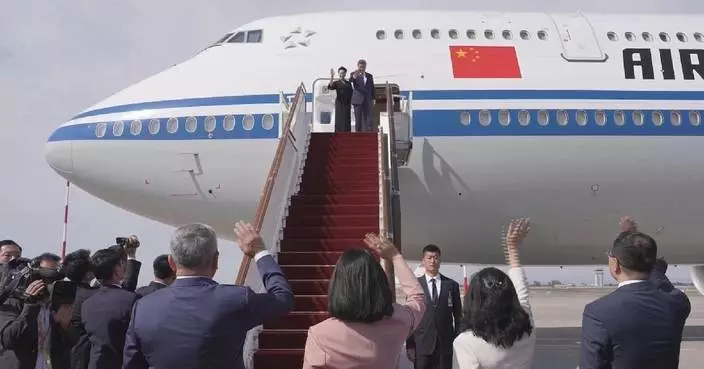
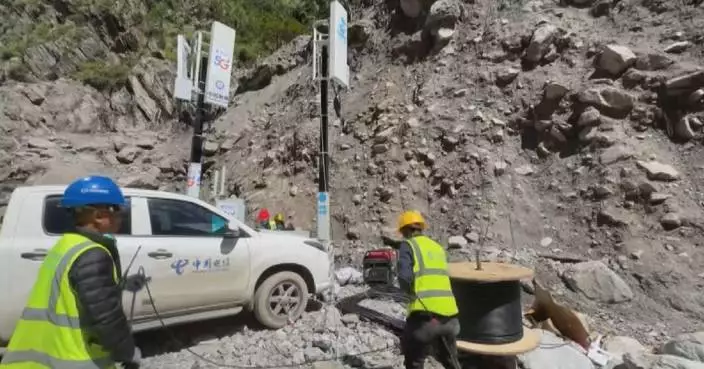
More emergency humanitarian aid supplies provided by the Chinese government to mudslide-hit Nepal departed from Shenzhen in south China's Guangdong Province on Tuesday afternoon.
The 5.8-ton supplies, including drones and water purification, lighting and genetic testing equipment, were shipped out at 14:59 (Beijing Time) and are expected to arrive at Tribhuvan International Airport in Kathmandu, Nepal, on Tuesday evening.
Carried by a Y-20 transport plane, they are the second batch of relief supplies provided by China to Nepal after the August 26 mudslide.
The deadly mudslide, which was triggered by the collapse of a high-altitude glacier on the Nepalese side of the border, had left at least 16 people dead and 546 others missing at Gyirong Port in southwest China's Xizang Autonomous Region as of Aug 29, according to the regional government.
Death toll from the catastrophic mudslide in Nepal has climbed to more than 900, with rescue demand continuing to rise, according to the United Nations.
"Coordinated by the Ministry of Foreign Affairs, the Ministry of Commerce, the China International Development Cooperation Agency, the General Administration of Customs and other departments, the second batch of aid supplies were sourced urgently and transported to the airport overnight for shipment. They are expected to arrive at Tribhuvan International Airport in Kathmandu this evening," said Luo Feiyu, an official at the exchange center of the Ministry of Commerce.
Shenzhen Bao'an International Airport set up a special task force to ensure the smooth shipment of the aid supplies.
"A dedicated green channel was set up at the receiving platform for the aid supplies to go directly to the priority loading area upon arrival, so as to fully guarantee their efficient and smooth transfer," said Zhang Xu, deputy director of the operations command center of the airport.
The first batch of Chinese relief supplies and four Chinese rescue experts arrived at Tribhuvan International Airport in Kathmandu at about 07:00 local time on Aug 30 to assist in disaster relief efforts.
The relief supplies, including tents, blankets, sleeping bags, hardtack and emergency kits, were handed over to the Nepali side at the airport.
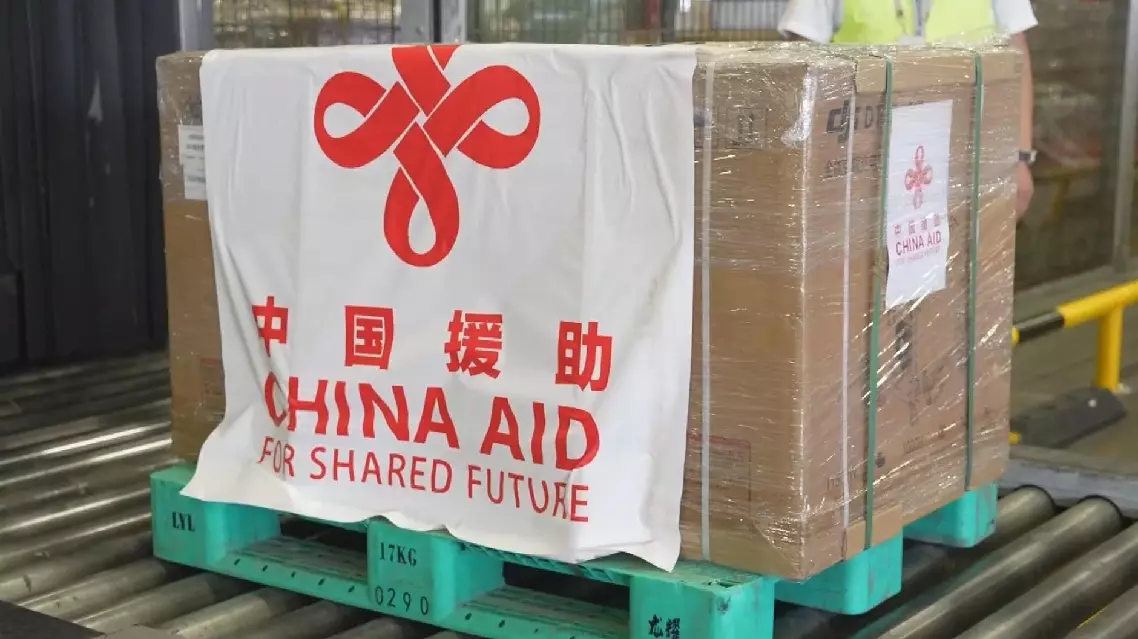
Additional humanitarian aid supplies depart from China for mudslide-hit Nepal
Agreements signed between China and Kyrgyzstan at the 2026 Shanghai Cooperation Organization (SCO) Summit in Bishkek are expected to inject fresh momentum into Kyrgyzstan’s growing technology sector, especially in digital economy, artificial intelligence (AI) and clean energy, an expert said.
The summit, held Monday and Tuesday in the Kyrgyz capital, ran under the theme "25 Years of the SCO: Together Towards Sustainable Peace, Development, and Prosperity" and brought together leaders from more than 20 countries.
In an interview with China Global Television Network (CGTN), Chubak Temirov, deputy director of the High Tech Park of the Kyrgyz Republic, said the SCO’s 25 years of trust now pave the way for joint technology ventures beyond Kyrgyzstan’s domestic market.
"The SCO spent 25 years building relationships and trust between our countries, between China and Kyrgyzstan and all other members. And I believe the next stage should be about building things together, in relation to technology; technologies, companies, research, products, and maybe new markets. Today, technology company in Bishkek doesn't necessarily think only about our domestic market, which is only 7.4 million people. We think broader, in relation to all SCO countries, or even global market," Temirov said.
In his meeting with Kyrgyz President Sadyr Japarov on Monday, Chinese President Xi Jinping said China and Kyrgyzstan should work together to build the Belt and Road Joint Laboratory and strengthen cooperation in areas including AI.
Echoing President Xi's words, Temirov identified local-language AI applications as the most immediate opportunity for Kyrgyzstan, while emphasizing that the best form of technology transfer lies in building local capacity to develop future products independently -- a partnership model that could deepen bilateral collaboration following the summit.
"I think the immediate practical opportunities for Kyrgyzstan in AI would be the local language AI. For example, let's imagine just a farmer in rural area, in some remote mountain in Kyrgyzstan, as you know, Kyrgyzstan is a mountainous country, could speak to an AI assistant in Kyrgyz language and receive information about weather, maybe agriculture. A student could have an AI tutor, for example, in his own language, in native language. Or a citizen could interact with digital public services, right? Digital public services now, in every country, are becoming a major trend of digitalization. Everyone now, just sitting from home, can get any public service s and get different things to make his life easier, right?" he said.
"China has a big scale from infrastructure and a mature AI ecosystem. The best technology transfer is not when you receive any finished product. As I said, it's when your people gain capability to build already the next product themselves, right? This is the kind of China-Kyrgyzstan technology partnership I would see as a really good example. I truly believe that after this summit, we can go to a new layer of friendship and collaboration. And I see more opportunities between China and Kyrgyzstan in AI in general, and in other technologies," he added.

China, Kyrgyzstan double down on tech innovation at SCO Summit