RIYADH, Saudi Arabia, Sept. 1, 2026 /PRNewswire/ -- As artificial intelligence rapidly expands beyond centralized cloud computing into real-world applications, HUMAIN has selected Compal Electronics (Compal; TWSE:2324) as its long-term strategic ODM partner to support the development and manufacturing of its next-generation AI infrastructure and intelligent computing platforms. The collaboration establishes a long-term roadmap spanning cloud AI infrastructure, edge computing, Physical AI, and future intelligent computing technologies, supporting HUMAIN's vision of building AI capabilities for the region.
The partnership is being showcased at LEAP 2026, where the two companies are demonstrating their end-to-end AI collaboration. It reflects a shared ambition to accelerate AI adoption through scalable, high-performance platforms that connect cloud intelligence with edge execution, enabling governments, enterprises, and emerging AI-native industries.
By working across the full AI spectrum, Compal and HUMAIN combine deep engineering expertise, advanced manufacturing, and global supply chain resources to deliver integrated AI solutions with speed and reliability.
"AI is moving from the cloud into everything around us. HUMAIN intends to lead that transition by building the infrastructure, platforms, and intelligent systems that take AI from data centers into the physical world," said Tareq Amin, CEO of HUMAIN. "Compal's engineering depth, manufacturing scale, and broad product portfolio make them an ideal ODM partner."
Advancing AI Infrastructure for the Cloud Era
At the core of the partnership is a long-term roadmap to jointly develop AI infrastructure platforms that can evolve alongside HUMAIN's expanding AI ecosystem. Compal will support HUMAIN through scalable ODM capabilities, enabling successive generations of AI servers and infrastructure platforms as AI computing requirements continue to grow. The solution portfolio includes AI servers based on both NVIDIA and AMD accelerated computing technologies, enabling flexible deployment for AI training, inference, and large-scale enterprise workloads.
By combining Compal's strengths in system design and integration, thermal engineering, and global manufacturing with HUMAIN's AI platform vision, the two companies are building infrastructure optimized for sovereign AI requirements.
This collaboration further reinforces Compal's leadership as a trusted ODM partner capable of supporting multiple AI ecosystems while delivering high-quality, production-ready infrastructure at scale.
Extending AI to Edge and Physical AI
Beyond the data center, the collaboration expands into AI PCs and Physical AI used for smart hospitals—marking a shift toward intelligent systems operating in real-world environments.
In the AI PC domain, HUMAIN and Compal will explore next-generation AI-enabled personal computing platforms that combine cloud intelligence with on-device AI, delivering secure, efficient, and personalized AI experiences for enterprise, government, and professional users.
A key showcase is Compal's physical AI PolyMedX platform, leveraging NVIDIA Agent-Ready Rheo Blueprint to integrate edge AI, sensing, and automation for hospital operations and patient care. Already introduced with leading medical institutions, PolyMedX demonstrates how Physical AI can enhance patient assistance, clinical workflows, and facility management.
"As Compal transforms into an AI-centric company, we are building capabilities from cloud to edge to deliver a full spectrum of AI solutions," said Tony Bonadero, CEO of Compal Electronics. "Together with HUMAIN, we aim to accelerate AI adoption with scalable platforms ready for real-world deployment."
Showcasing Innovation at LEAP 2026
The collaboration is prominently featured at LEAP 2026, a leading global technology event held in Riyadh, Saudi Arabia, bringing together industry leaders, innovators, and the tech ecosystem to shape the future of digital transformation and AI. At the event, HUMAIN and Compal are demonstrating how AI is transforming industries beyond traditional computing.
A key highlight is a live demonstration of Physical AI, showcasing how AI can bridge digital intelligence with real-world environments. The demonstration highlights Compal's capabilities in integrating AI computing, edge technologies, and intelligent systems to enable more responsive and efficient real-world applications.
###
About Compal
Founded in 1984, Compal Electronics is a Forbes Global 2000 company and one of the world's leading Original Design Manufacturers (ODMs), delivering innovative technology solutions across AI servers, AI PCs, edge computing, smart healthcare, automotive electronics, and intelligent devices. With comprehensive engineering expertise and global manufacturing capabilities, Compal partners with leading technology companies to accelerate the commercialization of next-generation AI solutions. More information, please visit https://www.compal.com
About HUMAIN
HUMAIN, a PIF company, is a global artificial intelligence company delivering full-stack AI capabilities across four core areas: next-generation data centers; hyper-performance infrastructure and cloud platforms; advanced AI models, including some of the world's most advanced Arabic large language models developed in the Arab world; and transformative AI solutions that combine deep sector insight with real-world execution.
HUMAIN's end-to-end model serves both public and private sector organizations, unlocking value across industries, driving digital transformation, and strengthening capabilities through human–AI collaboration. With a growing portfolio of sector-specific AI products and a core mission focused on intellectual property development and global talent leadership, HUMAIN is engineered for international competitiveness and technological excellence.
Forward-Looking Statement
This press release may contain forward-looking statements based on current expectations and assumptions. Actual results may differ materially due to various risks and uncertainties. The companies undertake no obligation to update these statements.
For further details about HUMAIN, please visit humain.com
Follow HUMAIN on: X | LinkedIn
** This press release is distributed by PR Newswire through automated distribution system, for which the client assumes full responsibility. **
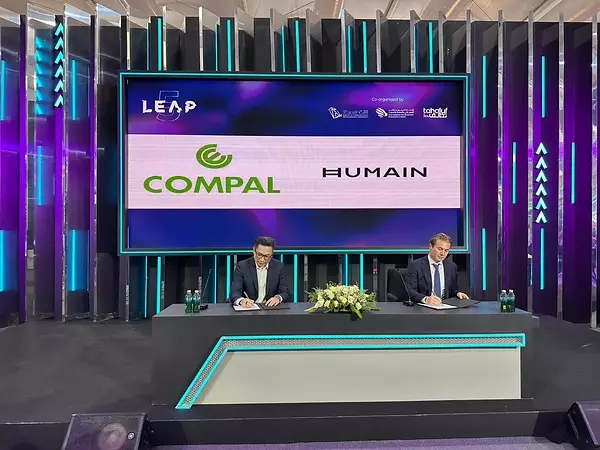
HUMAIN Collaborates with Compal to Drive Cloud-to-Edge AI Expansion, Showcasing Partnership at LEAP 2026