A small peace resource room in Kitakyushu City, Japan's Fukuoka Prefecture, is preserving photographs, documents, and relics from Japan's wartime past -- materials collected by war survivors who, according to the facility's director, want future generations to confront Japan's acts of aggression.
In an interview with China Media Group (CMG) in Kitakyushu City ahead of Thursday -- the day marking the 81st anniversary of the victory in the Chinese People's War of Resistance Against Japanese Aggression (1931-1945) and the World Anti-Fascist War, Yoshiko Komatsu, head of the Kitakyushu Peace Resource Room, said the collection was started by survivors who rented a building and set up a "Peace Museum" in one of its rooms to exhibit what they had gathered over the years.
"They (the war survivors) rented a building. In one of the rooms, they set up an exhibition under the name 'Peace Museum.' What we have inherited are the materials preserved by that museum at the time," she said.
Komatsu, a native of Kitakyushu, said she was shocked to learn that her hometown played a major role in Japan's war machine -- a fact she said was never taught to her growing up.
"After the Meiji era, Kitakyushu City had many factories producing weapons during the war. A wide variety of weapons were manufactured here, ranging from rifles to tanks, military vehicles, machine guns, and heavy machine guns, and eventually even Fu-Go balloon bombs were produced here. It is said that many bomb-type weapons were also manufactured. In other words, this was a city that supported warfare," Komatsu said.
"However, I am sorry to say that although I myself was born and raised in Kitakyushu City, I had absolutely no knowledge of these facts before," she said.
According to Komatsu, the war survivors who initiated the collection were driven by a fear that history would repeat itself.
"The war survivors were concerned that we might repeat the same mistakes. That is why they had been calling for the establishment of a peace museum that is, a museum to pass on the memory of war. To that end, they continued to petition and strive for it," she said.
A museum was eventually built, she said, but it fell short of what the survivors had envisioned.
"Later, a museum was indeed built. But the museum established by the city government was not the kind of museum that the war survivors had hoped for. The war survivors believed that the museum must not only convey how the war broke out, but also must convey what Japan did on the battlefield. Without conveying the acts of aggression, it would be impossible to apply these historical lessons to the future," Komatsu said.
In 2022, the original Kitakyushu Peace Museum was closed. Komatsu, determined to prevent the materials from being lost, stepped in to fill the void. "Later, I began to look into these materials. I also started learning about the war. At that time, I actually knew very little about the war as well. As I studied more and more, I increasingly felt that these things absolutely must not disappear. So I decided to carry them forward," said the peace activist.
Today, the Kitakyushu Peace Resource Room displays materials and items related to Japan's war of aggression. Komatsu and other members hold regular study sessions on historical topics, teaching people — including children — about Japan's past history of aggression.
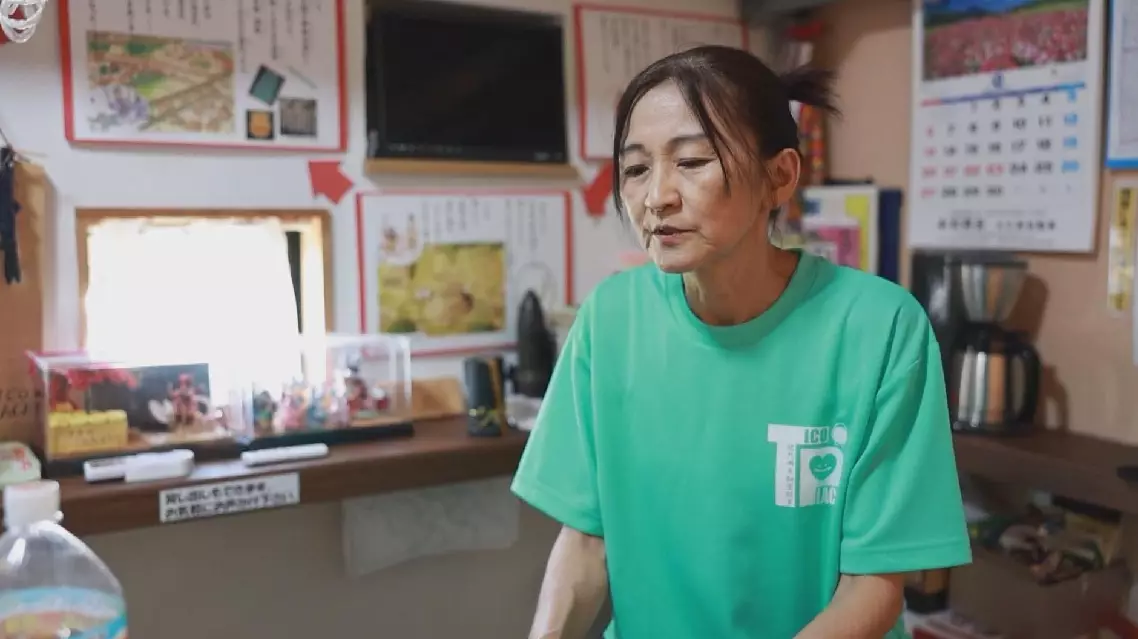
Japanese activist keeps alive history of Japan's wartime aggression