NEW YORK (AP) — Hollywood has just wrapped up its best summer in a decade and its biggest vibe shift since the pandemic.
After years of new-normal ticket sales and regular spells of unease, the summer box office rallied to $4.61 billion in domestic ticket sales between May 1 and Aug. 31, according to Rentrak.
That’s not just miles ahead of last year (a 26.1% increase from 2025), but better than every summer other than 2013. Accounting for inflation and higher ticket prices, it’s less of a record season. Admissions are still way down from pre-pandemic levels. But 2026 was still the summer Hollywood got its mojo back.
While that is partly thanks to some usual suspects — Spider-Man, “Toy Story” and others — much of what’s driven the resurgence has been refreshingly new. Gen-Z audiences have filled theaters. Low-budget films such as “Obsession” have turned into blockbusters. But it's been filmmakers, even more than intellectual property, that have lured moviegoers. Even once-dead movies have come back to life.
“We’re seeing audiences show up for things they really care about, and those might not be the same things we saw a summer or two summers ago,” says Dave Green, director of the previously canned “Coyote vs. Acme.” “I’m really encouraged by the resilience of the movie business and that it can bounce back and morph and change all the time.”
Such optimism had for years been hard to find in a Hollywood ravaged by the pandemic, wildfires, labor strife, contraction and technological upheaval. There are still seismic changes afoot, including Paramount’s proposed acquisition of Warner Bros. Discovery and the continuing effects of generative AI.
But for the first time in a while, the movie business is running at a high gear, with reason to expect the good times might continue to roll. Fall releases like “Avengers: Doomsday” and “Dune: Part III” (both due out in December) should add to the momentum, and maybe more record returns.
Here’s what fueled Hollywood’s summer comeback:
There's not a lot that movies like “The Odyssey,” “Obsession” and “Disclosure Day” have in common. But each drew audiences largely because of the filmmaker behind them.
Christopher Nolan's box-office drawing power has never been more apparent. That he could transform one of the oldest works in literature into a summer blockbuster that will soon hit $1.6 billion is a triumph even for him. It goes to show just how much a studio having the right stable of filmmakers can be a boon to them. Universal Pictures famously scooped up Nolan after his acrimonious departure from Warner Bros. over its pandemic detour to streaming.
Universal is also home to Spielberg, whose “Disclosure Day” ($241.3 million worldwide) made a more minor splash in theaters. But everyone who came to see it came for Spielberg. The same, maybe, could be said for “Obsession,” by 26-year-old YouTuber-turned-filmmaker Curry Barker. Made for less than $1 million, it's surpassed $500 million worldwide for Focus Features, making it among the most profitable movies ever made.
The seminal moment of the season, and a possible sea change in 21st century Hollywood, was when “Obsession” blew past “Star Wars,” a franchise that helped define the summer blockbuster. “Star Wars: The Mandalorian and Grogu” tapped out with a disappointing $345.4 million globally.
It wasn't the only sign that some of Hollywood's most dependable franchises don't necessarily have the same power they once did. The Walt Disney Co.'s latest live-action remake, “Moana” ($315.4 million), also stumbled, as did Warner Bros. and DC Studios' big summer release, “Supergirl” ($126.4 million).
Of course, other long-running franchises are doing just fine. Sony Pictures' “Spider-Man: Brand New Day” is still atop the box office but it's already accrued $2.34 billion, making it the second highest grossing film ever, not accounting for inflation.
While that success points to a few things — Spider-Man's supremacy among superheroes, the inconsistency of any “superhero fatigue” — it was hard to miss how, for two months, Tom Holland and Zendaya (stars in "Brand New Day,” co-stars in “The Odyssey”) presided over summer moviegoing.
The 30-year-old stars, and their obvious drawing power, reflect the considerable influence Gen Z has on the box office. Those aged 14 to 29 were already ranking as the demographic going most often to theaters. According to Cinema United, the exhibitor trade group, Gen Z in 2025 averaged a leading 6.1 visits, up from 4.9 the year prior.
That was most evident in the twin successes of “Obsession” and “Backrooms” earlier in the summer. A24's “Backrooms,” directed by 21-year-old Kane Parsons, grossed $394.1 million worldwide on a $10 million budget. That a pair of 20-something former YouTubers outperformed Spielberg and “Supergirl” suggests shifting tides in American moviegoing.
“I think we’re a little tired of being at home. Our generation is the COVID generation a little bit,” Barker said in an earlier interview while basking in the grosses for “Obsession.” “I was fortunate enough to have all four years of high school experience. My brother Riley lost two years of that. We’re sick of the phones.”
According to S&P Global, the number of overall ticket sales is still well behind where they were in 2019. Through mid-August in 2019, cinemas sold 795.9 million tickets. Over that same period this year, the number is 547.1 million.
What's making up the difference is ticket prices, particularly for large-format showings. Business has been best on the biggest screens. In July, “The Odyssey” led IMAX to its best month ever, with $257 million in worldwide sales.
IMAX, more differentiated from home TVs than your average movie screen, never saw the same downturn that broader exhibition did.
“IMAX had a record in 2025. We beat the number from pre-pandemic and we expect to beat last year’s number this year,” says Richard Gelfond, IMAX chief executive. “So we’ve been back.”
Still, the craze over seeing “The Odyssey” in 70 mm IMAX isn't likely to be forgotten. Film format increasingly drives moviegoing. The chance to see this year's best-picture winner “One Battle After Another” in VistaVision was part of its pull on cinephiles.
It's also one reason why the looming matchup of “Avengers: Doomsday” and “Dune: Part III” will be so fascinating. In December, “Dune: Part III” will have IMAX exclusivity while Disney is promoting “Infinity Vision” — a designation for premium large format screens — for “Doomsday.” But in a similar situation, things worked out just fine for “The Odyssey” and “Spider-Man: Brand New Day.”

FILE - Curry Barker poses for a portrait in New York on Thursday, June 11, 2026. (Photo by Andy Kropa/Invision/AP, File)
PLYMOUTH, Mass. (AP) — Lindsay Clancy's trial judge said he was going to declare a mistrial Friday before suddenly changing course and giving her defense attorney one hour to appeal. Judge William Sullivan’s stunning move came after he announced in court that jurors on Friday sent a note for a third time saying they couldn't unanimously decide whether to hold her criminally responsible for killing her three young children in 2023.
Deliberations took a dramatic turn Thursday when the foreperson told the judge that a lone holdout was refusing to follow the court’s instructions about reasonable doubt. Clancy’s defense has argued that the judge’s refusal to remove the juror undermines the trial.
Clancy, a 36-year-old former labor and delivery nurse, doesn’t deny strangling her children in the basement of their home. Defense attorney Kevin Reddington blamed postpartum psychosis. Prosecutors said she knew what she was doing.
Postpartum psychosis is estimated to afflict 1 to 2 per 1,000 women after delivery. Experts at the Cleveland Clinic describe it as a mental health emergency affecting someone’s sense of reality. Though most people with postpartum psychosis don’t harm their children, mothers with severe cases may try to do so.
Here’s the latest:
The case would essentially go back to the same status as before the trial — Clancy could be charged with murder and held at a psychiatric hospital awaiting a resolution of the criminal case.
Prosecutors would have to decide whether to try again with a new jury. If they do, the jury selection process would begin again and a new trial would be scheduled.
Prosecutors could also offer a plea deal to Clancy, said Brad Bailey, a Boston defense attorney and former prosecutor who is not involved in the case.
“Any time the threat of a retrial with murder one hanging over the client is re-interjected, defense lawyers will, at the very least, explore whether or not there’s any interest in a resolution,” Bailey said.
▶ Read more
Prosecutor Jennifer Prague told the judge a mistrial was required because he had already read to the jury the legal instruction sometimes known as a “dynamite charge.”
Reddington argued the judge still had discretion: “The court has the ability to send the jury back,” he said.
Sounding exasperated, the judge said “I don’t feel I have any choice but to declare a mistrial at this time.”
Reddington then requested that the jurors be polled “as to whether or not there has been a decision reached on murder one, murder two, manslaughter or anything like that.” If they did reach such a decision, prosecuting her again on those charges would be double jeopardy, he said.
Sprague objected, saying the court can’t delve into jury deliberations. “I don’t think anything else is required at this point other than a declaration of mistrial unfortunately.”
Sullivan then said, “Over the defendant’s objection, I am going to declare a mistrial at this point.”
Then Reddington pushed back, and the judge gave him one hour to appeal to the Massachusetts Supreme Judicial Court.
Criminal defense attorney Joseph Krowski, who has been observing the trial, commented about Friday’s developments outside the court in Plymouth, Massachusetts. He said the defense wants a judge on the state’s highest court to consider an emergency stay because Reddington believes there “is a structural defect to this trial by the failure to remove the juror or do an inquiry.”
Judge Sullivan read the jury foreperson’s note aloud in open court: “It is with a heavy heart that we report we are unable to come to a unanimous decision and will not be able to.”
Sullivan and Reddington went back and forth after the judge signaled that he would declare a mistrial and summon the jury to break the news.
Then the judge suddenly gave Clancy’s lawyer time to seek an appeal to stop his mistrial order.
“What I’m asking for is time to file a single-justice appeal for this travesty,” said Reddington, who was upset over Sullivan’s refusal to remove a juror.
“I’ll hold off for an hour,” the judge said.
The clock began around 11:30 a.m.
Clancy’s parents, Paula and Mike Musgrove, and her sister, Allison Ozga, showed no reaction but stared straight ahead. Clancy’s expression wasn’t visible to the gallery.
The defense then raised objections and the jury was not brought in.
Prosecutors and Reddington are being brought up to a podium and the court clerk showed them something. It is unclear what it was.
Now they’ve returned to their tables and the judge has returned to the bench.
With nearly 100 people packed inside, a court officer told the public outside “there is no more room” and closed the courtroom doors.
First the media and now members of the public are re-entering the courtroom.
The prosecutors are at their table. Reddington is sitting next to Clancy. Clancy’s parents and her sister are two rows back.
There’s a line for media seats that’s 15 people deep, with journalists either standing or sitting on the floor behind an orange cone after court security moved them back from the door.
The benches outside the courtroom are filled with about 20 members of the public, some dressed in pink to show their support for Clancy. Many are waiting to get a seat in the courtroom, which has been filled to capacity.
Reddington urged Sullivan to “forcefully” explain the jury instruction about how to apply reasonable doubt to deliberations, and not use a “soft” approach.
“What do you want me to do? Get a brass band?” the judge responded. “The fact that I perhaps didn’t give it my full inflection — I’m sorry about that but I’m not an actor. I’m just giving the instruction.”
Sullivan then promised to give the instruction again “with more pizzazz,” a remark that caused laughter in the courtroom.
The judge ultimately gave the jurors one more reminder about following his instructions before sending them back to the jury room.
“That juror told you that he would be able to apply the law to the fact as you asked him. Based on this note from this juror it clearly and unequivocally indicates they are 11-1 and this person will not apply reasonable doubt to the evidence to return a not guilty verdict.”
Sullivan disagreed, saying law only allows a juror to be discharged for personal reasons having nothing to do with the case or their relationship with the other jurors.
Before the jury was brought into the courtroom Friday, Reddington beseeched the judge to deal with the juror referenced in the foreperson’s note on Thursday.
“I have never seen a situation like this where a foreperson on the jury is so courageous as to speak on behalf of 11 jurors and indicate that a juror, number which I will not mention, and I quote, ‘has made statements acknowledging doubt but refuses to apply it to the verdict,’” Reddington said.
Reddington said the juror “looked you in the eye and lied” when the judge questioned him after receiving the note.
Criminal defense attorney Joseph Krowski Jr. has been following the trial and commented outside court about the judge’s challenge at this point in the deliberations.
“The jurors aren’t saying that there’s just a factual disagreement with the holdout — they’re saying that that juror is refusing to follow the law,” Krowski said Thursday evening.
“Now, I don’t want to speculate. I’m not in there, and I don’t know what the disagreement is, and how do we know that that juror’s even right or wrong on the law, but you could see the visceral reaction from attorney Reddington, and it looked like to me that he’s frustrated.”
“Judges have to be careful into inquiring into what’s being discussed during deliberation. So if he gets another communication, then I’m sure he would have a very, very confined, carefully constrained voir dire,” Krowski said. “One more communication that they’re at an impasse would mandate a hung jury, mistrial.”
“I wanted to remind you, as I instructed you earlier, it is your duty as jurors to accept the law as I gave it to you,” he told them. “You must follow the law as I give it to you whether you agree with it or not.”
“With that, you may now resume your deliberations.”
Sullivan acknowledged to the jury that he got a note from the jury on Thursday.
“If there are any notes in the future ... make sure we don’t put down where everybody is numerically,” Sullivan told them.
Despite a request from Reddington, Sullivan has ruled that he will not do a further inquiry of the juror.
Court has reopened and reporters and the public have filed in. There is not an empty seat.
The judge is now here and lawyers are discussing further instructions to the jury.
Reddington filed a motion Friday requesting a standing order so there will “be no further sidebars” and that “all related proceedings will be handled in open court.”
Sullivan has often used sidebars to discuss legal issues with the defense and prosecution, especially during jury deliberations. During those sessions, no one in court can hear what is being discussed.
Defense attorney Kevin Reddington told reporters after leaving court Thursday that the foreperson’s note identified the holdout juror to the judge.
He said he’s hoping that before the judge questions that juror on Friday, attorneys on both sides will get to argue over the specifics of that inquiry.
Reddington wants that debate out in the open, not in a private sidebar conversation.
A deadlocked jury returns Friday for the seventh day of deliberations in the Lindsay Clancy trial, a day after the jury’s foreperson informed the judge that a single juror wasn't following the court’s instructions about reasonable doubt.
The extraordinary disclosure made Thursday in the form of a note delivered to the judge offered the clearest glimpse yet of what may be keeping jurors from reaching a verdict on whether the Massachusetts mother is criminally responsible for killing her three children.
The jury has twice told Judge William Sullivan that it is unable to agree on a verdict. On Thursday, Sullivan brought in each juror individually and questioned them in private. The judge then reread his instructions on reasonable doubt before sending them back to continue deliberating. Soon thereafter, he sent them home.
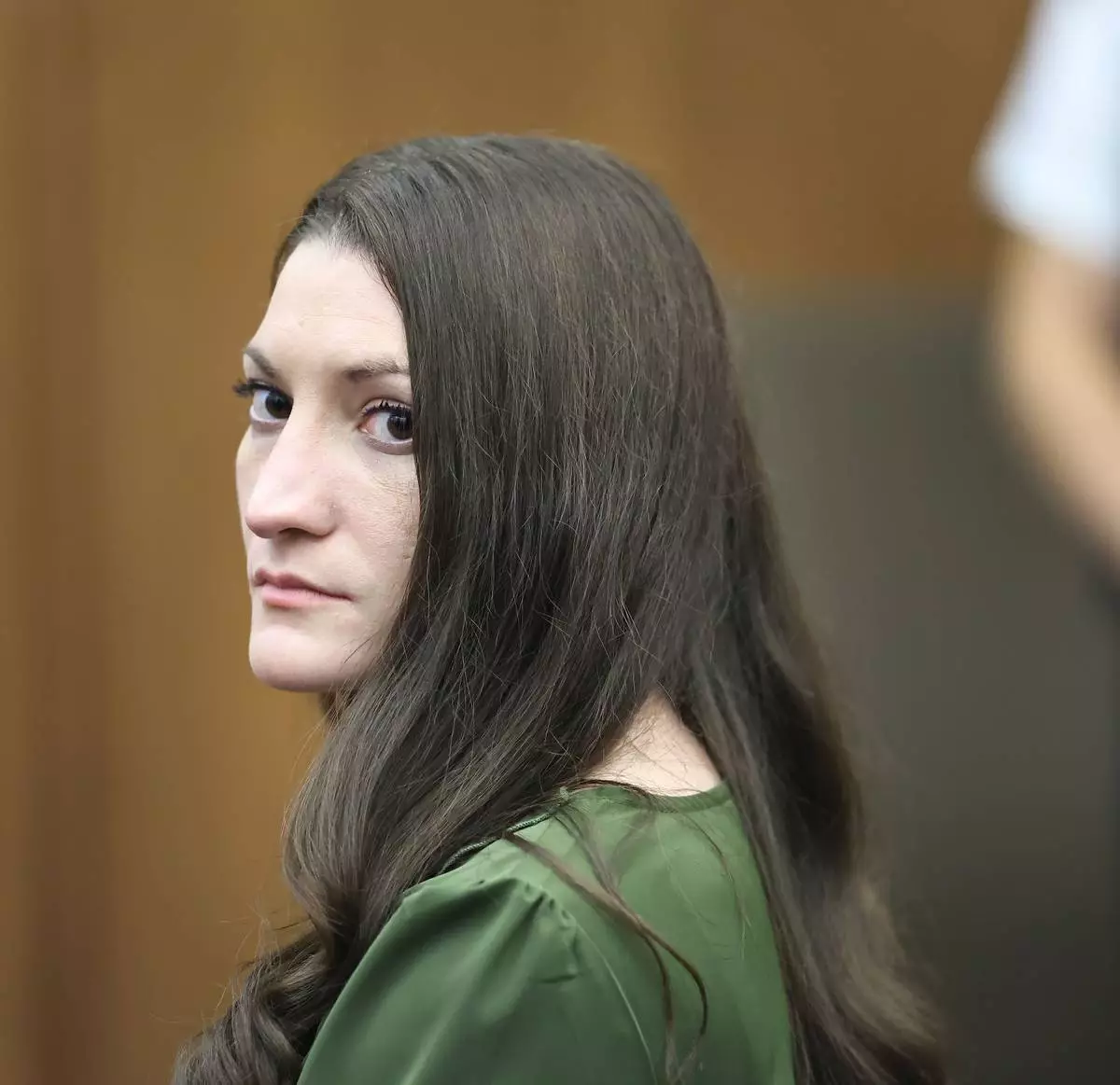
Lindsay Clancy watches jury members as Judge William Sullivan polls them during her murder trial at Plymouth Superior Court in Plymouth, Mass., Monday, Aug. 31, 2026. (Greg Derr/The Patriot Ledger via AP, Pool)
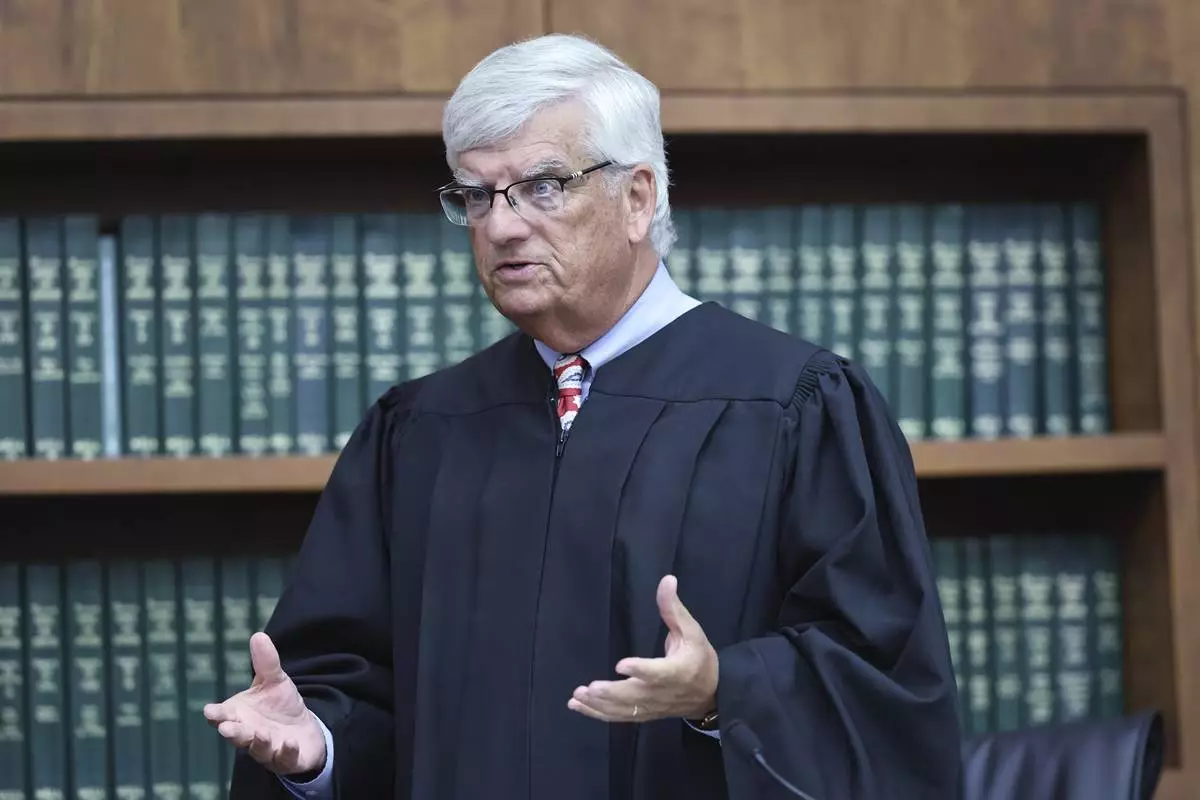
Judge William Sullivan asks the jury to continue deliberations during Lindsay Clancy's murder trial at Plymouth Superior Court in Plymouth, Mass., Tuesday, Sept. 1, 2026. (Greg Derr/The Patriot Ledger via AP, Pool)
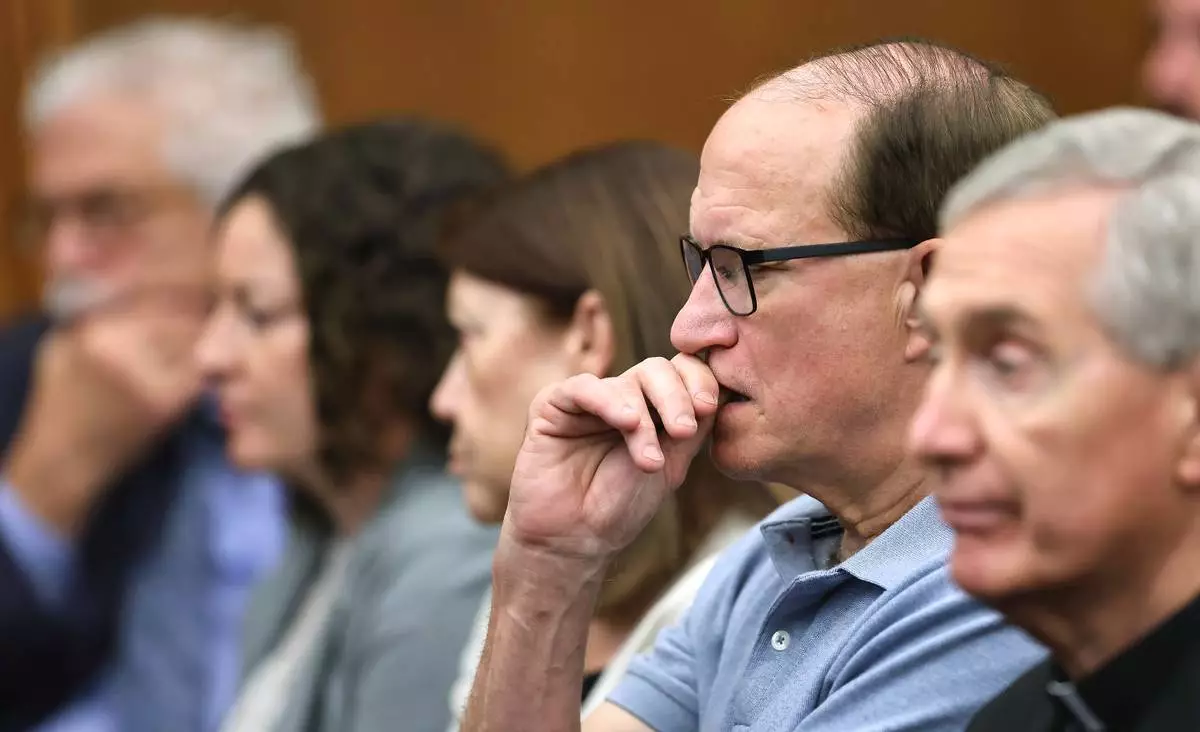
Mike Musgrove, father of Lindsay Clancy, center right, sits with family as they listen to the judge tell the jury to keep discussing a possible verdict after jurors said they couldn't agree for a second time whether Clancy is criminally responsible for killing her three children in 2023, Wednesday, Sept. 2, 2026, in Plymouth, Mass. (Greg Derr/The Patriot Ledger via AP, Pool)
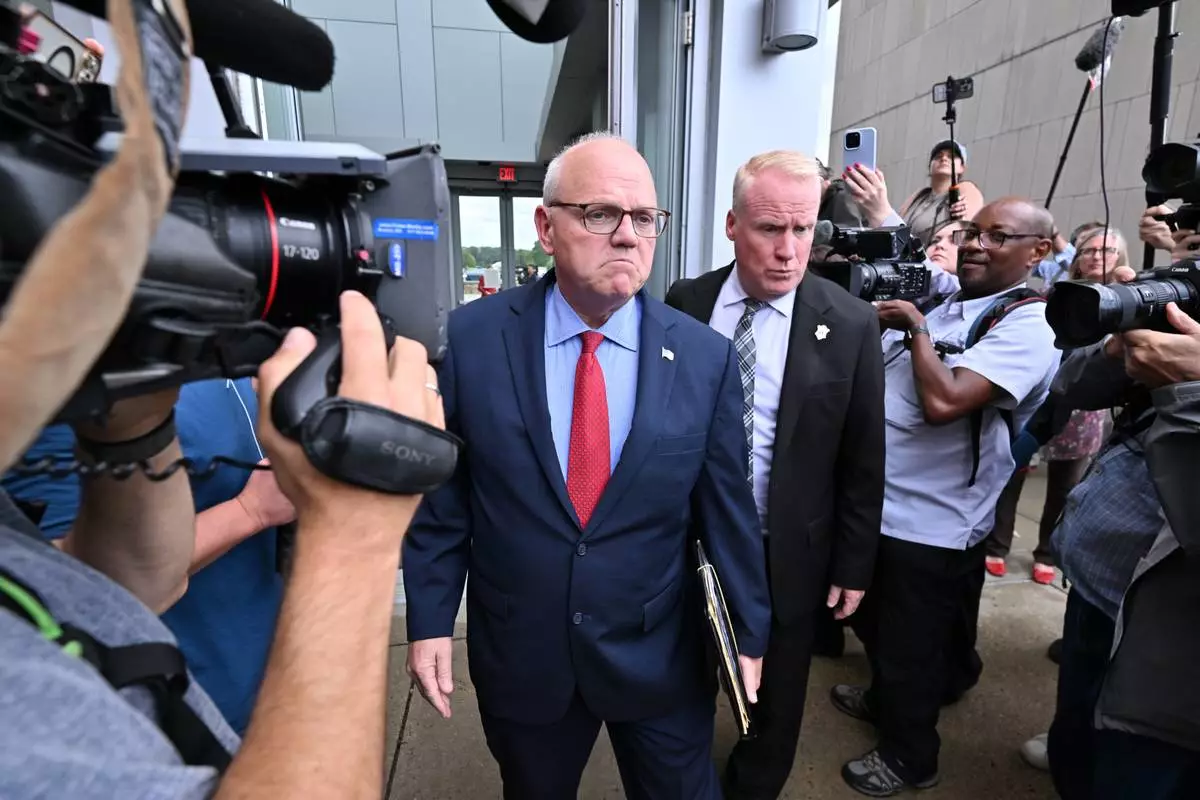
Timothy Cruz, Plymouth County District Attorney, center, leaves Plymouth Superior Court, Thursday, Sept. 3, 2026, in Plymouth, Mass. (AP Photo/Josh Reynolds )
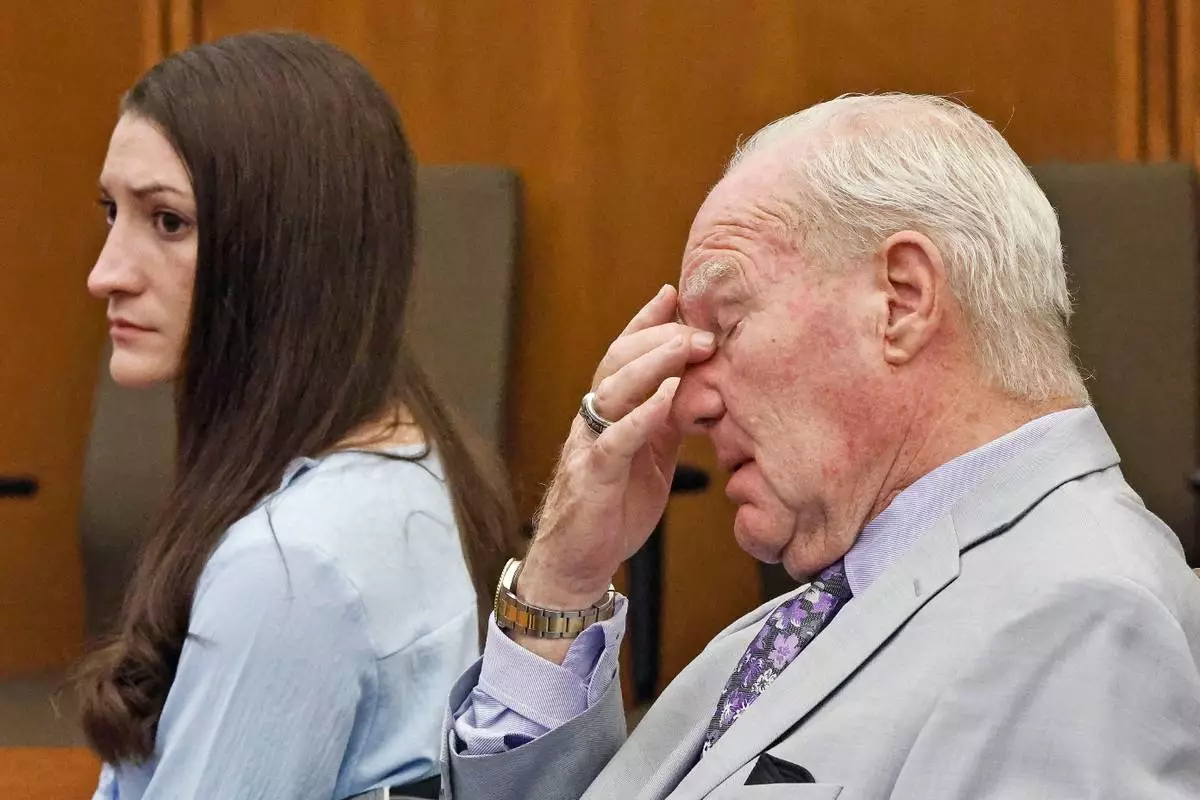
Lindsay Clancy and attorney Kevin Reddington watch as Judge William Sullivan tells the jury to keep discussing a possible verdict after jurors said for a second time they couldn't agree whether Lindsay Clancy was criminally responsible for killing her three children in 2023, Wednesday, Sept. 2, 2026, in Plymouth, Mass. (Greg Derr/The Patriot Ledger via AP, Pool)