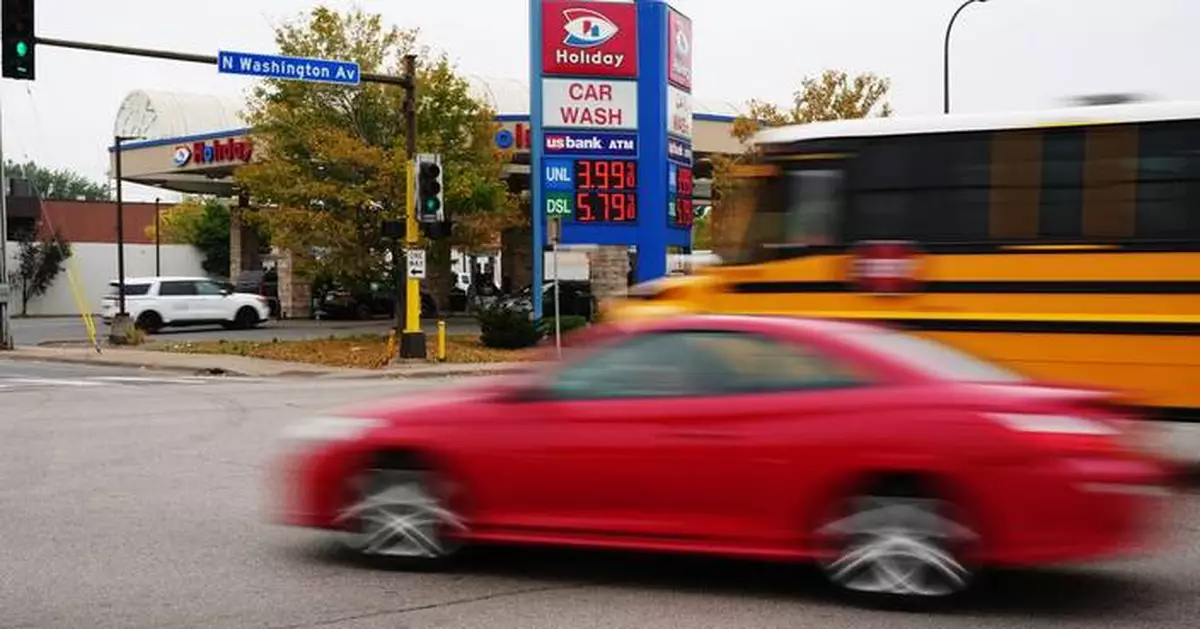
It's never been more expensive in the U.S. to fill up the tank and take one last summer trip over the Labor Day weekend.
The average price of regular gas was $4.14 a gallon heading into the holiday, nearly a dollar higher than last year and well above the Labor Day weekend record of $3.82 from 2012, according to AAA motor club.
Nicole Collins planned to head from Philadelphia to South Carolina to visit friends, but she said her family has spent most of the summer close to home and not taking their typical weekend trips because driving has gotten so expensive.
“Gas is pretty high right now. It doesn’t help that we also have a baby, so we also have to pay for that,” Collins said outside a gas station in Claymont, Delaware, where regular gas was $4.199 a gallon.
Prices shot up after the U.S. and Israel attacked Iran in February and have not settled down since. Crude oil traffic through the key Strait of Hormuz has plunged, and Iran has refused to reopen the waterway.
“Everything points to the Iran War and the Strait of Hormuz,” said Tom Seng, a professor of energy finance at Texas Christian University.
Energy Secretary Chris Wright offered few specifics on when the nation’s drivers might see relief at the gas pump, acknowledging that prices are higher now than Labor Day 2025.
“Yes, they’re higher today, but we’re doing everything we can to push them down," Wright said Sunday on ABC’s “This Week.”
The national average for regular gas prices is still well below the record of $5.02 a gallon set in June 2022.
But diesel is a different story: It hit a national average of $5.85 a gallon Friday, a record.
Trucks and other freight delivery systems use a lot of diesel, and that increased transportation cost is being passed on to consumers, whether at the grocery store or through package delivery services.
“It doesn’t really seem like there’s an end to it,” Collins said.
Gas prices typically drop as the summer driving season ends and refineries turn to making a cheaper winter blend.
But Seng said there are other factors this year even beyond the volatile situation in the Middle East that make future prices unpredictable. U.S. refineries are working at 98% capacity, many in the unusually harsh Texas heat. If there are problems there or a hurricane knocks some systems offline, prices will struggle to drop.
And it's not just a Middle East problem. Ukrainian drone attacks on Russian refineries are squeezing diesel supplies. Chinese refiners are seeing declining outputs as well, said Matthew Metzgar, a clinical professor of economics at UNC Charlotte.
“There’s just less gasoline coming out of those refineries,” Metzgar said.
Wright, the energy secretary, said the Trump administration was taking steps to increase production and that the markets forecast lower prices in the coming months.
“If you look at the futures prices, if you wanted to buy today in bulk gasoline for two months out in November, it’s about $0.35 cheaper than it is today. So the marketplace thinks gasoline prices are going to move meaningfully lower," he said.
Geopolitically, though, there is little a driver can do to knock down gas prices.
But using price apps can help save a little money, especially on long trips where gas by the interstate could be 10 to 15 cents per gallon more expensive than at stations a short drive down the road, Metzgar said.
Associated Press videojournalist Mingson Lau and reporter Gary Fields contributed.
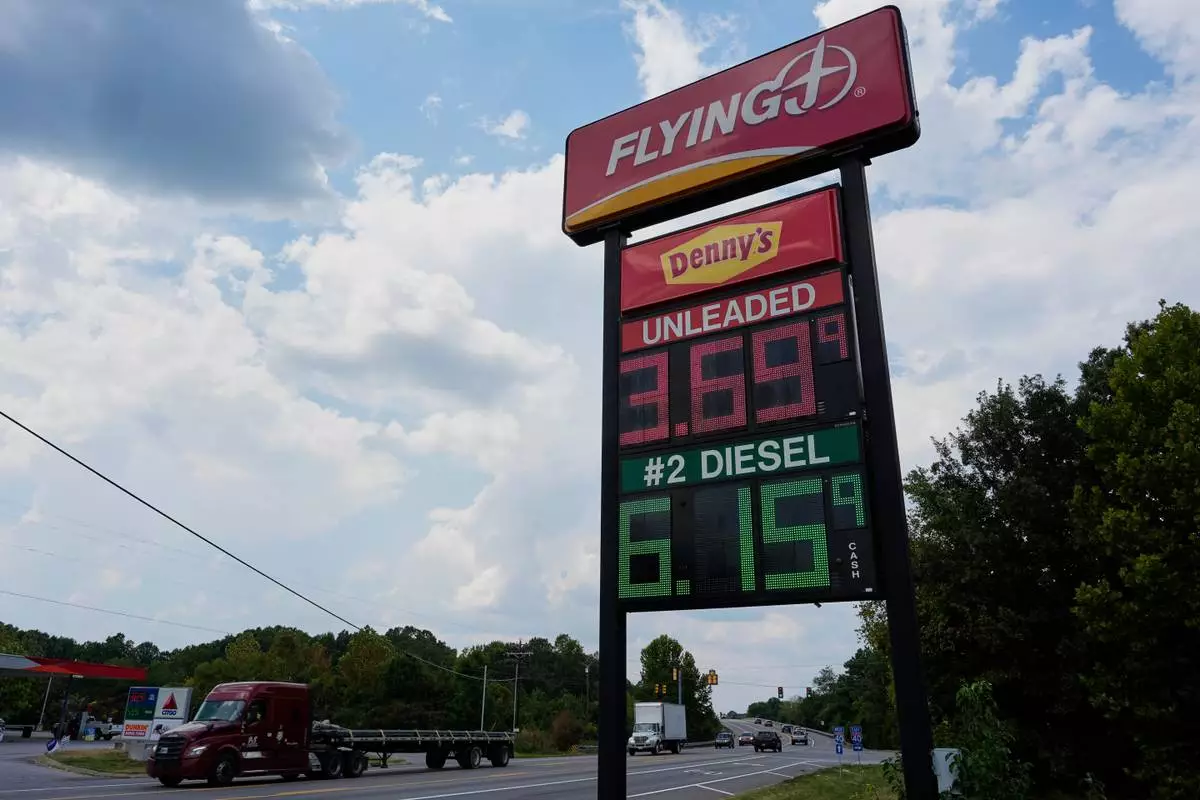
Fuel prices are displayed outside a truck stop Friday, Sept. 4, 2026, in Fairview, Tenn. (AP Photo/George Walker IV)
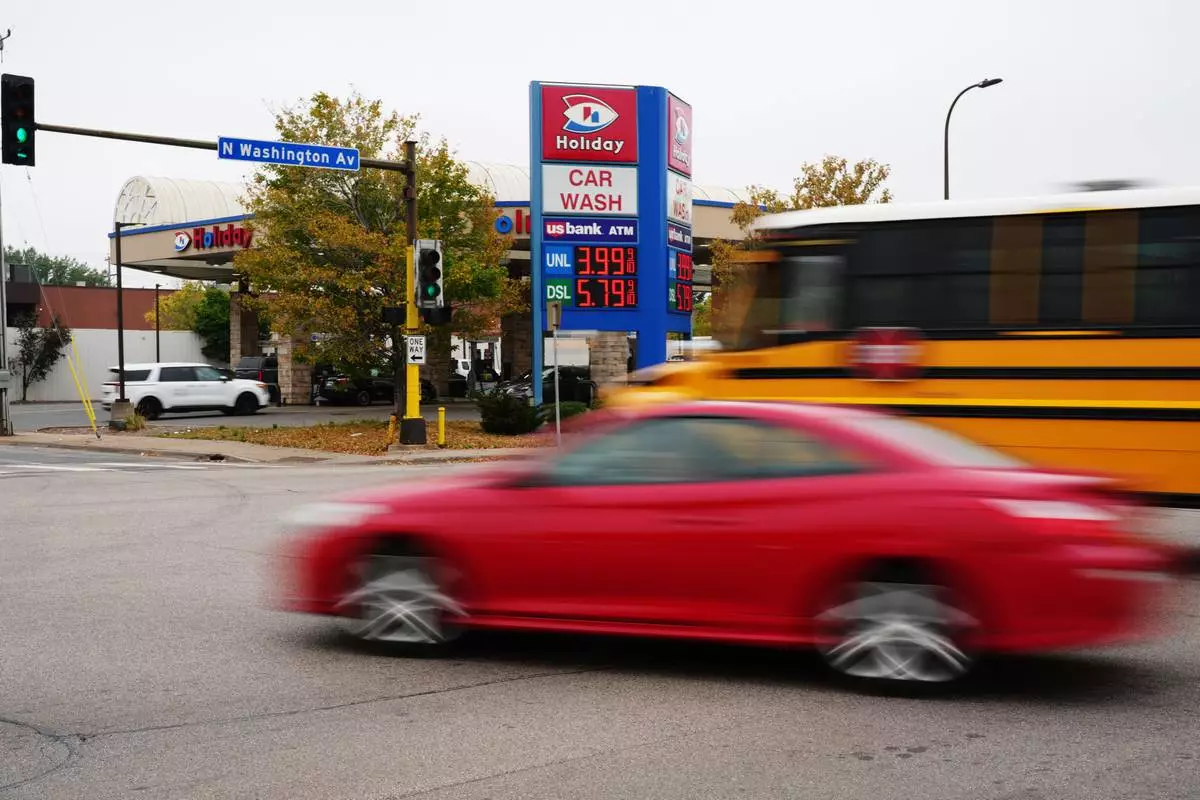
Diesel prices are seen at a gas station as prices hit a record high in the U.S., Friday, Sept. 4, 2026 in Minneapolis. (AP Photo/Ellen Schmidt)
THE HAGUE, Netherlands (AP) — Germany on Monday will challenge claims at the United Nations’ top court that it is “facilitating” acts of genocide in Gaza by providing arms and other military support to Israel.
Nicaragua, which launched the case at the International Court of Justice, accuses Berlin of violating the Genocide Convention and international humanitarian law. While the case centers on Germany, it indirectly takes aim at Israel’s campaign in Gaza in response to the deadly Oct. 7, 2023 attacks by Hamas.
Israel, which isn’t a party in the proceedings, strongly denies that its actions amount to acts of genocide.
Monday’s hearing at the court in The Hague will address questions raised by Germany over whether the court has jurisdiction in the case.
The conflict left tens of thousands of Palestinians dead and devastated the enclave. Despite a fragile ceasefire brokered by the United States last year, violence has continued. Since the ceasefire was announced, Israeli fire has killed more than 1,300 Palestinians in Gaza. Five Israeli soldiers have also been killed.
Germany has been a staunch supporter of Israel for decades and is the second-largest supplier of arms to Israel after the United States.
Berlin denies Nicaragua's allegations. The head of Germany’s legal team, Tania von Uslar-Gleichen, told judges during an earlier hearing that Nicaragua’s claims “have no basis in fact or law.”
Last year, Germany stopped authorizing any exports of military equipment to Israel that could be used in Gaza but later lifted those restrictions.
In 2024, the court rejected an emergency request from Nicaragua to order Germany to halt military and other aid to Israel in Gaza, but the 16-judge panel declined to throw out the case altogether.
The proceedings are the latest legal attempt to rein in Israel’s military campaign by a country with historic ties to the Palestinian people, after South Africa accused Israel of genocide at the same court in 2023.
In January 2024, judges at the ICJ ordered Israel to do all it can to prevent death, destruction and any acts of genocide in Gaza. Two months later, the court told Israel to take measures to improve the humanitarian situation in Gaza, including opening more land crossings to allow food, water, fuel and other supplies.
South Africa says that Israel largely ignored those orders.
Both South Africa’s case against Israel and Nicaragua’s case against Germany allege violations of the 1948 Convention on the Prevention and Punishment of the Crime of Genocide. The convention was drawn up in the wake of the Holocaust to codify a new crime: genocide.
A team of independent experts commissioned by the United Nations’ Human Rights Council and the largest professional organization of scholars studying genocide have both concluded that Israel is violating the treaty but only an international court can make a legal determination.
Proceedings at the ICJ can drag on for years. In 2007, the court ruled that Serbia “violated the obligation to prevent genocide” in the 1995 Srebrenica massacre, when Bosnian Serb forces rounded up and murdered some 8,000 mostly Muslim men and boys in eastern Bosnia.
In May, the court set a November 2027 deadline for South Africa to file its written pleadings and gave Israel until May 2029 to reply. Hearings on the core question of the case — whether Israel committed genocide in Gaza — likely won’t be heard until late 2029 at the earliest.
In separate proceedings at the International Criminal Court, also in The Hague, which tries cases against individuals rather than between nations, judges have issued arrest warrants for Israeli Prime Minister Benjamin Netanyahu and his former Defense Minister Yoav Gallant in connection with the conflict.
The pair are charged with crimes against humanity, not genocide. The court said it found that there was reason to believe they used “starvation as a method of warfare” by restricting humanitarian aid and intentionally targeted civilians in Israel’s campaign against Hamas in Gaza — charges Israeli officials deny.
In response, the United States has issued sanctions against many senior court staff, including nine of the ICC’s 18 judges.
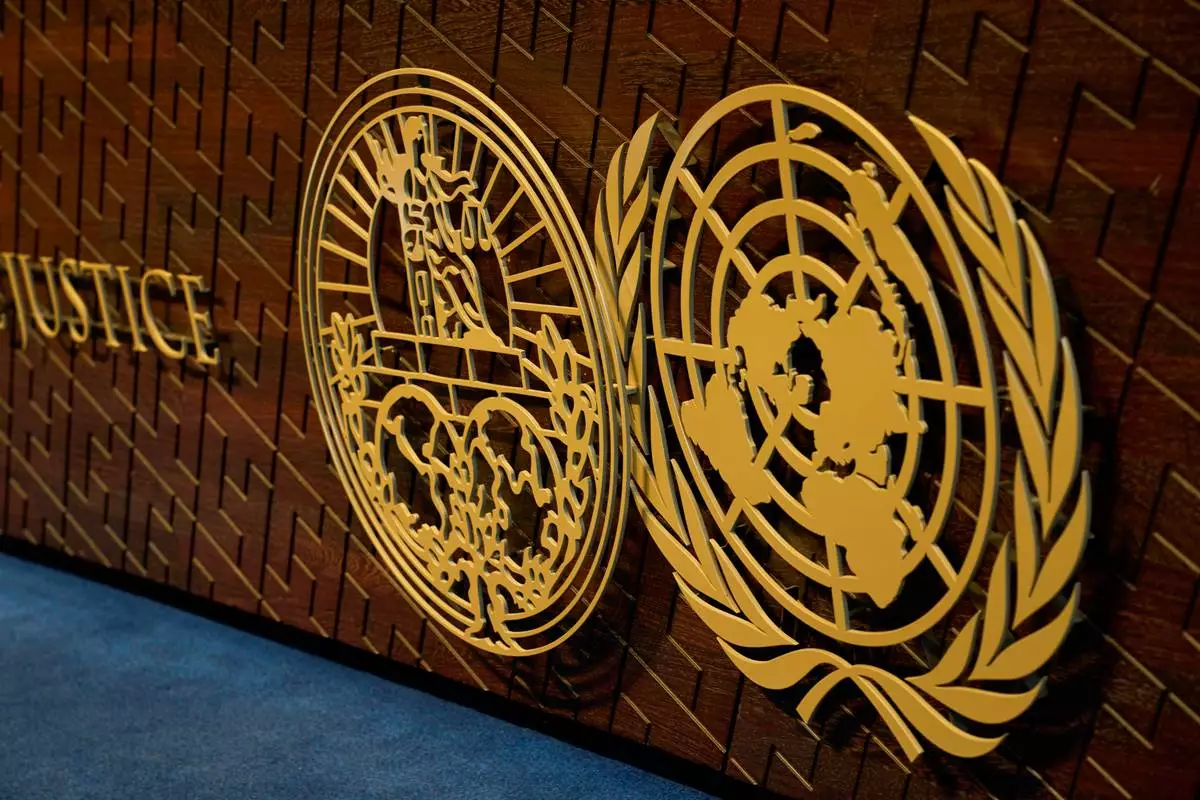
FILE - The logo of the International Court of Justice displayed on the judges' bench, in The Hague, Netherlands, May 4, 2026. (AP Photo/Peter Dejong, File)