Skip to Content Facebook Feature Image

Congo’s Ebola burial teams battle community anger, fatigue and fear of infection

News

Congo’s Ebola burial teams battle community anger, fatigue and fear of infection
News

News

Congo’s Ebola burial teams battle community anger, fatigue and fear of infection

2026-09-07 12:06 Last Updated At:13:17

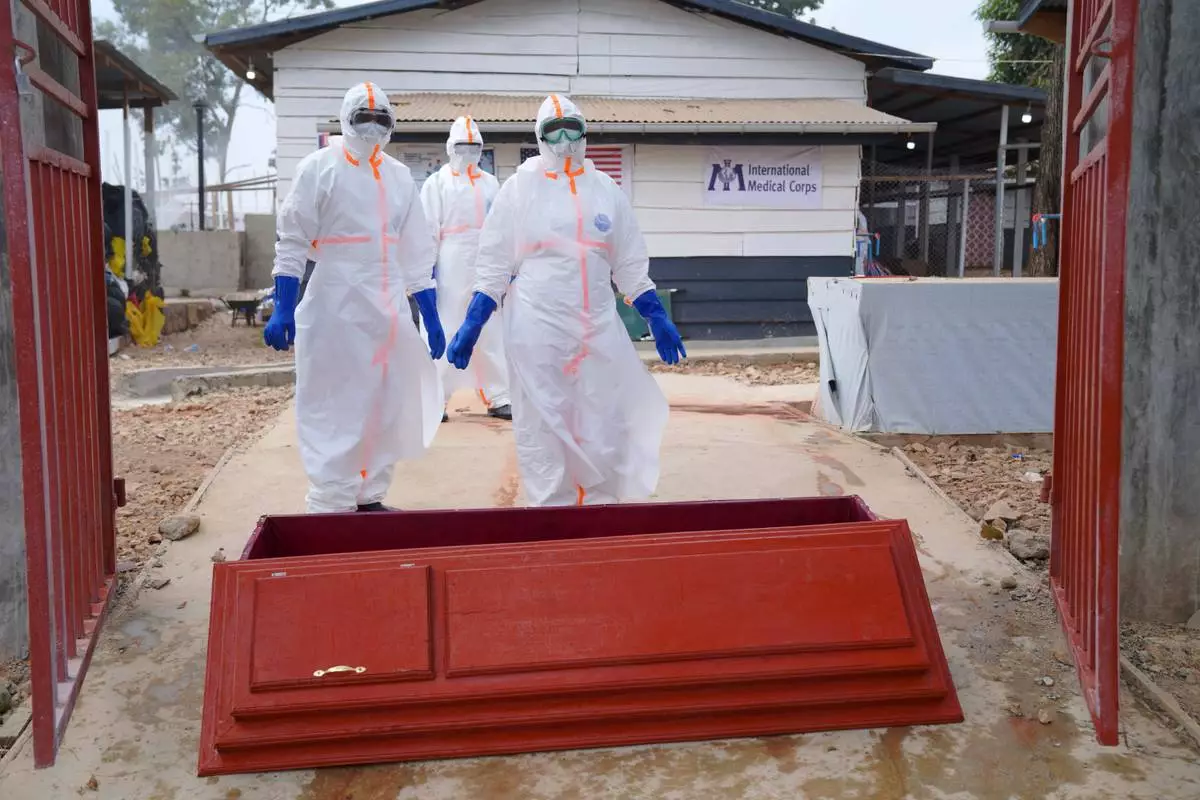
BUNIA, Congo (AP) — Yuma Adolphe and his team are responsible for the safe and dignified burial of some of the people who die from Ebola in Ituri, the epicenter of history's deadliest Ebola outbreak. Nearly every day, they dig the graves, prepare the bodies and handle the coffins.

But as the authorities grapple with the outbreak, which has killed nearly 3,200 people among more than 6,500 cases, the burial team says they are at their limits, struggling with an increasing workload and hostile communities.

More Images
Family members of Abineno Justine, a 38 year old woman who died of the Ebola virus, arrive at a morgue to identify her body ahead of her burial, in Bunia, Congo, Friday, Sept. 4, 2026. (AP Photo/Dieudonne Dirole)
Family members of Abineno Justine, a 38 year old woman who died of the Ebola virus, arrive at a morgue to identify her body ahead of her burial, in Bunia, Congo, Friday, Sept. 4, 2026. (AP Photo/Dieudonne Dirole)

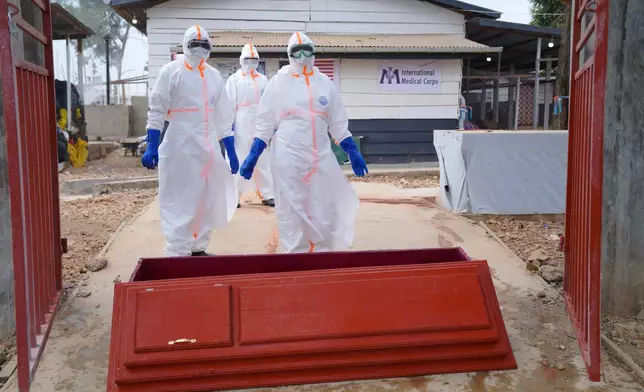
Health workers who are members of the safe and dignified burial team prepare to bury Abineno Justine, a 38 year old woman who died of the Ebola virus, in Bunia, Congo, Friday, Sept. 4, 2026. (AP Photo/Dieudonne Dirole)
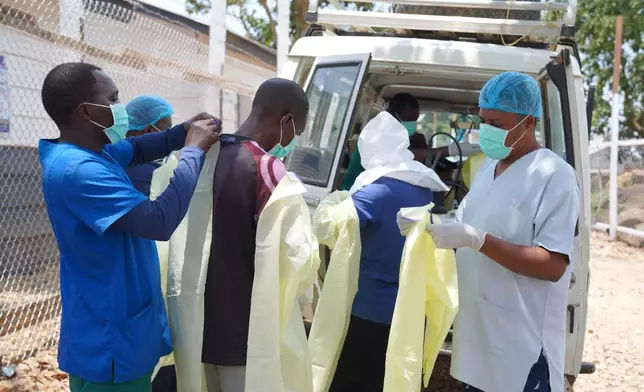
Health workers who are members of the safe and dignified burial team prepare to bury Abineno Justine, a 38 year old woman who died of the Ebola virus, in Bunia, Congo, Friday, Sept. 4, 2026. (AP Photo/Dieudonne Dirole)
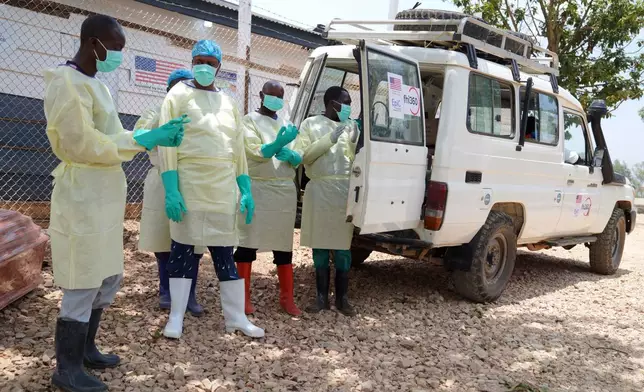
Health workers who are members of the safe and dignified burial team prepare to bury Abineno Justine, a 38 year old woman who died of the Ebola virus, in Bunia, Congo, Friday, Sept. 4, 2026. (AP Photo/Dieudonne Dirole)
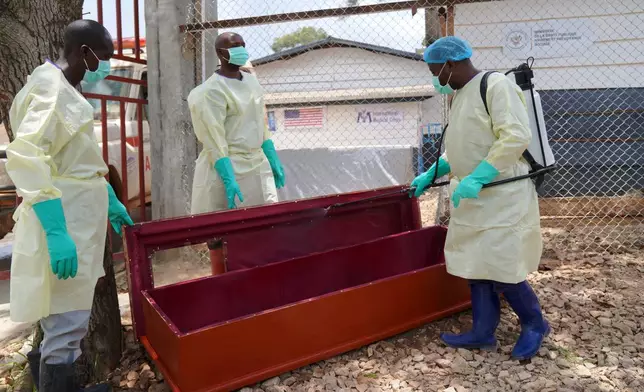
Health workers who are members of the safe and dignified burial team prepare to bury Abineno Justine, a 38 year old woman who died of the Ebola virus, in Bunia, Congo, Friday, Sept. 4, 2026. (AP Photo/Dieudonne Dirole)

Health workers who are members of the safe and dignified burial team prepare to bury Abineno Justine, a 38 year old woman who died of the Ebola virus, in Bunia, Congo, Friday, Sept. 4, 2026. (AP Photo/Dieudonne Dirole)

Health workers who are members of the safe and dignified burial team prepare to bury Abineno Justine, a 38 year old woman who died of the Ebola virus, in Bunia, Congo, Friday, Sept. 4, 2026. (AP Photo/Dieudonne Dirole)

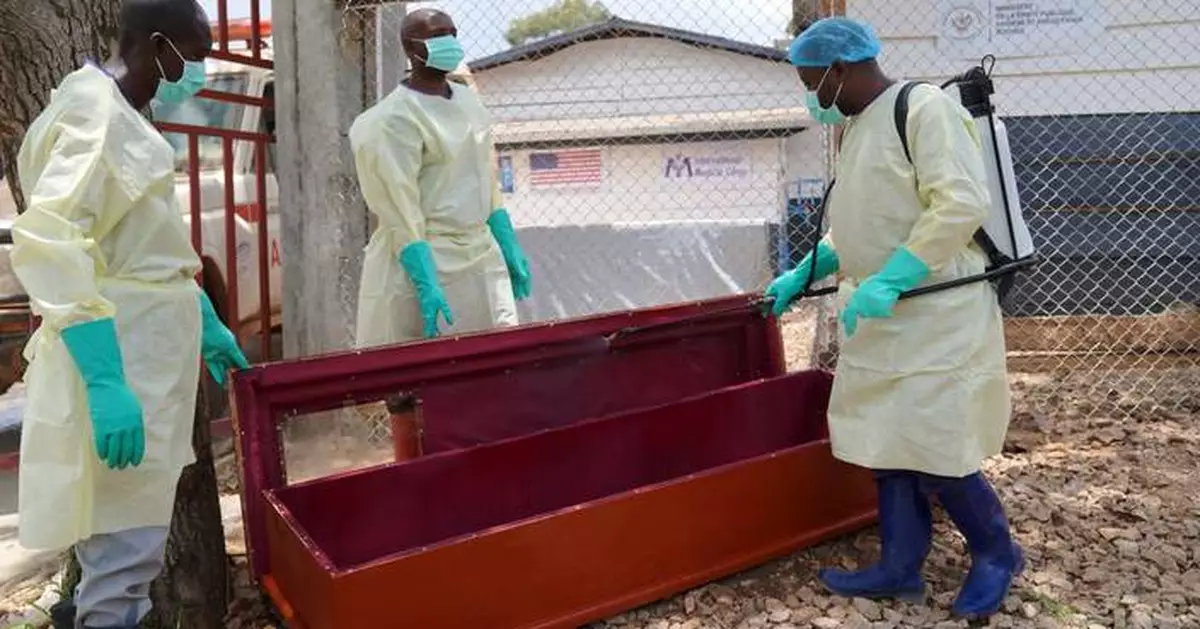
Health workers who are members of the safe and dignified burial team disinfect a coffin to bury Abineno Justine, a 38 year old woman who died of the Ebola virus, in Bunia, Congo, Friday, Sept. 4, 2026. (AP Photo/Dieudonne Dirole)

Health workers who are members of the safe and dignified burial team disinfect a coffin to bury Abineno Justine, a 38 year old woman who died of the Ebola virus, in Bunia, Congo, Friday, Sept. 4, 2026. (AP Photo/Dieudonne Dirole)

“It is difficult, but we try to push ourselves beyond our limits,” Adolphe told The Associated Press.

Since the outbreak began in mid-May, authorities have deployed small burial teams like Adolphe's across the hot spots to handle the burials. Paid $20 a day, they are a part of a group of front-line workers who are working to contain the rapidly moving disease.

Despite the toll, the burial team members say the priority is to keep their community safe.

“We have to look at our own mental well-being, and physically the fatigue mounts, but we keep going to ensure the community is protected.”

But their work is in the crosshairs of the locals' frustration with the outbreak, which not only has taken their loved ones but prohibits them from traditional burial rites.

Health workers exclusively handle the bodies as Ebola spreads as a result of direct contact with the blood or bodily fluids of infected people.

Experts say bodies of victims still contain considerable amounts of active virus and can spread infections further.

Since May, health workers and burial teams such as Adolphe's have been attacked by bereaved families across the front line of the outbreak.

“Usually, the body is handed over to the family, who can handle it however they wish, in accordance with our African customs,” Adolphe said. “But in this situation, it’s difficult to let the family handle the body as they please. They are deprived of certain rituals, and that’s what leads to misunderstandings.”

Jeanne Alasha, adviser to the military governor of Ituri on health and humanitarian affairs, said that “as for those who continue to assault the teams, they are committing offenses punishable by law.”

Ituri province, where the outbreak is concentrated, is also at the center of the rebel conflict in eastern Congo. The province is under a military government appointed by federal civilian authorities in Kinshasa.

Shortly before noon last Friday, Justine Habineno, a 36-year-old chorister, was buried in Congo’s Ituri province. Habineno had died of Ebola. She had only complained of slight headaches before heading to a hospital and was diagnosed with Ebola, her mother said.

A catechist presided over the ceremony attended by dozens of people, as a team of specialist burial team members in scrubs and boots stood by.

Habineno's mother, Sofia Wanito, said that the doctors only allowed her to see the body through the window of the hospital ward, and she wasn't allowed to touch the coffin.

“In the past, we didn’t die like this. I could not even cover her with the sheets myself and pay a final tribute,” Wanito said.

The Ebola outbreak is spreading across six provinces in eastern Congo in some of the most difficult conditions imaginable, fueled by rebel violence, displacement and intense population movements. A weak healthcare and surveillance system also challenges responders, and insufficient contact tracing and laboratory testing.

Efforts to contain the outbreak have also been complicated by the lack of an approved vaccine or treatment for the rare Bundibugyo virus causing it. Authorities have started vaccinating front-line health workers with the Evrebo vaccine, which the World Health Organization says could offer some protection against Ebola but there's no conclusive evidence that it would work against the current virus.

Health authorities say the true scale of the crisis is likely three times more than official statistics as the disease continues to outpace efforts to contain it. WHO has said that it's projected to surpass the deadliest in history, West Africa’s 2014-2016 outbreak, which killed more than 11,000 people.

Front-line health workers in eastern Congo have gone on multiple strikes to demand pay for their work, complicating efforts to stop the outbreak.

Benjamin Muhindo, another burial team member, said that his family worries that he might bring the virus home. For him, though, a bigger priority is ensuring the proper burial of victims, he said.

“Burials during this Ebola epidemic are very complicated, as we are working under pressure and constantly racing against the clock,” Muhindo said.

Trauma experts say the high number of cases and the deaths are only one side of its impact at personal and communal levels.

“The trauma of this outbreak doesn’t stop with the case count,” said Rose Tchwenko, Mercy Corps country director in Congo. The chain of transmission will only be broken by “an integrated holistic response,” which includes a social response to bereaved families and front-line workers, she added.

After the burial on Friday, Adolphe said that he's very tired but more worried about the community than anything else.

“We have no choice,” he said. “We are here to safeguard our community.”

The Associated Press receives financial support for global health and development coverage in Africa from the Gates Foundation. The AP is solely responsible for all content. Find AP’s standards for working with philanthropies, a list of supporters and funded coverage areas at AP.org.
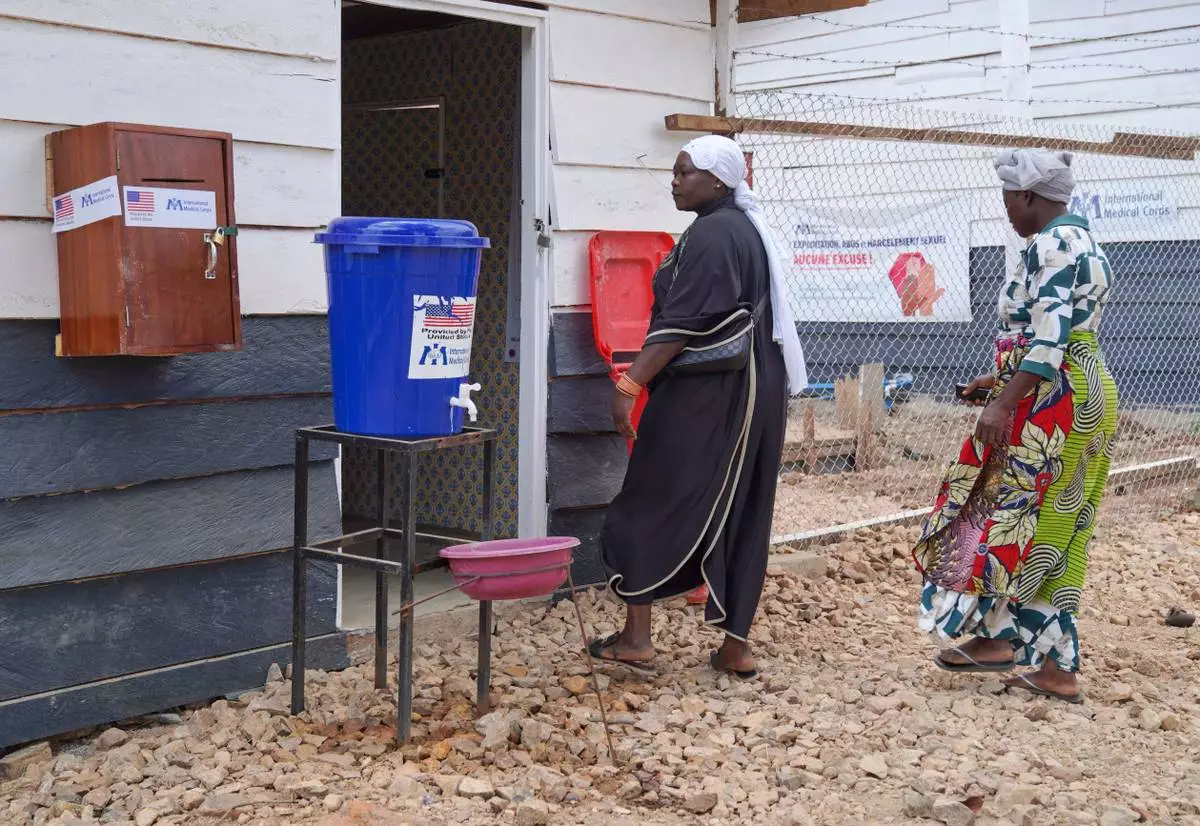
Family members of Abineno Justine, a 38 year old woman who died of the Ebola virus, arrive at a morgue to identify her body ahead of her burial, in Bunia, Congo, Friday, Sept. 4, 2026. (AP Photo/Dieudonne Dirole)
Family members of Abineno Justine, a 38 year old woman who died of the Ebola virus, arrive at a morgue to identify her body ahead of her burial, in Bunia, Congo, Friday, Sept. 4, 2026. (AP Photo/Dieudonne Dirole)

Health workers who are members of the safe and dignified burial team prepare to bury Abineno Justine, a 38 year old woman who died of the Ebola virus, in Bunia, Congo, Friday, Sept. 4, 2026. (AP Photo/Dieudonne Dirole)
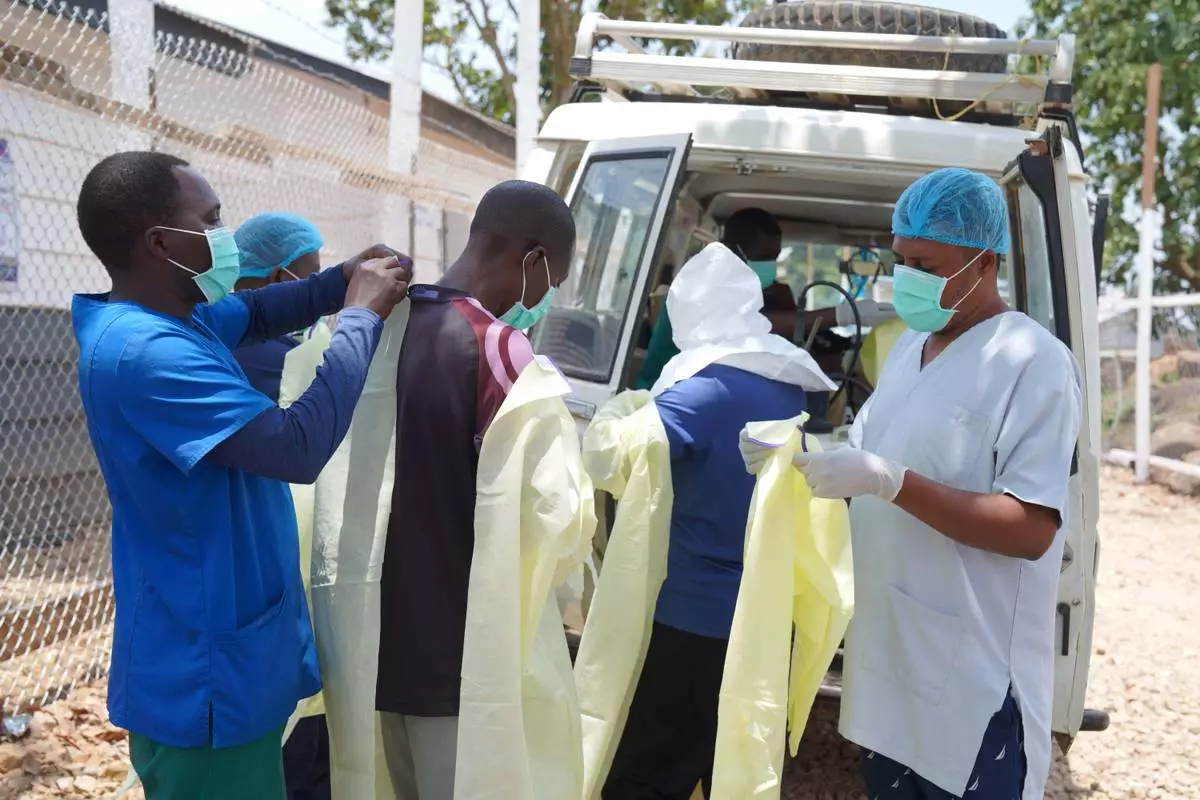
Health workers who are members of the safe and dignified burial team prepare to bury Abineno Justine, a 38 year old woman who died of the Ebola virus, in Bunia, Congo, Friday, Sept. 4, 2026. (AP Photo/Dieudonne Dirole)
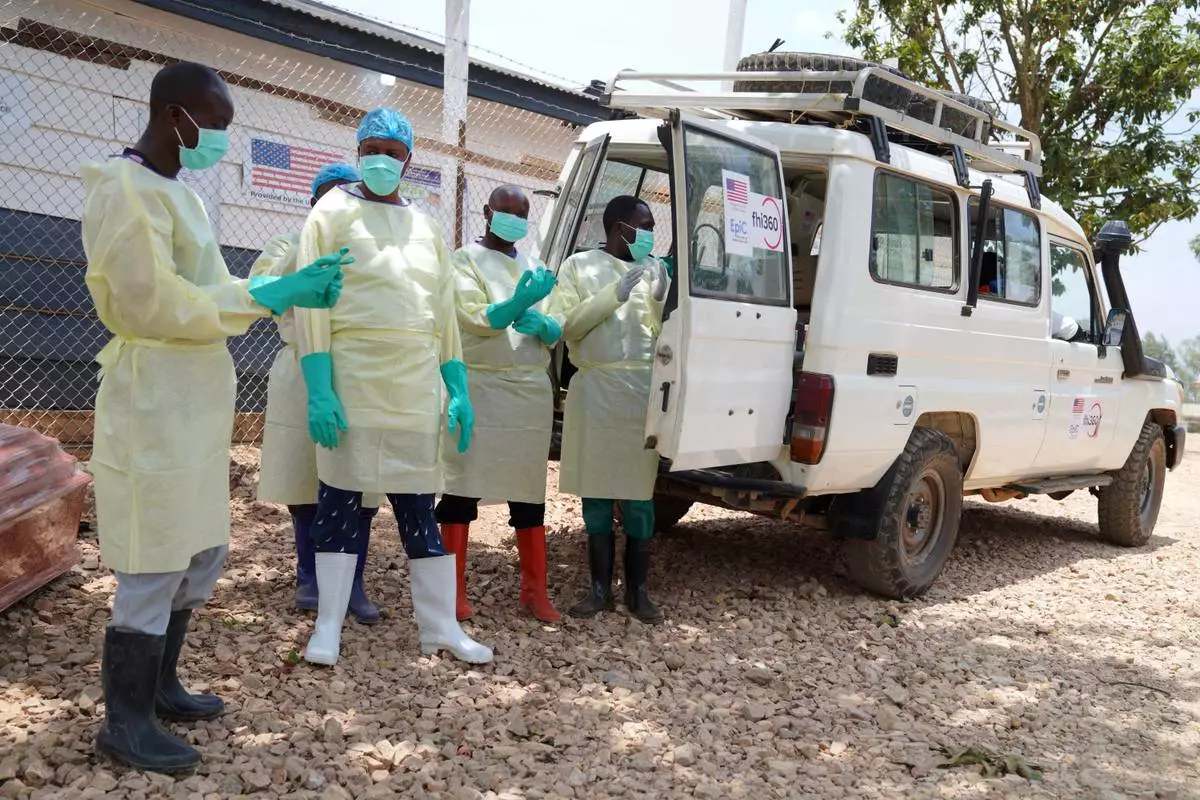
Health workers who are members of the safe and dignified burial team prepare to bury Abineno Justine, a 38 year old woman who died of the Ebola virus, in Bunia, Congo, Friday, Sept. 4, 2026. (AP Photo/Dieudonne Dirole)
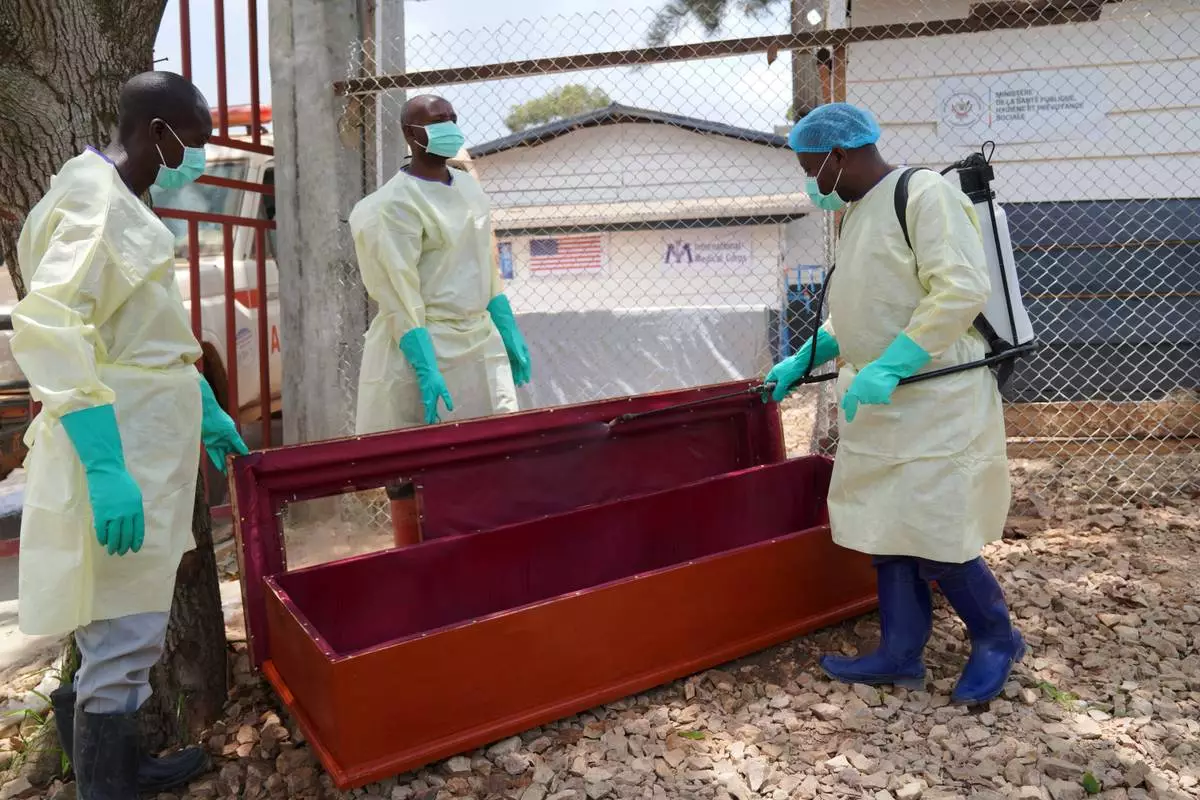
Health workers who are members of the safe and dignified burial team prepare to bury Abineno Justine, a 38 year old woman who died of the Ebola virus, in Bunia, Congo, Friday, Sept. 4, 2026. (AP Photo/Dieudonne Dirole)

Health workers who are members of the safe and dignified burial team prepare to bury Abineno Justine, a 38 year old woman who died of the Ebola virus, in Bunia, Congo, Friday, Sept. 4, 2026. (AP Photo/Dieudonne Dirole)
Health workers who are members of the safe and dignified burial team prepare to bury Abineno Justine, a 38 year old woman who died of the Ebola virus, in Bunia, Congo, Friday, Sept. 4, 2026. (AP Photo/Dieudonne Dirole)
Health workers who are members of the safe and dignified burial team disinfect a coffin to bury Abineno Justine, a 38 year old woman who died of the Ebola virus, in Bunia, Congo, Friday, Sept. 4, 2026. (AP Photo/Dieudonne Dirole)
Health workers who are members of the safe and dignified burial team disinfect a coffin to bury Abineno Justine, a 38 year old woman who died of the Ebola virus, in Bunia, Congo, Friday, Sept. 4, 2026. (AP Photo/Dieudonne Dirole)
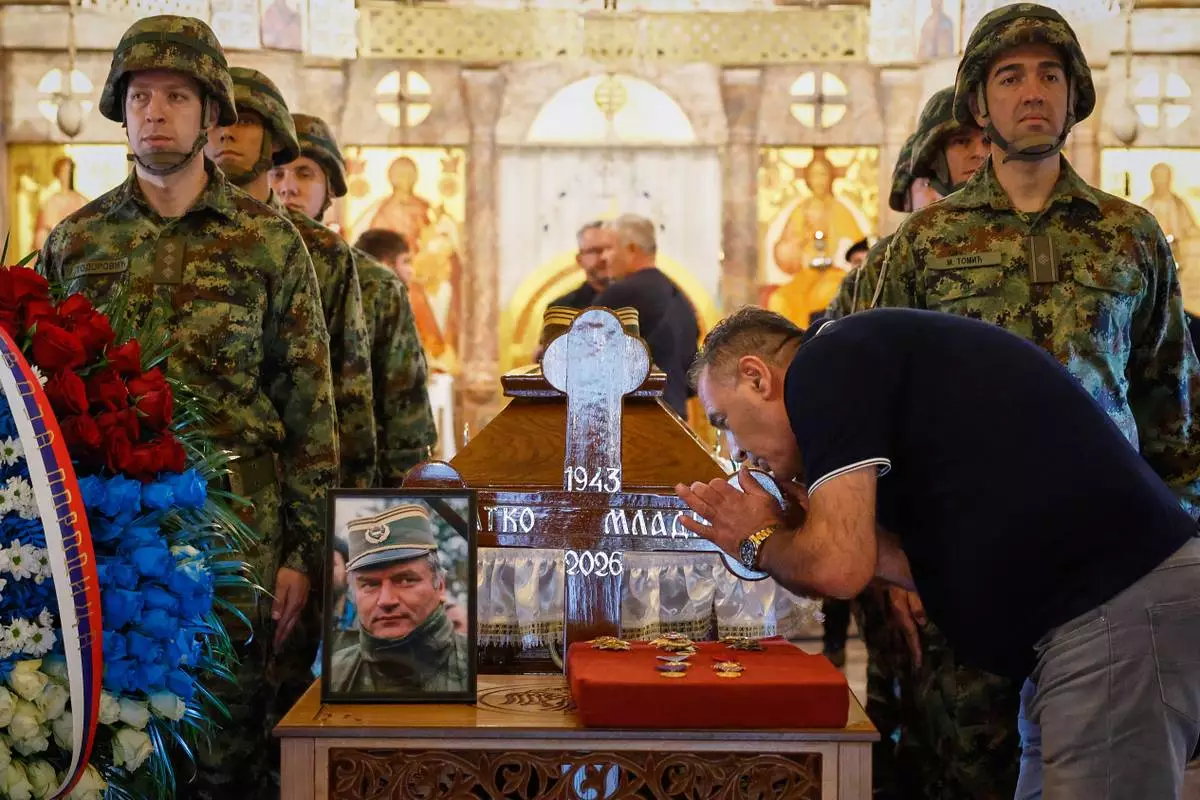
BELGRADE, Serbia (AP) — The body of Ratko Mladic, the Bosnian Serb commander who died while serving a life sentence for war crimes, lay in state on Monday as Serbia defied European Union warnings against allowing public homage to the man found guilty of the continent’s first case of genocide since World War II.

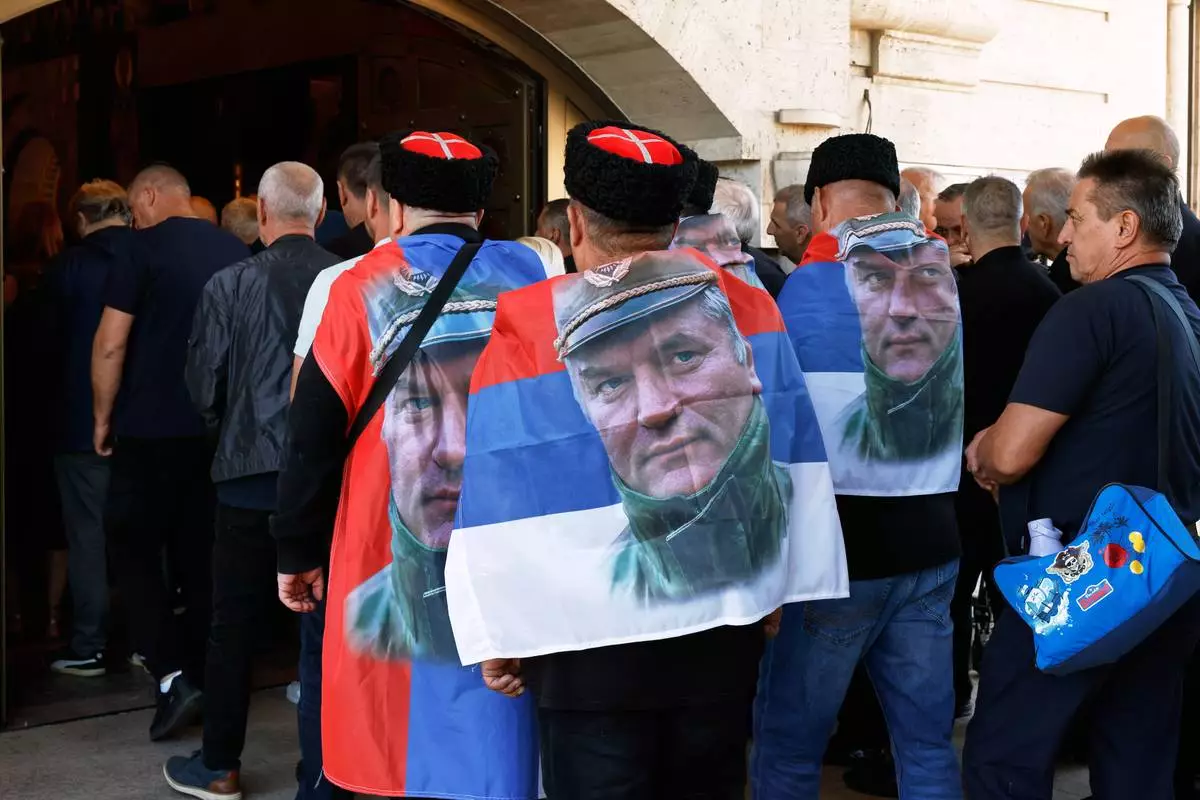
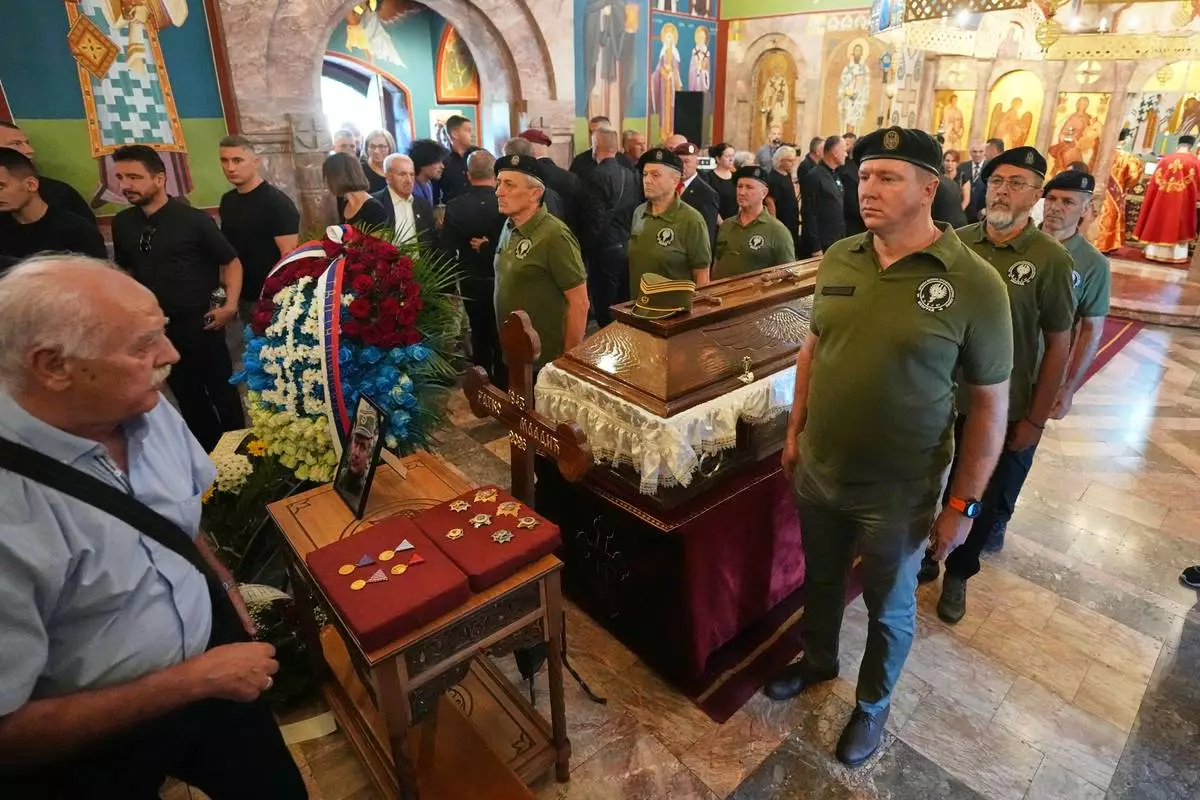
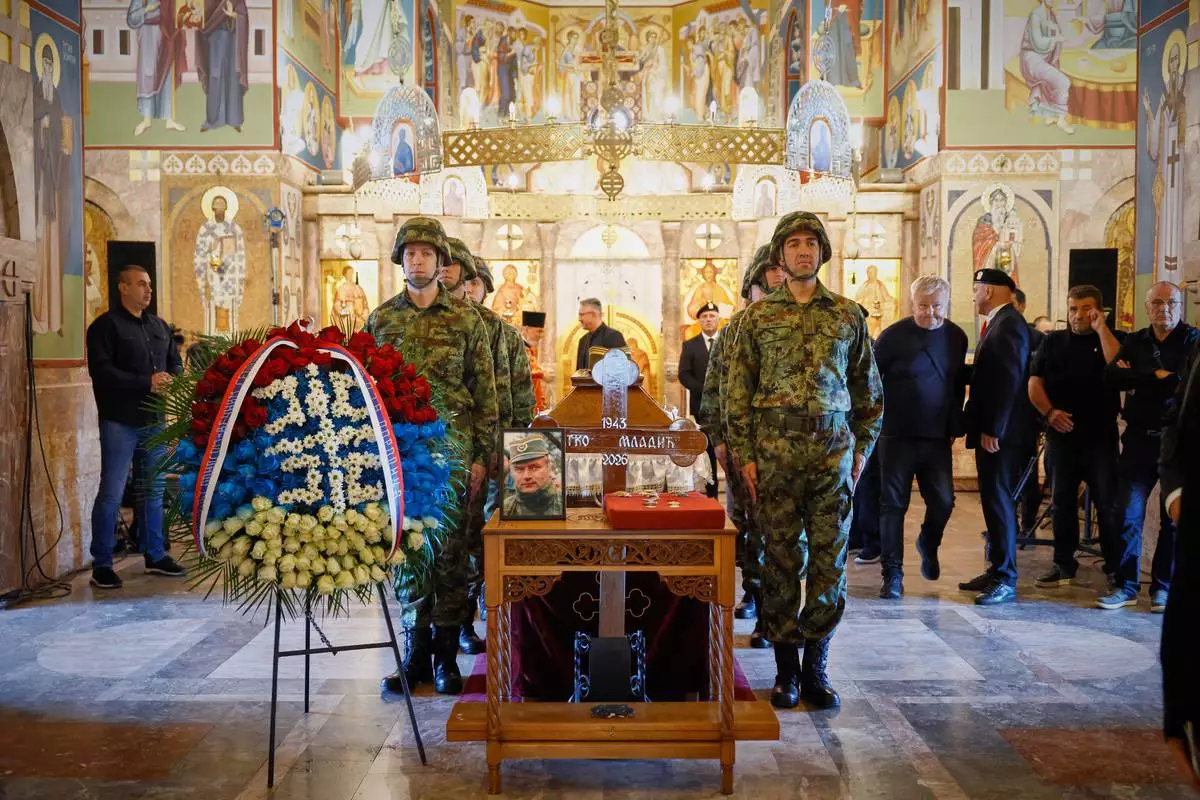
Thousands of mourners arrived early at the small Serbian Orthodox Church of St. Luke in Belgrade to honor Mladic, who is still viewed as a hero by many Serbs. His military officer's cap and saber rested on the coffin, which was flanked by men in fatigues.

Pro-government media in Serbia reported that Mladic will receive full military honors while the head of the Serbian Orthodox Church, Patriarch Porfirije, will lead the funeral service.

Mladic “was a man who gave everything in his life for the Serbian people,” said Milan Dobric, a mourner who traveled from Kosovo for the funeral. “I am glad that this morning people are coming to pay special respect.”

Mladic died at 84 on Aug. 27 in The Hague, Netherlands, while serving a life sentence for genocide, war crimes and crimes against humanity his troops committed during the Bosnian war in 1992-95.

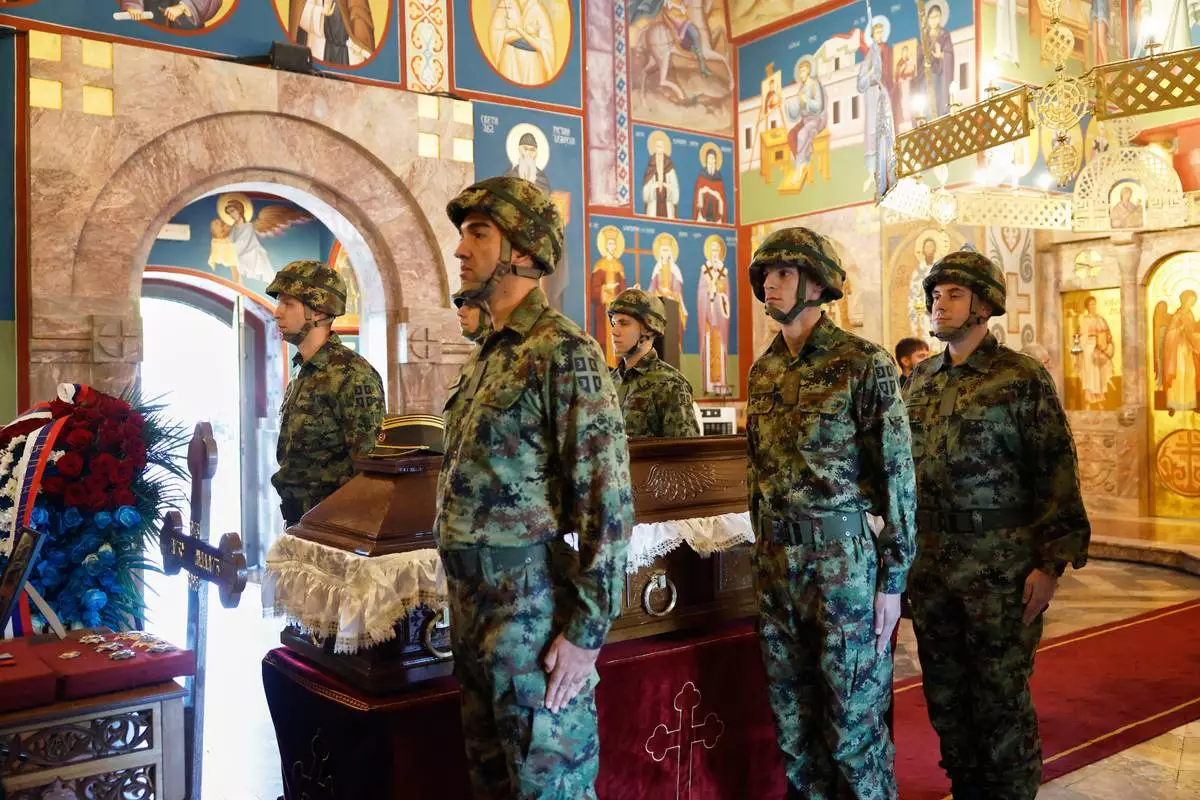
While the funeral arrangements were formally made by Mladic's family, the Serbian government sent a plane last week to bring his remains to Belgrade, and soldiers carried his coffin wrapped in the national flag. A military commemoration was held Saturday at an official Serbian army venue.

Populist President Aleksandar Vucic, a former extreme nationalist who supported Serbia’s expansionist policies during the war, described the funeral as an “emotional outpouring” that “has nothing to do with whether Vucic allowed something or not.”

Serbia is a candidate nation for European Union membership and has faced strong criticism for honoring Mladic after his death.

Marta Kos, the enlargement commissioner for the bloc, canceled an upcoming visit to Serbia in protest, arguing that “the glorification surrounding his death is incompatible with the values on which the EU path is built.”

Serbia, which backed Bosnian Serb forces during the war, remains defiant over its wartime role and accuses the West of anti-Serb bias.

Vucic said that "we (Serbs) have been persecuted and harassed for 30, 40 years .. always guilty whatever happens,” He added that “people just won’t take it any more.”

Vucic, who is not attending the funeral, previously has accused Kos of “lying.” The Serbian president has stepped up his anti-Western rhetoric ahead of an early parliamentary election expected next month.

A number of other European officials joined the criticism of Serbia, along with regional leaders and relatives of Mladic's victims from the war in Bosnia. The conflict left more than 100,000 people dead and over 1 million homeless before it ended in 1995 in a U.S.-brokered peace agreement.

Mladic was sentenced in 2017 for orchestrating the massacre of more than 8,000 Muslims in Srebrenica in 1995; the yearslong siege of the Bosnian capital of Sarajevo and other war crimes, including setting up concentration camps for detained non-Serb civilians and enemy soldiers.

Since Mladic died, his nationalist admirers have held vigils, painted a series of murals with his image in Belgrade and lit flares in his honor. On Sunday evening, soccer fans displayed a huge image of Mladic and chanted his name at a match in Belgrade.

Serbia has refused to recognize that genocide was committed in Srebrenica, calling the massacre a “horrific crime” instead. Last year, Serbia buried another convicted war criminal, the former army chief of staff Nebojsa Pavkovic, with full military honors at a cemetery for distinguished individuals.

The Balkan nation's EU bid has stalled due to democratic backsliding and Vucic’s refusal to join international sanctions against Russia over the invasion of Ukraine.

A U.N. “safe haven” for Bosniaks (Bosnian Muslims), Srebrenica ended up being overrun by Serbs who forced men and boys to strip, killed them and bulldozed their bodies into mass graves. The war started after the breakup of the former Yugoslavia when ethnic Serbs in Bosnia took control over swaths of Bosnian territory to form a country of their own and unite it with Serbia.

People line up to pay their respects to the former Bosnian Serb army commander Ratko Mladic, seen on the flags, who died last week while serving a life sentence for genocide and other atrocities during the war in Bosnia, at the St. Luka Church, in Belgrade, Serbia, Monday, Sept. 7, 2026. (AP Photo/Marko Drobnjakovic)

People line up to pay their respects to the former Bosnian Serb army commander Ratko Mladic, seen on the flags, who died last week while serving a life sentence for genocide and other atrocities during the war in Bosnia, at the St. Luka Church, in Belgrade, Serbia, Monday, Sept. 7, 2026. (AP Photo/Marko Drobnjakovic)

People line up to pay their respects as Serbian war veterans stand around the coffin of the former Bosnian Serb army commander Ratko Mladic, who died last week while serving a life sentence for genocide and other atrocities during the war in Bosnia, at the St. Luka Church, in Belgrade, Serbia, Monday, Sept. 7, 2026. (AP Photo/Darko Vojinovic)

People line up to pay their respects as Serbian war veterans stand around the coffin of the former Bosnian Serb army commander Ratko Mladic, who died last week while serving a life sentence for genocide and other atrocities during the war in Bosnia, at the St. Luka Church, in Belgrade, Serbia, Monday, Sept. 7, 2026. (AP Photo/Darko Vojinovic)

Serbian national military servicemen stand around the coffin of the former Bosnian Serb army commander Ratko Mladic, who died last week while serving a life sentence for genocide and other atrocities during the war in Bosnia, at the St. Luka Church, in Belgrade, Serbia, Monday, Sept. 7, 2026. (AP Photo/Marko Drobnjakovic)

Serbian national military servicemen stand around the coffin of the former Bosnian Serb army commander Ratko Mladic, who died last week while serving a life sentence for genocide and other atrocities during the war in Bosnia, at the St. Luka Church, in Belgrade, Serbia, Monday, Sept. 7, 2026. (AP Photo/Marko Drobnjakovic)

A man touches the cross as Serbian national military servicemen stand around the coffin of the former Bosnian Serb army commander Ratko Mladic, who died last week while serving a life sentence for genocide and other atrocities during the war in Bosnia, at the St. Luka Church, in Belgrade, Serbia, Monday, Sept. 7, 2026. (AP Photo/Marko Drobnjakovic)

A man touches the cross as Serbian national military servicemen stand around the coffin of the former Bosnian Serb army commander Ratko Mladic, who died last week while serving a life sentence for genocide and other atrocities during the war in Bosnia, at the St. Luka Church, in Belgrade, Serbia, Monday, Sept. 7, 2026. (AP Photo/Marko Drobnjakovic)

A man touches the cross as Serbian national military servicemen stand around the coffin of the former Bosnian Serb army commander Ratko Mladic, who died last week while serving a life sentence for genocide and other atrocities during the war in Bosnia, at the St. Luka Church, in Belgrade, Serbia, Monday, Sept. 7, 2026. (AP Photo/Marko Drobnjakovic)

A man touches the cross as Serbian national military servicemen stand around the coffin of the former Bosnian Serb army commander Ratko Mladic, who died last week while serving a life sentence for genocide and other atrocities during the war in Bosnia, at the St. Luka Church, in Belgrade, Serbia, Monday, Sept. 7, 2026. (AP Photo/Marko Drobnjakovic)

Recommended Articles