The chapter on main dishes in my cookbook, “Greek Out,” starts with an explanation of what “main dish” means to me.
Most people, understandably, immediately think of dinner. Because in many places that’s the biggest meal of the day, and it’s usually meat plus starch plus vegetable.
But the way I grew up thinking about meals, a main dish is more of a feeling than a set formula, and it’s definitely not just about dinner. First of all, when I was growing up, the biggest meal of the day was usually lunch.
For this main dish, the idea is simple: Rub the halibut with sumac and cinnamon and a little drizzle of olive oil, grill until caramelized and charred, then hit it with some honey. Chewy, creamy, cheesy, sweet, salty — they’re all in attendance in one fun handheld barbecue dish. Halloumi isn’t as Greek as graviera as far as firm, salty cheeses go, but it holds its shape so nicely and goes toe to toe with the tender, juicy halibut.
Serves 4 as a main or 10 as an appetizer
2 teaspoons grated lemon zest (from 1 to 2 lemons)
1 ½ teaspoons ground sumac
1 teaspoon garlic powder
1 teaspoon onion powder
1 teaspoon Diamond Crystal kosher salt
½ teaspoon freshly ground black pepper
¼ teaspoon ground cinnamon
1 pound skinless wild halibut, cut into 1-inch cubes
3 tablespoons extra-virgin olive oil
3 cups 1-inch chunks sourdough bread
10 fresh figs, halved
9 ounces halloumi, cut into 1-inch cubes
10 Medjool dates, pitted
Hot honey or regular honey, for serving
Fresh mint leaves, for serving
Store-bought toum (garlic spread), for serving (optional)
Prep the halibut: If using wooden skewers, soak them in water for 20 minutes.
In a small bowl, stir together the lemon zest, sumac, garlic powder, onion powder, salt, pepper and cinnamon. Use paper towels to pat the halibut cubes dry, then transfer to a medium bowl. Sprinkle with the seasoning mixture and 1 tablespoon of the olive oil and gently toss to coat the fish.
Assemble the skewers: In a second medium bowl, combine the bread, figs and halloumi with the remaining 2 tablespoons olive oil and toss to coat.
Thread each skewer with a piece of bread, halloumi, halibut and fig, plus a date. Repeat until you’ve run out of ingredients and have made 10 skewers.
Grill: Heat the grill to medium heat — about 400 F or 200 C — and brush or spray with olive oil.
Add the skewers and grill until char marks form on the first side, 2 to 3 minutes. Flip and repeat on the remaining three sides, until the halibut is cooked through and flakes easily with a fork, 8 to 12 minutes total.
Serve: Transfer the skewers to a plate or platter, hit ’em with a drizzle of honey and lemon and a sprinkle of mint, then serve with toum, if desired.
Maria Koutsogiannis is CEO and creator of FoodByMaria, a community of nearly 4 million followers who enjoy Greek and Mediterranean recipes. She grew up working in her parents' Greek diner and traveling to Greece every summer. She lives in New York City and Calgary, Alberta, with her husband and two dogs.
Excerpted from “Greek Out” by Maria Koutsogiannis. Copyright (copyright) 2026 by Maria Koutsogiannis. Used with permission of Voracious, an imprint of Little, Brown and Company. New York, NY. All rights reserved.

This image released by Voracious the cookbook “Greek Out,” by Maria Koutsogiannis. (Linda Xiao/Voracious via AP)
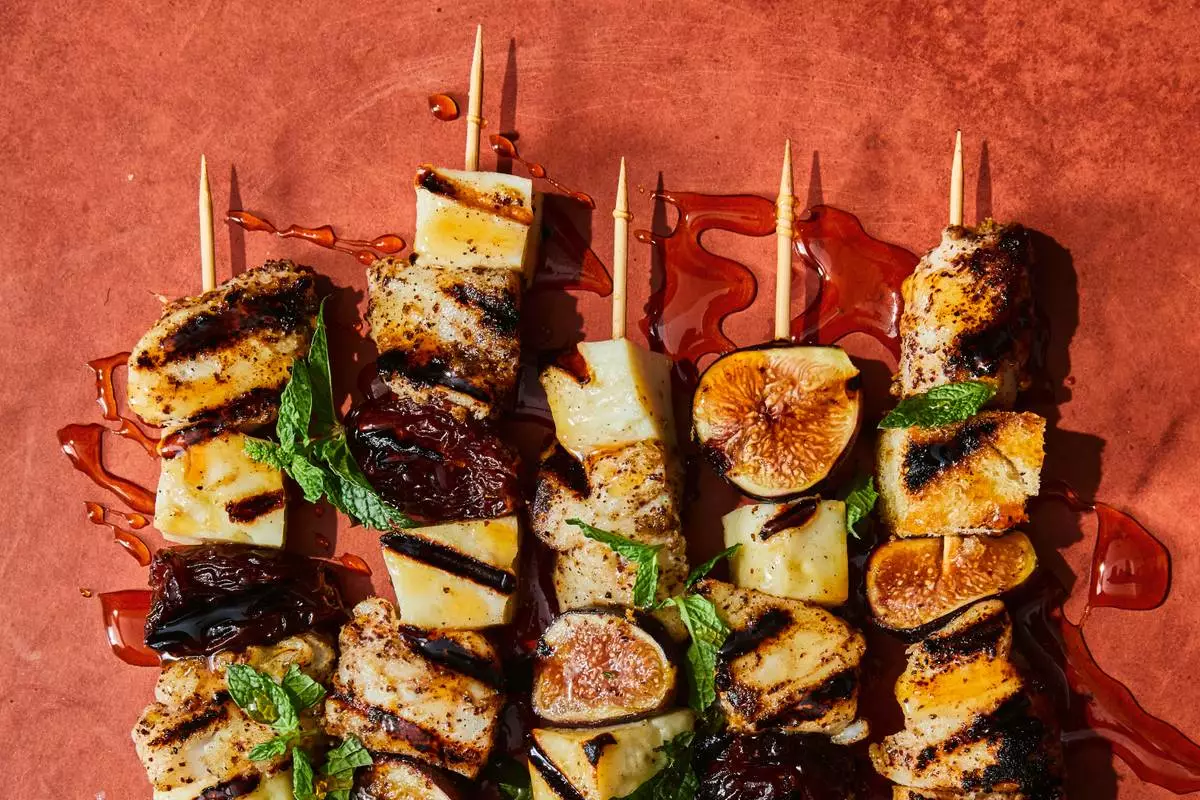
This image released by Voracious shows a recipe for halibut and halloumi skewers with dates and figs, from the cookbook “Greek Out,” by Maria Koutsogiannis. (Linda Xiao/Voracious via AP)
SEOUL, South Korea (AP) — North Korean leader Kim Jong Un put his second naval destroyer into service and called for building a more reliable nuclear deterrent, state media reported Monday, as the U.S., South Korea and Japan held a trilateral military exercise he views as a security threat.
The ship's commissioning comes as North Korea is dialing up pressure on the U.S. after rebuffing President Donald Trump's decision to scale back a major military drill with South Korea in a conciliatory step toward Kim. Observers say North Korea wants to wrest bigger U.S. concessions.
The destroyer Kang Kon was commissioned into North Korea's navy in the eastern port city of Wonsan Sunday at a ceremony attended by Kim and his teenage daughter, whom South Korea’s spy service calls his likely heir. North Korean state media photos showed the girl dressed in a white dress and blazer walking alongside her father on a red carpet, touring the warship and posing with sailors together.
The ship and the Choe Hyon, which was put into service in June, are both 5,000-ton destroyers that state media said can carry various conventional and nuclear weapons. Considered North Korea’s biggest and most advanced warships, the two destroyers were likely built with Russian assistance, experts say. In July, North Korea said it test-fired nuclear-capable cruise missiles from the Kang Kon.
In a speech at the ceremony, Kim said the back-to-back warship additions instilled fear in the enemies as the nuclear armament of North Korea's navy made it possible to exercise its nuclear deterrent in a more diversified, practical manner.
“Concerns of the enemies will be surely deepened,” Kim said. "We must establish more clearly a powerful and reliable nuclear war deterrent, to put into practice the diverse and effective operation of our nuclear combat systems and further strengthen our military activities for maritime defense and war deterrence.”
After years of prioritizing ballistic missile development, Kim has increasingly turned his focus to modernize the navy, which he admitted in Sunday’s speech lacked warships befitting its mission until a few years ago. Outside experts said the North Korean destroyers’ weapons and radar systems would enhance its offensive and defensive capabilities.
Kim said North Korea is pursuing another “significant" naval advancement that would be unveiled in eight months. Many observers say the project could be related to Kim's stated goal of acquiring a nuclear-powered submarine.
On Monday, the U.S., South Korea and Japan kicked off their five-day Freedom Edge exercise in the waters off South Korea's southern Jeju island. South Korea's military said the exercise is defensive in nature and meant to enhance a joint response capability against North Korean nuclear threats. It said the exercise involves key maritime and aerial military assets of South Korea, the U.S. and Japan.
Last week, North Korea's Foreign Ministry accused the U.S. of more clearly expressing its confrontational posture against the North. It cited the Freedom Edge exercise and U.S. officials' reported comments that the U.S. remains committed to the complete denuclearization of North Korea.
On Aug. 21, the U.S. and South Korean militaries ended their annual Ulchi Freedom Shield exercise six days earlier than originally planned, after Trump said he had ordered the Pentagon to “substantially reduce” the drill. Trump cited what he described as a good relationship with Kim, who views the drill as an invasion rehearsal.
But Kim's sister and senior official, Kim Yo Jong, shrugged off Trump's outreach, saying just shortening the drill won’t change its “provocative, aggressive nature.” North Korea launched about 10 short-range ballistic missiles toward the sea, apparently delivering on its previous threat to respond to the U.S.-South Korean drill.
Kim Jong Un has previously said he could return to talks if the U.S. drops its “hostile policy” against North Korea and respects what he calls North Korea's status as a nuclear state.
Kim and Trump's earlier diplomacy collapsed in 2019 due to disputes on how much economic benefits North Korea should get in return for a limited denuclearization step. Now with his advancing nuclear program and deepened ties with Russia and China, experts say Kim has greater leverage than before.

Protesters shout slogans demanding to stop the South Korea, U.S. and Japan trilateral military drill called "Freedom Edge" near the U.S. Embassy in Seoul, South Korea, Monday, Sept. 7, 2026. The letters read "Oppose the Freedom Edge." (AP Photo/Lee Jin-man)

South Korean army K-9 self-propelled howitzers take positions in Paju, South Korea, near the border with North Korea, Sunday, Sept. 6, 2026. (AP Photo/Ahn Young-joon)
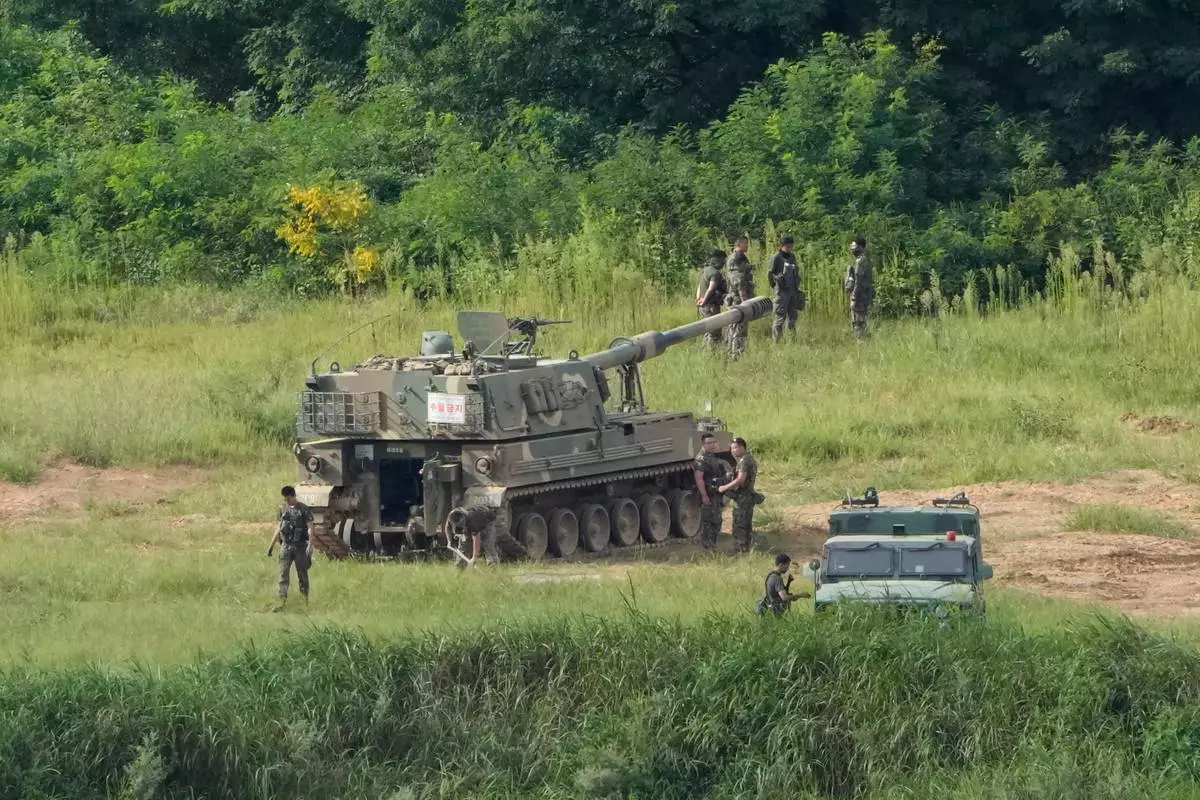
South Korean army soldiers work near their K-9 self-propelled howitzer in Paju, South Korea, near the border with North Korea, Sunday, Sept. 6, 2026. (AP Photo/Ahn Young-joon)
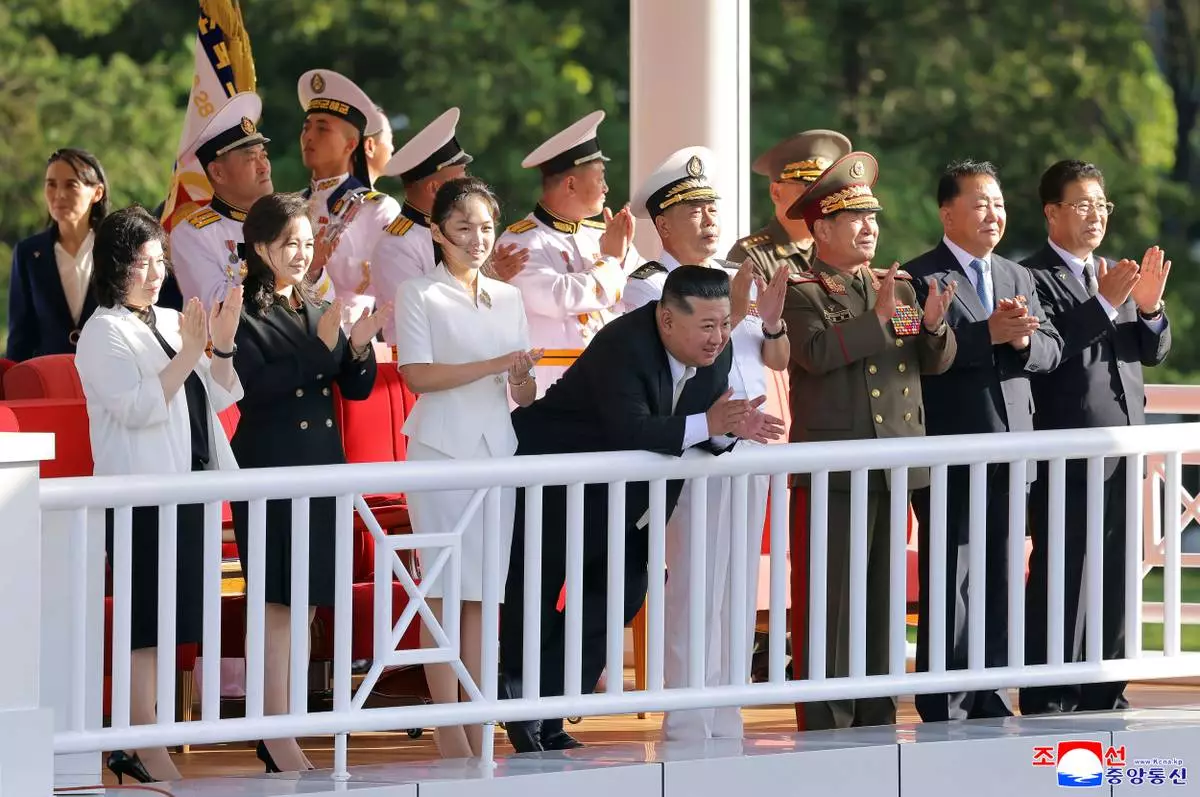
In this photo provided by the North Korean government, its leader Kim Jong Un, front center, his daugther, third left in front, and his wife Ri Sol Ju, second left in front, attend a commissioning ceremony of a destroyer, Kang Kon at a port in Wonsan, North Korea Sunday, Sept. 6, 2026. Independent journalists were not given access to cover the event depicted in this image distributed by the North Korean government. The content of this image is as provided and cannot be independently verified. Korean language watermark on image as provided by source reads: "KCNA" which is the abbreviation for Korean Central News Agency. (Korean Central News Agency/Korea News Service via AP)
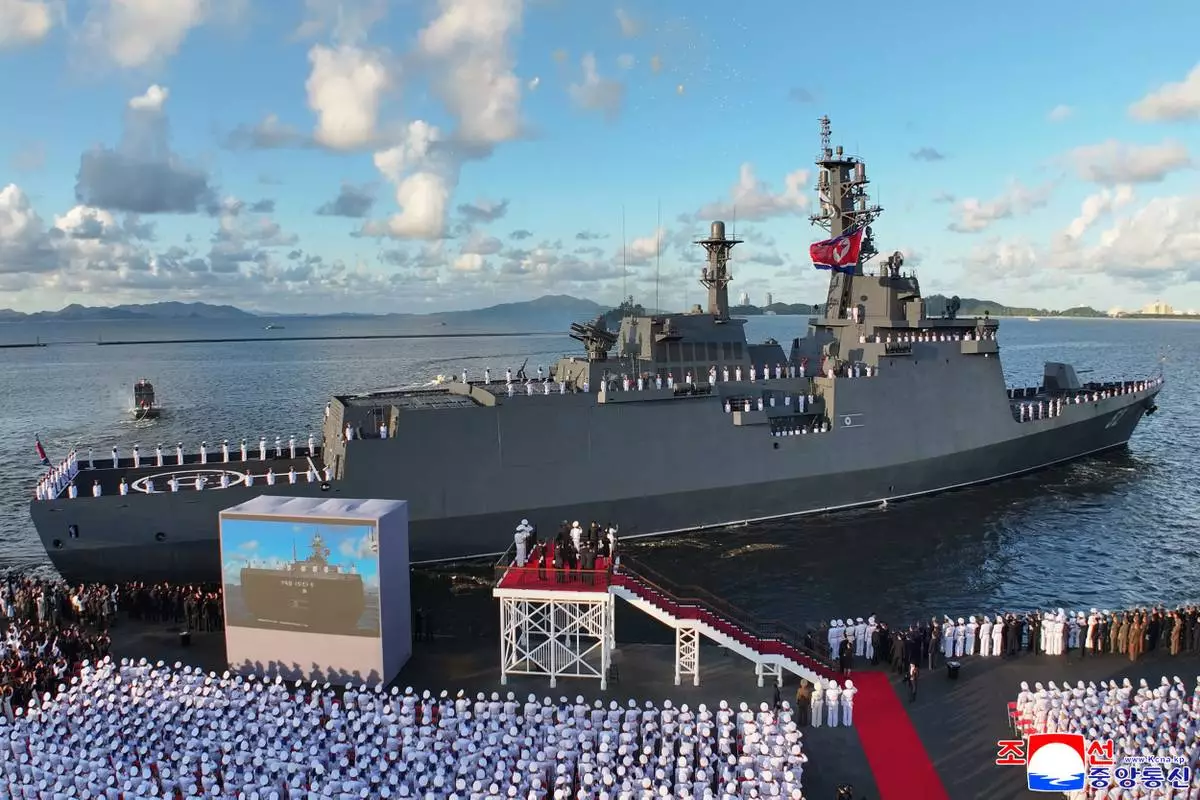
This photo provided by the North Korean government, shows a destroyer, Kang Kon at a commissioning ceremony at a port in Wonsan, North Korea Sunday, Sept. 6, 2026. Independent journalists were not given access to cover the event depicted in this image distributed by the North Korean government. The content of this image is as provided and cannot be independently verified. Korean language watermark on image as provided by source reads: "KCNA" which is the abbreviation for Korean Central News Agency. (Korean Central News Agency/Korea News Service via AP)
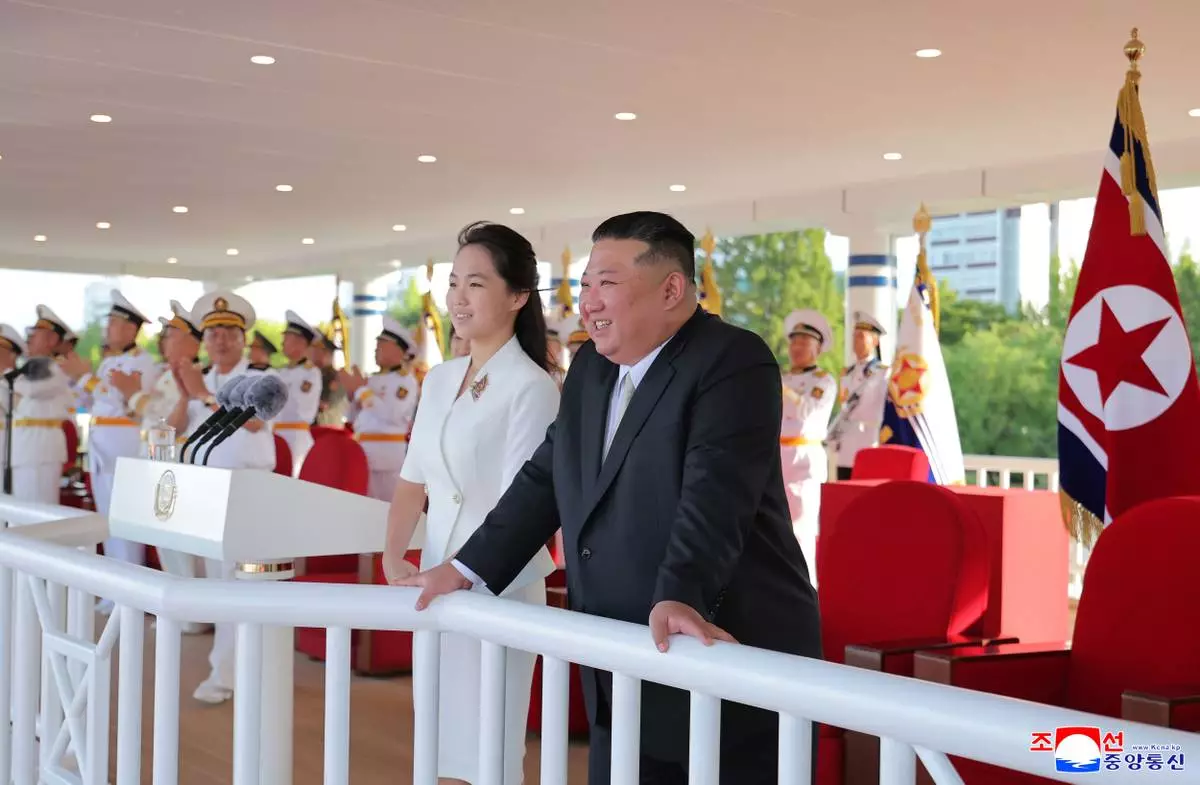
In this photo provided by the North Korean government, its leader Kim Jong Un and his daugther attend a commissioning ceremony of a destroyer, Kang Kon at a port in Wonsan, North Korea Sunday, Sept. 6, 2026. Independent journalists were not given access to cover the event depicted in this image distributed by the North Korean government. The content of this image is as provided and cannot be independently verified. Korean language watermark on image as provided by source reads: "KCNA" which is the abbreviation for Korean Central News Agency. (Korean Central News Agency/Korea News Service via AP)