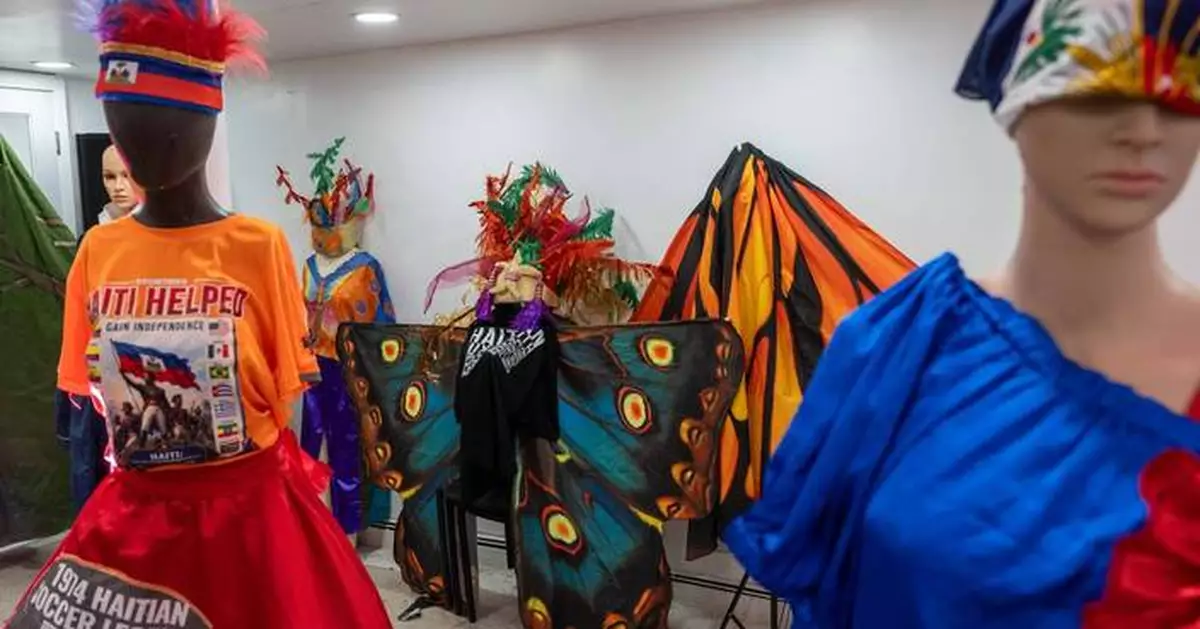
NEW YORK (AP) — Steel drums, flag-draped floats, and the smell of jerk chicken will fill Brooklyn’s Eastern Parkway on Monday, as hundreds of thousands turn out for the West Indian Day Parade, one of the largest celebrations of Caribbean culture in the country.
This year, Haitians are marching under more solemn circumstances than in prior years. Federal immigration enforcement has intensified against Caribbean and other Black immigrant communities over the past year, and Haitians have lost a key protection — temporary protected status. Known as TPS, it let hundreds of thousands remain in the U.S. legally.
Click to Gallery
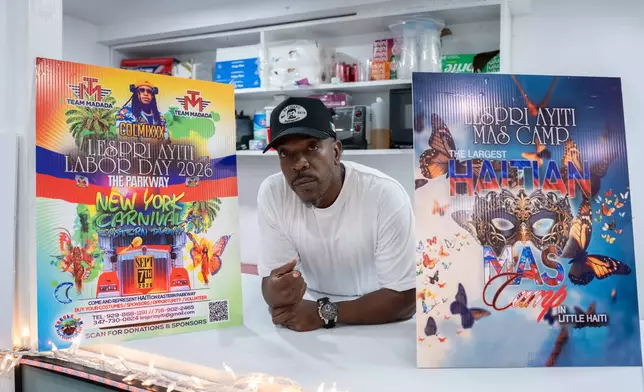
Haitian-American Jesus Luc poses for a portrait ahead of the West Indian Day Parade, Thursday, Sept. 3, 2026, in the Brooklyn borough of New York. (AP Photo/Adam Gray)
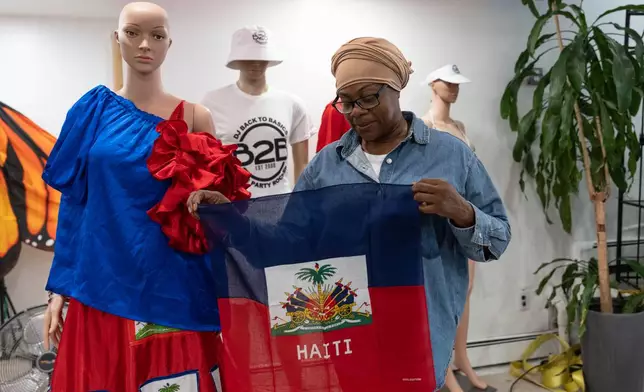
Haitian-born Edwina Paul holds Haitian flag ahead of the West Indian Day Parade, Thursday, Sept. 3, 2026, in the Brooklyn borough of New York. (AP Photo/Adam Gray)
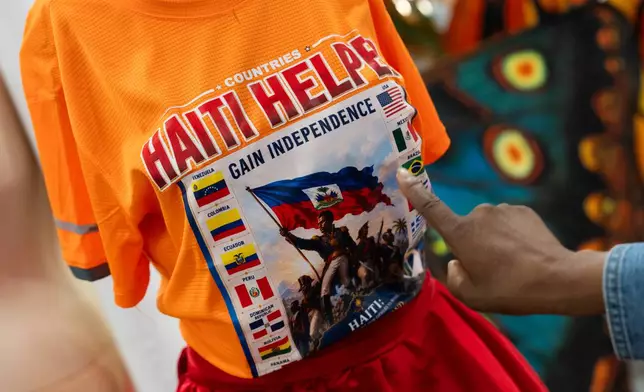
Haitian-born Edwina Paul points at a Haitian independence-themed costume for Lespri Ayiti Mas Camp ahead of the West Indian Day Parade on Thursday, Sept. 3, 2026, in the Brooklyn borough of New York. (AP Photo/Adam Gray)
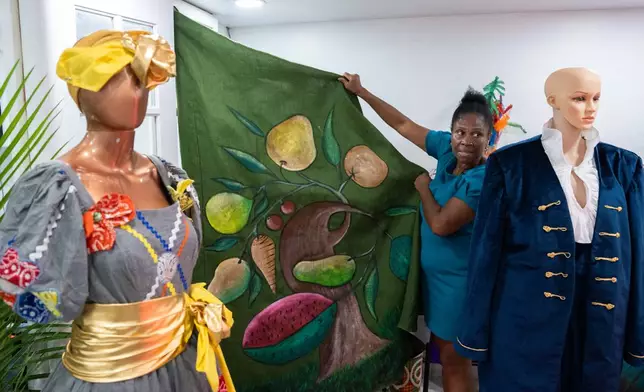
Haitian-born Clara Poteau holds up a Haitian costume for Lespri Ayiti Mas Camp, ahead of the West Indian Day Parade, Thursday, Sept. 3, 2026, in the Brooklyn borough of New York. (AP Photo/Adam Gray)
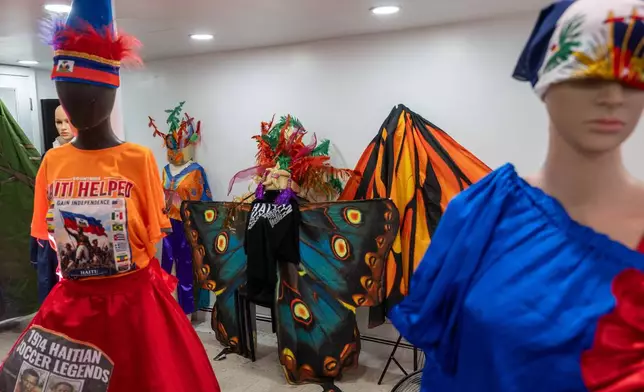
Haitian costumes for Lespri Ayiti Mas Camp are displayed ahead of the West Indian Day Parade, Thursday, Sept. 3, 2026, in the Brooklyn borough of New York. (AP Photo/Adam Gray)
Organizers say the parade has become both a defiant assertion of pride and a rare bright spot in a traumatic year.
“There’s a somber cloud over it with everything that has happened from last year to this year with TPS ... what’s happening in detention centers, and those who are being sent back with no valid way of living or supporting themselves,” said Natalie Lafontant, a Brooklyn native who organizes Lespri Ayiti, or “Spirit of Haiti,” the largest Haitian “mas” — short for masquerade — or marching community in Monday’s parade.
Still, she said, the response to hardship is not surrender.
“But if you know anything about the Caribbean, especially about Haiti, we use music, dance, art, to continue to strive and push through,” Lafontant said while taking stock of parade costumes at a community center.
In June, the Supreme Court ruled 6-3 in Mullin v. Doe that federal courts cannot review the Trump administration’s decision to end temporary protected status for Haitian and Syrian immigrants, clearing the way for roughly 350,000 Haitians to lose the protection. A federal judge finalized the order in early August, and work permits tied to Haitian TPS expired July 27.
Lafontant’s group, comprising about 180 artists, designers, musicians and residents, is marching in the parade for the second year. The group struggled to find float sponsors this year.
“All the insurances that we’ve got to cover, the people who walk, you’ve got to take care of them, the costumes, the designers. You add that all up, it’s a very hefty bill. But we continue to do it because we love our country,” said Lafontant.
Lafontant is part of a Haitian community that numbers roughly 163,000 in the New York metropolitan area, according to the Migration Policy Institute — the second-largest Haitian population in the U.S. after the Miami metropolitan area.
Most Haitian migrants settled in Brooklyn neighborhoods including Flatbush, East Flatbush and Crown Heights.
Haitians arrived in New York in waves beginning under the dictatorship of Jean-Claude “Baby Doc” Duvalier, whose regime’s repression and economic collapse drove many to leave the island in the 1970s and 1980s. The migration continued after his 1986 ouster.
Haiti’s history of resistance runs deeper still, back to the Haitian Revolution, when enslaved and free Black people overthrew French colonial rule in what is widely regarded as the only successful slave revolt in modern history, culminating in the 1803 Battle of Vertières. The victory paved the way for Haiti’s independence the following year.
That history of resistance remains a source of pride for Haitians far beyond the country’s shores, even among generations who have built new lives abroad.
Edwina Paul, founder of SPM, or “Fanm Se Poto Mitan” — “Women Are the Pillar of Society” — left Haiti in 1993 to start a new life with her husband in the Brooklyn neighborhood of Canarsie. Paul, whose coalition of Haitian women leaders and organizers is marching Monday, said conditions in Haiti are what pushed people to leave.
“It’s not safe there. Coming here is like an umbrella for us to be safe from that,” she said of those fleeing the country’s gang violence and instability. “We don’t come here to sin, we don’t come here to kill. We come here to work, to have a better education.”
SPM's resilience is stitched into its costumes this year. Clara Poteau, a fashion designer and an alumna of the Fashion Institute of Technology, designed royal blue emperor robes in the image of Jean-Jacques Dessalines, a lieutenant and leader of the Haitian Revolution and the first leader of an independent Haiti.
A total of six designers and one painter spent a month hand-painting costumes that commemorate Haitian achievements, working through the weekend before the parade: dresses covered in miniature Haitian flags, skirts bearing the faces of Duckens Nazon and Emmanuel Sanon, the national football players who hold Haiti’s international scoring records, at 44 and 47 goals, respectively.
One orange T-shirt, dubbed the “Freedom” tee, carries the flags of nations Haitian revolutionary leaders helped liberate with shelter, money, weapons, and troops, including Venezuela, Colombia, Ecuador, Peru, Bolivia, Panama, Mexico and Greece.
The sound of the mas, the first taste of Haitian energy parade attendees will experience before seeing the group, is carried forward by Jesus Luc, a Harlem native and Lespri Ayiti’s band manager. Luc coordinated a lineup built around “Raboday,” a popular genre of contemporary Haitian and Caribbean sounds, and Kompa, Haiti’s signature native dance music.
Headlining is DJ Comix of the band Team Madada, dubbed by Luc as “probably the most popular group in Haiti,” part of a new generation of sound defining the country’s youth.
“It’s electrifying. It’s music that will touch your soul. Between the music and the costumes... it’s the heart of the people that’s going to be there.”
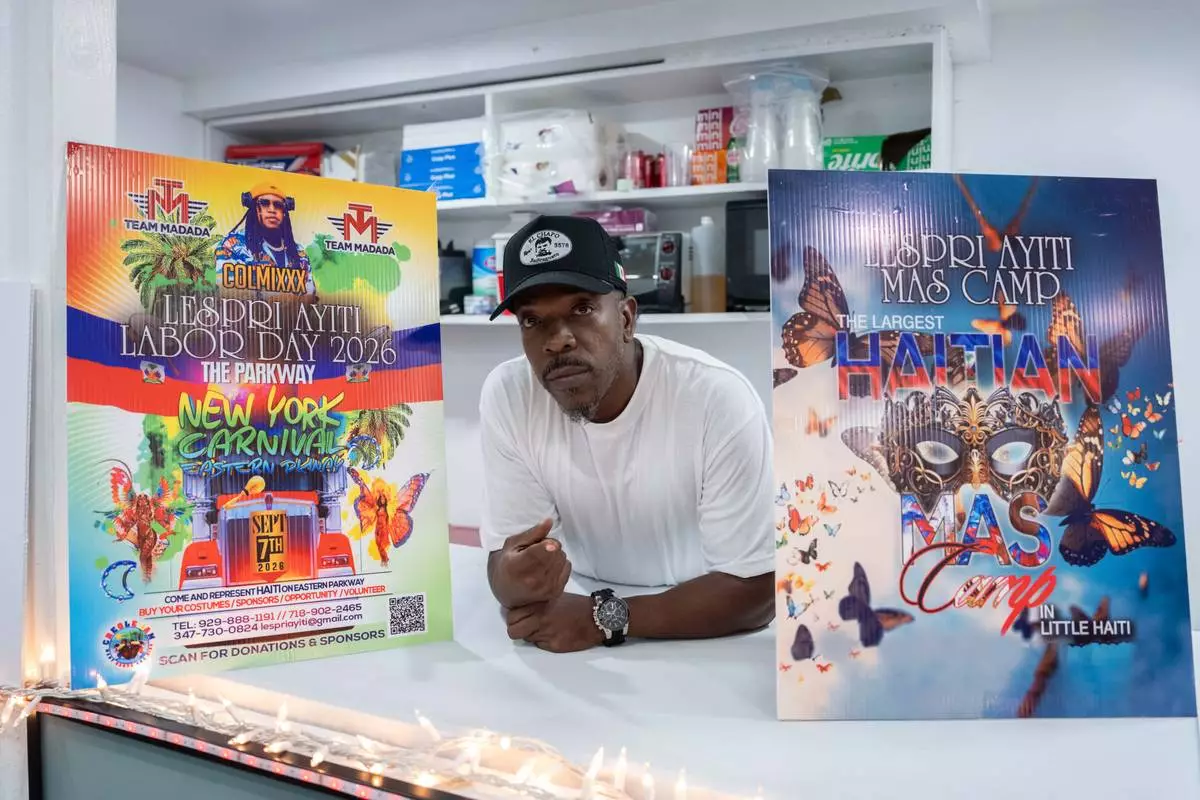
Haitian-American Jesus Luc poses for a portrait ahead of the West Indian Day Parade, Thursday, Sept. 3, 2026, in the Brooklyn borough of New York. (AP Photo/Adam Gray)
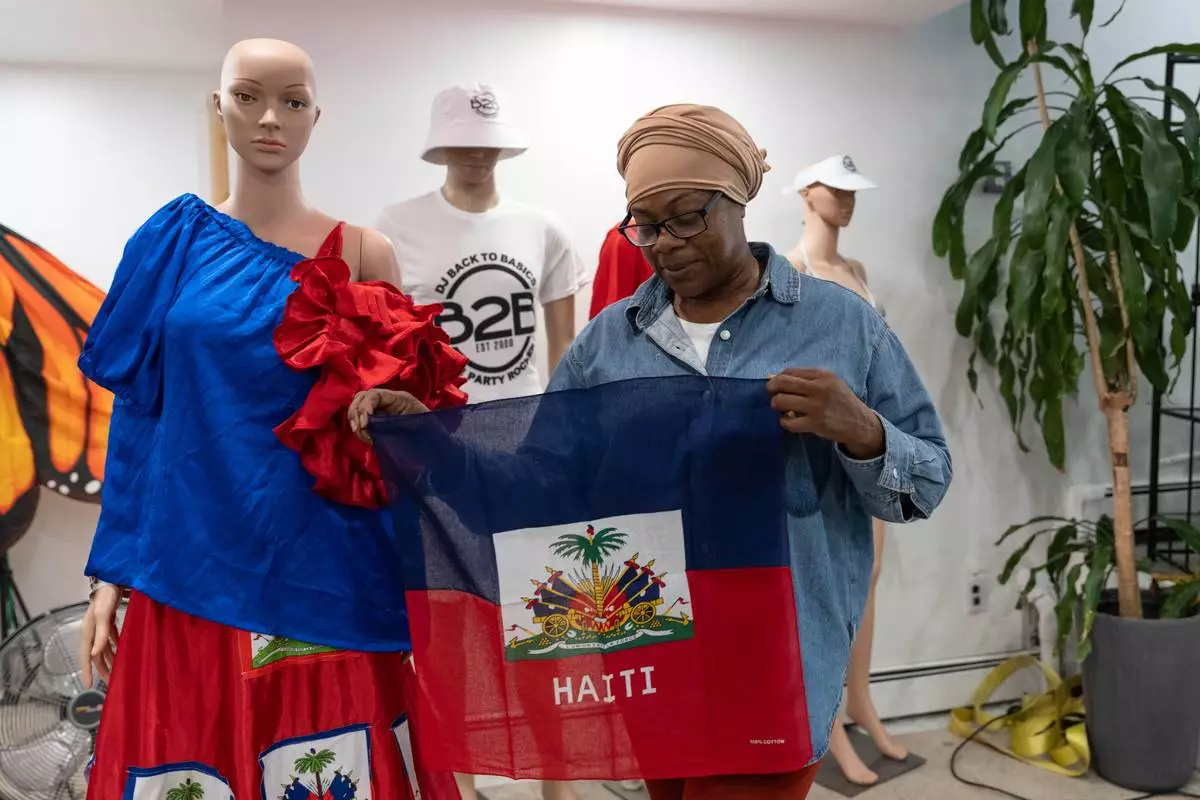
Haitian-born Edwina Paul holds Haitian flag ahead of the West Indian Day Parade, Thursday, Sept. 3, 2026, in the Brooklyn borough of New York. (AP Photo/Adam Gray)
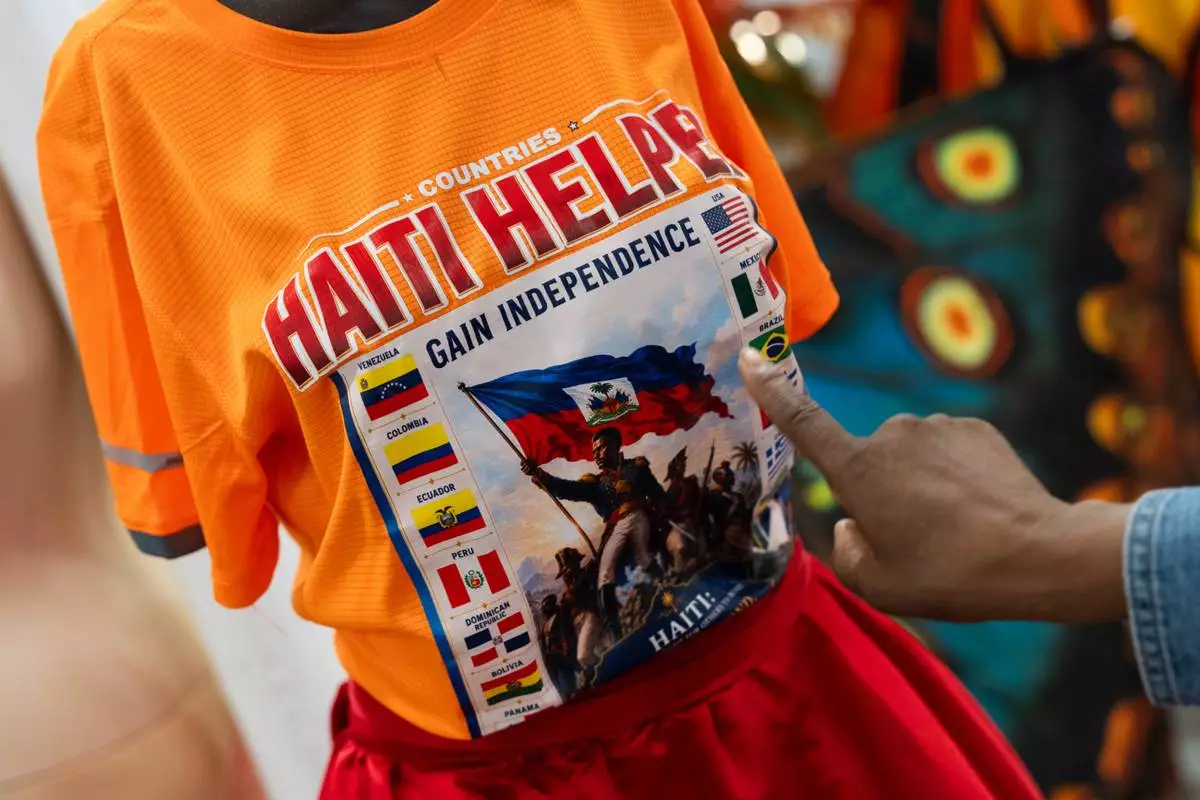
Haitian-born Edwina Paul points at a Haitian independence-themed costume for Lespri Ayiti Mas Camp ahead of the West Indian Day Parade on Thursday, Sept. 3, 2026, in the Brooklyn borough of New York. (AP Photo/Adam Gray)
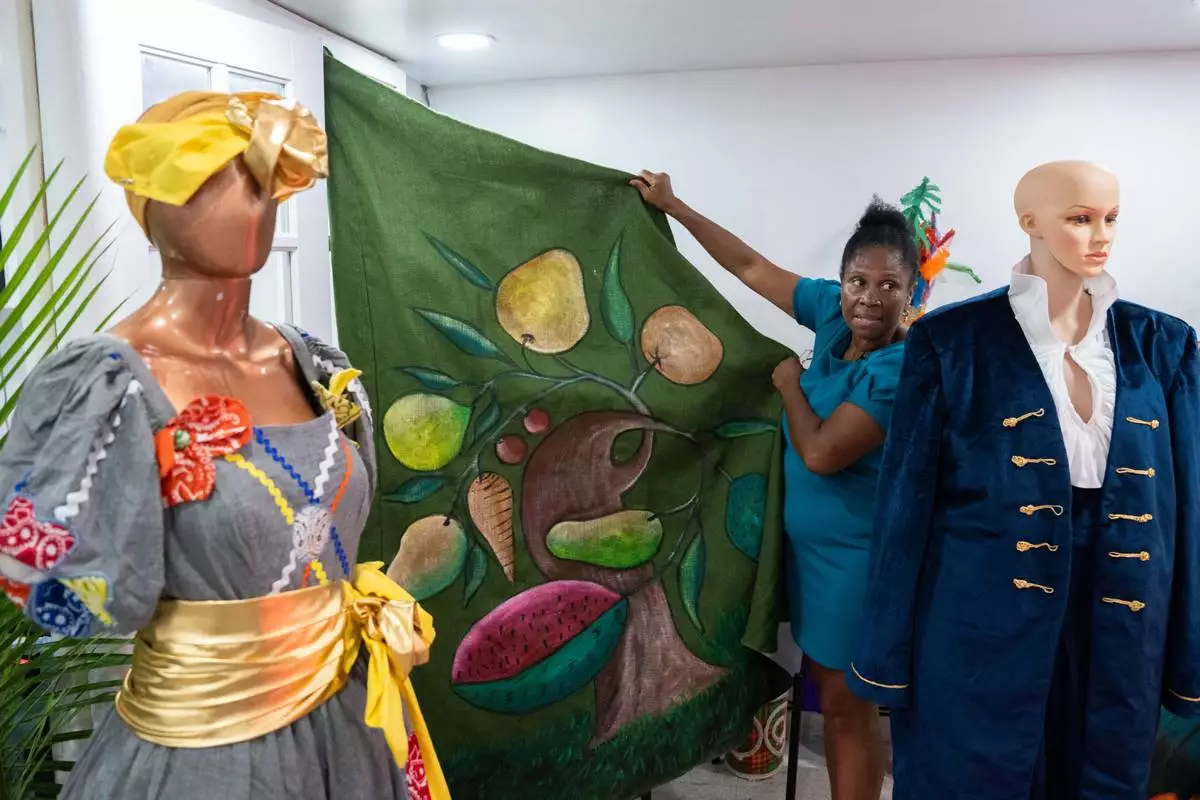
Haitian-born Clara Poteau holds up a Haitian costume for Lespri Ayiti Mas Camp, ahead of the West Indian Day Parade, Thursday, Sept. 3, 2026, in the Brooklyn borough of New York. (AP Photo/Adam Gray)
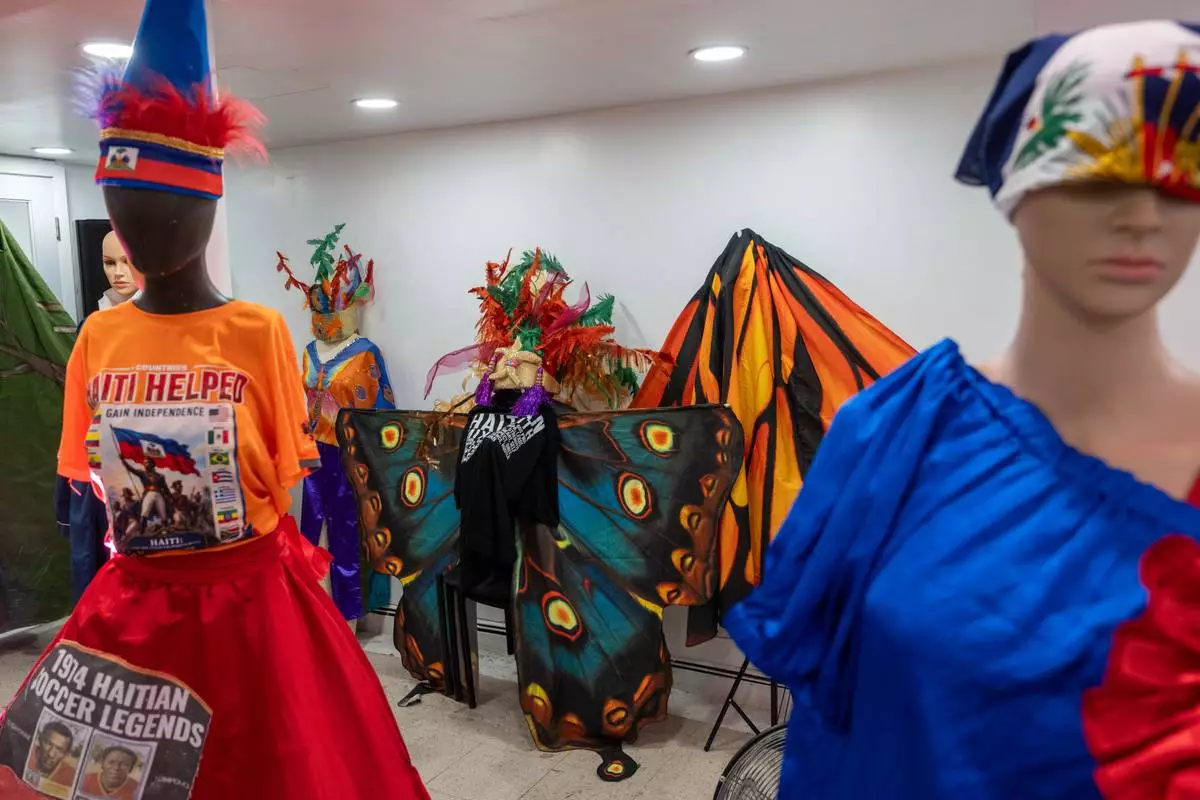
Haitian costumes for Lespri Ayiti Mas Camp are displayed ahead of the West Indian Day Parade, Thursday, Sept. 3, 2026, in the Brooklyn borough of New York. (AP Photo/Adam Gray)