As the BRICS cooperation mechanism is embarking on its third golden decade, a new chapter begins with China -- a rotating BRICS chair next year.
When addressing the Session I of the 18th BRICS Summit in New Delhi, India, Chinese President Xi Jinping said on Saturday that BRICS cooperation mechanism has become the world's most influential platform for cooperation among emerging markets and developing countries.
He announced that China will take over as the rotating chair of the BRICS and host the 19th summit next year.
Over the past two decades, China has hosted three BRICS summits, each marking a new milestone in the group's evolution, expanding the scope of cooperation and strengthening the representation of the Global South.
When China hosted the third BRICS Summit in the tropical resort of Sanya in the southernmost island province of Hainan in 2011, the group officially became BRICS with South Africa joining as a new member.
At the ninth BRICS Summit in south China's coastal city of Xiamen six years later, Xi proposed the "BRICS Plus" cooperation approach, and invited leaders from non-BRICS members including Egypt, Mexico, Thailand and Guinea to discuss international development cooperation and deepen South-South cooperation.
Addressing the opening ceremony of the BRICS Business Forum on Sept 3, 2017, Xi said, "Going forward, BRICS countries have a major task to accomplish, which is growing our economies and strengthening cooperation. We should build on past success, chart the course for future cooperation and embark on a new journey to jointly usher in the second 'Golden Decade' of BRICS cooperation."
When China chaired BRICS again in 2022, the 14th BRICS Summit was held in virtual format in June. At the summit, Xi called for a "more comprehensive, close, practical and inclusive high-quality partnership" and emphasized global development.
On 24 June 2022, the High-level Dialogue on Global Development was held on the margins of the summit.
Addressing the dialogue, Xi called for joint efforts to promote global development and foster a development paradigm featuring benefits for all, balance, coordination, inclusiveness, win-win cooperation and common prosperity.
"As an ancient Chinese adage goes, 'With one heart and one mind, we can accomplish everything we aspire for.' Let us firm up confidence, stride forward in pursuit of high-quality partnership, and usher in a new era of prosperity and development," he said.
At the 18th BRICS Summit, Xi noted on Saturday that this year marks the 20th anniversary of BRICS cooperation, saying that over the past two decades, the BRICS cooperation mechanism has continued to grow and expand, and has demonstrated remarkable vitality and dynamism.
The Chinese side stands ready to work with all parties to build consensus, create a better future, and embark on BRICS' third "golden decade", jointly opening up a bright future of prosperity and progress, he added.
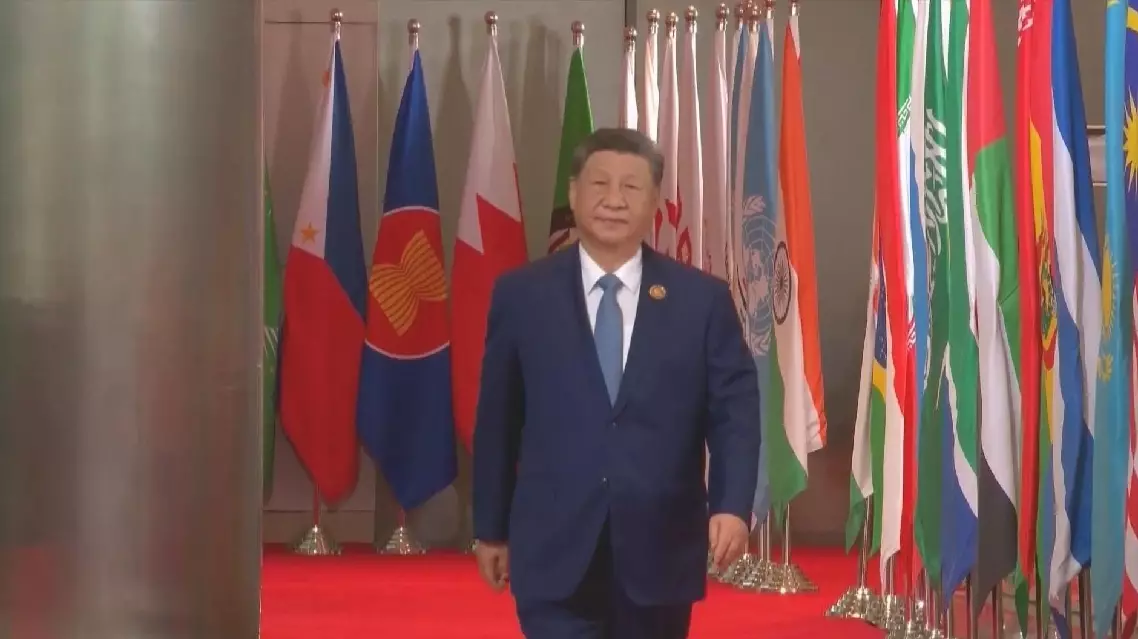
BRICS cooperation opens up prospect of prosperity, progress