The China-Laos "Peace Train-2026" joint humanitarian medical rescue drill entered its full-process exercise phase in the Lao capital Vientiane on Saturday, simulating an international humanitarian medical response to a super typhoon disaster.
Staged against the backdrop of super typhoon-related international humanitarian medical relief, the drill moved into full execution following an order from the frontline joint command.
Joint search and rescue teams arrived at the disaster site equipped with unmanned systems including drones and robotic dogs. Using real-time data relayed by the unmanned platforms, participating troops precisely located the injured and moved quickly to the scene alongside mixed China-Laos search and rescue teams.
The joint search and rescue unit and the joint medical team worked in close coordination, first using unmanned transport vehicles for rapid casualty evacuation which was seamlessly followed by field emergency ambulances and casualty transport vehicles to move the groups of wounded for treatment.
"Faced with groups of casualties in a short period, we verified handover forms one by one, registered information, checked patients' vital signs, and efficiently completed triage based on injury tags before sending them to doctors," said Wang Qi, head of the second-echelon medical facility of the "Peace Train" medical team.
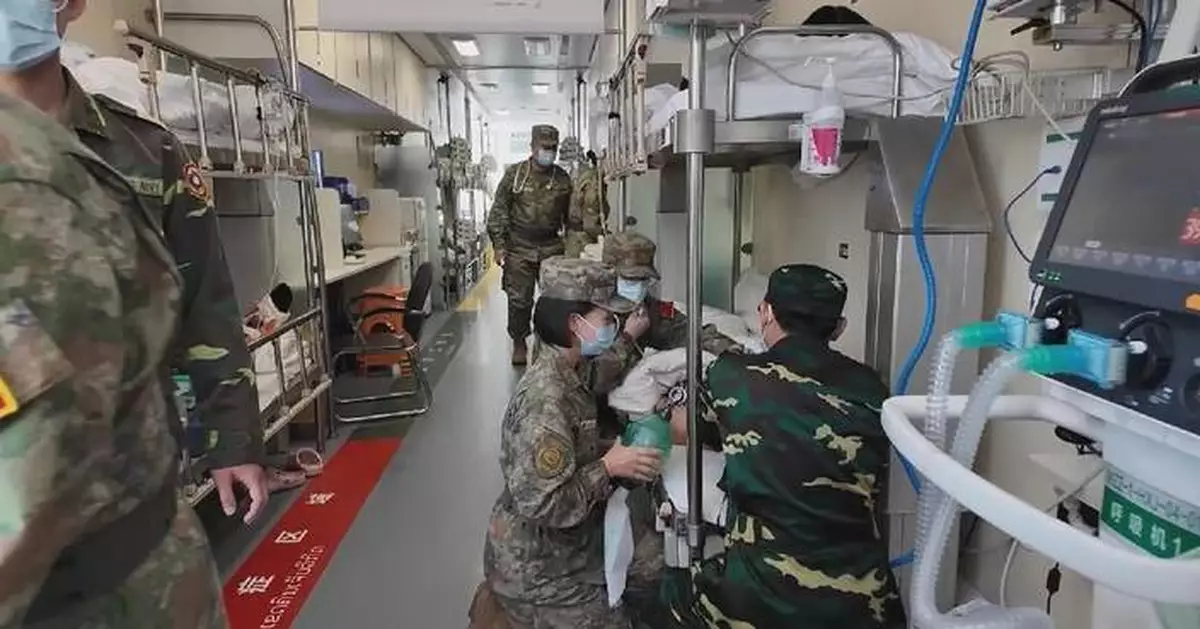
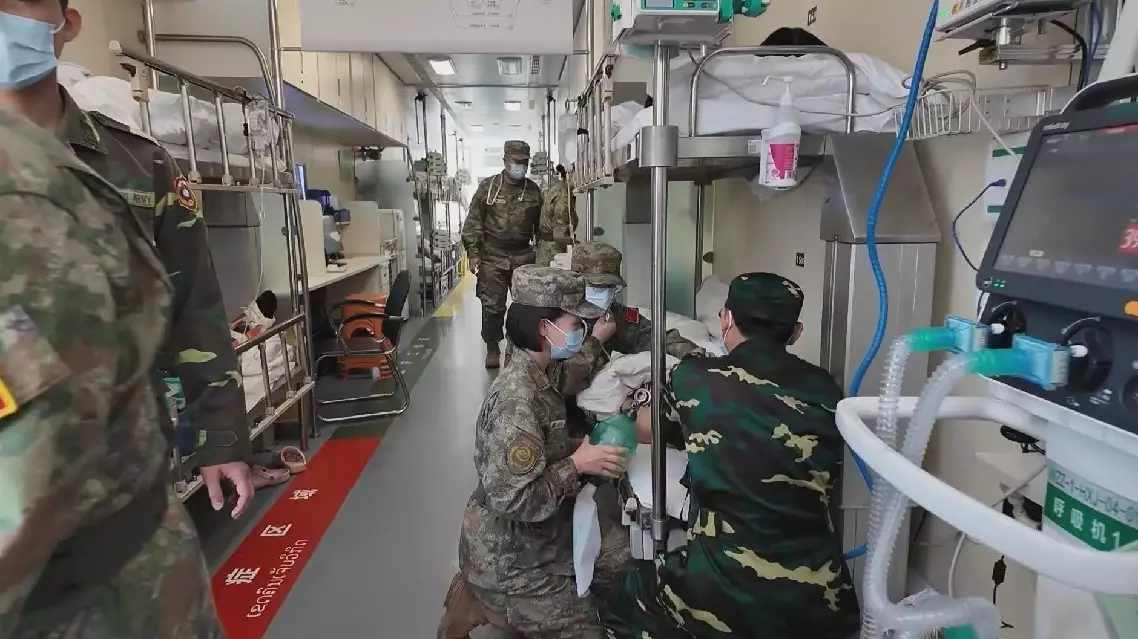
Inside the operating room aboard the medical train, Chinese and Lao medical staff worked together to perform surgery on a casualty with a severe abdominal wound.
Through close coordination between the two sides, the casualty's bleeding was brought under effective control. The patient was then transferred to the intensive care unit in the treatment carriage.
"I am very proud to participate in this joint exercise and to have the opportunity to exchange experiences," said a Lao member of the "Peace Train" medical team.
Serving as a "mobile ICU", the intensive care unit is equipped with 10 electric double-decker lifting hospital beds, as well as mobile ventilators, portable ultrasound machines, and ECG monitors. It can accommodate 21 patients with moderate to severe injuries or illnesses.
"We extended the chain of medical treatment from casualty collection points and field medical tents to the medical train's treatment carriages. We focused on practicing the seamless integration of anesthesia, surgery, and intensive care under realistic conditions, gaining valuable experience in how China and Laos could jointly respond to mass-casualty emergencies, such as those caused by natural disasters, in the future," said Ma Dan, a surgeo and Chinese member of the "Peace Train" medical team.
China-Laos "Peace Train-2026" joint exercise conducts full-process drills