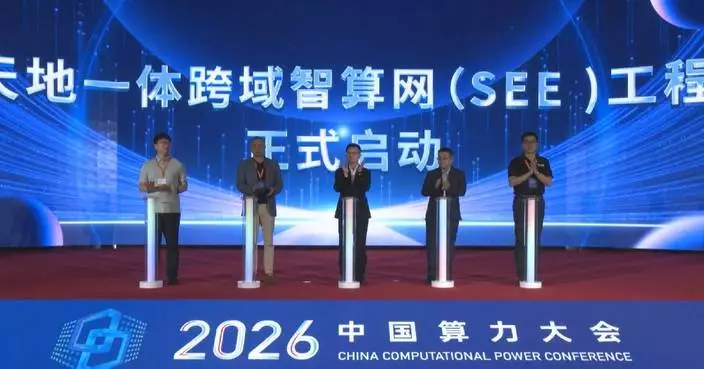
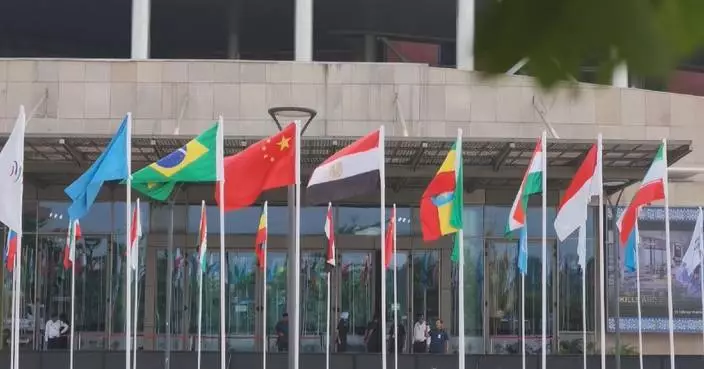
The just-concluded 2026 China International Fair for Trade in Services (CIFTIS) placed a strong emphasis on AI innovations, which are moving beyond exhibitions to empower everyday work around the world.
The event came to an end on Sunday at the Shougang Park in Beijing, delivering a series of remarkable highlights and fruitful outcomes in forums, business matchmaking and promotion events, exhibitions, and achievement releases.
Lu Huiling, deputy director of the Beijing Municipal Commerce Bureau, said the fair has injected new vitality into innovation across the global services sector through practical cooperation.
"All the parties highly praised China's achievements in the development of services trade, with strong confidence that China's development brings new global opportunities,” she said.
One emerging trend this year is locally-deployed AI agents -- AI that can actually work like a digital employee.
Cao Jialun, solution manager of China Telecom, said that these digital employees help streamline enterprise workflow. Building on this, Chinese companies are providing integrated technologies, solutions and full-cycle services.
"We've developed more than 300 digital employees across 14 of the 15 services sectors. They’re already going global, including to Southeast Asia and the Middle East. Our advantages are twofold: strong model capabilities, driven by the rapid development of Chinese AI models, and a wide range of industry-specific solutions," he said.
Digital workers aren't the only ones going global. China's AI avatars are joining the action too, helping Chinese companies reach overseas customers through e-commerce and interactive media.
"They can speak multiple languages and adapt to different markets and platforms. We help Chinese companies with live stream shopping, short videos and real-time interaction overseas. Today’s AI avatars are more than digital clones. They look and move like real people, interact in real time, and even have their own knowledge and persona," said Tian Yuxin, AI Avatar Product Manager of Baidu.
On OpenRouter's leaderboard, which provides real-time, data-driven tracking of the most popular AI models, eight of the top 10 AI models are open-weight models developed by Chinese companies.
"AI model of China is very interesting because it's a very unique model. Because it's open source, so it allows everyone to set up their own higher AI for their own businesses," said Gianni Di Giovanni, vice president of the European Chamber of Commerce in China.
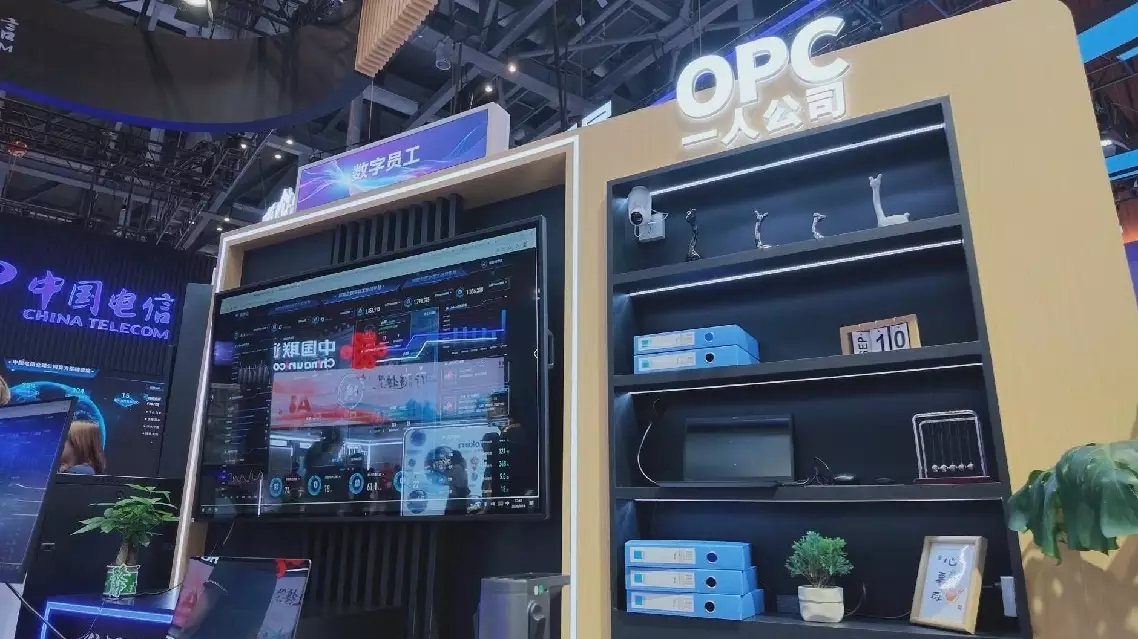
2026 CIFTIS highlights innovative AI application scenarios
North China's Hebei Province has ranked among the country's top performers in the comprehensive computing power index for three consecutive years, according to a report released Saturday by the China Academy of Information and Communications Technology (CAICT).
The province launched a national computing power interconnection node to accelerate its digital and intelligent transformation on Saturday.
The Hebei Artificial Intelligence (AI) Computing Center in the Langfang Economic and Technological Development Zone in Hebei's Langfang City, is primarily used to support high-end computing tasks such as training large AI models and industrial simulations, according to its manager. "Currently, the average monthly computing power utilization rate has exceeded 96 percent. In the past, computing power was primarily general-purpose, focused on data storage and simple computations. What we now provide is intelligent computing power specifically designed to support high-end applications such as the training and inference of large AI models and industrial simulations," said Zhao Zitong, general manager of the Hebei AI Computing Center.
At present, intelligent computing power has become the core engine driving the intelligent upgrading of the entire industrial process.
In Langfang, which ranks among the country's top performers in the urban computing power sub-index, all 36 operational data centers have begun transitioning to intelligent computing facilities. Although Hebei boasts an ample supply of computing power, small and medium-sized enterprises face challenges such as high barriers to entry and high costs, while large enterprises encounter bottlenecks in coordinating resources across different computing centers.
To resolve this supply-demand imbalance, Langfang spearheaded the development and launch of an integrated computing power network platform.
On the large screen at the platform's command center, dynamic data including computing power input, supply, and application are shown in real time, providing a clear overview of computing resource status.
"The computing power scheduling and operations of sub-platform integrates dispersed and idle computing resources and utilizes intelligent scheduling algorithms to provide low-cost, flexible computing services for high-frequency computing scenarios such as AI inference and scientific research, thereby meeting the diverse computing needs of different industries and users," said Xing Yanbo, general manager of Digital City Technology Group Co., Ltd, .
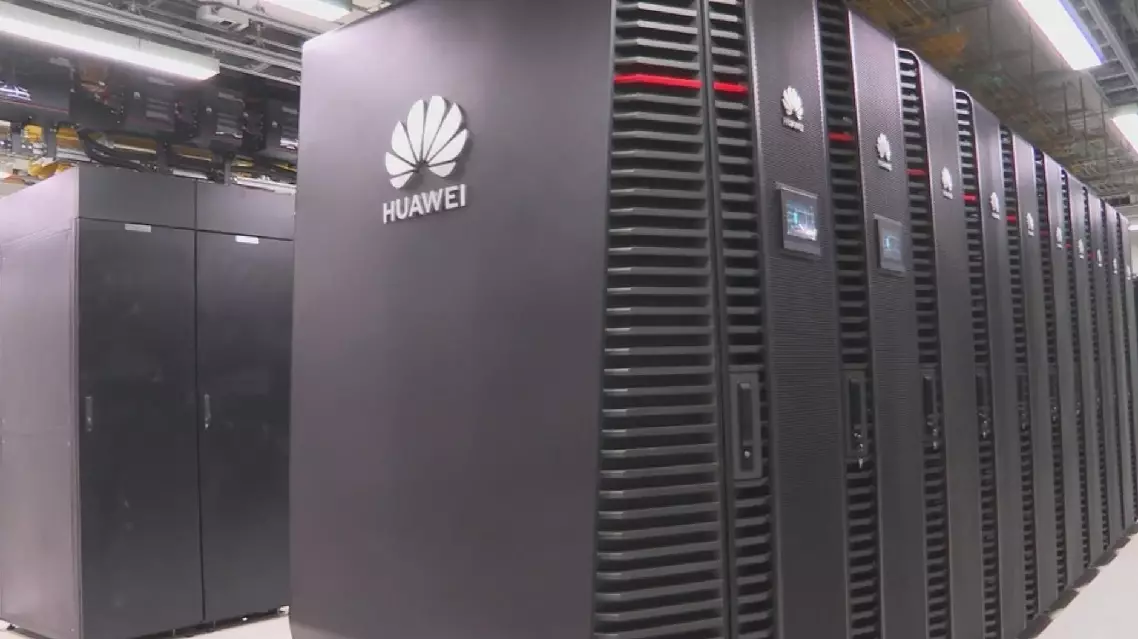
China's Hebei Province leads in computing power for third straight year: report