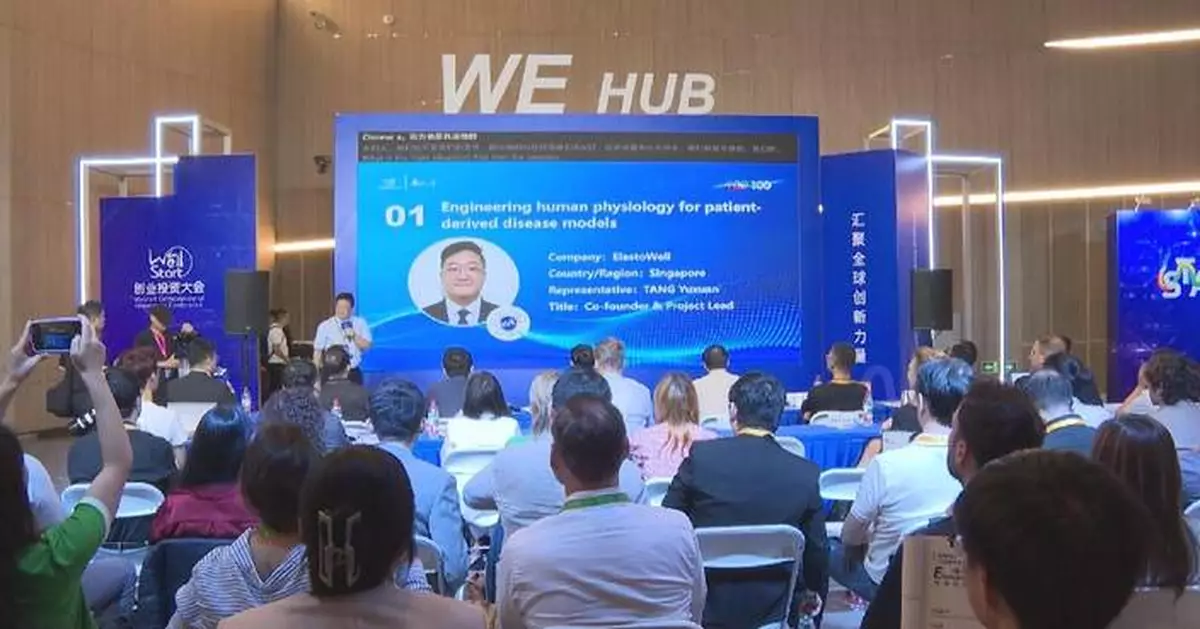
The WeStart Entrepreneurial Investment Conference is underway in Shanghai from Saturday through Monday, showcasing 21 standout overseas projects seeking investment, market access and partnerships.
As a parallel event to the ongoing 19th Pujiang Innovation Forum, this year's WeStart recruited globally through seven competition sites, including the United Kingdom, Germany, France, the Netherlands, and Singapore. A total of 215 overseas projects were submitted, with 21 outstanding representatives invited to Shanghai to establish meaningful connections with local industries.
During the roadshow sessions, Chinese and foreign experts jointly evaluated the projects and engaged in in-depth discussions with the founders.
One team from the Netherlands showcased a soft inspection robot, seeking joint industrial development, mass production, and component technology cooperation rather than financing alone.
"As a whole, China is a huge market for us, on the one hand, as a customer basis, but also if we want to address the confined space inspection domain in Asia Pacific, we believe that China, and Shanghai more specifically, can be the hub for our logistics and manufacturing for actually bringing in our robots as a service to all of Asia Pacific," said Jaskaran Sandhu, CEO and co-founder of XiniX AI.
A British team presented an AI-native compliance platform that has already secured commercial orders overseas and is now looking for funding to expand into the Chinese market.
"China is leading in AI and we are an AI-native compliance platform. So AI governance and compliance is critical now as China scales its AI capabilities. And I think having also being part of that journey will enable us to learn more and faster ahead of other markets and be able to address any compliance and the governance issues early in the process," said Dr. Ahmed Shawky, founder and CEO of SustainGRC.
The conference also features a "Future Industry Island" on site, showcasing cutting-edge innovations in quantum, brain-computer interfaces, embodied intelligence, and silicon photonics. More than 300 sci-tech innovation projects present their financing needs, and a "project matchmaking mini-program" was launched simultaneously, extending matchmaking services to full-year, full-cycle support and building a deep-exchange bond between sci-tech innovation projects and investment institutions.
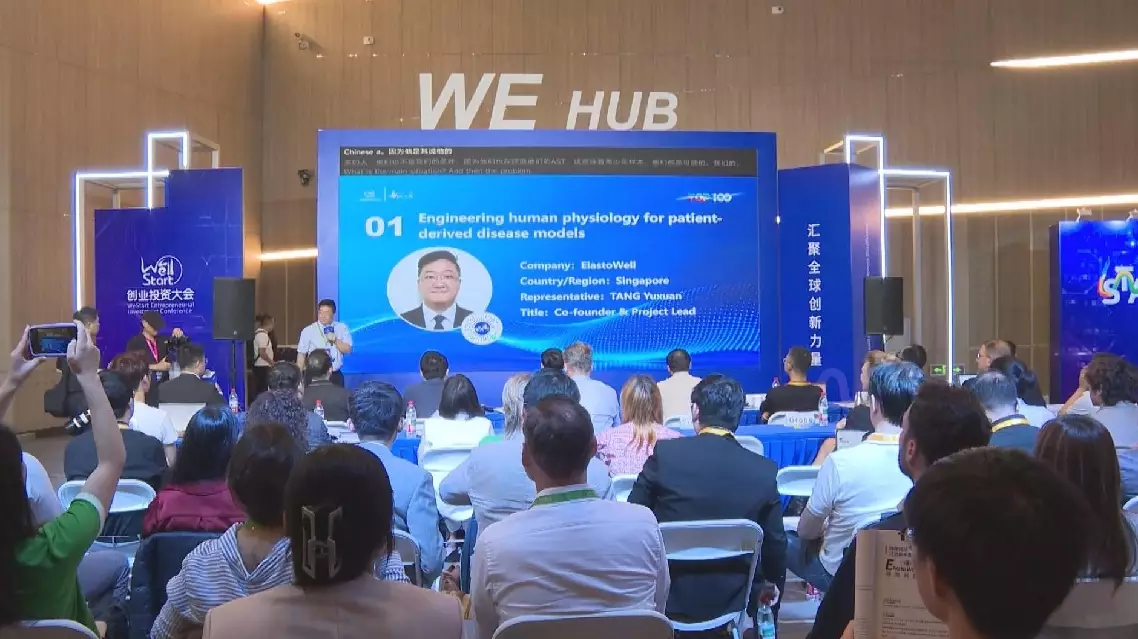
Shanghai's WeStart Conference highlights 21 overseas projects seeking investment
China's homegrown humanoid robots were an interesting highlight at the just-concluded 2026 China International Fair for Trade in Services (CIFTIS), showcasing evolving technologies spanning whole-body locomotion, underlying control, and data collection.
At the telecommunications, computer and information services exhibition area, one highlight is a humanoid robot rhythmically striking a set of ancient bronze bells. With carefully controlled force and steady timing, the machine demonstrates precisely tuned motion and control capabilities that have proved a crowd favorite at this year's fair.
The telecommunications, computer and information services exhibition area features more than 130 enterprises and institutions.
Among the debuts is a domestically developed robot electronic architecture platform. Designed as a unified base layer, the architecture meets functional and performance demands of everyday, industrial and medical scenarios alike, paving the way for more refined real-world deployment.
"This electronic architecture strengthens security functions and can effectively defend against cyberattacks or virus damage. By merging the robot's 'brain' and 'cerebellum' on a unified architecture and simplifying the network, it greatly reduces cost while delivering better performance and easier development," said Li Ping, a representative of the exhibitor.
The high cost of data collection and calibration has long been a bottleneck for the embodied AI sector. To address this, a Chinese company showcased its independently developed simulation training system, which closely replicates physical reality and allows robots to practice and learn from trial and error repeatedly in virtual environments, sharply cutting training costs for embodied AI firms.
To date, the company has made more than 100,000 hours of human behavior datasets open source to the global community, covering over 15,000 distinct scenarios.
"We hope this helps small and medium-sized enterprises and research institutes in China's embodied AI sector train models faster. We are also pushing data standardization, so that multiple teams can reuse one dataset," said Dong Xiaochao, another exhibitor representative.
The 2026 CIFTIS, which concluded in Beijing on Sunday, drew participants from 90 countries, regions, and international organizations, with over 1,800 companies exhibiting services and technologies on site.
The core exhibition area debuted a showcase of more than 140 innovation cases spanning all 12 categories of services trade, including artificial intelligence, large language models, and intelligent agents, offering a glimpse of where China's services sector is headed.
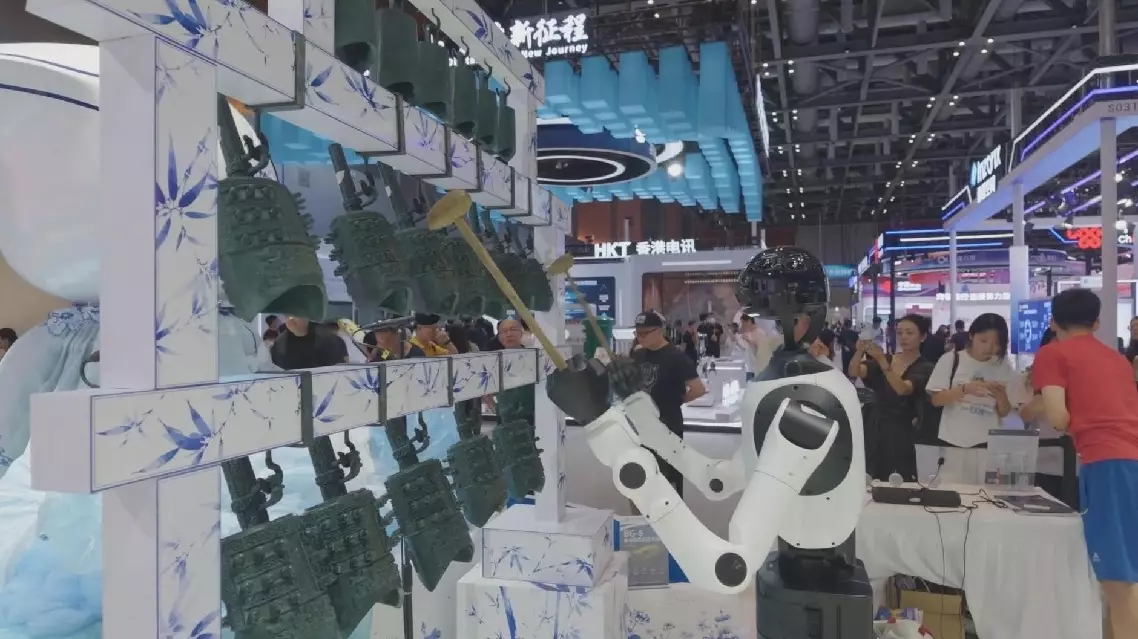
Humanoid robots demonstrate full-chain technological evolution at 2026 CIFTIS in Beijing