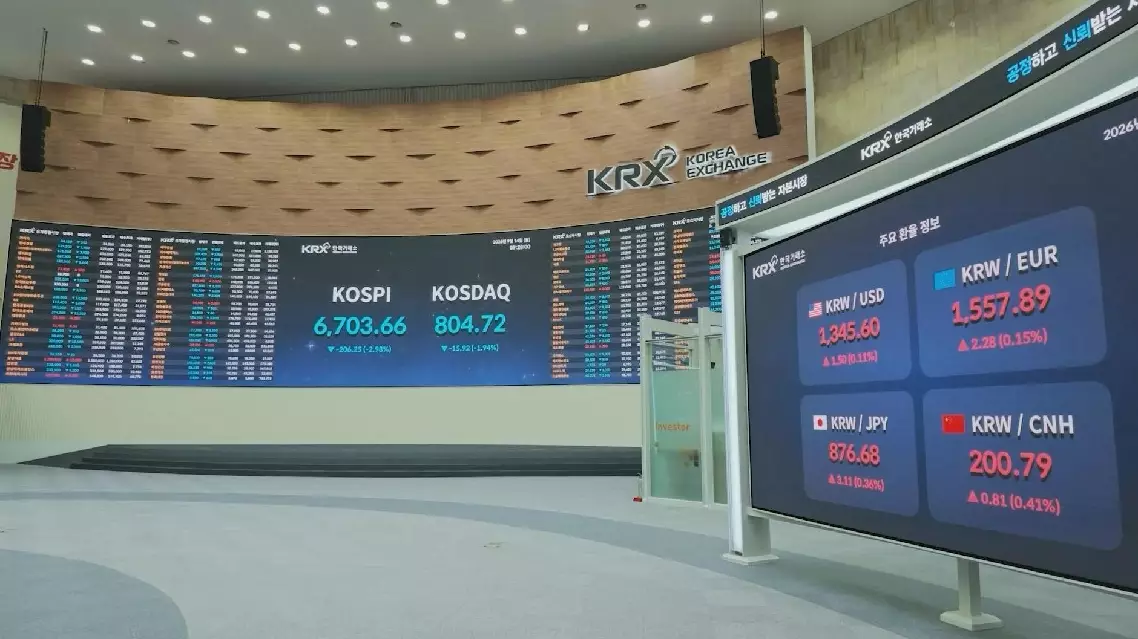
The Korea Exchange (KRX) on Monday officially launched an after-hours trading session, allowing investors to buy and sell eligible stocks until 8 p.m. following the regular market close.
Regular trading hours remain unchanged from 9 a.m. to 3:30 p.m. Under the new regime, investors can continue trading eligible stocks after the regular market close until 8 p.m.
The Korea Exchange originally planned to roll out a pre-market session alongside the after-hours service on the same day but delayed the plan to late 2027 following feedback from the securities sector about heavy strains on IT system development and workforce operations.
The trading hour expansion aligns with a global trend among major exchanges to lengthen trading windows, aiming to facilitate overseas investors' access to ROK shares and bolster the global competitiveness of the ROK's capital market.
Intensifying competition from domestic alternative trading platforms has also driven the move.
Launched in March 2025, NEXTRADE, the ROK's first alternative trading system, ended the Korea Exchange's nearly 70-year monopoly on the stock market. With longer trading hours and lower transaction fees, the platform has quickly siphoned off some trading orders from the main bourse.
"Especially during [NEXTRADE's] pre-market session from 8 a.m. to 9 a.m., trading volume has shown a clear upward trend. The KRX has recognized this market shift and understands there is genuine demand in the market. Without extended trading hours, its competitiveness could be affected. This is also an important background behind this policy adjustment," said Hwang Seiwoon, a researcher at the Korea Capital Market Institute.
For retail investors in the ROK, the extended schedule allows office workers who cannot trade during daytime hours to buy and sell stocks after work. Price reactions to overseas market moves and major corporate news are also expected to be reflected more promptly in stock valuations.
However, concerns have emerged, particularly over liquidity and price volatility. Analysts caution that with thinner trading activity in the evening session, even small order sizes could trigger pronounced price swings.
"Since the launch of the alternative trading platform, short-term price volatility has already been observed, especially during pre- and post-market sessions. In particular, when market fluctuations intensify, it is difficult to rule out the possibility that this is related to unfair trading practices. Therefore, it is necessary to take preventive measures against such risks in advance," Hwang said.
As for whether exchange-traded funds (ETFs) and exchange-traded notes (ETNs), the KRX has decided to exclude them from the after-hours session for now, citing concerns over market volatility.
Nonetheless, a 24-hour trading system remains a medium- to long-term goal for the KRX, and the market widely expects the exchange to progressively expand the scope of tradable products and further extend trading hours in the future.
Korea's ROK extends trading hours to 8 p.m. to boost market competitiveness
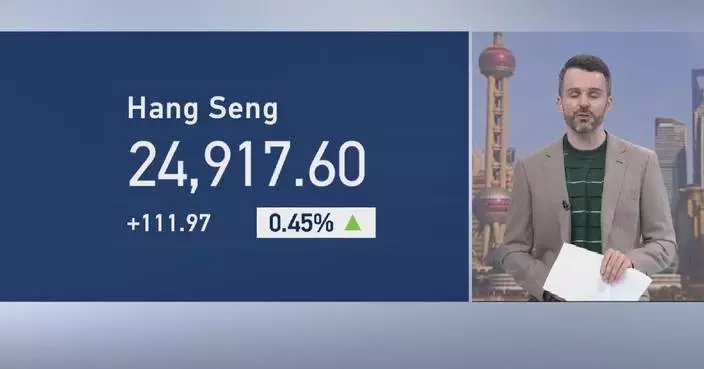
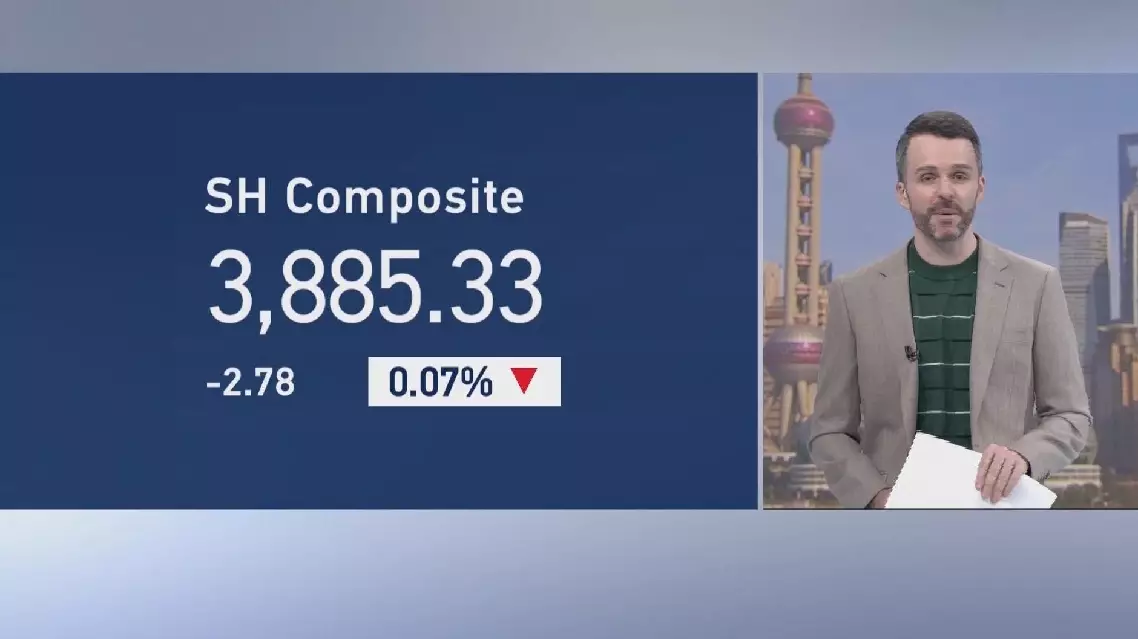
China's benchmark Shanghai Composite Index closed almost flat on Monday amid a wide sell-off of artificial intelligence-related stocks triggered by calls from top executives of major U.S. AI developers to slow the pace of AI development, according to Timothy Pope, an analyst for China Global Television Network (CGTN).
The Shanghai Composite Index dropped 0.07 percent to 3,885.33 points on Monday, while the Shenzhen Component Index closed 0.64 percent lower at 13,384.57 points.
The ChiNext Index, tracking China's Nasdaq-style board of growth enterprises, lost 1.10 percent to close at 3,285.58 points Monday. The STAR Composite Index, which reflects the performance of stocks on China's sci-tech innovation board, closed 0.35 percent lower at 1,811.23 points.
Pope noted that despite the overall resilience of major indexes, AI hardware stocks were among the biggest losers on the day.
"The Chinese mainland markets proved pretty resilient today actually as global AI stocks wobbled. We saw oil prices jump and interest-rate hike bets rising as well. The Shanghai Composite Index ended the session pretty much flat, while the Shenzhen Component [Index] lost a little more than half of 1 percent. AI stocks around the world sank today after the Anthropic CEO Dario Amodei published an essay calling for a slowdown in the development of frontier AI models. That was also backed up by OpenAI boss Sam Altman and some other industry leaders as well. But critically for Chinese companies, Amodei also called for tighter restrictions on exports of advanced AI chips and semiconductor equipment to China. We saw AI shares on the A-share have been caught in a bit of a rotation cycle already lately, with investors switching in and out pretty aggressively from these AI hardware stocks. So that added some extra momentum to today's move out of that sector. They were falling and were one of the weaker sectors today," said Pope.
The analyst said stocks of listed big state-own banks saw an injection of capitals from investors amid AI sell-off.
"Investors took some shelter in financial stocks. The big state-owned banks were once again helping to support the Shanghai index and investors were also waiting for the latest bank-lending data, although that wasn't released before the close of the markets today. There was also a small rebalance in the STAR 50 today. A handful of new companies joined the high-tech index, but that didn't fundamentally change things for the pressured tech sector," he said.
Pope highlighted that Chinese investors will witness a slew of data release in the rest of the week, helping them to have a more comprehensive grasp of the status of the country's domestic demand.
"For the week ahead in China, it's going to be very data-heavy. Tomorrow we have a big data dump including fixed-asset investment, property data, retail sales and industrial production and that's really going to give the market some clues about the state of domestic demand after those very strong trade figures that we saw last week," he said.
Chinese stocks resilient as calls for AI slowdown trigger sell-off: analyst