Deployed on tennis courts worldwide, Chinese-developed mobile AI tennis robots capable of adaptive ball delivery have become popular among tennis enthusiasts.
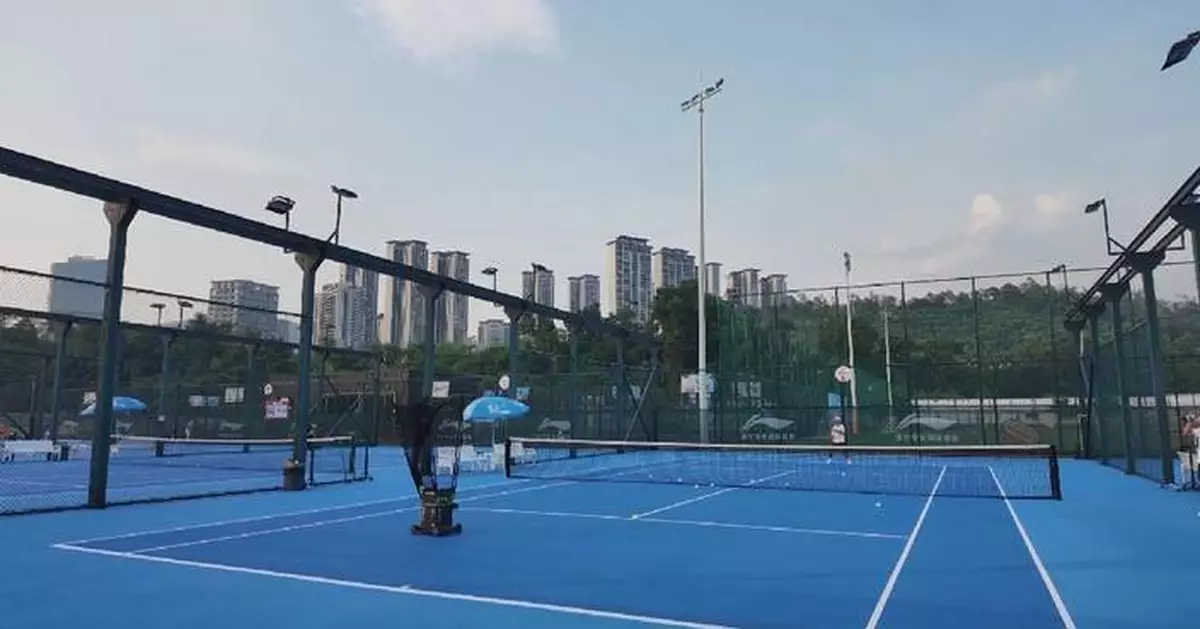
At a tennis venue in east China's Shanghai, an AI tennis robot stationed on the court delivers consistent serves to support player training. Capable of round-the-clock operation, the device works free from time and manpower constraints.
Equipped with visual recognition modules, the AI tennis robot captures users' swing movements in real time and provides voice prompts to correct postures, enabling players to complete standardized and systematic training without human coaches.
"The ball delivery quality of this robot is comparable to that of a player rated 4.0 or higher. Regarding the experience of rallying, it usually takes 30 to 50 private coaching sessions for total beginners to achieve steady five-shot baseline rallies. This intelligent robot can help users save nearly half of their private training expenses," said Xu Yong, a tennis enthusiast.
At a tennis center in Nanshan District, southern Chinese city of Shenzhen, the upgraded AI tennis robot supports all-direction movement and automatically adjusts ball-returning rhythms according to players' strokes. Unlike traditional fixed-point ball machines, it simulates the tactics and movement of a real opponent, delivering an immersive competitive training experience.
"The experience is excellent. The robot can move freely forward, backward and side to side while maintaining stable ball returns," said Liu Haolin, a tennis enthusiast.
Data released by China's General Administration of Sport shows that the total number of tennis participants in the country has exceeded 25 million. However, the sector is plagued by a notable shortage of professional coaches, while conventional ball machines with limited functionality fail to cater to diversified and personalized training needs. AI-powered tennis robots have bridged this industry gap, gaining wide popularity among tennis venues and recreational players alike.
Meanwhile, smart shared cabinets for AI tennis robots have been launched at numerous tennis venues across Shenzhen. Citizens can rent the devices by scanning a QR code on the cabinets with their smartphones, with rental rates ranging from 60 to 120 yuan (about 9 to 17 U.S. dollars) per hour.
"Recently, we have completed cooperation and product deployment at nearly 70 percent of tennis clubs in Shenzhen that have three or more standard courts. Nationwide, our deployment coverage has reached almost 40 percent of multi-court tennis venues in Beijing, Shanghai and Guangzhou," said Wang Lu, commercial director of Acemate.
From Shanghai and Shenzhen to global markets, Chinese-developed AI tennis robots are accelerating their overseas expansion.
According to Huang Zihui, CEO of Acemate, the AI tennis robot was launched on global crowdfunding platforms in May 2025. The campaign, aimed at global market verification in addition to fundraising, achieved far better results than expected.
"Our product became an instant hit globally. Users from more than 60 countries rushed to place orders. To date, we have shipped over 6,000 units worldwide, with more than 70 percent of sales contributed by overseas markets. North America and Europe serve as our largest markets, and our products are also widely used in Australia, Japan and Singapore," said Huang.
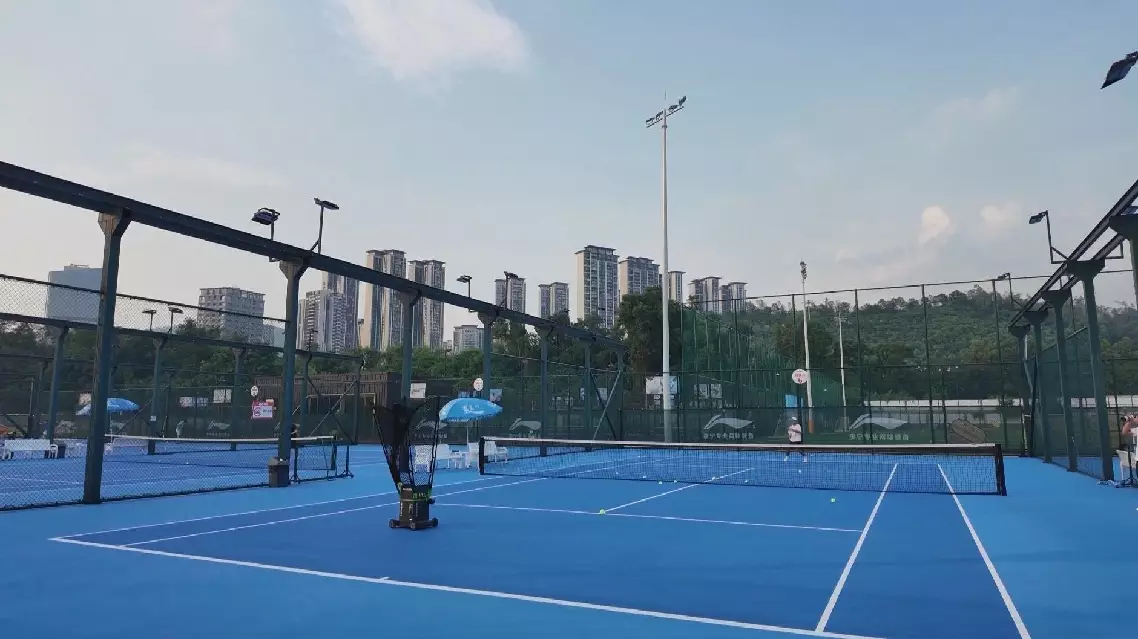
Chinese-developed AI tennis robots take global market by storm