China's outstanding aggregate financing to the real economy stood at 464.8 trillion yuan (about 69.26 trillion U.S. dollars) at the end of August, maintaining a reasonable growth at 7.2 percent year on year, central bank data showed on Monday.
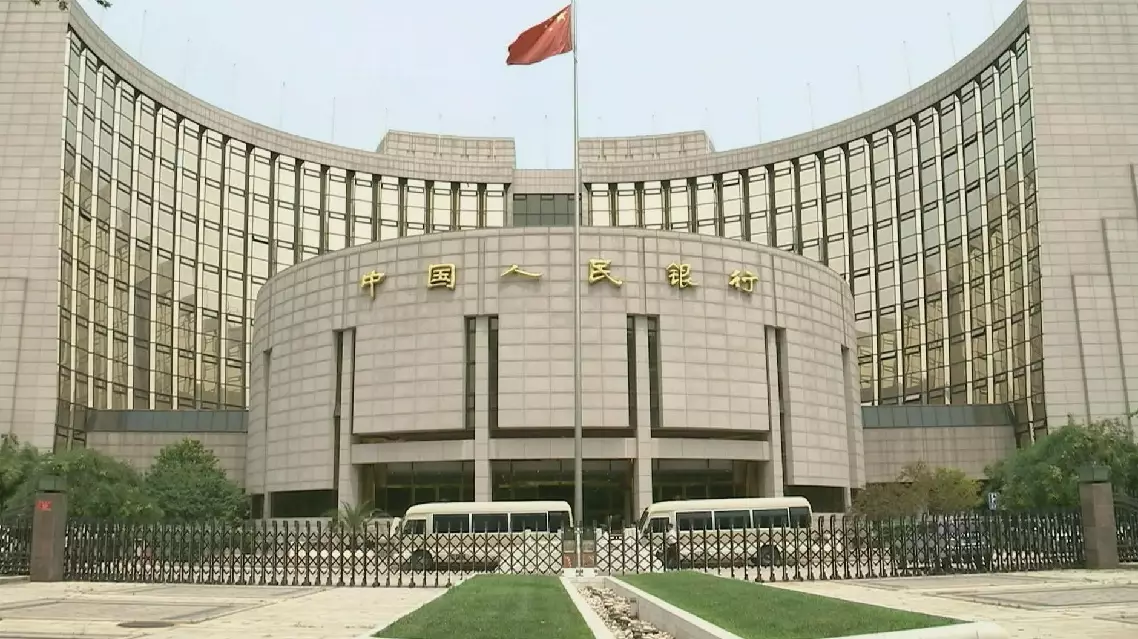
M2, a broad measure of money supply that covers cash in circulation and all deposits, had increased by 7.5 percent year on year to 356.81 trillion yuan by the end of last month, according to the People's Bank of China.
China's outstanding yuan loans stood at 282.35 trillion yuan at the end of August, up 4.9 percent year on year.
"The growth rates matched the targets for economic growth and the overall price level. China's aggregate financial volume is growing at a reasonable pace, and social financing conditions have remained relatively loose, creating a favorable monetary and financial environment for steady economic growth and high-quality development," said Dong Ximiao, chief economist at Merchants Union Consumer Finance.
Zhang Jiqiang, head of Huatai Research, noted that the combined share of bond and equity financing in the increment of social financing clearly exceeded the share of loans in the first eight months of the year, nearly 20 percentage points higher than that in the same period five years ago.
This means more diverse ways in which finance supports the real economy, thus enabling businesses to make lower-cost and more sustainable funding plans, Zhang said.
Loan interest rates remained at historically low levels in August, with the weighted average interest rate on newly issued business loans slightly below 3 percent, some 0.2 percentage points lower than that in the same period last year.
The central bank said in its latest monetary policy report that it will continue to implement a moderately loose monetary policy in the second half of 2026, strengthen counter-cyclical adjustment, and take solid steps to promote sustained economic development.
It will also maintain ample liquidity, guide financial institutions to enhance the balance of credit supply, and align the growth of social financing and money supply with expected targets for economic growth and overall price levels.
"Social financing costs were kept at a low level in August, and liquidity supply was ample, reflecting the orientation of a moderately loose monetary policy. The 15th Five-Year Plan (2026-2030) on building China into a financial powerhouse has been officially issued. It is expected that future macroeconomic and financial policies will further strengthen counter-cyclical adjustment, with intensifying efforts to boost domestic consumption and optimize supply," said Wen Bin, chief economist at China Minsheng Bank.
China’s aggregate financial volume sees reasonable growth in August: central bank