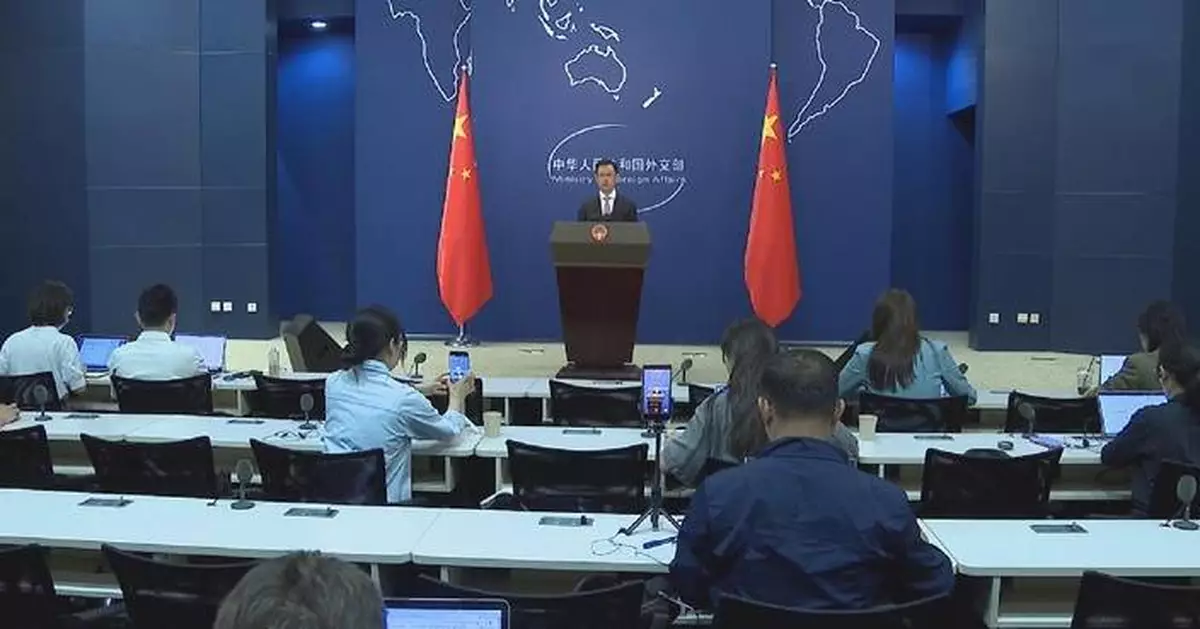
Philippines' so-called maritime jurisdiction claims over Chinese territory are illegal, Chinese Foreign Ministry spokesman Guo Jiakun said at a regular press briefing in Beijing on Tuesday.
"The Nansha Qundao, including Meiji Jiao, Zhubi Jiao and Zhongye Dao, is an inherent part of China's territory. China's construction and other activities on its own territory fall within the scope of its sovereignty and are legitimate and lawful. The territorial boundaries of the Philippines are clearly defined by a series of international treaties, and Nansha Qundao has never been part of Philippine territory. In accordance with the international law principle of 'land dominates sea,' the Philippines' so-called maritime jurisdiction claims over Chinese territory are illegal. The Philippine side's statements have fluctuated -- at one moment claiming that China's Zhubi Jiao is located within its exclusive economic zone and continental shelf, and at another moment claiming it lies within the territorial waters of the islands and reefs it has illegally occupied. This precisely illustrates the absurdity and arbitrariness of the Philippine claims, which are fundamentally untenable," he said.
"The 'South China Sea arbitration award' was entirely a political ploy by the Philippine side to seize illegal gains. The so-called 'award' is illegal, invalid, and has no binding force. The Philippines' so-called 'Maritime Zones Act' illegally incorporates China's Huangyan Dao and most of the islands and reefs in the Nansha Qundao along with the relevant maritime areas into the Philippine maritime zones, seriously infringing upon China's territorial sovereignty and maritime rights and interests in the South China Sea. It is illegal and invalid, and China firmly opposes it and will never accept it. We want to reiterate that China will continue to take resolute measures to safeguard its territorial sovereignty and maritime rights and interests and firmly oppose all acts of infringement. The Philippine side should immediately cease its infringing and provocative actions, as well as its incitement and sensationalism," said Guo.
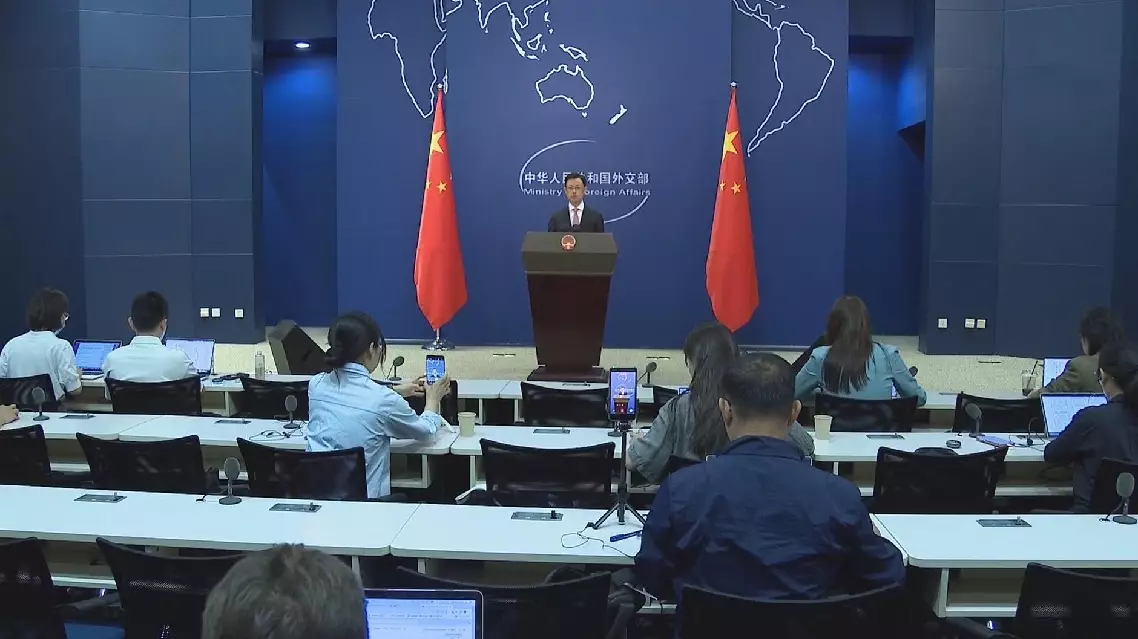
Philippines' so-called maritime jurisdiction claims over Chinese territory illegal: spokesman