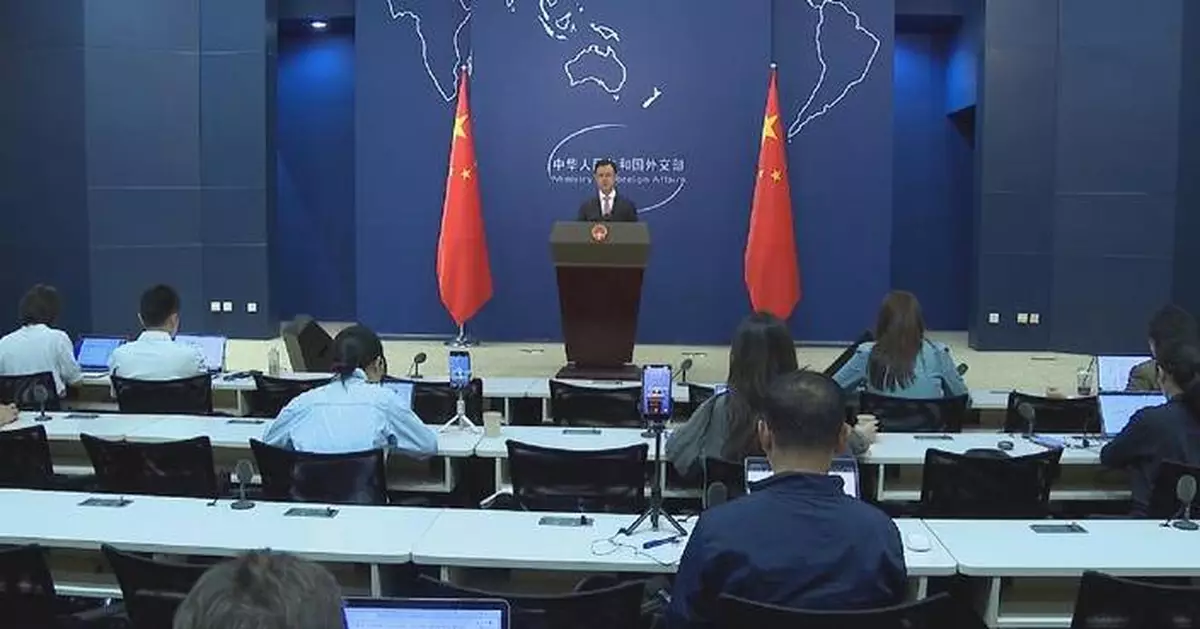
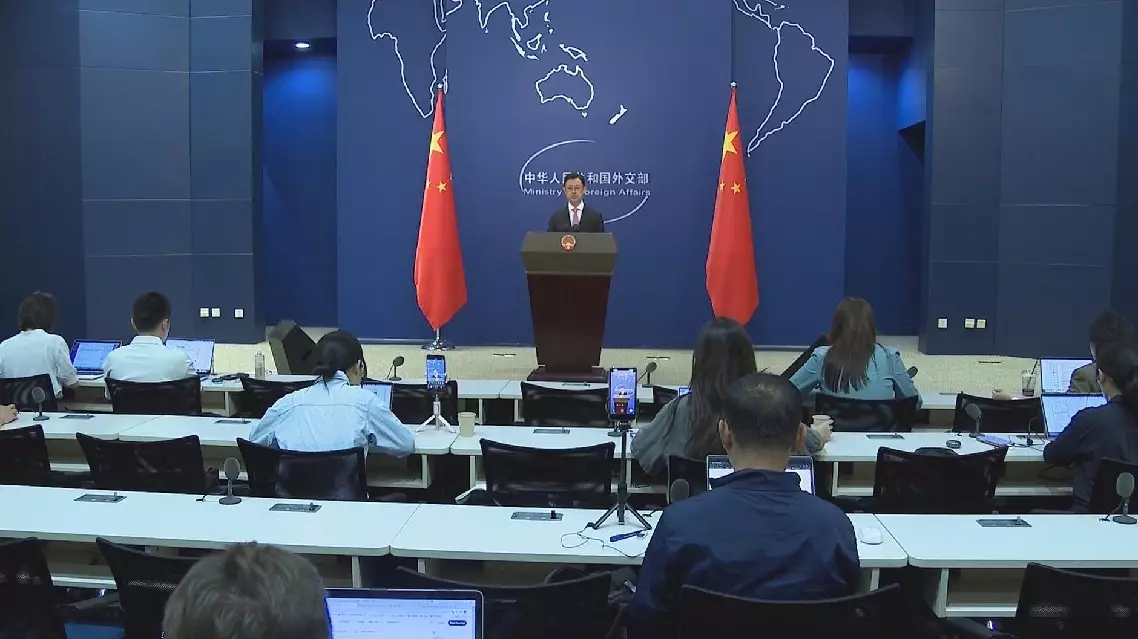
China will continue connecting the international market with its quality services, Foreign Ministry spokesman Guo Jiakun said at a press briefing in Beijing on Tuesday.
Guo made the remarks in response to a media query about the 2026 China International Fair for Trade in Services (CIFTIS) that concluded in Beijing on Sunday, which drew nearly 100 countries, regions and international organizations to exhibit their products.
"'China Services' is a brand-new calling card for China's high-level opening-up. This year's CIFTIS attracted more than 1,830 companies to participate exhibition offline and 5,300 online, yielding over 1,200 outcomes. It displayed a series of new technologies, new solutions and new outcomes in information and telecommunication, financial technology, digital medical care, smart education, energy conservation and environmental protection and other areas, creating new opportunities for cooperation. China will continue to connect the international market with quality services, promote the sharing of outcomes through mutually beneficial cooperation, and let more 'China Services' go out of the country and deliver greater benefits to the world," Guo said.
China to continue sharing quality services with world: spokesman
A massive public health blind spot has emerged in the Ebola response in the Democratic Republic of the Congo (DRC), as communication barriers are leaving many people with hearing impairment cut off from crucial health information about the deadly outbreak.
Since the ongoing Ebola epidemic was declared in May, the Congolese Red Cross (CRC) has launched a nationwide awareness-raising campaign, with posters put up on the streets and health messages broadcast on television and radio stations to reach as many residents as possible.
However, for the nation's deaf community, these life-saving updates have been hitting a wall of silence.
In the northeastern city of Kisangani, many deaf people still struggle to understand the message being disseminated, as it is not tailored to their specific needs.
"So far, preventive measures have only been explained to us superficially. We aren't truly equipped. We need adapted educational materials to better understand the signs of the disease and recognize the symptoms of Ebola," said Zacharie Dunga, director of the Espoir School for the Deaf in Kisangani.
The DRC government has announced targeted intervention plans, promising to restructure its public health response to fully integrate people with disabilities.
"We have implemented a range of strategies tailored to each group, including people with disabilities --the visually impaired, and the deaf or hard of hearing. We have produced communication materials in Braille. We are also refining our messaging to see how we can incorporate sign language interpreters to convey information regarding EVD (Ebola Virus Disease)," said Christian Tshilenge, an expert in risk communication and community engagement.
The current outbreak has become the largest and deadliest Ebola epidemic in the DRC's history and the second largest globally, behind the 2014-2016 epidemic in West Africa.
According to the latest data released by the DRC government, the country has recorded 7,541 confirmed Ebola infections as of Saturday, with 3,639 fatalities.
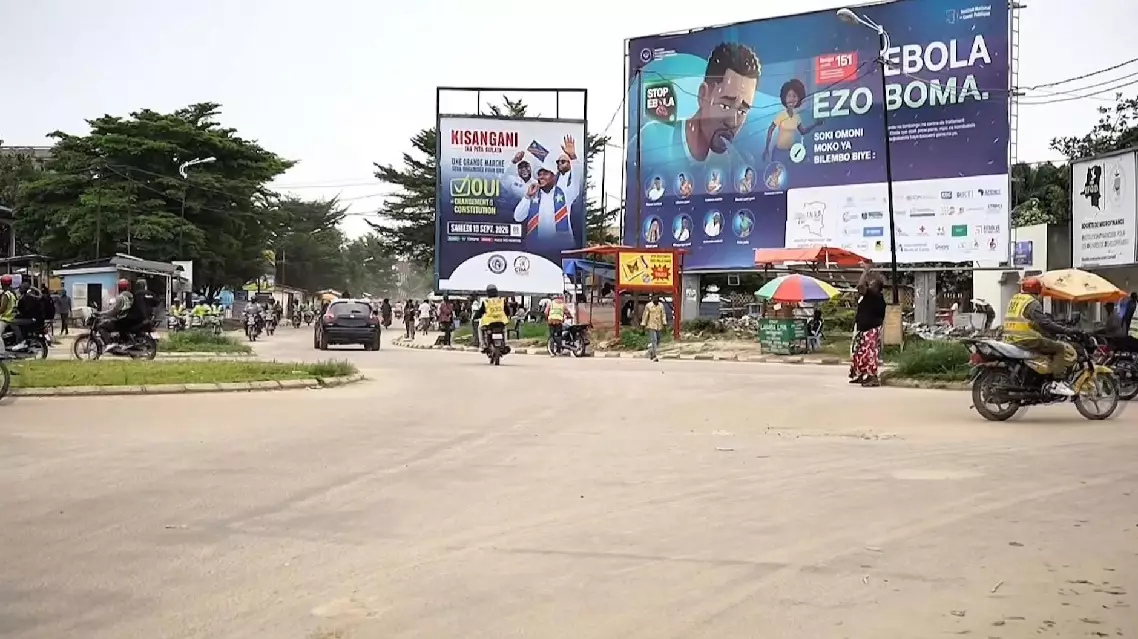
Communication barriers put deaf community at risk amid ebola outbreak in DR Congo