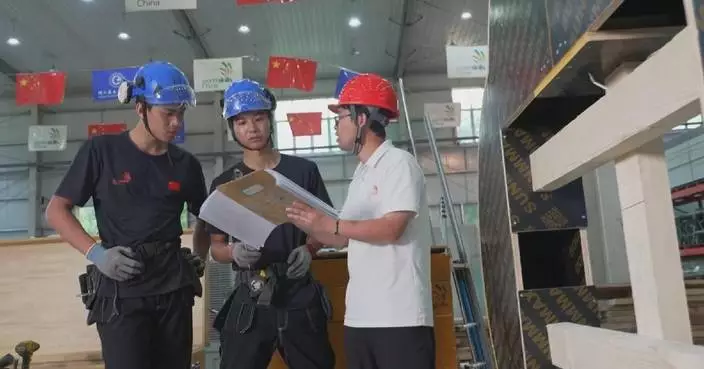
The 23rd China-ASEAN Expo opened Thursday in Nanning, capital of south China's Guangxi Zhuang Autonomous Region, featuring more than 3,400 companies from over 70 countries eager to tap surging regional trade and unlock new market opportunities.
Marking a major milestone, this year’s five-day event brings together all 11 ASEAN members in Nanning for the first time, with Timor-Leste joining as a co-organizer. Under the theme "CAFTA 3.0 Opportunities, Better Life," the showcase spans everything from traditional industries and digital communications to green development and artificial intelligence.
Officials from the bloc's newest member say the landmark gathering represents a major step forward.
"My feeling is so excited actually, because this is the first time for Timor-Leste after joining ASEAN as the 11th member of the bloc," said Domingos Tilman, a communications consultant with the Timor-Leste presidential office.
For commercial participants, the trade fair offers critical access to Southeast Asia's largest consumer market.
"This is my second time to come here and follow the exhibition. I have more opportunities after the exhibition. I am very happy to be here," said Dwi Sabda Irawati, an exhibitor from Indonesia.
"The Chinese market is so big. We are ready to export to here. In here, we need to find a retailer to import our product to here," said Siti Nur Abidah Binti Ramli, another exhibitor from Indonesia.
The expo comes amid record economic exchange between the two sides. China-ASEAN trade surpassed 1 trillion US dollars for the first time in 2025, up 7.4 percent year-on-year. Regional logistics received an additional boost this year following the opening of the Pinglu Canal, establishing a direct waterway route from southwestern China to Southeast Asian ports.

Global firms gather in Nanning as expanded 23rd China-ASEAN expo kicks off
Hundreds of robots will be tested for real-world roles at an upcoming expo in Hangzhou, east China's Zhejiang Province, as the industry shifts from eye-catching demos to practical applications
The organizer, China Media Group, will host this Zhejiang leg of the 1st Intelligent Robot Application Skills Exhibition on Sunday, with more than 60 companies showcasing over 300 robots spanning special operations, smart commerce and public services.
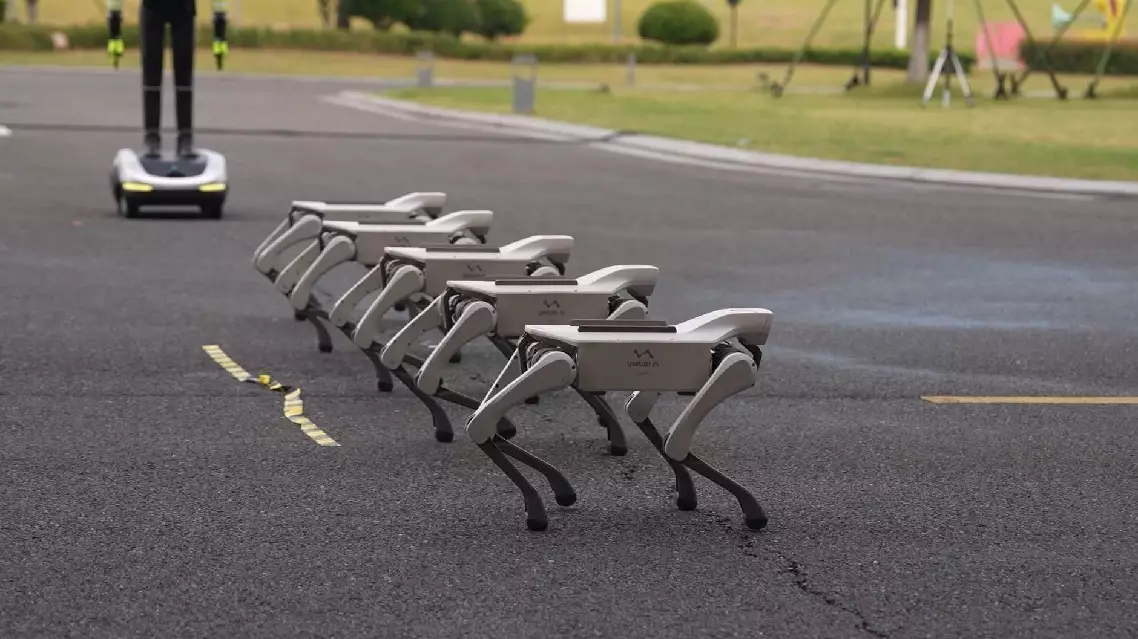
Rather than showing off dazzling moves, the machines will recreate real work scenarios and demonstrate what they can do on the job. Ahead of the opening, robot squads are drilling hard at the rehearsal site.
Among them is a team that simulates an air-ground collaborative patrol. A drone drops supplies at a target location before a robot dog takes over. That dog is no rookie. It has already been deployed in chemical plants and industrial parks across the country, handling inspection and security duties, and is equipped with infrared cameras and gas sensors that let it sense its environment on its own.
Next comes a more unusual four-legged machine with a robotic arm. As the rehearsal shows, it can grab obstacles in its path. Though small, it handles objects weighing around two kilograms with ease, a capability that could prove valuable in hazardous settings such as nuclear power plants and chemical facilities.
Another machine on display is a spray painting robot. Its arm extends up to 3.2 meters, and it can build parametric maps on site and automatically plan its own painting routes for walls and ceilings. It is built for large, high-altitude spraying jobs, taking on the complex and grueling work that would otherwise fall to people.
China Media Group launched its first Intelligent Robot Application Skills Exhibition in Beijing in July, aiming to help smart robots find practical use across more fields and inject fresh momentum into economic and social development.
Robots to take on real-world jobs at application skills expo in Hangzhou