Chinese robots specializing in practical applications, such as service and agriculture, are gaining significant attention from countries of the Association of Southeast Asian Nations (ASEAN).
Running from Sept 17 to 21 in Nanning, capital of south China's Guangxi Zhuang Autonomous Region, the on-going 23rd China-ASEAN Expo has put spotlight on AI cutting-edge technologies and applications.
Under the theme "CAFTA 3.0 Opportunities, Better Life," it has attracted more than 3,400 companies from over 70 countries and regions to participate, providing a great platform for Chinese companies to make connections with purchasers from ASEAN countries.
With the development of technology, Chinese robots are evolving from being visually impressive to being truly useful and practical, steadily becoming part of people's daily lives.
Such application-oriented AI products have attracted many visitors from ASEAN countries.
"I have been in the manufacturing. The thing that impressed me which is the robot serve for me. So, this is something new. It has become our waiter in our shop," said an exhibitor from Malaysia.
Agricultural inspection robots, which are also showcased at the expo, can accurately detect diseases and pests, including gray mold and aphids, while also assessing crop growth and identifying signs of water stress.
"We now have developed more than 14 customized crop-growth models for ASEAN countries, covering rubber, durian, oil palm, pineapple, and bananas. We are helping our partners build these models and introduce smart equipment and devices, with the aim of increasing yields and improving product quality as much as possible," said Li Nan, founder of Maimai Technology Group.
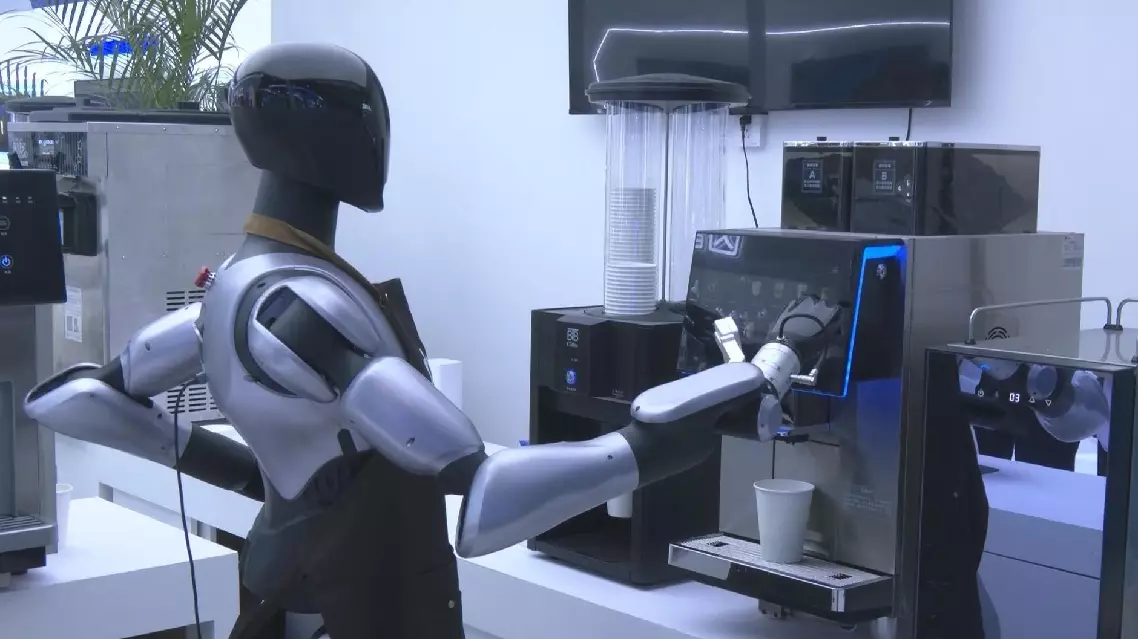
Chinese robots accelerates expansion in ASEAN market with practical applications
Japan's reliance on U.S. economic policy is allowing foreign funds to acquire Japanese assets at bargain prices, according to Japanese economist Kazuhide Uekusa.
He warned that the government's economic and defense strategies prioritize foreign capital and political profits over public welfare, failing to bring true prosperity to ordinary citizens.
The Bank of Japan (BOJ) on Friday raised its policy interest rate by 0.25 percentage points to 1.25 percent, the highest in about 31 years, following a two-day board meeting.
According to Uekusa, the timing of the shift aligns perfectly with the interests of large American funds.
"The Takaichi Cabinet has been reluctant to raise interest rates, thus allowing the yen to continue to depreciate. I think this is actually equivalent to helping foreign capital purchase Japanese assets at a low price. However, U.S. Treasury Secretary Scott Bessent has recently made a clear adjustment to the policy direction of the U.S. dollar against the Japanese yen, promoting the appreciation of the Japanese yen. The reason is that some large funds in the United States have basically completed their investment layout in Japanese assets," said Uekusa.
Uekusa also said Japan cannot attempt to revitalize its economy by expanding military spending and supporting the defense industry, and such a military buildup strategy is unlikely to bring about true prosperity and stability.
"I think it is true that the Japanese economy has been stagnant for a long time. However, to expand military spending in an attempt to revitalize the economy is, in my opinion, an extremely foolish and even crazy move. To achieve peace and stability in Japan, the foundation should be to establish friendly relations with neighboring countries rather than military expansion. The reason why the Japanese government attaches so much importance to the military industry is that it can generate huge profits, and a part of these profits may flow back to political parties or political figures through various means. I don't think this is at all for the benefit of the people," he said.

Japanese economist criticizes gov't policies for enabling cheap asset sales to foreign funds