The Chinese Academy of Agricultural Sciences (CAAS) on Saturday showcased more than 560 latest scientific and technological achievements from its 36 affiliated research institutes at a public exhibition, bringing lab innovations directly to consumers' daily lives and dining tables.
In the fruit and vegetable zone, a glass of fresh carrot juice drew more visitor attention than traditional sweet fruits, becoming one of the most popular displays.
"It tastes good. It feels sweeter than ordinary carrots," said child visitors.
Researchers developed the sweeter, more tender carrot varieties -- along with reduced-sugar variants -- by fine-tuning harvest schedules and cultivation models for different breeds.
Zhuang Feiyun, a specialist in bulk vegetable industrial technology systems at the CAAS Institute of Vegetables and Flowers, said the modification targets unpleasant flavor compounds without sacrificing nutrition.
"The overall taste of carrots is heavily influenced by growing conditions. By adjusting certain components, we've minimized many of the compounds that people find unpalatable, while fully preserving their original nutritional value," Zhuang said.
Also on display were crisp, translucent cucumbers enriched with tartronic acid, a functional small molecule that effectively inhibits the conversion of sugar into fat, offering a dietary aid for weight management.
The crop section featured breakthroughs from the Institute of Crop Sciences, including low-beany-flavor, high-isoflavone soybeans suited for juicing, and a newly developed corn variety that combines both sweet and glutinous textures in a single kernel.
Xiao Yonggui, a breeding expert at the Chinese Academy of Agricultural Sciences, talked about the technical advance behind the new corn variety.
"Traditional corn is either sweet or glutinous, or a mix at ratios like seven glutinous kernels to one sweet, or three to one. This new type integrates both flavors in one kernel with adjustable proportions, resulting in a much better eating experience," Xiao said.
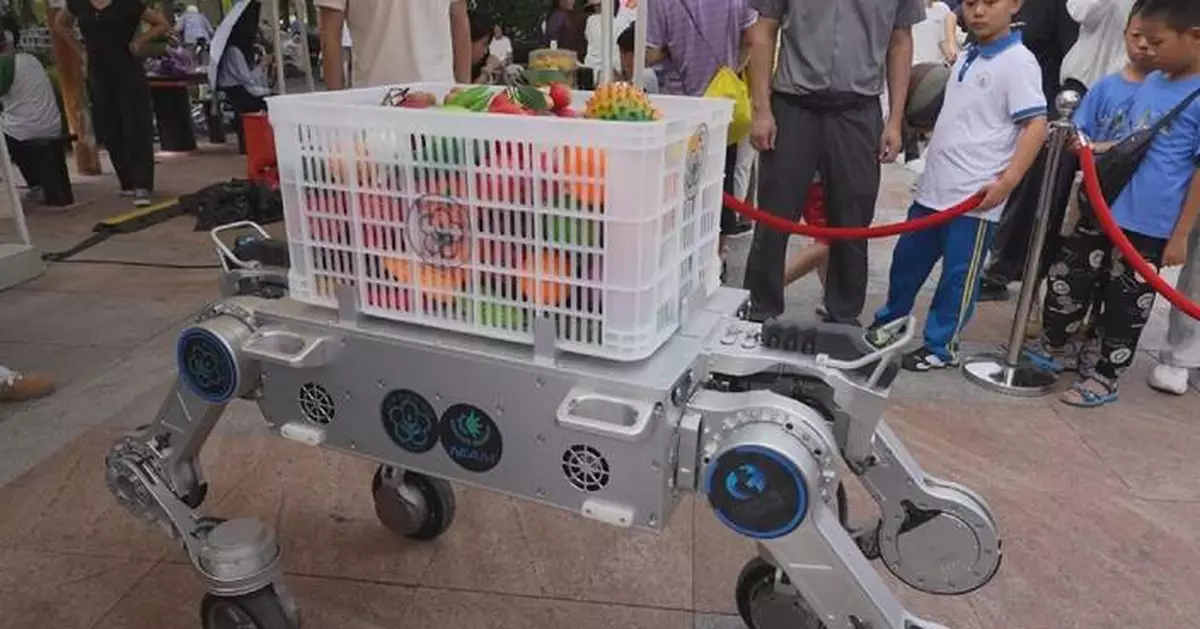
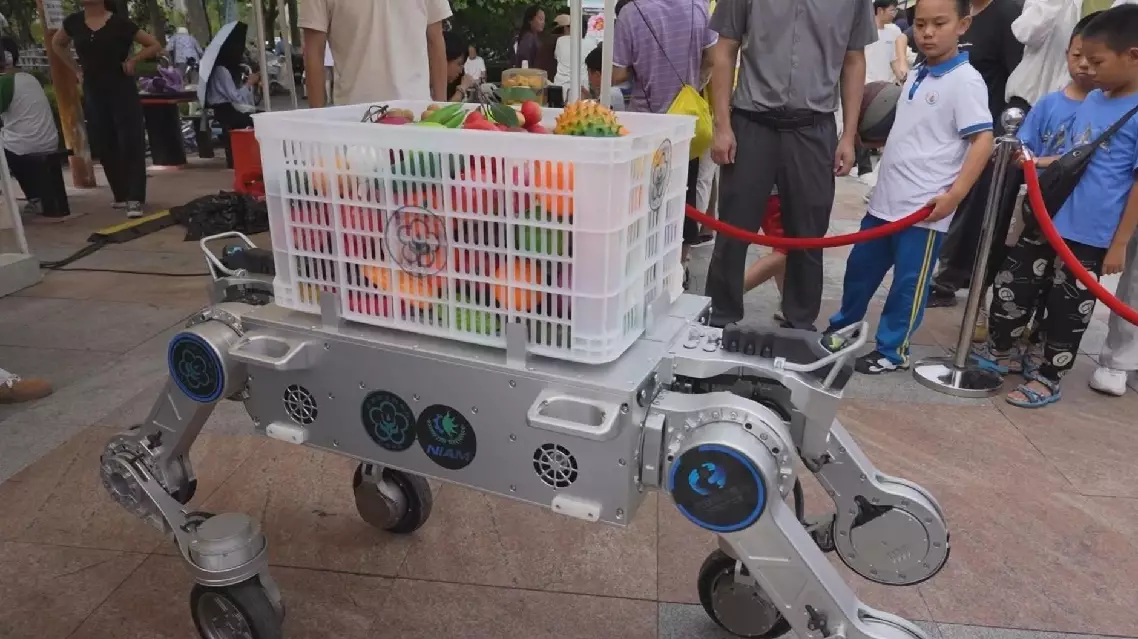
On the machinery side, a range of new agricultural robots made their debut. One agricultural transport robot can carry more than 100 kilograms of crops across hilly terrain while maneuvering with unusual agility.
"The movement we are showing now is lateral motion. In narrow farmland environments, it can quickly switch between rows and also perform in-place turns with omnidirectional movement," said Gong Qingshuo, an assistant researcher at the Nanjing Institute of Agricultural Mechanization under the Ministry of Agriculture and Rural Affairs.
Another key exhibit is a global animal disease risk forecasting model currently under development. The system will deliver real-time epidemic monitoring and early warning, acting as a "weather map" for the global livestock industry and strengthening the safety of meat, eggs and milk supplies.
From food products to production applications, these tangible, accessible research achievements are steadily narrowing the gap between agricultural laboratories and everyday life.
China unveils latest agricultural sci-tech achievements linking labs to daily life, dining tables