A public memorial was held in Hong Kong on Sunday for Tung Chee-hwa, former vice chairman of the National Committee of the Chinese People's Political Consultative Conference (CPPCC) and former chief executive of the Hong Kong Special Administrative Region (HKSAR).
Tung died of illness at the age of 89 in Hong Kong on Sept. 8. He is regarded as an outstanding contributor to "one country, two systems," a renowned patriot, an outstanding social activist and a close friend of the Communist Party of China (CPC).
Tung served as vice chairman of the 10th, 11th, 12th and 13th National Committees of the CPPCC. He was the first- and second-term chief executive of the HKSAR.
While Tung was critically ill, the central authorities expressed deep concern over his condition. Chinese President Xi Jinping and other central leaders instructed the Liaison Office of the Central People's Government in the HKSAR to convey best wishes and required all-out efforts in treatment.
Following Tung's passing, Xi Jinping, Li Qiang, Zhao Leji, Wang Huning, Cai Qi, Ding Xuexiang, Li Xi, Han Zheng, Hu Jintao and others expressed their deep grief in various forms and extended sincere condolences to his family. Shi Taifeng, a member of the Political Bureau of the CPC Central Committee and vice chairman of the CPPCC National Committee, Leung Chun-ying, vice chairman of the CPPCC National Committee, Wang Dongfeng, vice chairman and secretary-general of the CPPCC National Committee, Xia Baolong, director of the Hong Kong and Macao Work Office of the CPC Central Committee and of the Hong Kong and Macao Affairs Office of the State Council, and John Lee, chief executive of the HKSAR, attended Sunday's memorial service.
The memorial service started at 09:00, with all those present observing a moment of silence. Leung, vice chairman of Tung's funeral committee, presided over the event.
Shi, chairman of Tung's funeral committee, delivered a speech at the event, reviewing Tung's life and highlighting his important contributions to the country, to Hong Kong, and to the society.
Following the speech, all participants bowed three times to Tung's portrait, came up in turn before his remains to pay their final respects, and expressed condolences to his family members.
Leaders from the central government institutions in Hong Kong, senior officials from the HKSAR government, HKSAR deputies to the National People's Congress, HKSAR members of the CPPCC National Committee, and representatives from various sectors of Hong Kong also attended the memorial to pay their respects.
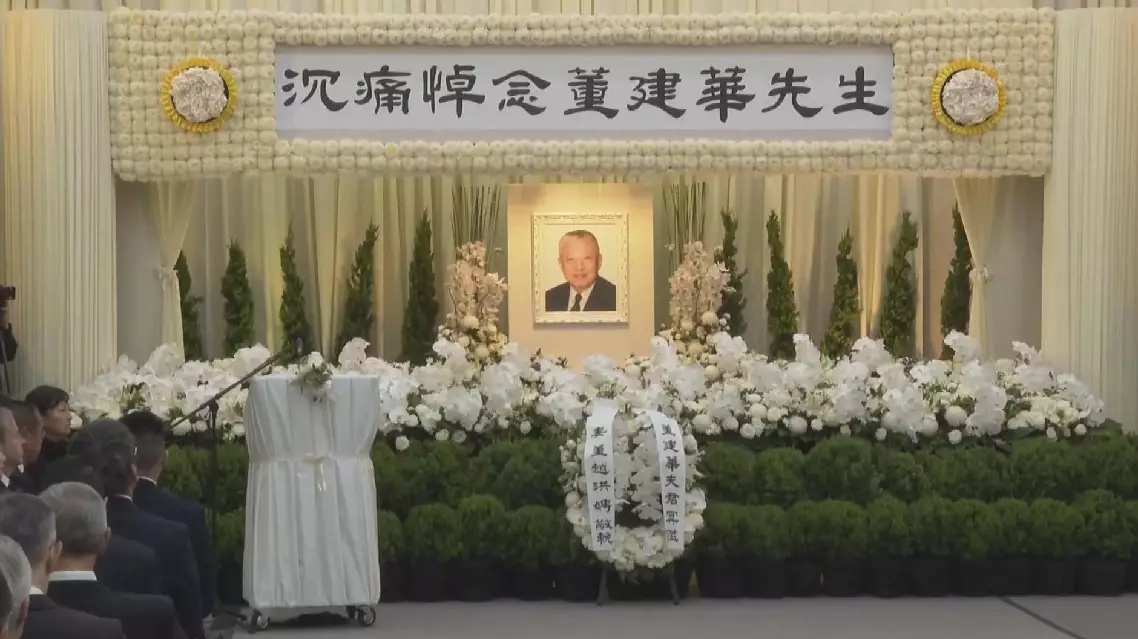
Public memorial held for former HKSAR Chief Executive Tung Chee-hwa
The ongoing China-ASEAN Expo serves as a bridge for China and the Association of Southeast Asian Nations (ASEAN) to boost trade flows, helping both sides reap shared development dividends.
Scheduled to run from Sept 17 to 21 in Nanning City of south China's Guangxi Zhuang Autonomous Region, the event draws more than 3,400 exhibitors from over 70 countries and regions.
This year, Timor-Leste is participating for the first time as a full ASEAN member and a co-host of the expo, with participants noting results have exceeded expectations, bolstered by China's vast market.
"I brought 60 packages of 250-gram coffee, which would be sold out in one day. Now I'm thinking that China market is open for everybody and it's very huge," said an exhibitor from Timor-Leste.
Participants also hailed the construction of China's Pinglu Canal, which officially opened to traffic on Wednesday.
The 134.2-km-long canal runs from Hengzhou, a county-level city in Guangxi, to the Beibu Gulf, the closest maritime outlet for much of southwest China.
The canal becomes a cost-competitive river-sea intermodal shortcut connecting ASEAN producers with the vast consumer market in southwest China, said the participants.
"In the past, shipments into the southwest China usually went by sea to Guangzhou and then overlands. Too many handover made it hard to keep products fresh. Losses were high and transit time was unreliable. Now that the canal is open, we can enter [the] Guangxi [Zhuang Autonomous Region] directly from the Beibu Gulf and move on to Yunnan, Guizhou and Sichuan restaurants, faster onto the supermarket shelves and tables in the southeast [part of China]," said an exhibitor from Vietnam.
With the formal signing of the China-ASEAN Free Trade Area (FTA) 3.0 Upgrade Protocol in Oct 2025, bilateral cooperation has expanded beyond economic and trade areas to emerging fields such as the digital economy and the green economy.
"I am looking for an investor to develop agriculture and integrated tourism with us in Malaysia," said an exhibitor from Malaysia.
Economic ties between China and ASEAN have continued to deepen. Bilateral trade topped 1 trillion U.S. dollars for the first time in 2025, totaling 1.05 trillion dollars, up 7.4 percent year on year. In the first seven months of 2026, trade between the two sides reached 744.41 billion dollars, an increase of 24.7 percent year on year and accounting for 21.8 percent of China's total foreign trade.
China has remained ASEAN's largest trading partner for 17 consecutive years, while ASEAN has been China's largest trading partner for six successive years.
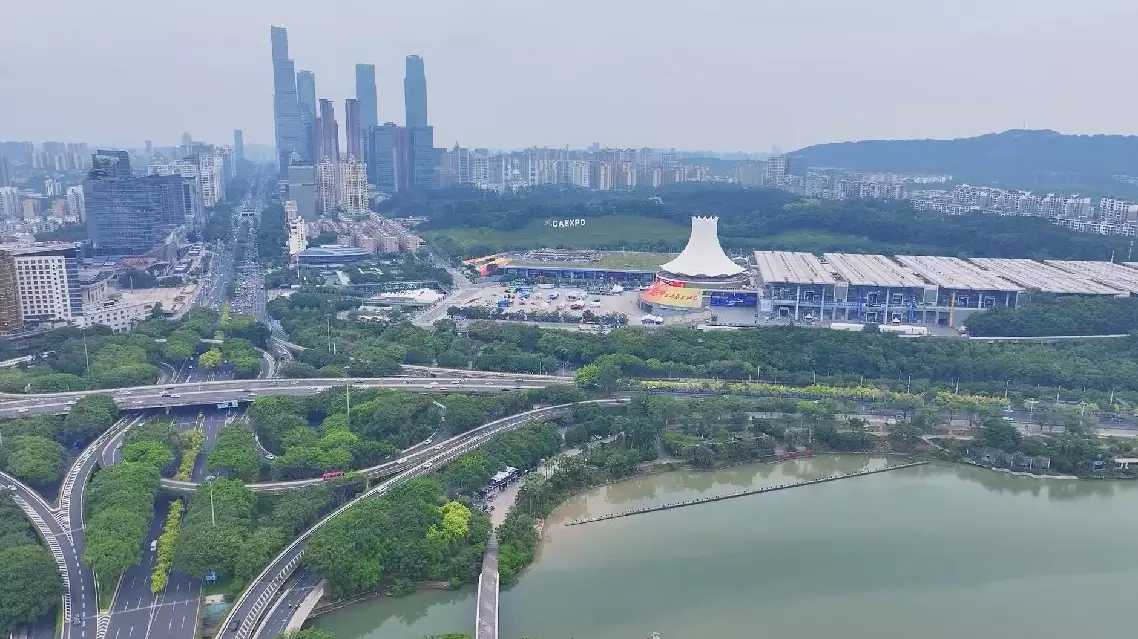
China-ASEAN Expo boosts bilateral cooperation, delivers shared dividends