CHICAGO (AP) — The Chicago Bears made a memorable trip to Philadelphia in November, rushing for 281 yards in an impressive 24-15 victory over the Eagles.
Philadelphia is hoping to return the favor on Monday night, when it visits Chicago in search of a second straight road win.
“They are one of the better running teams in the league,” Eagles defensive coordinator Vic Fangio said. “They’ve got a really great (offensive line), great backs. Their scheme is good. We’re going to have to play it a whole lot better.”
It would be difficult to play it any worse than they did in their matchup last season. D’Andre Swift and Kyle Monangai both went over 100 yards rushing as Chicago possessed the ball for almost 40 minutes in its fifth consecutive victory — a streak that helped propel the Bears to the NFC North title. Philadelphia gained just 87 yards on the ground in the loss.
Swift and Monangai led the way again as Chicago rushed for 291 yards in this year's season opener at Carolina on Sept. 13. But the Bears' ground game was held in check during Sunday's 9-3 loss to Minnesota, finishing with 134 yards on 31 attempts.
Chicago has an uncertain situation at quarterback with Caleb Williams dealing with a right hamstring injury and Tyson Bagent in the concussion protocol. But Fangio doesn't think it will have much of an effect on the Bears' rushing scheme.
“They’re an under-center offense a good bit, so it’s not like it’s a lot of gun zone-read, QB-generated runs,” Fangio said. “They’re under center, handing it off. They do a great job of blocking.”
Philadelphia is coming off a dramatic 24-20 victory at Tennessee. Eagles quarterback Jalen Hurts threw a 3-yard touchdown pass to Darius Cooper with 9 seconds left.
“It’s a really good team coming in. ... They make it really difficult for you and it’s sound, both sides of the ball,” Bears coach Ben Johnson said. “Special teams a good unit as well, so we’ll have our work cut out for us.”
If Williams and Bagent are unable to play, Case Keenum is expected to start for Chicago. The 38-year-old Keenum has made 66 starts in 80 career games, but he hasn’t thrown a pass in a regular-season game since Dec. 24, 2023, for Houston against Cleveland.
“I feel really good,” Keenum said. “There have been some things every year. I call it a little puzzle of trying to figure out how to get your body in the best shape that it can. This year worked a little more on my diet and what I put in, what I fuel it with. Which is not as fun, it’s just boring, but it does help. So, I feel great.”
Philadelphia (2-0) at Chicago (1-1).
When/where to watch: Monday, 8:15 p.m. EDT, ESPN/ABC.
Latest odds: Eagles by 4 1/2.
Against the spread: Eagles 0-2, Bears 1-1.
Last week: Eagles beat the Titans 24-20; Bears lost to the Vikings 9-3.
Last meeting: Bears beat Eagles 24-15 on Nov. 28 in Philadelphia.
Series record: Bears lead 30-17-1.
Eagles DT Jordan Davis vs. Bears C Garrett Bradbury. Listed at 6-foot-6 and 336 pounds, the 26-year-old Davis presents a sizeable challenge for Bradbury and the rest of Chicago's interior offensive line. The Eagles also have Jalen Carter and Moro Ojomo up front on defense. Bradbury was acquired in an offseason trade with New England. He was flagged four times in the loss to the Vikings, two for holding and two for false starts.
— Philadelphia is 2-0 for the fourth time under coach Nick Sirianni. The Eagles won their first eight games in 2022 and their first five in 2023. They got off to a 4-0 start last season.
— The Eagles lead the NFL with a .705 (31-13) road winning percentage since the 2021 season.
— Philadelphia's defense surrendered 295 yards in Week 1 against Washington and 291 yards in Week 2 against Tennessee. It's the first time since 1995 that the Eagles held their opponents under 300 total yards in each of the first two games.
— Bears wide receiver Kalif Raymond leads the team with 13 catches through two games. He has six third-down receptions that have gone for first downs.
— Bears tight end Colston Loveland has one catch for 3 yards so far this year. He had a team-high 58 receptions for 713 yards and six touchdowns as a rookie last season.
See AP’s full NFL coverage here

Chicago Bears head coach Ben Johnson walks off the field after the Bears lost to the Minnesota Vikings in an NFL football game in Chicago, Sunday, Sept. 20, 2026. (AP Photo/Nam Y. Huh)
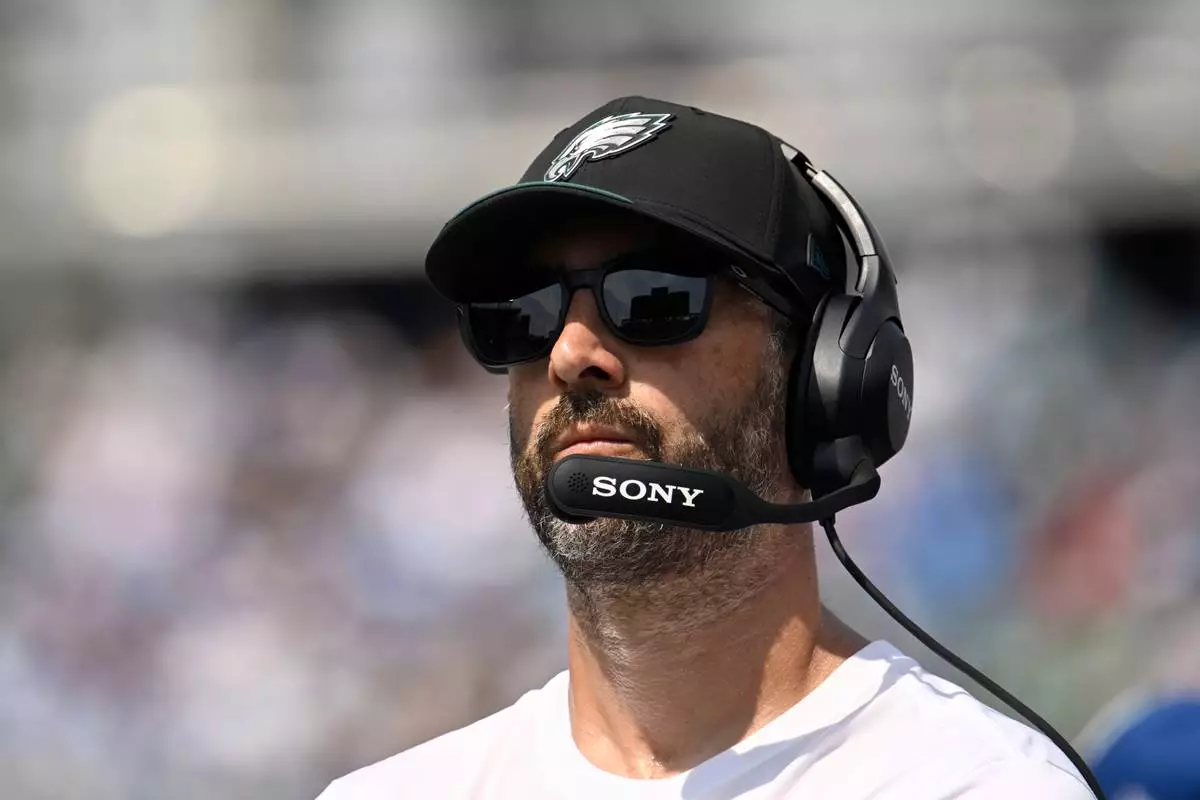
Philadelphia Eagles head coach Nick Sirianni watches from the sideline during the first half of an NFL football game against the Tennessee Titans, Sunday, Sept. 20, 2026, in Nashville, Tenn.(AP Photo/John Amis)

Philadelphia Eagles quarterback Jalen Hurts walks off the field after an NFL football game against the Tennessee Titans, Sunday, Sept. 20, 2026, in Nashville, Tenn.(AP Photo/John Amis)
ALLENTOWN, Pa. (AP) — The Energy Department said Thursday that it will spend almost $2 billion to try to squeeze more electricity out of the nation's aging and stressed power grid, as President Donald Trump's administration steps up efforts to avoid blackouts amid skyrocketing energy demand spurred by artificial intelligence.
The money will go toward 31 projects across 26 states that are expected to produce more than 23 gigawatts of additional electricity capacity — enough to power 16 million homes. The projects will use new technologies such as sensors to measure real-time weather conditions to ensure safe transmission or direct power away from congested paths, the department said.
The upgrades could improve power reliability and lower electricity costs for about 100 million Americans, officials said.
“This is a quick way to lower electricity prices and increase reliability: using fibers that are already in the transmission lines to analyze what’s the temperature out, what’s the wind out, how can we use this transmission line to distribute more power, but safely and only in the right conditions," Energy Secretary Chris Wright said in a news conference promoting the grants Thursday at a PPL Corp. facility in Allentown.
The eastern Pennsylvania electric utility says two data centers in its territory came online this year and six more are under construction, with enough other data centers in the advanced planning stages that its peak electric demand could quintuple by 2032.
PPL said it is receiving $71.5 million to modernize an existing high-voltage transmission line across roughly 30 miles in northern Pennsylvania.
The announcement comes amid warnings that AI’s voracious demand for power is threatening to overwhelm U.S. power supplies, as massive new data centers come online faster than new power plants can be built. It also comes as electricity bills rise faster than inflation in many parts of the U.S., blamed in some areas on demand from data centers.
The snowballing opposition to data centers in communities across the country has thrown a wrench into the plans of the world’s richest companies and transformed the midterm election landscape.
Trump continues to stick up for data centers, even as politicians from both major political parties criticize them and many communities try to block them.
In the meantime, Congress and some states are trying to push utilities to expand their use of new technologies to make grids more efficient and to lessen the need to build new power plants.
Julia Selker, the executive director of the WATT Coalition, a trade association for grid-enhancing technologies, said both the projects and the scale of the investment are significant. Utilities in the U.S. are lagging places like Europe in adopting the technologies, despite federal investment in the past to develop and test them, Selker said.
Still, Drew Maloney, CEO of the Edison Electric Institute, a trade association of for-profit utilities, said America's electric utilities are making a “significant investment” every year in new technologies to strengthen the grid and reduce outages.
Wright said that work on the projects should begin right away and that he hoped some efficiencies are in place before this winter to tamp down price spikes when extreme weather sends demand skyrocketing.
Wright said he didn't know whether the projects would have gotten done without federal funding. Many, he said, had been under consideration before the grants were offered, but the grant recipients hadn't “quite pulled the trigger” on them.
Projects being announced Thursday will involve component enhancements on more than 1,500 miles (2,400 kilometers) of transmission lines and technological enhancements across nearly 21,000 miles (34,000 kilometers), the department said.
Projects were prioritized based on those that can be put into operation quickly, officials said. Money for the grants comes from the bipartisan infrastructure law enacted by Congress under then-President Joe Biden, a Democrat. The government's $1.9 billion in funding will be matched by $3.35 billion from the recipients, the department said.
Recipients include utilities, cooperatives and four state agencies. The state agencies — in Colorado, Indiana, Ohio and Oklahoma — were the biggest recipients, collectively drawing $810 million, with the Colorado and Oklahoma projects promising improvements to regional grids.
Trump has vowed to “unleash” the nation's energy sector in his second term, aiming to drive up record-setting domestic oil and gas production, strip away pollution restrictions on power plants and keep expensive coal-fired power plants operating past their retirement dates.
The administration also has pledged nearly $4 billion to buy back offshore wind leases as Trump seeks to discourage the expansion of wind energy in favor of fossil fuels.
His administration meanwhile has pushed to help tech giants build and connect data centers to power plants and high-voltage power lines and convert Cold War-era uranium enrichment plants into data center and power plant complexes.
Daly reported from Washington.
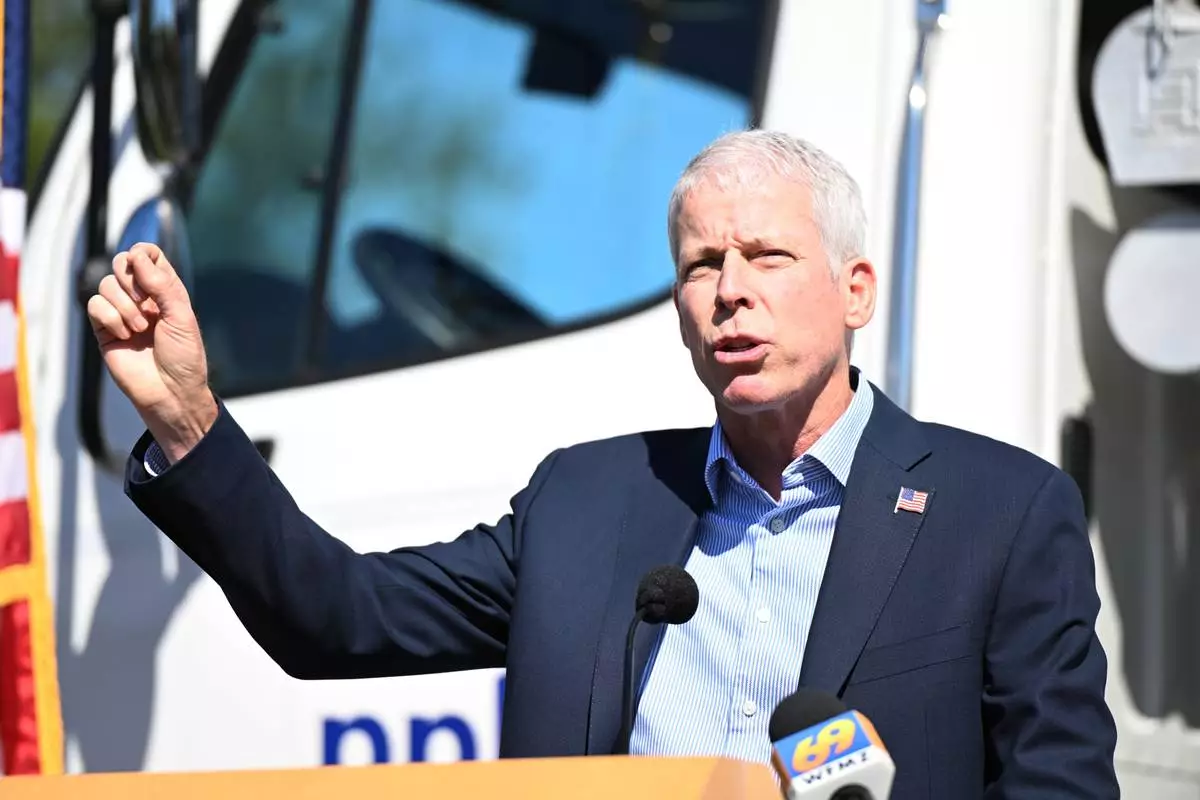
Energy Secretary Chris Wright speaks at a news conference at a PPL Corp. facility to announce that the Energy Department will spend almost $2 billion to try to squeeze more electricity out of the nation's aging and stressed power grid, Wednesday, Sept. 24, 2026, in Allentown, Pa. (AP Photo/Marc Levy)
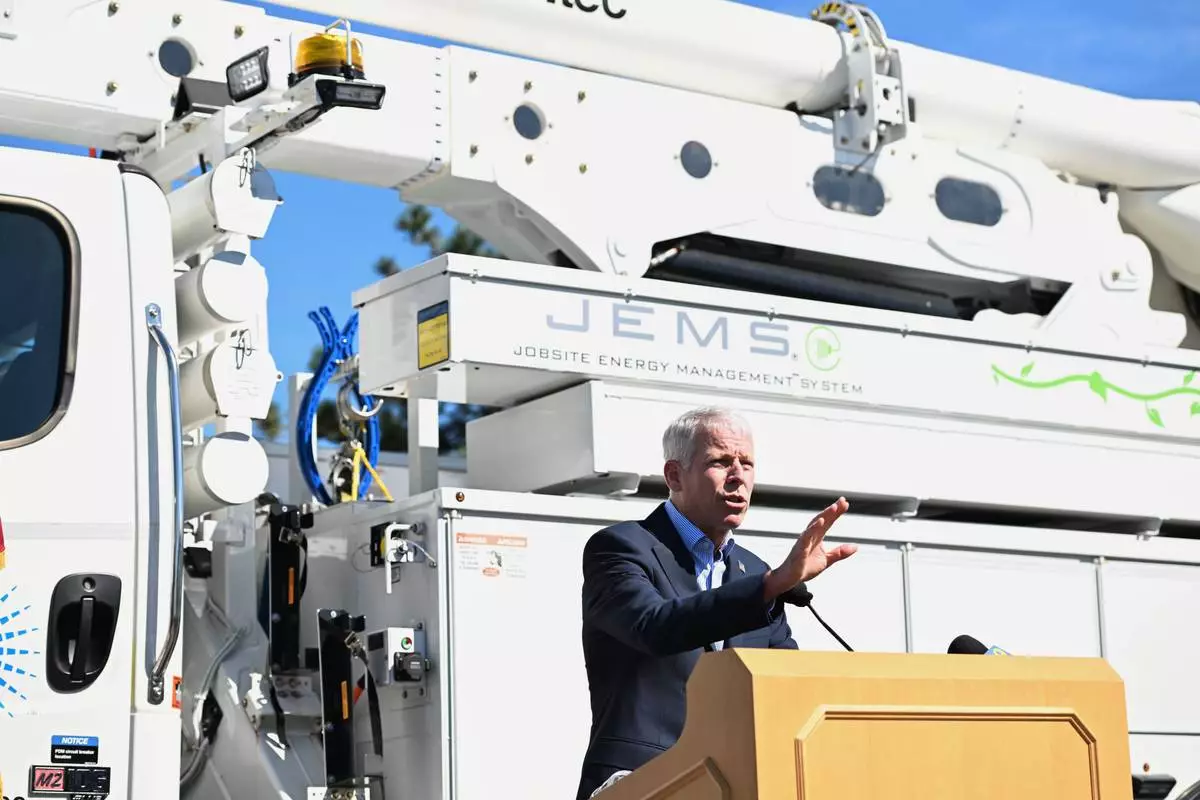
Energy Secretary Chris Wright speaks at a news conference at a PPL Corp. facility to announce that the Energy Department will spend almost $2 billion to try to squeeze more electricity out of the nation's aging and stressed power grid, Thursday, Sept. 24, 2026, in Allentown, Pa. (AP Photo/Marc Levy)
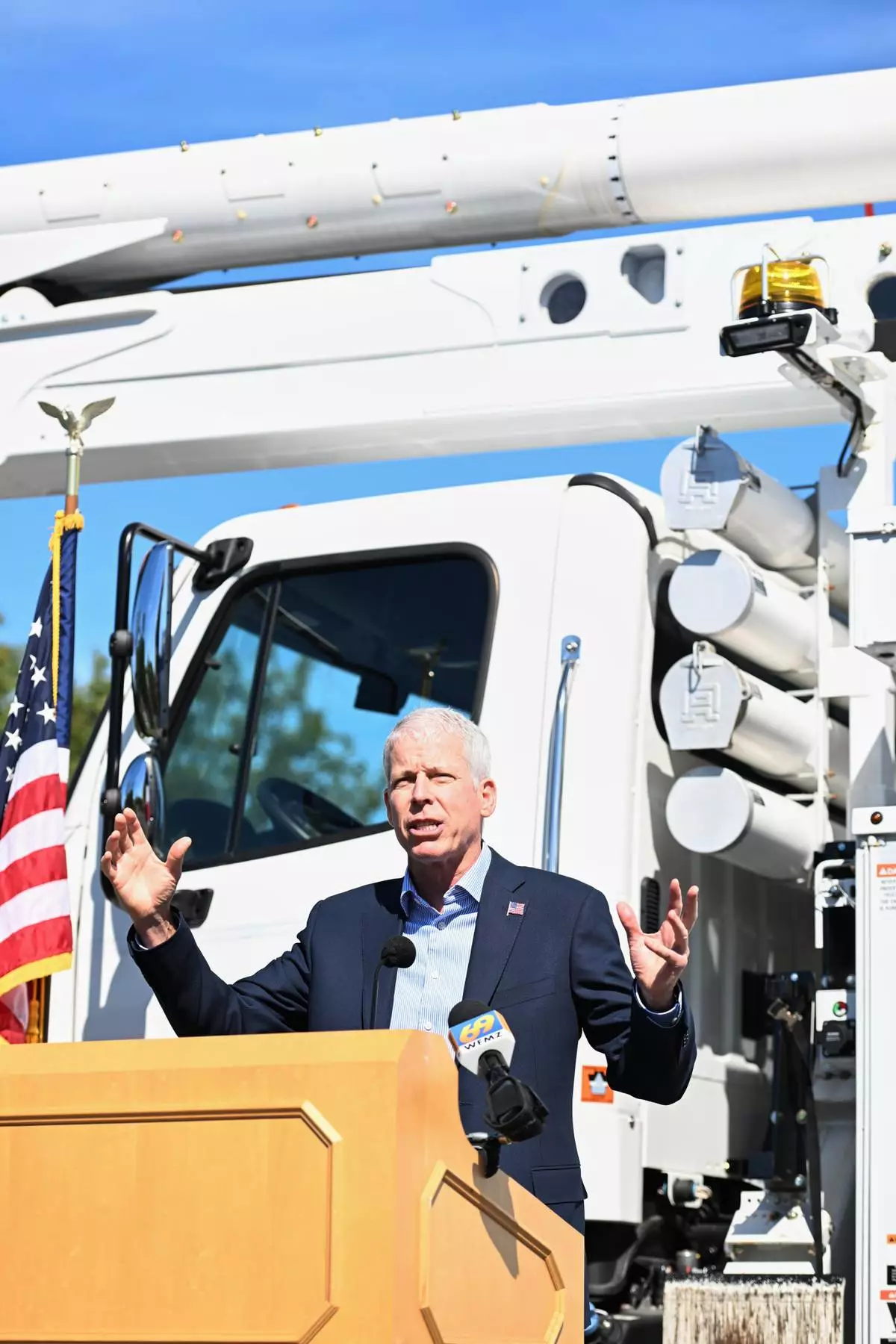
Energy Secretary Chris Wright speaks at a news conference at a PPL Corp. facility to announce that the Energy Department will spend almost $2 billion to try to squeeze more electricity out of the nation's aging and stressed power grid, Thursday, Sept. 24, 2026, in Allentown, Pa. (AP Photo/Marc Levy)
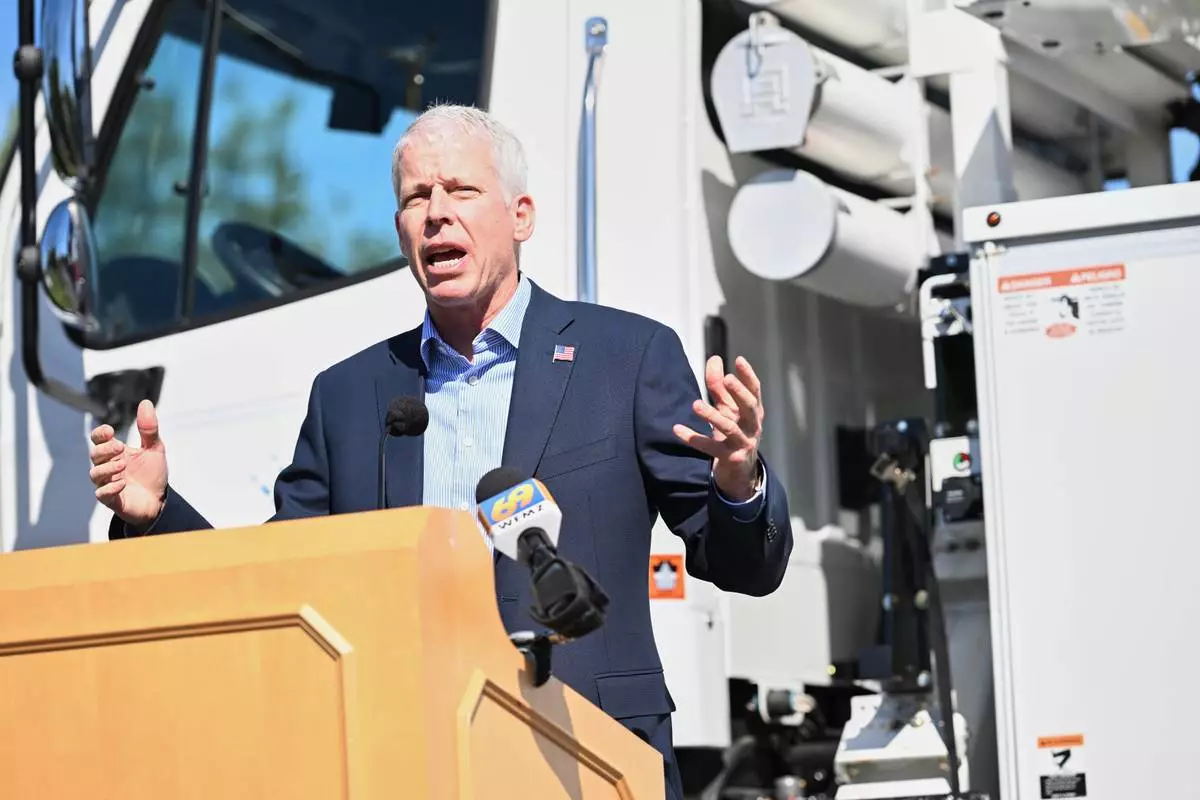
Energy Secretary Chris Wright speaks at a news conference at a PPL Corp. facility to announce that the Energy Department will spend almost $2 billion to try to squeeze more electricity out of the nation's aging and stressed power grid, Thursday, Sept. 24, 2026, in Allentown, Pa. (AP Photo/Marc Levy)
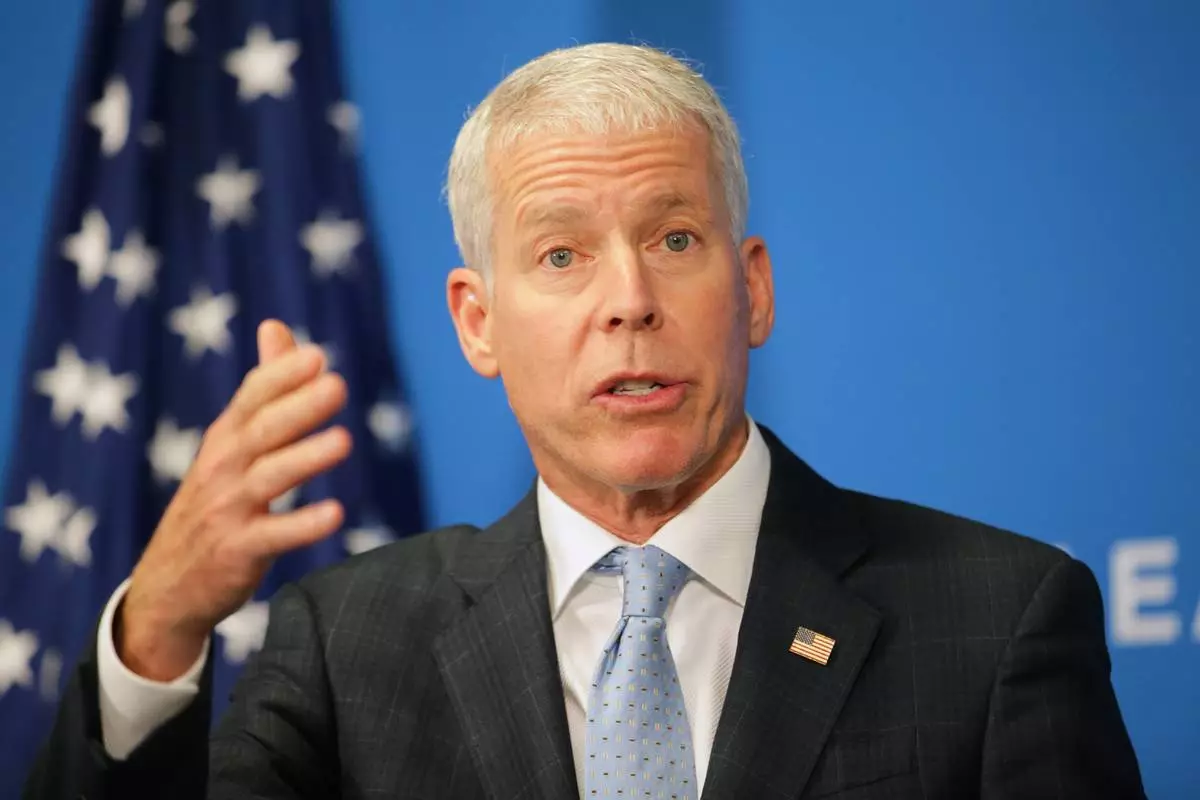
United States Secretary of Energy Chris Wright, talks to the media during a press conference on the sidelines of the annual General Conference of the International Atomic Energy Agency (IAEA) in Vienna, Austria, Monday, Sept. 14, 2026. (AP Photo/Heinz-Peter Bader)