The China Manned Space Agency (CMSA) on Sunday released its weekly update on the Shenzhou-23 mission, reporting that the crew completed payload transfer operations and steadily advanced scientific experiments aboard the Tiangong space station.
According to the mission schedule, the three crew members, Zhu Yangzhu, Zhang Zhiyuan and Lai Ka-ying, carried out the extravehicular transfer of a general-purpose test apparatus for components and devices last week.
The apparatus includes experimental units such as a hollow-core photonic bandgap fiber optic gyroscope, a super-precise navigation sensor that uses light traveling through hollow glass tubes to track movement and orientation.
It also includes next-generation electronic hardware and remote sensing target detection technology that relies on Chinese-developed AI chips.
With support from ground personnel, the crew also completed the return to the cabin of the material exposure experiment apparatus, which allows scientists to test how different materials react to space radiation.
Since it was launched aboard the Tianzhou-5 cargo spacecraft on Nov. 12, 2022, the apparatus has conducted three batches of exposure experiments involving 16 projects, setting multiple world firsts. The fourth batch is currently underway, covering eight scientific research projects and 26 unit samples. In-cabin scientific experiments proceeded in an orderly manner last week. The crew conducted mass perception and arm vibration tests as part of an in-orbit tactile perception experiment to study changes in astronauts' tactile sensitivity during spaceflight. They also completed an emergency decision-making ability assessment and in-orbit emotional state tests.
In terms of platform maintenance, the crew replaced components in the water-air separation device of the regenerative life support system.
The astronauts also completed medical checks, including a 12-lead electrocardiogram and non-invasive cardiac function examinations, and used equipment such as a bone loss countermeasure device and a neuromuscular electrical stimulator to actively counter the physiological effects of weightlessness.
China launched the Shenzhou-23 crewed spaceship on May 24. The mission includes a one-year in-orbit study designed to gather data for future long-duration human space missions.
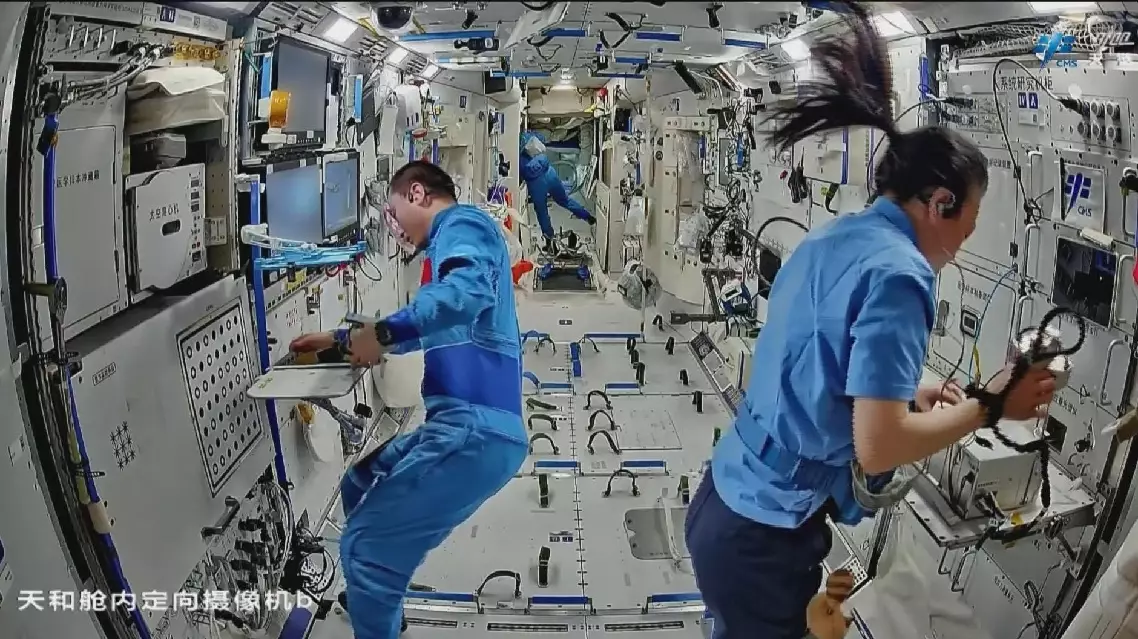
Shenzhou-23 crew completes payload transfer operations, experimental tasks
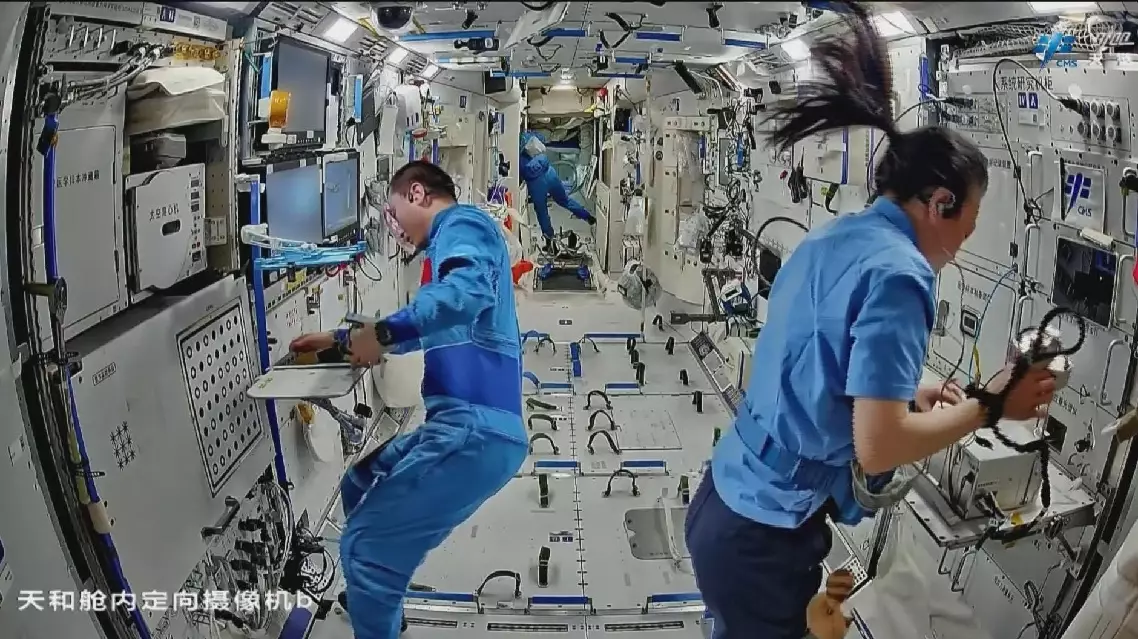
Shenzhou-23 crew completes payload transfer operations, experimental tasks
International observers have welcomed the recent summit between Chinese President Xi Jinping and U.S. President Donald Trump, calling deepened China-U.S. cooperation vital for global stability and positive development.
Xi concluded a three-day state visit to the United States on Friday, where he and Trump reaffirmed their commitment to a constructive, strategically stable relationship guided by fairness, reciprocity, and mutual respect.
In separate interviews with China Central Television, leaders and experts from around the world underscored that efforts to find a proper way for major countries to coexist not only benefit China and the U.S., but also inject much-needed stability and positive energy into global peace and development.
"And having that framework [for cooperation built on the constructive China-U.S. relationship of strategic stability] rolled out between China and the U.S. is really important. We know that type of relationship works and it's successful. So we have to ensure that we see more cooperation between states on a global basis," said Catherine Ardagh, Minister of State at the Department of Justice, Home Affairs and Migration, Ireland.
"After 11 years, President Xi is the first Chinese president to visit the United States of America. [For] the number of takeaways in this visit we see, as far as the outcomes, there are more than eight outcomes -- around eight outcomes are there. The world is looking toward this historic meeting," said Tahir Malik, head of the Department of International Relations, the National University of Modern Languages in Islamabad, Pakistan.
"So this mutual collaboration and respect between the United States and China sort of sets a standard for stability, growth and development. Certainly, the joint collaborations that the two presidents have set up for continual communication, I think, will be important," said Richard A. Black, the Schiller Institute's representative at the United Nations.
"Strong message of President Xi: The biggest investment of China is friendship, is cooperation, partnership, and not armed -- peaceful solutions for actually the world's problems," said Zijad Becirovic, director of International Institute for Middle East and Balkan Studies in Slovenia.
"President Xi Jinping's emphasis about sincerity and communication, coexistence as well as effective communication, is timely and I think we are heading for a stable world when these superpowers speak like that and continue coexisting," said Fabian Mutale, political analyst from Zambia.
Xi's visit was at the invitation of U.S. President Donald Trump. It followed Trump's state visit to China back in May.
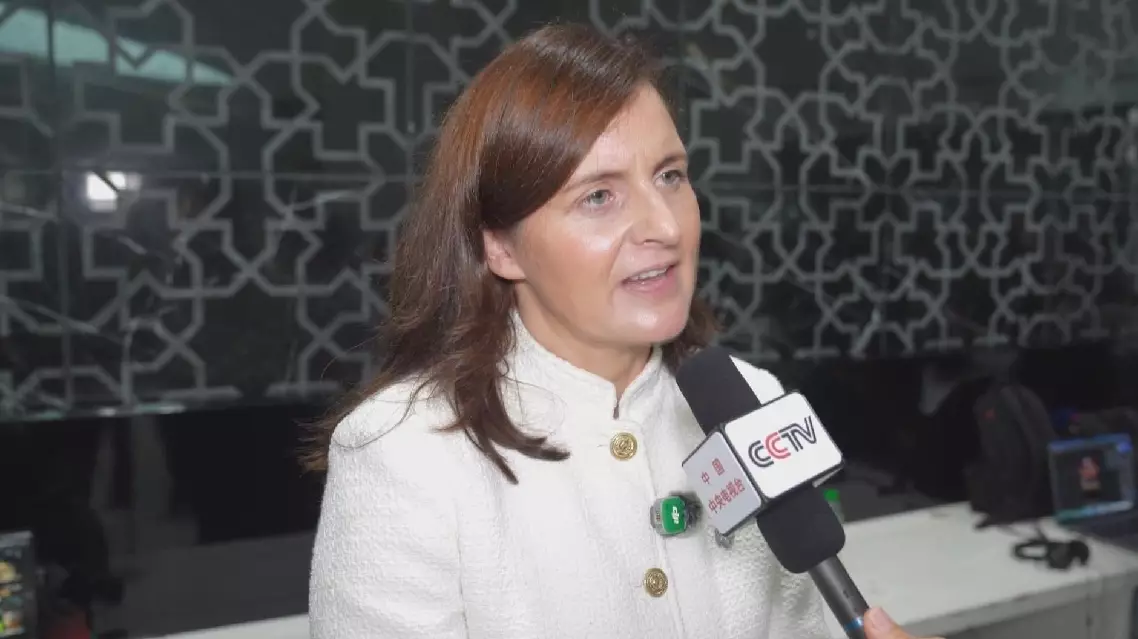
Xi’s U.S. visit boosts cooperation, world stability: international observers