China's most renowned amyotrophic lateral sclerosis (ALS) patient, Cai Lei, seven years into his fight against the incurable disease, channel his remaining faculties into independent drug research for the incurable disease with his wife amid repeated setbacks and scant medical support from domestic and overseas institutions.
After the former vice-president of Chinese e-commerce giant JD.com received his ALS diagnosis in 2019, disease that progressively attacks motor neurons has gradually robbed him of his mobility and ability to speak. Since last year, he has been able to communicate with the outside world only through an eye-tracking device. Even so, he continues working until 23:00 every day to push forward drug research.
His wife, Duan Rui, has supported him in her own way, also becoming a pillar for other families affected by ALS. To raise funds for the research, she left her job at an accounting firm in 2022 and found the "Breaking the Ice Station" live-stream channel. She handles product selection and livestreaming, often staying busy until two or three o'clock in the morning.
Duan said that 100 percent of the profits from live-streaming are channeled into ALS research.
"For the past three years, live-stream revenue has covered most of the team's operational and research costs. We have also received roughly 5 million yuan (about 744,800 U.S. dollars) in public donations. I have no other business income," Cai said through his eye-tracking system.
He added that their seven-year efforts to find an ALS treatment have been unsuccessful so far.
"Over the past seven years, the general timeline of our research on the disease was: first, we sought advice from ALS doctors and experts at home and abroad, but got no results; second, we contacted major pharmaceutical companies, again without success; we then launched our own research into ALS medications, testing hundreds of compounds, and we’ve made important discoveries, yet no breakthrough so far. We’ve also used AI to analyze 20 million relevant papers and patents, which is still going on and has yet to yield any results," he said.
Duan Rui said she focuses solely on fundraising and never involves herself in how the research funds are spent.
"I do not follow the details of spending. That's just how scientific research works. Ninety-nine percent of research projects end in failure. If I viewed the work as a patient's family member, I would be overwhelmed by frustration. Fundraising is incredibly tough. When you face this reality, you instinctively wonder - is this project truly viable? Why should we invest in it?" said Duan.
While the drug developed under Cai's leadership has achieved progress in treating SOD1-mutated ALS, it has yielded no improvement for his own sporadic ALS condition, despite daily experimental treatment.
Yet the couple believe investing in scientific research itself creates value.
"I am certain about it. Scientific research is like a jigsaw puzzle with 10,000 pieces scattered on the ground. You have no idea which piece goes where, so you keep sorting through them. Is there any point to this work? Yes. Once you check a piece, someone else does not have to. Someday, someone may get lucky and find the right fit. When that happens, we can solve the puzzle. That is why I firmly believe every piece we sort now brings us closer to finding the final one. We need to look beyond our own lifetime, beyond our family, and stop treating this like a business venture. Simply put, it becomes easier to accept when we stop focusing only on ourselves," said Duan.
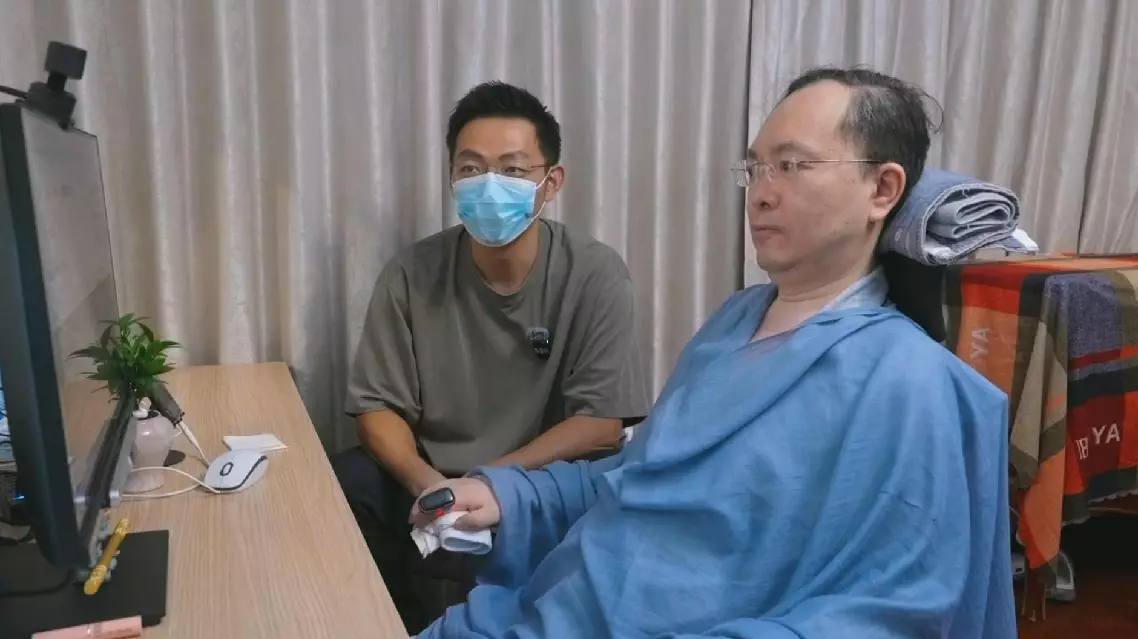
Former JD executive and wife dedicate themselves to ALS research amid setbacks
Chinese President Xi Jinping's state visit to the United States has led to new progress in a constructive China-U.S. relationship of strategic stability, Chinese Foreign Minister Wang Yi said after Xi wrapped up his U.S. visit on Friday.
Wang, also a member of the Political Bureau of the Communist Party of China Central Committee, made the remarks while briefing reporters on Xi's state visit to the United States from Sept. 23 to 25.
President Xi and President Donald Trump had a candid and in-depth exchange of views in a friendly atmosphere of mutual respect on strategic and overarching issues concerning China-U.S. relations and the broader global landscape, Wang said.
Since President Trump began his second term, the two heads of state have maintained close exchanges, including three in-person meetings and five phone talks, and fostered a pattern of interaction marked by mutual respect and sincerity, said Wang, noting this has become the most valuable strategic asset in China-U.S. relations.
An important political outcome of the visit is that President Xi and President Trump further enriched the substance of the new positioning of China-U.S. relations and have agreed to build a constructive China-U.S. relationship of strategic stability based on respect, fairness and reciprocity, Wang said.
Respect means respecting each other's sovereignty and territorial integrity, respecting each country's choice of social system and development path, and respecting the other side's core interests and major concerns, Wang said.
Fairness, Wang continued, means pursuing mutually beneficial cooperation and handling differences through consultation, rejecting a zero-sum game in which one side's gain comes at the expense of the other's, and not seeking unilateral absolute advantage.
Reciprocity means that the two countries are equal in sovereignty, that neither side stands above the other, that neither engages in hegemonic nor bullying behavior, that each side's concerns are addressed on an equal basis, and that cooperation across various fields develops in a balanced manner, Wang said.
Noting that President Xi has pointed out that a stable China-U.S. economic and trade relationship requires both expanding the list of cooperation and shortening the list of problems, Wang said that the U.S. side should treat Chinese companies fairly, resolve problems through dialogue and negotiations, and promote the sustained, stable and positive development of China-U.S. economic and trade relations.
The fentanyl abuse problem in the United States is not caused by China, but China has always acted with the utmost goodwill and made every effort to assist the U.S. side in addressing the fentanyl crisis, Wang noted, adding that the two heads of state tasked the law enforcement agencies of the two countries with continuing to strengthen cooperation and jointly combat transnational crime.
To promote people-to-people exchanges between China and the United States, President Xi has announced a series of new measures, including inviting 100,000 young Americans to visit China for exchange and study programs over the next five years, Wang said.
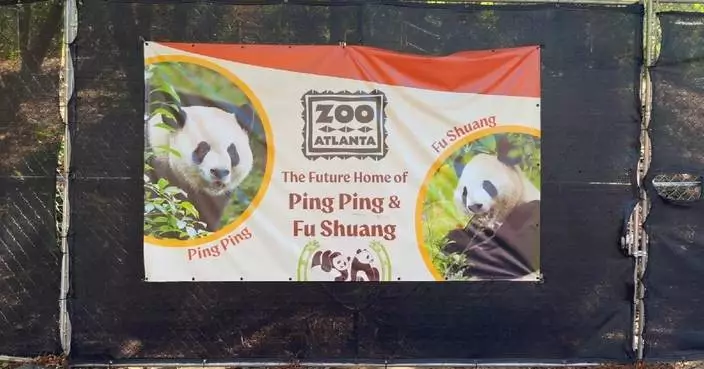
One piece of good news that has been particularly welcomed by the American public is that two pandas, Ping Ping and Fu Shuang, will soon arrive at Zoo Atlanta, Wang added.
During the visit, Wang said, the two heads of state had an in-depth exchange of views on major international and regional issues of common concern and agreed to strengthen coordination to make due contributions to world peace and development.
President Xi also encouraged relevant parties to stay committed to peace, supported the United States and Iran in returning to the Islamabad Memorandum of Understanding, resuming dialogue and negotiations at an early date, and ultimately reaching a comprehensive agreement covering the nuclear issue, Wang said.
During the visit, President Xi and President Trump also had an in-depth exchange of views on artificial intelligence (AI), pointing out that the two countries should leverage respective strengths rather than guard against each other, Wang said.
The two heads of state agreed to make good use of AI dialogue mechanisms between the two countries and jointly prevent the misuse and abuse of AI, Wang added.
Noting that this year marks the 80th anniversary of the opening of the Tokyo Trials, Wang said that China and the United States are both permanent members of the United Nations Security Council, and it is their shared responsibility to uphold the postwar international order and prevent the resurgence of militarism.
China and the United States will respectively host the APEC Economic Leaders' Meeting and the G20 Leaders' Summit in the fourth quarter of this year, Wang said, adding that the two heads of state confirmed their mutual support, which will continue to inject momentum into cooperation in the Asia-Pacific and global governance.
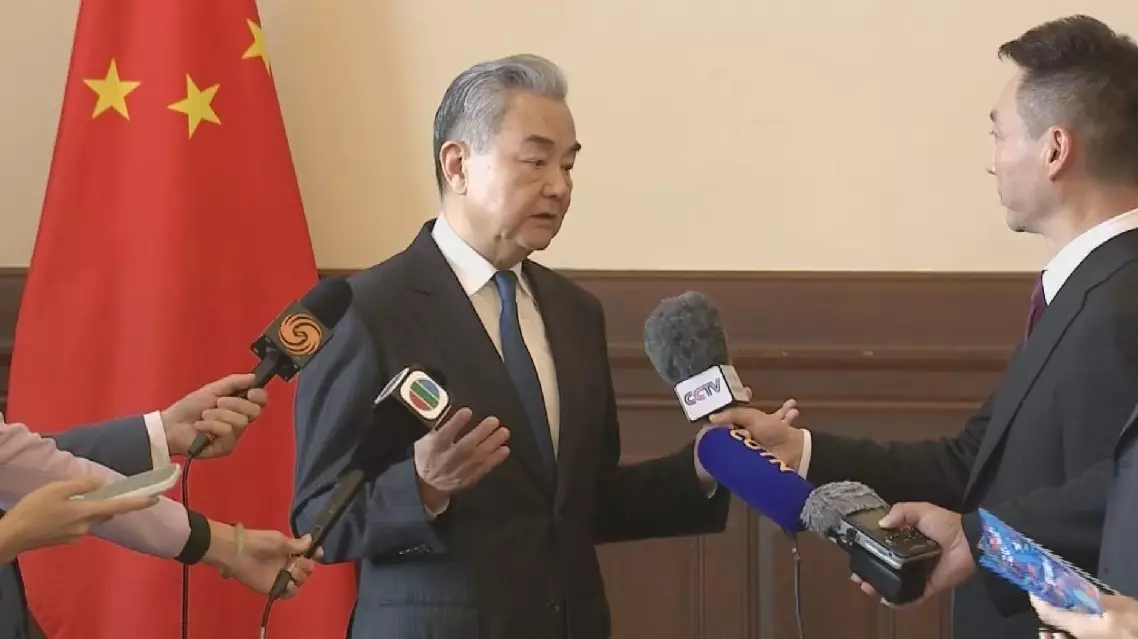
Xi's state visit leads to new progress in constructive China-U.S. relationship of strategic stability: Chinese FM