China will join hands with all other countries to build a community with a shared future for humanity and make the world a better place for all, said Chinese Vice President Han Zheng on Saturday.
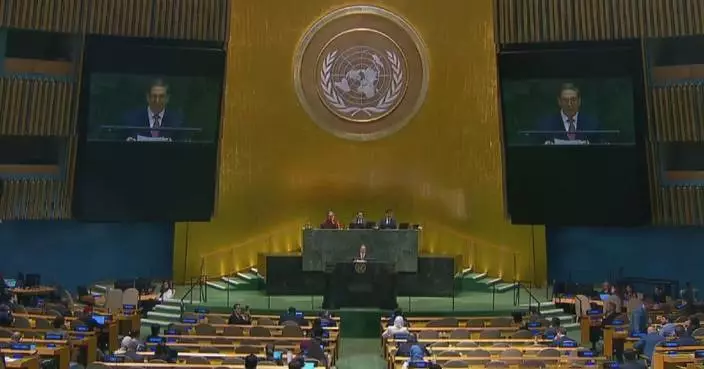
Han made the statement when delivering a speech at the general debate of the 81st session of the United Nations General Assembly.
The world is witnessing intertwined changes and turbulence, protracted geopolitical conflicts, widening development gaps and a growing number of global challenges, he said.
Recalling that Chinese President Xi Jinping put forward the Global Development Initiative at the 76th Session of the U.N. General Assembly in 2021, and has since then proposed the Global Security Initiative, the Global Civilization Initiative and the Global Governance Initiative, Han said these initiatives provide strategic guidance for the building of a community with a shared future for humanity.
He said that more and more countries want to join hands to shoulder the historic mission of addressing difficulties and challenges, and advancing the well-being of all humanity.
Han put forward a four-point proposal:
First, in safeguarding the postwar international order and fostering lasting peace based on common security, the vision of common, comprehensive, cooperative and sustainable security should be turned into action, and the Cold War mindset and bloc confrontation should be discarded.
Differences and disputes should be settled through dialogue and consultation, and unilateral military actions that violate the U.N. Charter and circumvent Security Council authorization should be opposed.
Second, the global development predicament should be addressed and prosperity for all should be promoted through openness and cooperation. Development should be kept at the center of the international agenda, and a global development partnership based on unity and equality that is balanced and inclusive should be jointly forged.
Third, exchanges and mutual learning among civilizations should be advanced and unity and mutual trust should be rebuilt through communication and dialogue. The UN platform should be used to boost international people-to-people exchanges, promote mutual understanding and amity among all peoples and the common development of diverse civilizations.
And fourth, the banner of multilateralism should be held high and concrete actions should be taken to safeguard fairness and justice. Countries should join forces and act together to safeguard the UN and make it stronger.
Han pointed out that the People's Republic of China restored its lawful seat in the United Nations in 1971, which is of profound and far-reaching significance to both China and the rest of the world.
Over the past 55 years, China has been a stabilizing force in times of volatility, he said, noting that China is firmly committed to pursuing peaceful development, and has the best track record on peace and security among major countries.
A main engine driving common development, China has, over many years, contributed around 30 percent to global growth, Han said.
He said that China, a progressive force in an era of change, has always worked toward a more just and equitable global governance system.
Han said that no matter how the international dynamics evolve, China remains unchanged in its pursuit of peace and development, in its dedication to safeguarding fairness and justice, and in its commitment to multilateralism.
China is willing to work with all other countries to create a brighter future for mankind through the great practice of building of a community with a shared future for humanity, he said.
During his stay in New York, Han had separate meetings with Bulgarian President Iliana Iotova, Serbian President Aleksandar Vucic, Cypriot President Nikos Christodoulides, Ghanaian President John Dramani Mahama, and Kiribati President Taneti Maamau.
The presidents spoke highly of the major ideas and initiatives proposed by Xi, expressed admiration for China's development achievements, and reaffirmed their governments' firm adherence to the one-China principle.
They also expressed the willingness to further enhance strategic mutual trust with China, deepen practical cooperation and strengthen multilateral coordination with the country, and make greater contributions to the well-being of the people and global sustainable development.
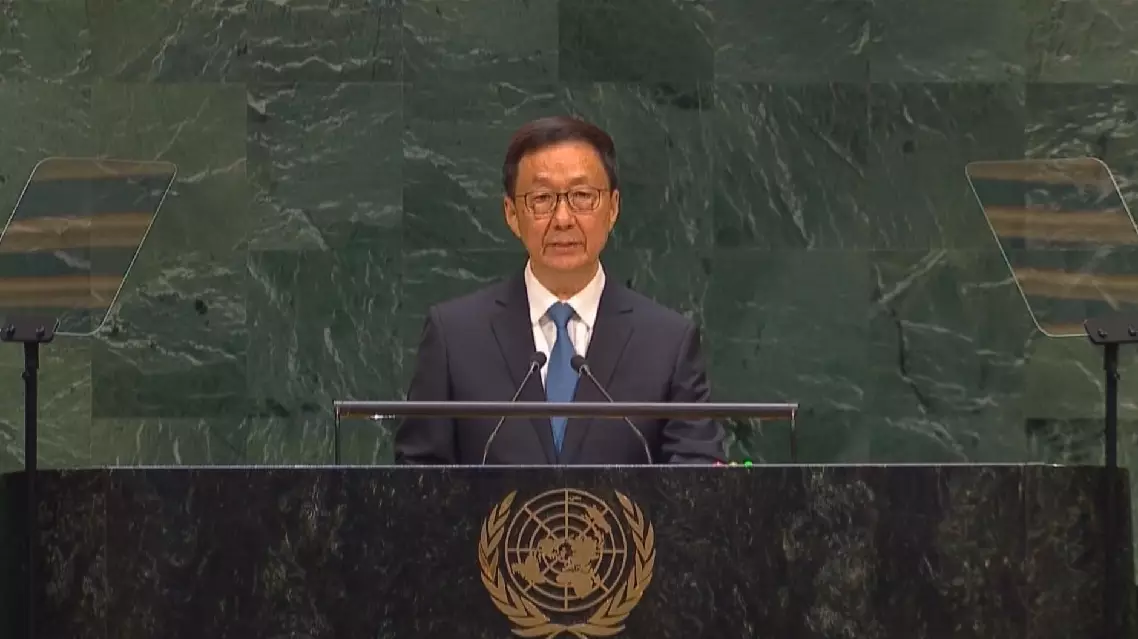
China to work with all countries to build community with shared future for humanity
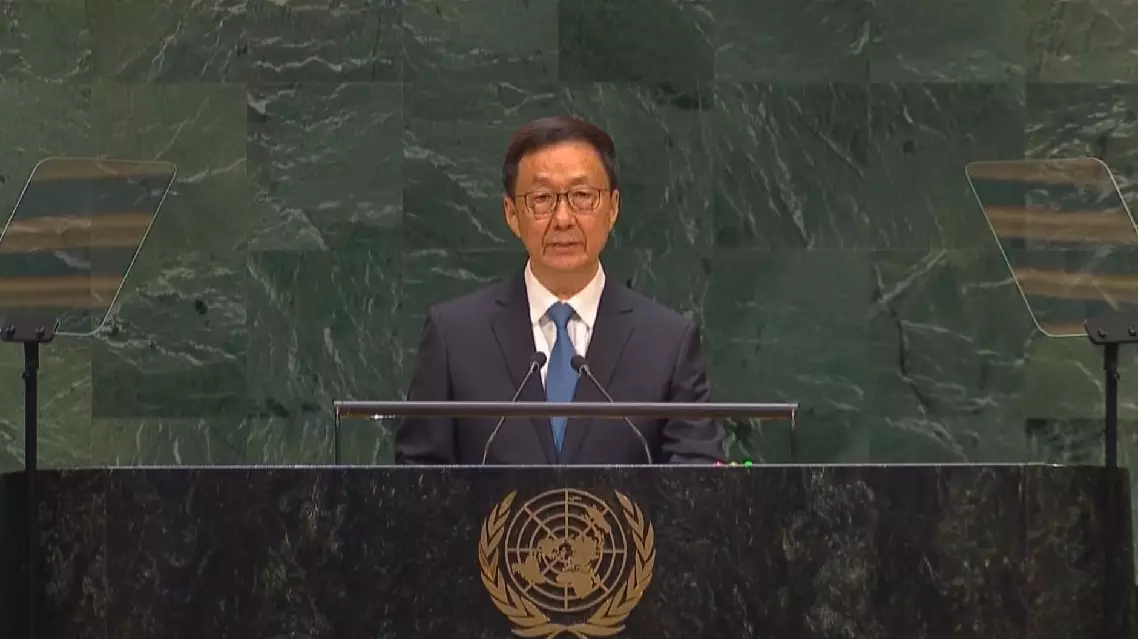
China to work with all countries to build community with shared future for humanity
Chinese President Xi Jinping's state visit to the United States has led to new progress in a constructive China-U.S. relationship of strategic stability, Chinese Foreign Minister Wang Yi said after Xi wrapped up his U.S. visit on Friday.
Wang, also a member of the Political Bureau of the Communist Party of China Central Committee, made the remarks while briefing reporters on Xi's state visit to the United States from Sept. 23 to 25.
President Xi and President Donald Trump had a candid and in-depth exchange of views in a friendly atmosphere of mutual respect on strategic and overarching issues concerning China-U.S. relations and the broader global landscape, Wang said.
Since President Trump began his second term, the two heads of state have maintained close exchanges, including three in-person meetings and five phone talks, and fostered a pattern of interaction marked by mutual respect and sincerity, said Wang, noting this has become the most valuable strategic asset in China-U.S. relations.
An important political outcome of the visit is that President Xi and President Trump further enriched the substance of the new positioning of China-U.S. relations and have agreed to build a constructive China-U.S. relationship of strategic stability based on respect, fairness and reciprocity, Wang said.
Respect means respecting each other's sovereignty and territorial integrity, respecting each country's choice of social system and development path, and respecting the other side's core interests and major concerns, Wang said.
Fairness, Wang continued, means pursuing mutually beneficial cooperation and handling differences through consultation, rejecting a zero-sum game in which one side's gain comes at the expense of the other's, and not seeking unilateral absolute advantage.
Reciprocity means that the two countries are equal in sovereignty, that neither side stands above the other, that neither engages in hegemonic nor bullying behavior, that each side's concerns are addressed on an equal basis, and that cooperation across various fields develops in a balanced manner, Wang said.
Noting that President Xi has pointed out that a stable China-U.S. economic and trade relationship requires both expanding the list of cooperation and shortening the list of problems, Wang said that the U.S. side should treat Chinese companies fairly, resolve problems through dialogue and negotiations, and promote the sustained, stable and positive development of China-U.S. economic and trade relations.
The fentanyl abuse problem in the United States is not caused by China, but China has always acted with the utmost goodwill and made every effort to assist the U.S. side in addressing the fentanyl crisis, Wang noted, adding that the two heads of state tasked the law enforcement agencies of the two countries with continuing to strengthen cooperation and jointly combat transnational crime.
To promote people-to-people exchanges between China and the United States, President Xi has announced a series of new measures, including inviting 100,000 young Americans to visit China for exchange and study programs over the next five years, Wang said.
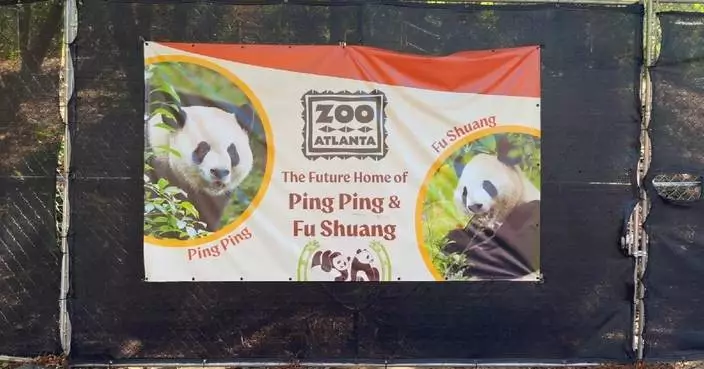
One piece of good news that has been particularly welcomed by the American public is that two pandas, Ping Ping and Fu Shuang, will soon arrive at Zoo Atlanta, Wang added.
During the visit, Wang said, the two heads of state had an in-depth exchange of views on major international and regional issues of common concern and agreed to strengthen coordination to make due contributions to world peace and development.
President Xi also encouraged relevant parties to stay committed to peace, supported the United States and Iran in returning to the Islamabad Memorandum of Understanding, resuming dialogue and negotiations at an early date, and ultimately reaching a comprehensive agreement covering the nuclear issue, Wang said.
During the visit, President Xi and President Trump also had an in-depth exchange of views on artificial intelligence (AI), pointing out that the two countries should leverage respective strengths rather than guard against each other, Wang said.
The two heads of state agreed to make good use of AI dialogue mechanisms between the two countries and jointly prevent the misuse and abuse of AI, Wang added.
Noting that this year marks the 80th anniversary of the opening of the Tokyo Trials, Wang said that China and the United States are both permanent members of the United Nations Security Council, and it is their shared responsibility to uphold the postwar international order and prevent the resurgence of militarism.
China and the United States will respectively host the APEC Economic Leaders' Meeting and the G20 Leaders' Summit in the fourth quarter of this year, Wang said, adding that the two heads of state confirmed their mutual support, which will continue to inject momentum into cooperation in the Asia-Pacific and global governance.
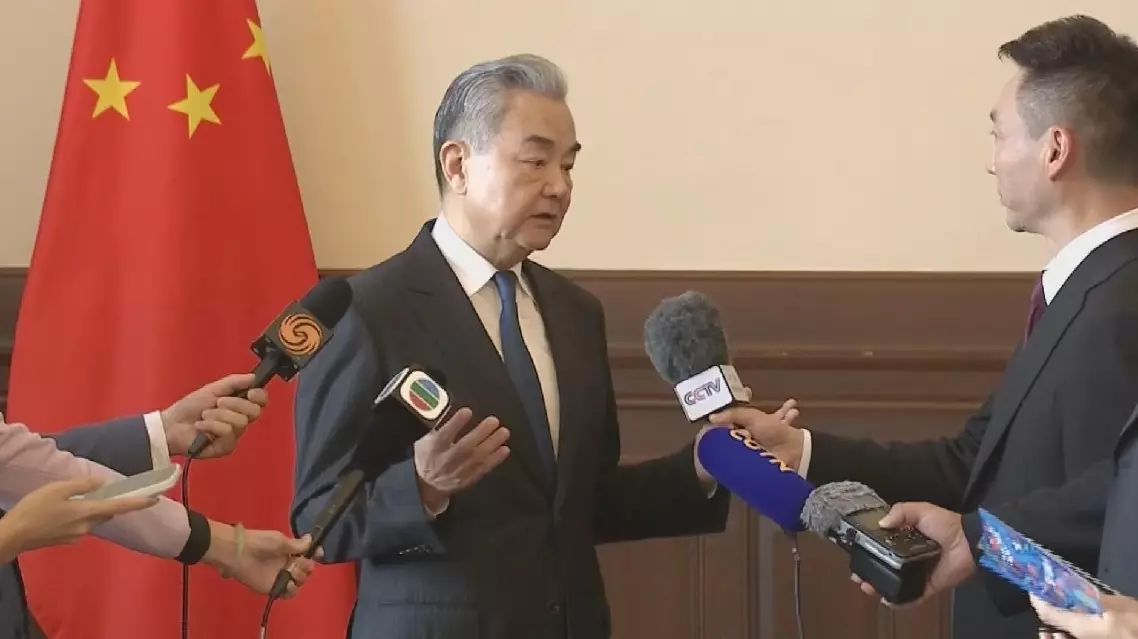
Xi's state visit leads to new progress in constructive China-U.S. relationship of strategic stability: Chinese FM
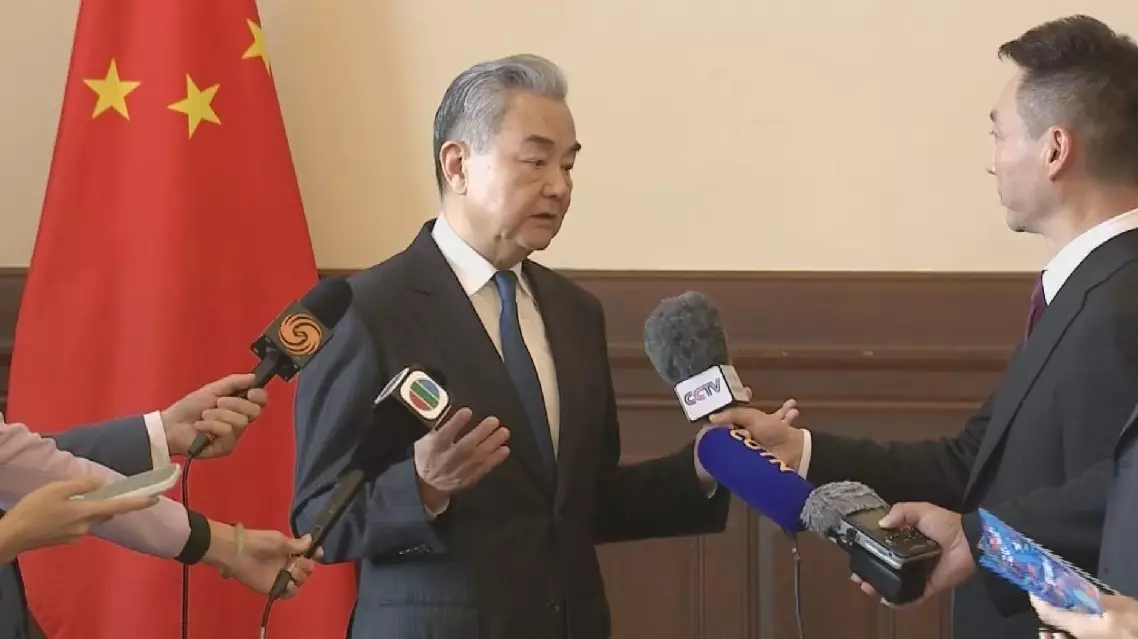
Xi's state visit leads to new progress in constructive China-U.S. relationship of strategic stability: Chinese FM