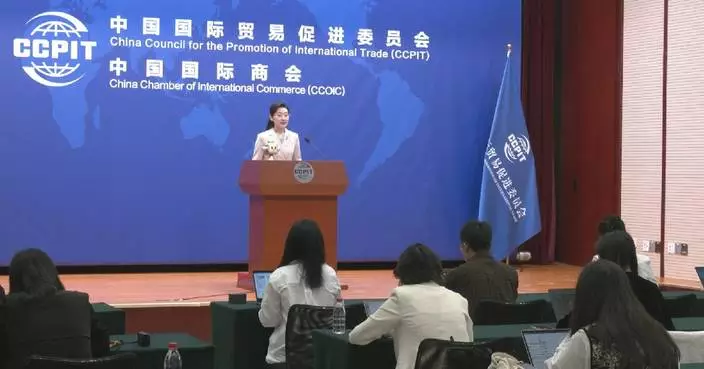
China has established 50 national academies for outstanding engineers and jointly trained nearly 36,000 master's and doctoral engineering students with enterprises, officials said at a conference on advancing industry-education integrated training for elite engineers held in Beijing on Sunday.
The elite engineer training program, launched in 2022, seeks to integrate industry and academia to nurture engineers capable of addressing technological challenges and leading industrial upgrades. It is seen as a crucial move by China to build a highly skilled workforce, with the academies developed in partnership with State-owned enterprises and designed to train engineers with a focus on innovation and practical problem-solving.
At Zhejiang University's National Academy for Outstanding Engineers, more than 1,700 master's and doctoral students began their studies this fall semester. In their first year, they will solidify their theoretical foundation through hands-on practical training before moving into industry with real-world problems to complete a closed loop of growth from classroom to industry.
"We align closely with major national strategies and focus on critical technological bottlenecks, establishing joint university-industry mentor teams led by strategic scientists. We have successively launched over 40 excellence-oriented training programs spanning key fields such as smart energy, artificial intelligence and integrated circuits," said Zhang Guangxin, dean of the National Academy for Outstanding Engineers.
Since the reform was launched, the program has focused on meeting the urgent needs of national strategy and industrial upgrading. Engineering master's and doctoral students have produced more than 26,000 innovation outcomes, most of which have been transformed and applied on site.
As of August this year, more than 400 engineering master's and doctoral students nationwide have obtained degrees based on practical achievements such as product design and scheme design, breaking the tradition of evaluating degrees solely by papers. Among the first cohort of graduates, 81 percent found employment at key enterprises in their respective fields.
"We will continue to deepen the industry-education integrated training mechanism. We will support provinces in building provincial-level excellent engineer academies. At the same time, we will extend the elite engineer training model to all 67 professional degree categories, to other countries and regions, and to the field of undergraduate education," said Hao Tongliang, deputy director of the Department of Degree Management and Postgraduate Education of the Ministry of Education.

China expands elite engineer training model after producing 36,000 industry-trained talents
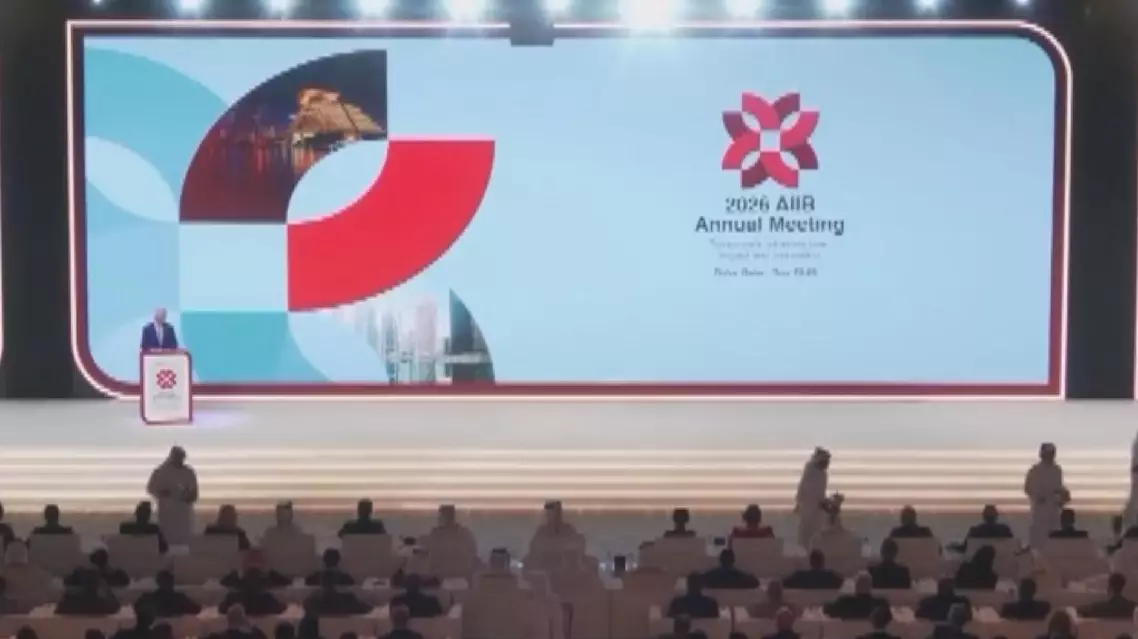
The Asian Infrastructure Investment Bank (AIIB) Monday opened its 11th annual meeting of the Board of Governors in Doha, Qatar, bringing together governors, senior officials, clients, partners and stakeholders.
AIIB President Zou Jiayi addressed the event, setting out the bank's priorities for its next stage of growth, emphasizing that infrastructure remains central to development, resilience and opportunity in an increasingly uncertain global environment.
Zou said the AIIB aims to double annual financing to about 20 billion U.S. dollars by 2030, focusing on infrastructure that supports climate resilience, renewable energy, digital transformation, regional connectivity, nature conservation and people-centered development.
The AIIB was established in January 2016 with a mission to foster sustainable economic development, create wealth, and improve infrastructure connectivity in Asia by investing in infrastructure and other productive sectors.
This year's gathering marks the official start of a new decade for the young multilateral development bank.
After completing its first decade of rapid expansion, the AIIB's membership has grown from its initial 57 founding members to 111 approved members. It has approved more than 79 billion U.S. dollars for over 400 projects across 43 economies, while maintaining AAA ratings from major international credit-rating agencies.
At a press conference, when asked about how the bank will strengthen cooperation to support its members in the coming decade, Zou emphasized that multilateralism remains the key.
"We have 111 members from different regions with different development stages. We come together with the common conviction in our mission and mandate - that is to develop infrastructure, promote regional integration. So when we have different views, we discuss, we seek for solutions through consultation, through the multilateral governance structure," she said.
That vision of collaborative multilateralism is backed by solid progress on the ground, a record highlighted by the host nation.
"The AIIB approved 10.6 billion dollars of financing last year, across 57 projects, [with] 71 percent of climate finance well ahead of its own targets. The bank's updated strategy sets a higher bar, doubling its annual financing by 2030 and mobilizing far more private capital alongside with it. Those targets are the right ones, and they will help to enable the theme of this meeting, which is 'Tomorrow's Infrastructure: Impact and Innovation'," Qatari Minister of Finance Ali bin Ahmed Al Kuwari said.
As AIIB's core governance and stakeholder engagement event, this year's annual meeting features discussions on how multilateral institutions, governments and private-sector partners can respond to infrastructure needs in a new global context, underscoring the importance of mobilizing private capital and deepening cooperation across institutions and markets.
AIIB annual meeting kicks off in Doha, eyeing greater development impact, innovation