A gas pipeline explosion in Syria's Damascus countryside on Wednesday knocked three power plants out of service, putting renewed strain on electricity supplies in the capital and surrounding areas, and dealing another blow to residents and the economy.
The Deir Ali, Nasiriyah and Tishreen power plants were taken offline on that day after the explosion on a gas pipeline supplying the Tishreen thermal power plant in the eastern countryside of Damascus, the Syrian Electricity Company said.
The Deir Ali and Nasiriyah stations came back into service after supplies were restored, yet Tishreen remained out of operation due to damage to its equipment, with inspection and maintenance work still under way.
"The gas pipeline was blown up and the power lines went down, and this directly affects the Syrian economy and the livelihood of citizens. The first impact, of course, is that fuel enters every aspect of people's lives, whether through direct consumption or indirectly through transportation and the materials used in manufacturing. The second impact falls on the government, which now faces another challenge: protecting gas, oil and energy pipelines, or turning to alternatives, both of which are costly," said Yahya Rakaj, an academic and expert in economic affairs.
"Adding to, or rather compounding, this challenge is that investment has so far been slow to enter Syria, and secondly, financial transfers to Syria have yet to be facilitated, leaving the government unable to act quickly except in the medium or short term. But the biggest challenge, beyond higher prices for citizens, is the government's task of rebuilding and restoring infrastructure, because rebuilding infrastructure will be among the priorities," he said.
As technical teams work to assess the damage and restore what was affected, the cause of the explosion is still under investigation.
"I saw a light appear from beneath the moon. I was surprised and thought it was a lunar eclipse. When I looked, it turned out to be the gas pipeline in Deir Ali that had been targeted. As for electricity, it is available, but with long rationing," said Abu Mohammed, a resident.
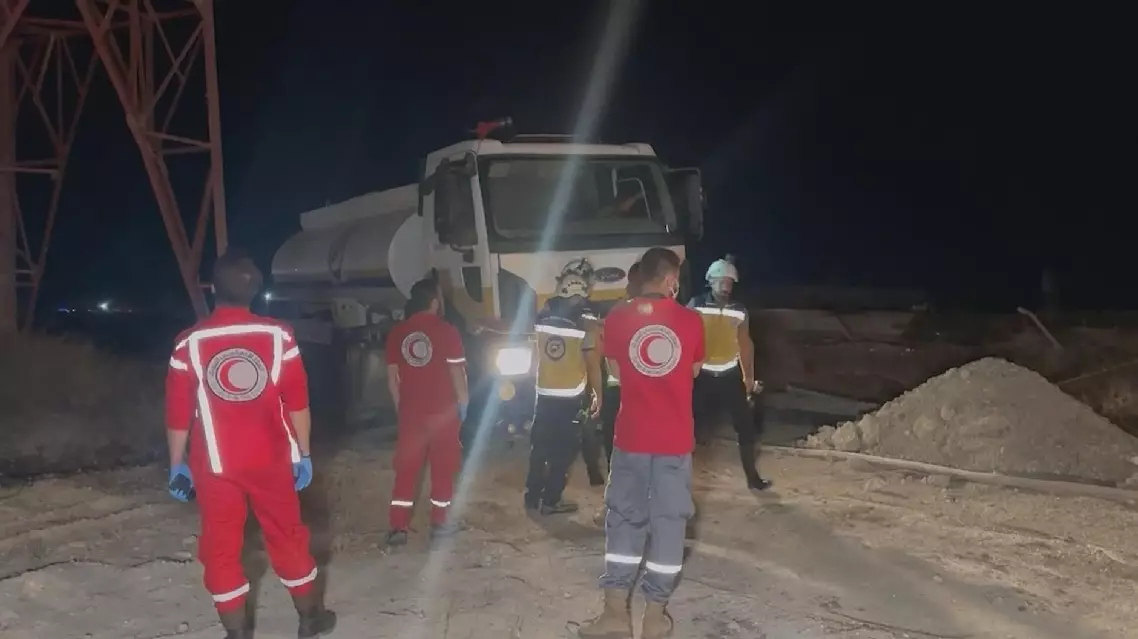
Gas pipeline blast knocks 3 Syrian power plants offline, straining electricity supplies
A farm in northeast China's Heilongjiang Province is drawing in travelers during the ongoing National Day holiday, transforming its rice fields into works of art and offering the visitors a unique way to experience the countryside.
By carefully planning the planting process, the Yangjiagang farm in the provincial capital city of Harbin has turned its fields into a canvas for stunning artworks, some of which span more than 17 hectares. Many of the artworks resemble classical Chinese paintings.
"We use rice plants of different colors to create these field artworks, and we update the designs every year. This year, we chose 'The Eight Immortals Crossing the Sea,' a well-known Chinese legend, as our theme. We hope these familiar stories can help people experience traditional Chinese culture while also seeing the creativity of modern agriculture," said Zhang Yu, deputy general manager of the Yanjiagang Farm Scenic Area Company.
The National Day holiday, also known as "Golden Week" in China, runs from Oct 1 to 7, sparking a major travel rush as hundreds of millions of people across the country take the chance to enjoy a short getaway. Many flock to cities or well-known tourist sites, but creative endeavors like the art at Yangjiagang farm are quickly reshaping how Chinese travelers choose their destinations.
Local farmers are doing all they can to ensure travelers feel welcome and enjoy their time. Beyond admiring the scenery, visitors can also board a little train that winds through the rice fields, try local specialties or enjoy a cup of rice-scented coffee.
"It's a nice place. You can breathe fresh air here. And I was amazed to see the colorful rice field artworks," said a visitor.
"I'm really happy to be here. I got to see rice fields and sorghum, things I had never seen before. And I even got to catch crayfish in the rice fields. It was so much fun," another visitor said.
"I'm from Harbin and I've been here many times. I like this place a lot. When friends visit from other places, I bring them here to see how rice is planted and how oil is made," said a visitor.
During the National Day holiday, daily visitors are reaching more than 20,000. The tourism boom has also opened up new opportunities for local farmers.
The story reflects something bigger. China's latest five-year tourism development plan calls for deeper integration of agriculture, culture and tourism. For Heilongjiang, China's leading grain-producing province, the goal is to ensure food security while unlocking new potential from its agricultural resources.
"Our farm is located just three kilometers from Harbin Airport, which gives us a great advantage in attracting visitors. Since we started developing agritourism, our overall benefits have grown significantly. It has also created jobs for more than 200 local farmers, who can work here during the off-season and earn additional income," Zhang said.
The fields will soon be harvested, but Yangjiagang is working to create year-round tourism experiences, allowing visitors to explore modern agriculture and rural life in every season.
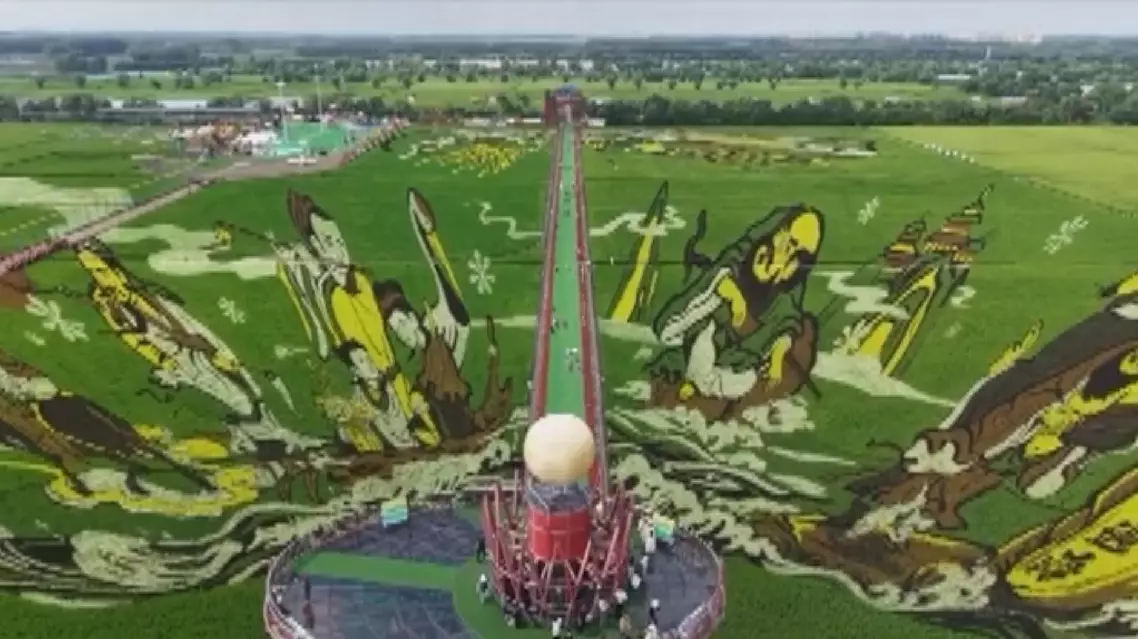
Chinese rice farms stuns holiday travelers with field-wide artworks