A peace demonstration was held near the Brandenburg Gate in Berlin, Germany on Saturday, which marks German Unity Day, drawing thousands of people from across the country to protest against military expansion and the reinstatement of compulsory military service.
The demonstration was jointly organized by multiple peace initiative organizations, trade unions, and political party groups. Members of the public taking part said that Germany's increasing defense spending in recent years was among their key reasons for turning out.
"We are at the most dangerous moment in Europe since the end of World War II. The Russia-Ukraine conflict is extremely brutal and has caused severe destruction, and it is now on the verge of escalating into a 'war over Ukraine', that is, a war between Russia and NATO. We must do everything possible to prevent such a scenario," said a demonstrator.
As the Russia-Ukraine conflict continues, Europe's security landscape has undergone major changes, and Germany has been continuously re-examining its role in the European security system. Against this backdrop, the peace demonstration placed opposition to war, opposition to military expansion, and opposition to the reinstatement of compulsory military service at the forefront of its demands.
The demonstration also reflects the divergent voices within German society regarding the country's future security path.
"I come from Hamburg. I am 78 years old this year. My older siblings all lived through World War II. They witnessed the horrors of war and suffered trauma. We do not want war to happen again in Germany," said a demonstrator.
"There is a close causal link between the burden of Germany's social security system and military expansion. We must bring the voice of opposition to this approach to the streets, because this policy direction is unpopular, and we need alternatives. This means we must once again discuss diplomacy and peace," another demonstrator said.
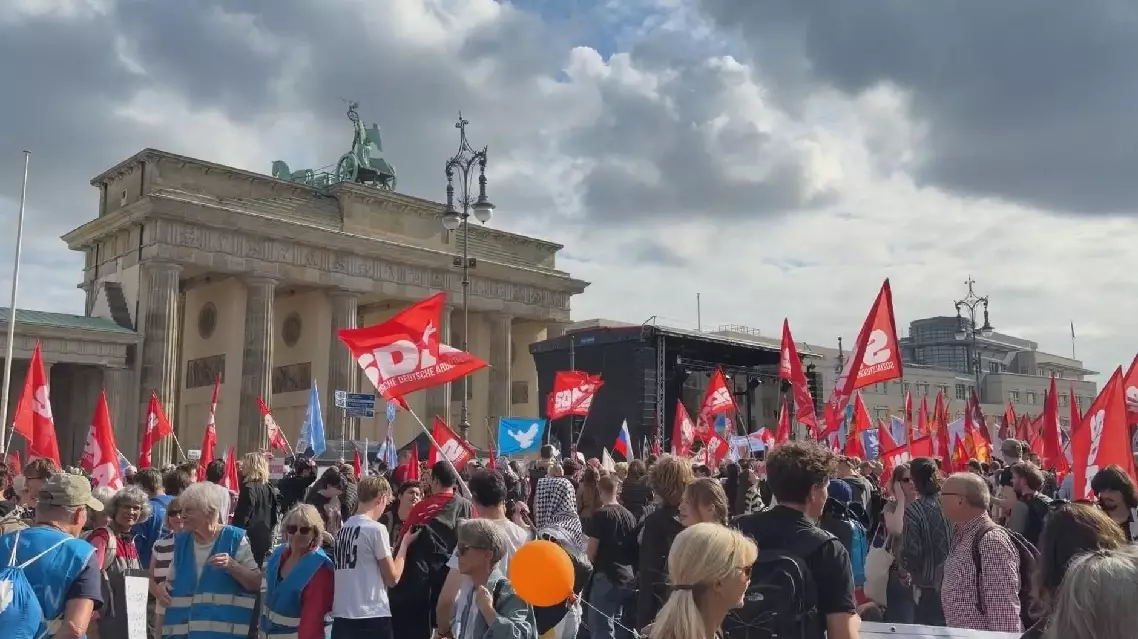
Berlin hosts peace demonstration against military expansion
The rich sound of accordion music filled the open air and inspired spontaneous dancing in the public squares of Tacheng, Xinjiang this summer, as the city hosted the 6th Xinjiang Tacheng International Accordion Art and Culture Festival.
Tacheng, just kilometers from the border with Kazakhstan, was an important stop on the northern branch of the ancient Silk Road. Today, the city continues to foster cultural exchange through vibrant events like this festival, which brought international performers and local musicians together in "Melody Market" pop-up shows.
Performances ranged from lively solos inspired by Horse Racing to the familiar Katyusha, played by renowned local accordionists, drawing people from different ethnic groups together to dance to the same tune.
"[At most of the] concerts, I play and the people only listen, but here it was like something together with people. Yes, dancing together, yes, I want to dance with them," said Lev Solomonovich, an accordionist from Moldova.
Following his scheduled performance, Solomonovich started an impromptu playing session with fellow musicians. The diversity among the accordionists, both in their origins and their musical styles, was a major draw for visitors.
"So many ethnic groups here: Kazakh, Uzbek, and others. I've heard so many different kinds of music today. It's been really interesting," said Orzu Nurulloeva, a teacher at the Gnesin Russian Academy of Music.
The festival took music beyond the concert stage, turning balconies into stages as night falls. With no stage separating musicians and audiences, everyone became part of the performance, making the entire area into a living, breathing dance party.
"It makes you really want to get up, dance and join in. The music and the accordion really get you going," said a visitor.
"You can really feel the warmth of the people here," said another visitor.
From the Melody Market to the balcony shows, the accordion weaved itself into daily life in Tacheng throughout the festival.
"I can say that I never expected to have an accordion event at such a level, because we know accordion is everywhere, and in every country it's more or less popular. Many amateurs and some professionals are playing accordion. But here it's like -- I don't know -- Olympic Games for accordion," said Alexander Selivanov, chairman of the Music Committee of the Confederation Internationale des Accordeonistes (CIA).
Known locally as China's "Accordion City," Tacheng has integrated the instrument deeply into its cultural fabric, bringing residents, visitors, and performers together through a shared language of music.
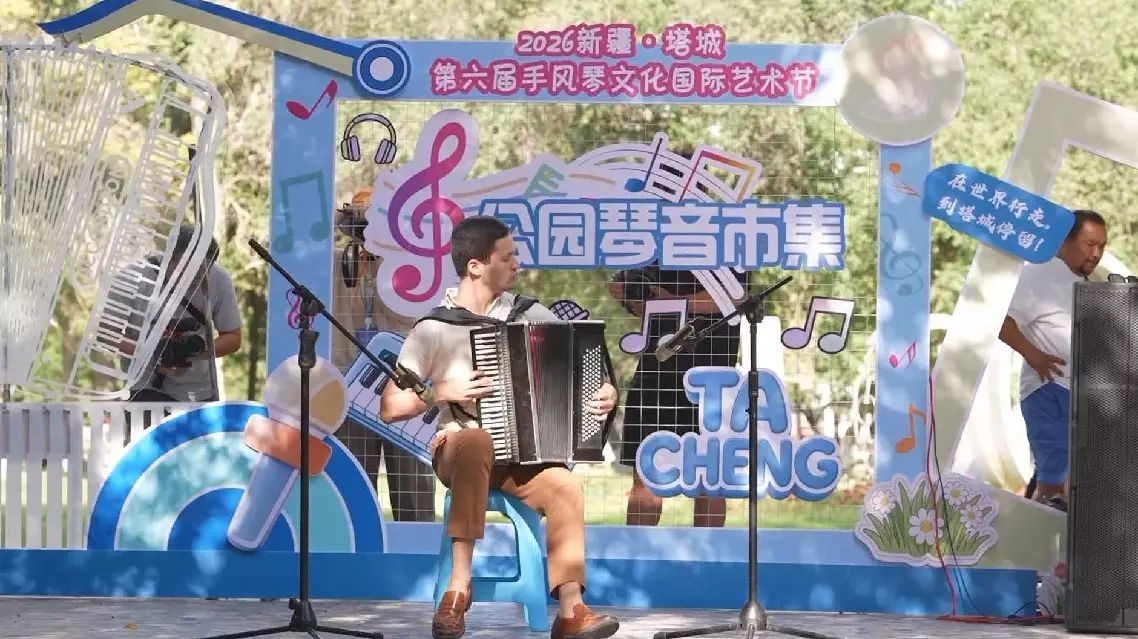
Live ryhthms ignite spontaneous dance in China's 'Accordion City'