Chinese is increasingly popular in schools in the central European country of Slovakia, as many students start learning the language in high schools or even earlier.
At the Mikulas Kovak High School in Banska Bystrica, a bilingual program was launched in 2016. Participating students spend five years studying Chinese as part of their regular education.
For Anna Marina Vidova, a fifth-year student of the high school, the decision to learn Chinese started with a book when she was just nine years old.
"I read about Chinese culture and history, and I do like history, so I just gave it a try," she said, adding that she is planning to apply to Chinese universities, so she is studying hard right now.
She wants to study international relations, and sees communication between China and Europe as key to their future ties.
"I believe the relations between China and the European Union are very important to us. And I think also the European Union has a lot to offer to China as well," she said.
At school, Chinese learning extends beyond language lessons, with students learning subjects such as mathematics, geography and history in Chinese.
"From the second grade, they are beginning to learn mathematics, physics, biology, geography and chemistry, partly in Chinese, so partly in Slovak language and partly in Chinese language, so it's bilingual," said Jan Durica, a Chinese language teacher of Mikulas Kovac High School.
For Vidova, learning other subjects in Chinese means learning about China beyond vocabulary and grammar.
"I can understand how Chinese think. And like we have Chinese lectures here, teachers, so they also help us," she said.
For graduates like Michaela Cholvadova, the language can also open paths for exchange between Slovakia and China.
"There are many work opportunities I'm looking forward to, maybe China, making some contracts with Slovakia, maybe so I can work in between the two countries," said Cholvadova.
Interest in learning Chinese is also reaching Slovak children.
In Bratislava, Moli Chinese Studio introduces Chinese through play, where children listen to Chinese teachers and learn words through activities.
Natalia Turchin, the studio's co-founder, said the approach helps children get early exposure to the language.
"The idea is that we are playing with them in Chinese. So we have a Chinese lecturer who is here with them, and she's playing with them in Chinese. So they're listening to the Chinese language," said Turchin.
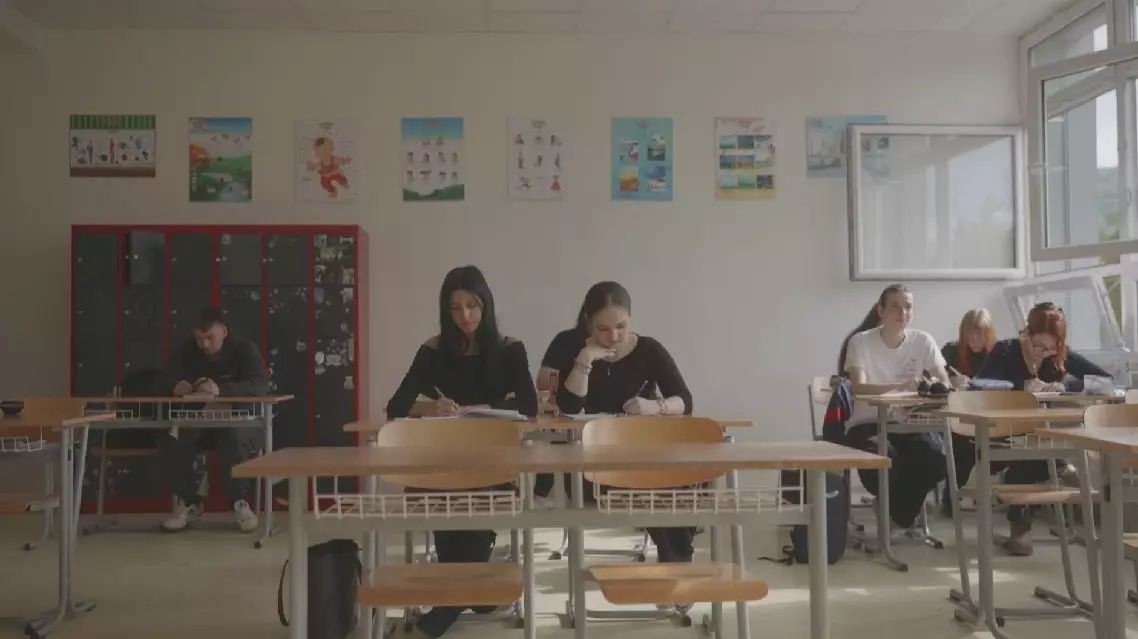
Chinese language learning gains popularity among young Slovakian students