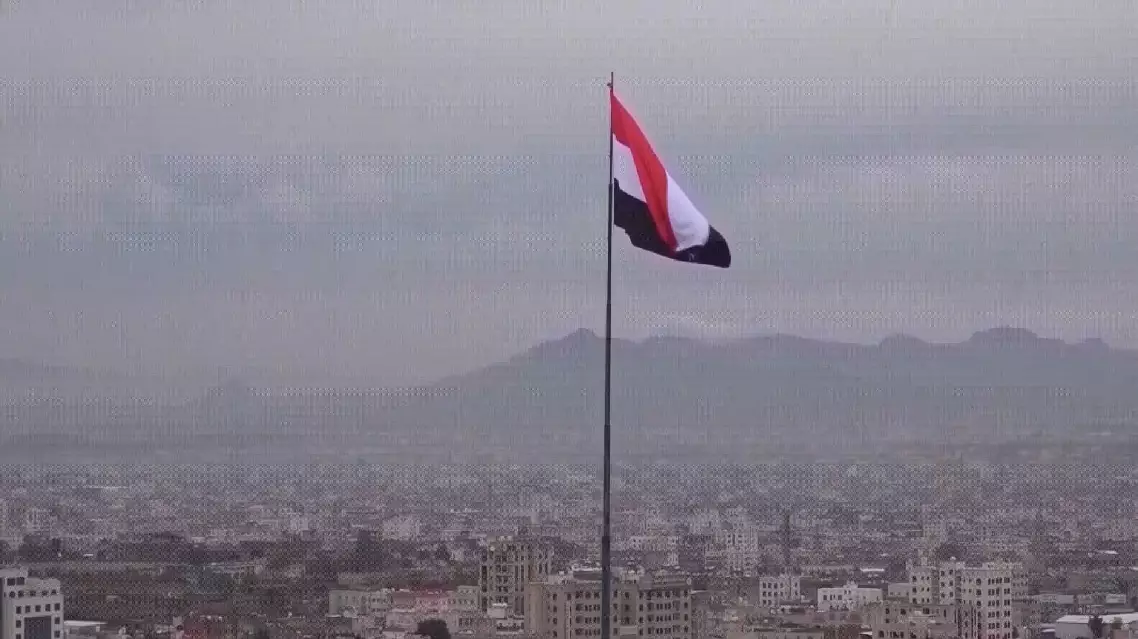
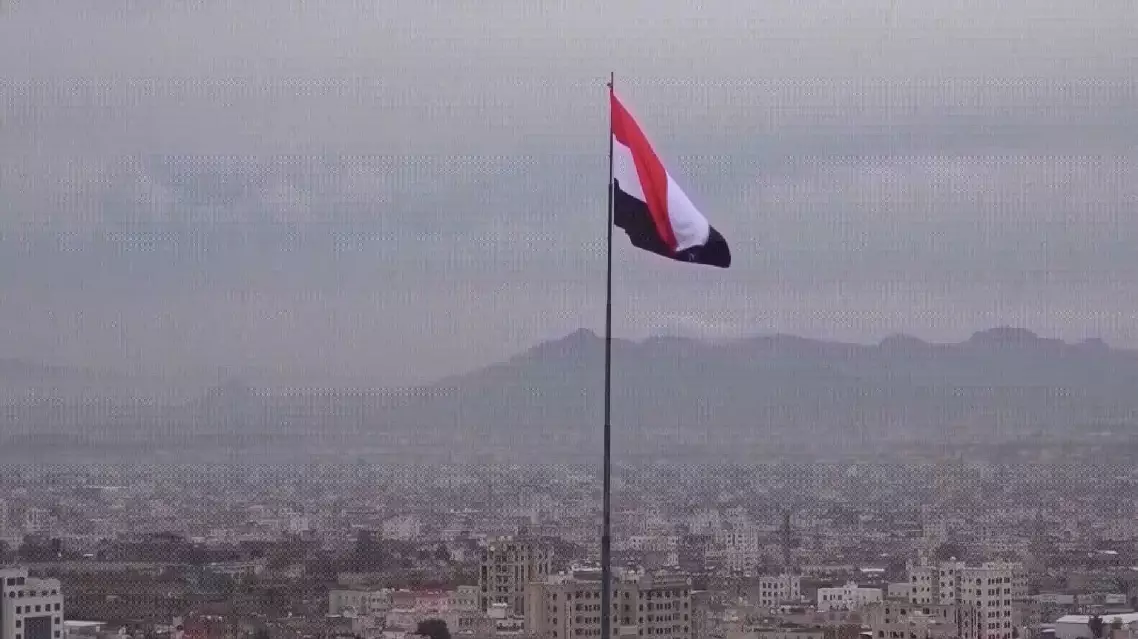
Loud explosions rocked Yemen's Houthi-held capital Sanaa late Saturday, as the Houthi-run al-Masirah TV reported renewed Saudi airstrikes on the city.
A Sanaa resident said warplanes could be heard overhead as powerful blasts echoed across the capital, rattling windows and shaking buildings.
Click to Gallery
Loud explosions rock Yemen's Houthi-held capital Sanaa after Saudi airstrikes
Loud explosions rock Yemen's Houthi-held capital Sanaa after Saudi airstrikes
Loud explosions rock Yemen's Houthi-held capital Sanaa after Saudi airstrikes
Loud explosions rock Yemen's Houthi-held capital Sanaa after Saudi airstrikes
Local residents believed that the airstrikes targeted Houthi positions. Casualties were not immediately known.
Earlier on Saturday, the Houthis said they had launched ballistic missiles and drones at an Aramco facility in the Saudi capital Riyadh in retaliation for what they described as intensified Saudi strikes on Yemen. Houthi military spokesperson Yahya Sarea said that 60 air and missile strikes had hit Yemen over the previous 24 hours.
Tensions between the Houthis and Saudi Arabia intensified after the group announced a maritime embargo against Saudi Arabia on July 20, followed by an escalation in cross-border missile and drone attacks and airstrikes.
The confrontation widened further in September amid fighting between the Houthis and Yemeni government forces, largely backed by Saudi Arabia. The Houthis captured the Red Sea port city of Mocha on Sept. 10 and strategically located Mayyun Island the following day.
Yemen's conflict began in late 2014, when the Houthis seized the capital Sanaa and much of northern Yemen, prompting a Saudi-led coalition to intervene in March 2015 in support of the internationally recognized Yemeni government.
Loud explosions rock Yemen's Houthi-held capital Sanaa after Saudi airstrikes
Loud explosions rock Yemen's Houthi-held capital Sanaa after Saudi airstrikes
Loud explosions rock Yemen's Houthi-held capital Sanaa after Saudi airstrikes
Loud explosions rock Yemen's Houthi-held capital Sanaa after Saudi airstrikes
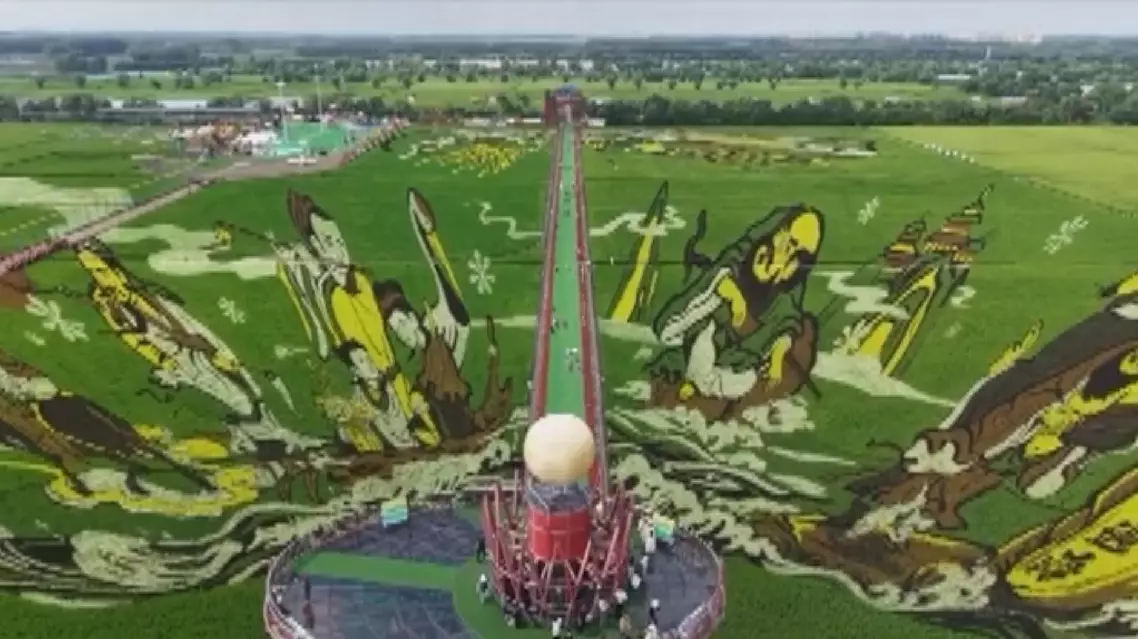
A farm in northeast China's Heilongjiang Province is drawing in travelers during the ongoing National Day holiday, transforming its rice fields into works of art and offering the visitors a unique way to experience the countryside.
By carefully planning the planting process, the Yangjiagang farm in the provincial capital city of Harbin has turned its fields into a canvas for stunning artworks, some of which span more than 17 hectares. Many of the artworks resemble classical Chinese paintings.
"We use rice plants of different colors to create these field artworks, and we update the designs every year. This year, we chose 'The Eight Immortals Crossing the Sea,' a well-known Chinese legend, as our theme. We hope these familiar stories can help people experience traditional Chinese culture while also seeing the creativity of modern agriculture," said Zhang Yu, deputy general manager of the Yanjiagang Farm Scenic Area Company.
The National Day holiday, also known as "Golden Week" in China, runs from Oct 1 to 7, sparking a major travel rush as hundreds of millions of people across the country take the chance to enjoy a short getaway. Many flock to cities or well-known tourist sites, but creative endeavors like the art at Yangjiagang farm are quickly reshaping how Chinese travelers choose their destinations.
Local farmers are doing all they can to ensure travelers feel welcome and enjoy their time. Beyond admiring the scenery, visitors can also board a little train that winds through the rice fields, try local specialties or enjoy a cup of rice-scented coffee.
"It's a nice place. You can breathe fresh air here. And I was amazed to see the colorful rice field artworks," said a visitor.
"I'm really happy to be here. I got to see rice fields and sorghum, things I had never seen before. And I even got to catch crayfish in the rice fields. It was so much fun," another visitor said.
"I'm from Harbin and I've been here many times. I like this place a lot. When friends visit from other places, I bring them here to see how rice is planted and how oil is made," said a visitor.
During the National Day holiday, daily visitors are reaching more than 20,000. The tourism boom has also opened up new opportunities for local farmers.
The story reflects something bigger. China's latest five-year tourism development plan calls for deeper integration of agriculture, culture and tourism. For Heilongjiang, China's leading grain-producing province, the goal is to ensure food security while unlocking new potential from its agricultural resources.
"Our farm is located just three kilometers from Harbin Airport, which gives us a great advantage in attracting visitors. Since we started developing agritourism, our overall benefits have grown significantly. It has also created jobs for more than 200 local farmers, who can work here during the off-season and earn additional income," Zhang said.
The fields will soon be harvested, but Yangjiagang is working to create year-round tourism experiences, allowing visitors to explore modern agriculture and rural life in every season.
Chinese rice farms stuns holiday travelers with field-wide artworks