Skip to Content Facebook Feature Image

Live ryhthms ignite spontaneous dance in China's 'Accordion City'

China

Live ryhthms ignite spontaneous dance in China's 'Accordion City'
China

China

Live ryhthms ignite spontaneous dance in China's 'Accordion City'

2026-10-04 17:43 Last Updated At:18:07

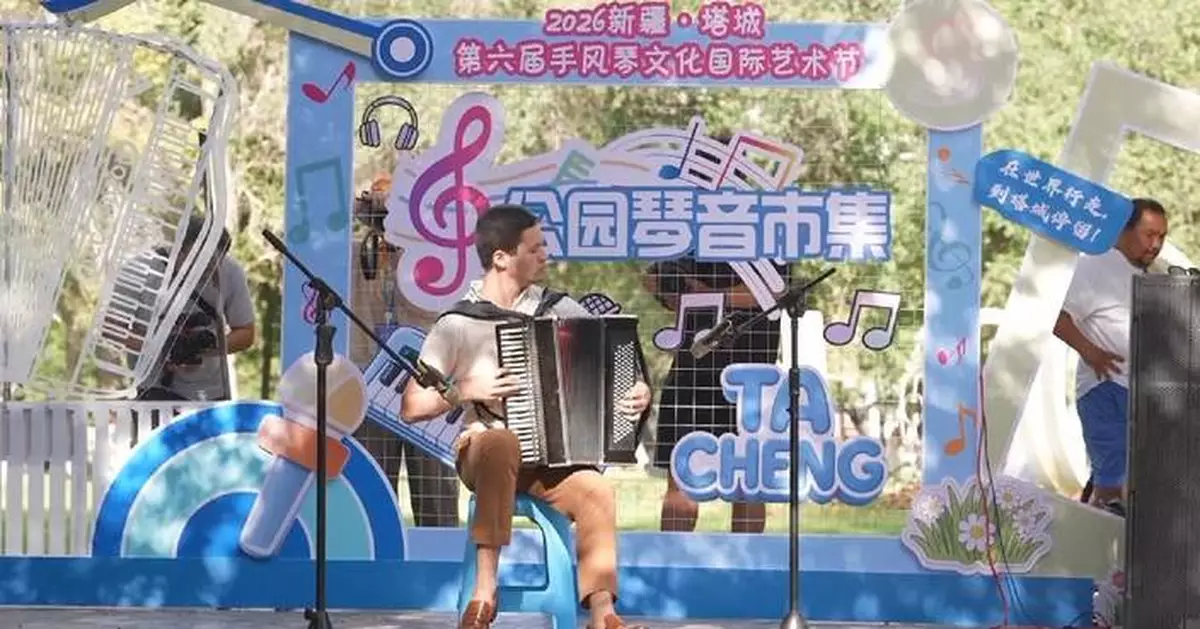
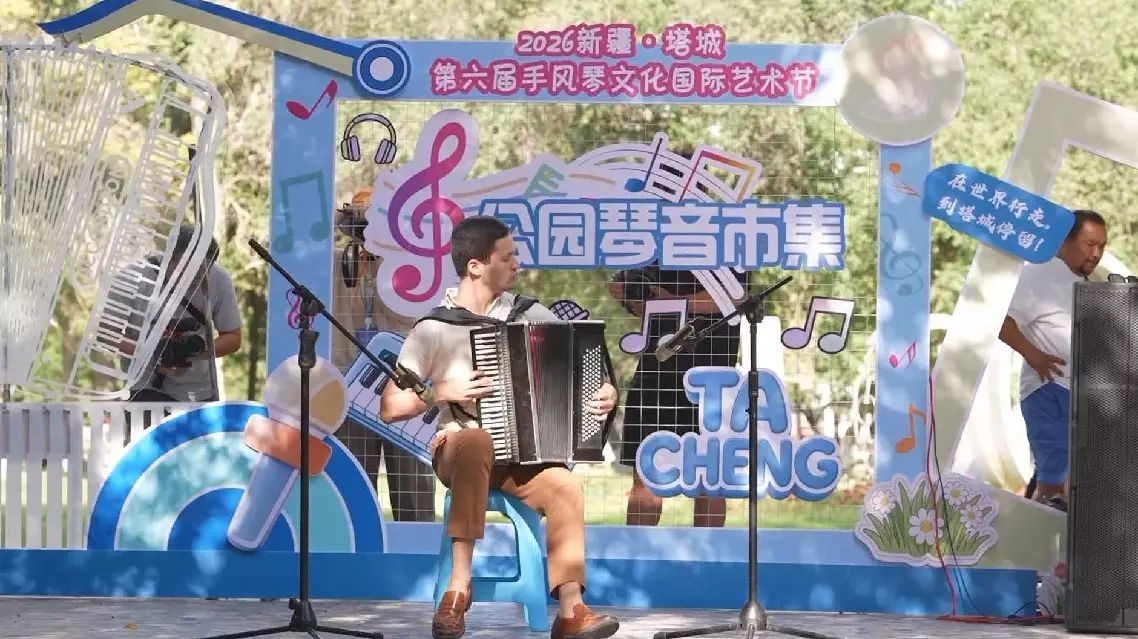
The rich sound of accordion music filled the open air and inspired spontaneous dancing in the public squares of Tacheng, Xinjiang this summer, as the city hosted the 6th Xinjiang Tacheng International Accordion Art and Culture Festival.

Tacheng, just kilometers from the border with Kazakhstan, was an important stop on the northern branch of the ancient Silk Road. Today, the city continues to foster cultural exchange through vibrant events like this festival, which brought international performers and local musicians together in "Melody Market" pop-up shows.

Performances ranged from lively solos inspired by Horse Racing to the familiar Katyusha, played by renowned local accordionists, drawing people from different ethnic groups together to dance to the same tune.

"[At most of the] concerts, I play and the people only listen, but here it was like something together with people. Yes, dancing together, yes, I want to dance with them," said Lev Solomonovich, an accordionist from Moldova.

Following his scheduled performance, Solomonovich started an impromptu playing session with fellow musicians. The diversity among the accordionists, both in their origins and their musical styles, was a major draw for visitors.

"So many ethnic groups here: Kazakh, Uzbek, and others. I've heard so many different kinds of music today. It's been really interesting," said Orzu Nurulloeva, a teacher at the Gnesin Russian Academy of Music.

The festival took music beyond the concert stage, turning balconies into stages as night falls. With no stage separating musicians and audiences, everyone became part of the performance, making the entire area into a living, breathing dance party.

"It makes you really want to get up, dance and join in. The music and the accordion really get you going," said a visitor.

"You can really feel the warmth of the people here," said another visitor.

From the Melody Market to the balcony shows, the accordion weaved itself into daily life in Tacheng throughout the festival.

"I can say that I never expected to have an accordion event at such a level, because we know accordion is everywhere, and in every country it's more or less popular. Many amateurs and some professionals are playing accordion. But here it's like -- I don't know -- Olympic Games for accordion," said Alexander Selivanov, chairman of the Music Committee of the Confederation Internationale des Accordeonistes (CIA).

Known locally as China's "Accordion City," Tacheng has integrated the instrument deeply into its cultural fabric, bringing residents, visitors, and performers together through a shared language of music.
Live ryhthms ignite spontaneous dance in China's 'Accordion City'

Live ryhthms ignite spontaneous dance in China's 'Accordion City'

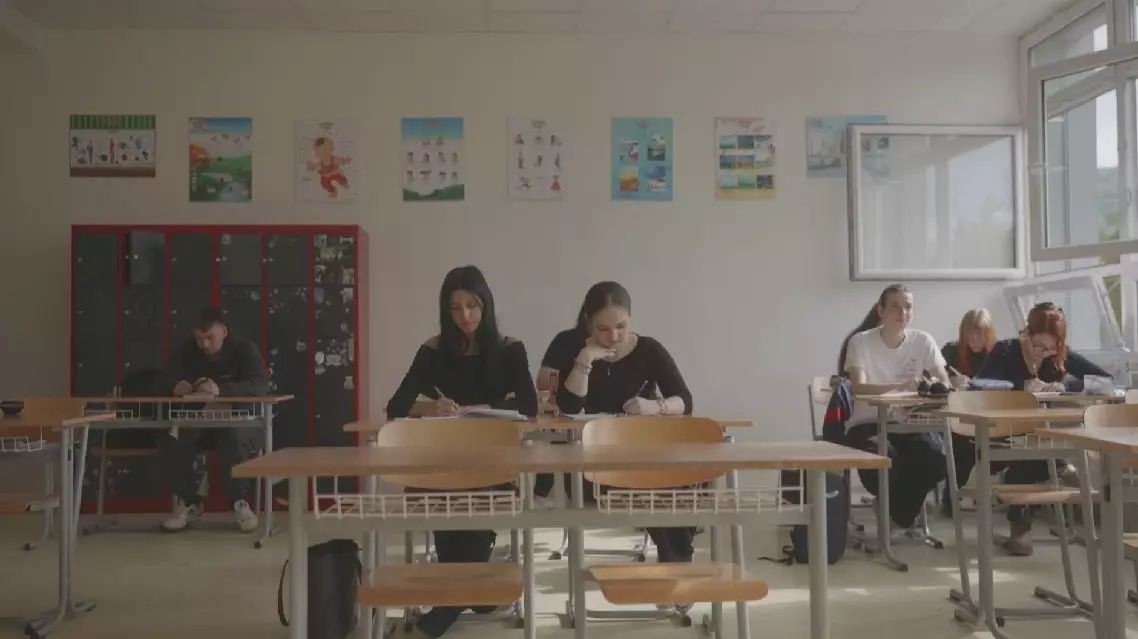
Chinese is increasingly popular in schools in the central European country of Slovakia, as many students start learning the language in high schools or even earlier.

At the Mikulas Kovak High School in Banska Bystrica, a bilingual program was launched in 2016. Participating students spend five years studying Chinese as part of their regular education.

For Anna Marina Vidova, a fifth-year student of the high school, the decision to learn Chinese started with a book when she was just nine years old.

"I read about Chinese culture and history, and I do like history, so I just gave it a try," she said, adding that she is planning to apply to Chinese universities, so she is studying hard right now.

She wants to study international relations, and sees communication between China and Europe as key to their future ties.

"I believe the relations between China and the European Union are very important to us. And I think also the European Union has a lot to offer to China as well," she said.

At school, Chinese learning extends beyond language lessons, with students learning subjects such as mathematics, geography and history in Chinese.

"From the second grade, they are beginning to learn mathematics, physics, biology, geography and chemistry, partly in Chinese, so partly in Slovak language and partly in Chinese language, so it's bilingual," said Jan Durica, a Chinese language teacher of Mikulas Kovac High School.

For Vidova, learning other subjects in Chinese means learning about China beyond vocabulary and grammar.

"I can understand how Chinese think. And like we have Chinese lectures here, teachers, so they also help us," she said.

For graduates like Michaela Cholvadova, the language can also open paths for exchange between Slovakia and China.

"There are many work opportunities I'm looking forward to, maybe China, making some contracts with Slovakia, maybe so I can work in between the two countries," said Cholvadova.

Interest in learning Chinese is also reaching Slovak children.

In Bratislava, Moli Chinese Studio introduces Chinese through play, where children listen to Chinese teachers and learn words through activities.

Natalia Turchin, the studio's co-founder, said the approach helps children get early exposure to the language.

"The idea is that we are playing with them in Chinese. So we have a Chinese lecturer who is here with them, and she's playing with them in Chinese. So they're listening to the Chinese language," said Turchin.

Chinese language learning gains popularity among young Slovakian students

Chinese language learning gains popularity among young Slovakian students

Recommended Articles