EDINBURGH, Scotland--(BUSINESS WIRE)--Oct 8, 2026--
Scottish technology company Machines With Vision is targeting the global US$78 billion rail maintenance sector after securing a multi-million, multi-year contract with Network Rail, as imprecise defect location data is estimated to cost the industry US$6 billion a year worldwide through repeat visits and wasted crew time.
This press release features multimedia. View the full release here: https://www.businesswire.com/news/home/20261008202957/en/
Beyond the significant financial cost, inaccurate defect location can also create a serious safety risk, unnecessarily exposing rail workers to potentially hazardous trackside environments as they search for defects that have been identified but cannot be precisely located.
Machines With Vision has developed innovative technology that uses cameras fitted to the underside of inspection trains to build a highly accurate image-based geospatial map of any railway network, enabling higher levels of safety, efficiency, and automation for railway infrastructure inspection and maintenance.
“Rail networks are complicated and dangerous environments,” said Machines With Vision CEO and Co-founder Anthony Ashbrook, “and the safety of workers and the general public is paramount. Ensuring that track workers get to the right place first time minimises the risk of a missed defect, keeping trains running safely and efficiently while making maintenance work itself safer.”
Machines With Vision maps the track visually and navigates crews directly to faults with millimetre accuracy via the company’s RailLoc system and Fault Navigator mobile app.
The contract win follows a successful pilot carried out with Network Rail over a two-year period.
Mark Chestney, Infrastructure Monitoring Programme Manager at Network Rail, said: “For every suspect, it would previously take on average an hour once you got on site to find it, now we’re talking five minutes. We have thousands of suspects every year, so that’s thousands of hours saved and thousands of hours of reduced exposure to slips, trips, and falls.”
Mark Chestney added: “With emergency speed restrictions costing thousands of pounds a minute in certain locations, deploying people to fix things rather than find things is a much more efficient way of working.”
Brian Whitney, Engineering Expert (Track) at Network Rail, said: “Fault Navigator and RailLoc represent a significant step forward in how we identify and verify rail defects. Accurate defect location reduces unnecessary track exposure, improves the effectiveness of verification activities and helps ensure maintenance resources are targeted where they are needed most. The potential benefits for workforce safety, productivity and asset management are considerable.”
Machines With Vision’s leadership team combines deep railway expertise with extensive experience in technology and high-growth businesses. CEO and Co-founder Anthony Ashbrook pioneered Mobile Visual Search, now used in apps including Amazon Shopping and Google Lens. CTO Jon Owen played a key role in digitally mapping the UK rail network and developed the sector’s first visual inspection system. CCO Justin Stroud is the former European MD of Sperry Rail, while Head of Operations Russell Licence spent almost two decades in senior roles at Network Rail. Director Richard Lennox brings extensive scaleup experience from leadership positions at Skyscanner, acquired by Ctrip for $1.7 billion in 2016, and Current Health, acquired by Best Buy for $400 million in 2021.
CEO Ashbrook said: “We have built a team that combines high-level technology and rail sector experience, and this combination positions us to become a key player as the market continues to evolve towards increasing automation. Many think of rail as an historic industry, when in truth it is set to become even more integral to economies, societies, and global sustainability going forward.”
The news comes as Machines With Vision expands its work with other national railway infrastructure operators across Europe, North America, and Australasia, while the company has also embarked on its latest external investment round to support its continued international growth.
Anthony Ashbrook added: “We’re excited about our international expansion plans and expect to announce related contract wins in due course, as we accelerate our internationalisation with investors who share our vision.”
About Machines With Vision
Machines With Vision is a rail technology company creating transformative navigation and automation solutions for the international rail industry. Through expertise from other sectors, such as computer vision, robotics and autonomous vehicles, the company is working towards a new golden age of railways, delivering sustainable, safe, reliable and low-cost transportation of people and goods.
For more information, please visit: https://www.machineswithvision.com/
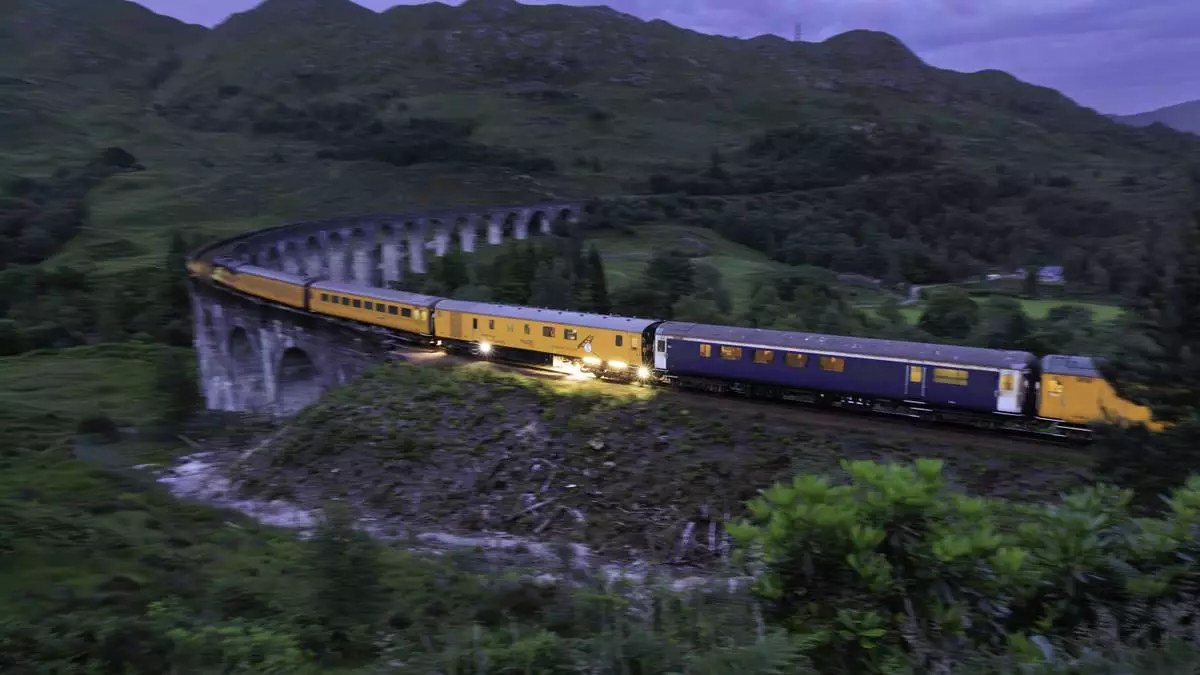
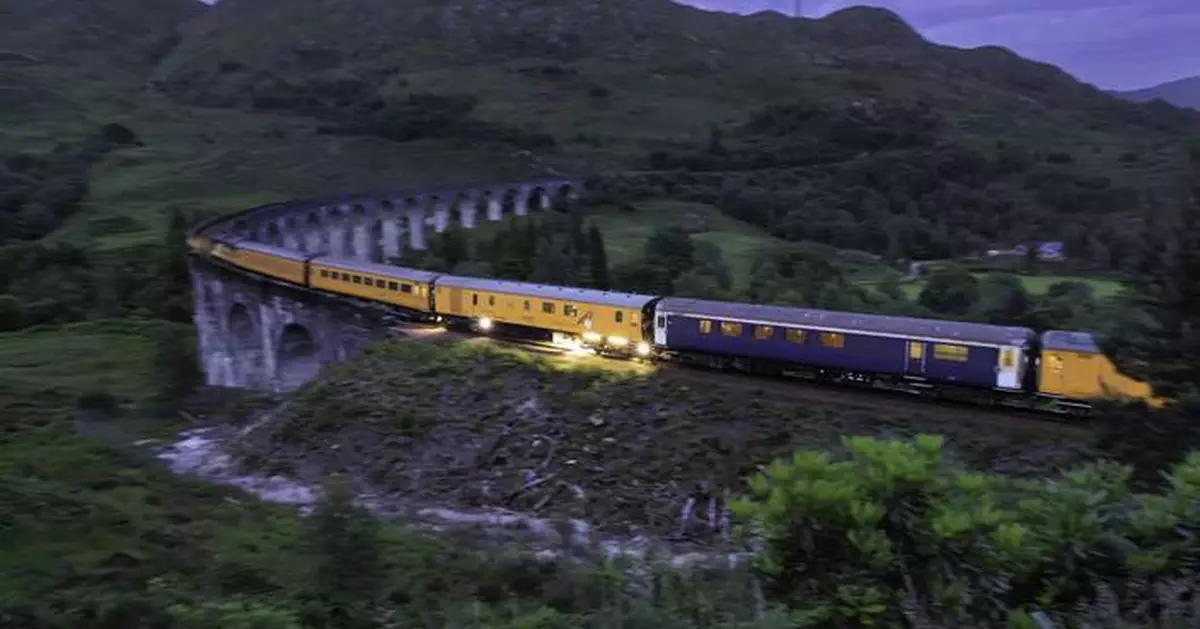
Network Rail's ultrasonic test unit fitted with Machines With Vision’s RailLoc sensor crossing Glenfinnan Viaduct
PARIS (AP) — Students barricaded a high school in northeastern Paris with rubbish bins on Thursday before police moved in with tear gas, as France’s nationwide protests showed few signs of ending.
The Hélène Boucher high school has been a flashpoint for clashes in the French capital and was one of hundreds of schools disrupted by protests Thursday.
At least a dozen demonstrations supporting the high school students’ movement were planned across France later in the day, including a rally at Place de la Bastille in Paris.
Riot police gathered in side streets as students converged on the school. Many protesters wore surgical masks or hoodies, apparently to avoid being recognized.
Police have made more than 6,600 arrests since late September, when students, most of them under 18, began protesting to demand more education funding, according to the Interior Ministry. The Education Ministry said 375 schools were fully or partially closed Thursday.
While the number of school closures was down compared to Tuesday, pressure is mounting on the government of outgoing President Emmanuel Macron.
The protests against the underfunding of schools — many of them struggling with dilapidated facilities and insufficient staff — have drawn troublemakers not concerned about the aims of the protest movement as well as unions and political groups.
In a TV address, Prime Minister Sébastien Lecornu lamented the “violence, students and staff being attacked, police officers and gendarmes injured, schools set on fire or vandalized, thousands of hours of classes lost, not to mention threats and insults.”
He took aim at “political leaders who use this anger to conduct their electoral battles.” France goes to the polls for a presidential election in April. “We cannot play with the safety of France’s youth,” Lecornu said.
At the Lycee, 18-year-old university student Emma Khelil came to offer support to those at the barricades at her former high school. She told The Associated Press that she’s really concerned about police violence.
“We’re here to defend our rights, not to lose an eye or a hand,” Khelil said. She also said that she had noticed insulation problems and water leaks in the school building and had even seen rats on occasion. Other students confirmed that they’d seen rats too.
She was not convinced by Lecornu’s efforts to calm the situation.
“I don’t think the movement is going to lose momentum. As long as things don’t change, we’re going to see the movement grow stronger, and potentially a convergence of struggles, especially with the next presidential election coming up,” she said.
Not long after she spoke, police surrounded a nearby square. The crowd surged, and tear gas was fired.
Smoke from burning garbage nearby hung in the air at Place de la République as hundreds of high school and university students prepared to march toward Place de la Bastille, the demonstration’s focal point.
Some carried signs bearing their schools’ names; others held placards reading “More money for repression than for our education” and “Who protects us from the police?”
“We’re here, we’re demonstrating, and we won’t stop. Until October, November, December if necessary. Nothing will stop us,” said Sofia Ferdials, 18, a student at Paris 8 University.
Dounia Gergeon, a 39-year-old school librarian, said she joined the demonstration at Place de la Bastille because she shared students’ concerns and worried about a broader crisis facing young people anxious about their futures. At the middle and high school where she works, time was set aside for students to discuss their demands.
“They do not feel supported,” she said. “They feel cornered and forced to work under these conditions.”
France is not the only country to be dealing with student-related protests.
In Belgium, Willy Demeyer, the mayor of Liege, issued a ban on public gatherings until midnight on Oct. 16, citing a “real, serious and imminent risk” of further clashes and vandalism.
City police said they used water cannon and tear gas on Wednesday to hold back several hundred protesters. Authorities sent emergency text messages advising shopkeepers to close due to rioting.
Nearly 90 people were arrested and several police were injured. Police reinforcements were sent from the capital Brussels and from Antwerp, and more are coming. Smaller protests have been held in Mons and Charleroi.
Belgium’s Interior Minister Bernard Quintin said on social media that the “perpetrators will have to answer for their actions before the courts.”
The Belgian protests, organized through online chat groups, include demands for more teachers and smaller classes as well as complaints about education reform in Belgium, but are also likely inspired by events in France.
Student protests have spread to several Italian cities, though on a much smaller scale and over a broader set of domestic grievances. Activists have explicitly invoked the French movement with the slogan “let’s do as they do in France,” while organizing school occupations, assemblies and marches.
In Turin, students occupied several high schools over building conditions, education funding and increased military spending. In Rome, students occupied one high school and walked out of another, while students in Naples added opposition to a planned migrant detention center to their demands.
Cook reported from Brussels. Masha Macpherson in Paris contributed to this report.
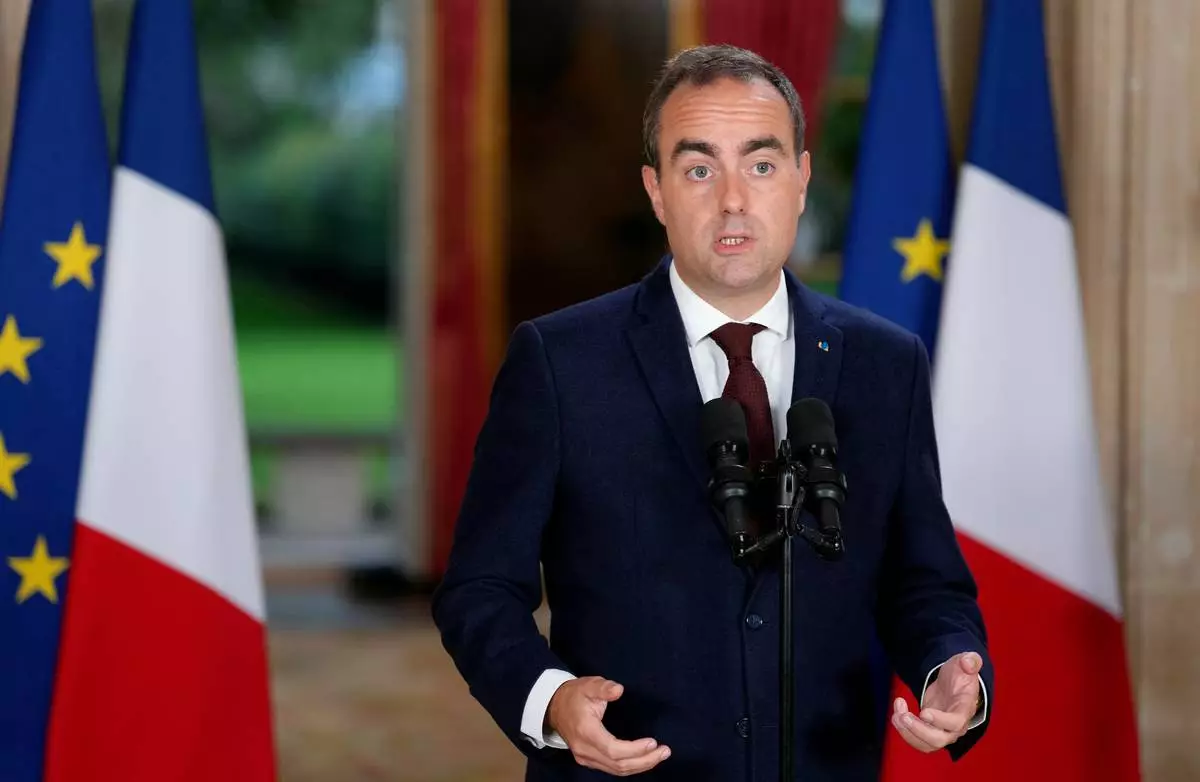
France's Prime Minister Sebastien Lecornu makes a statement at the Hotel de Matignon in Paris, Wednesday, Oct. 7, 2026. (Dimitar Dilkoff/Pool Photo via AP)
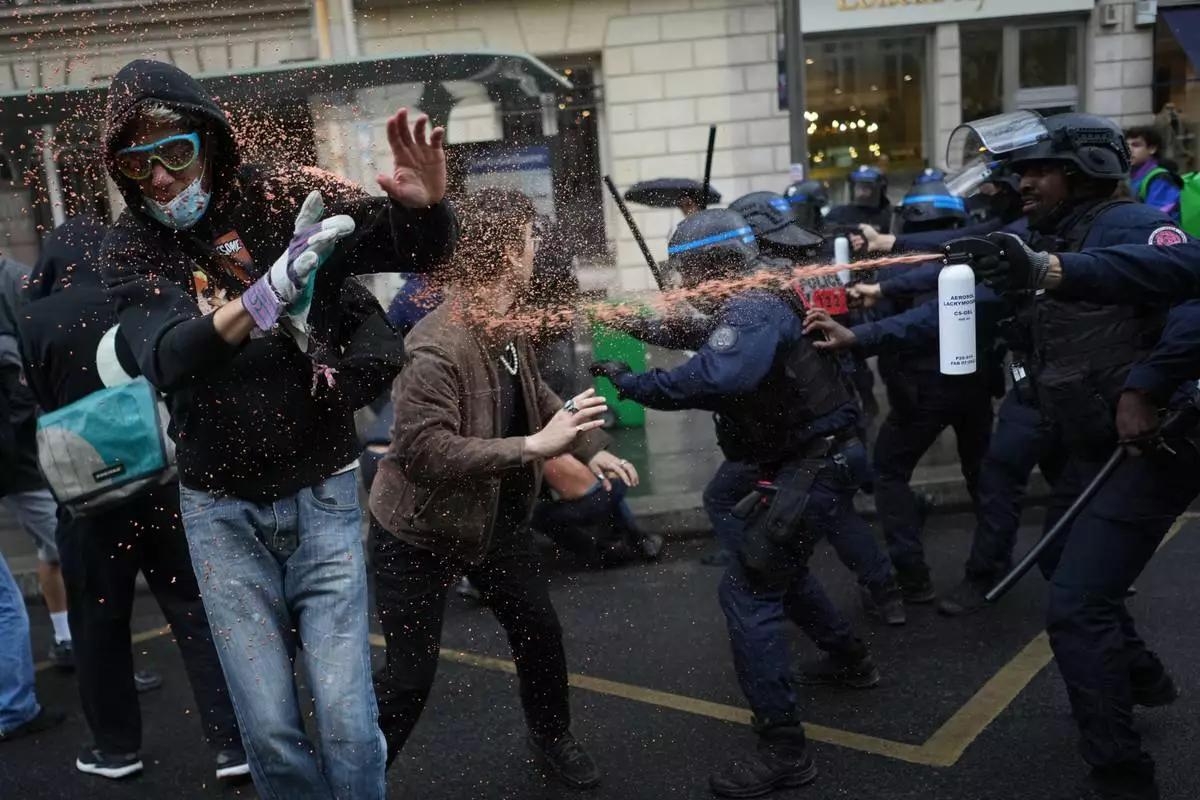
Police officers spray students with pepper spray near Sciences Po university as they protest against under-resourced schools, in Paris, Wednesday, Oct. 7, 2026. (AP Photo/Thibault Camus)
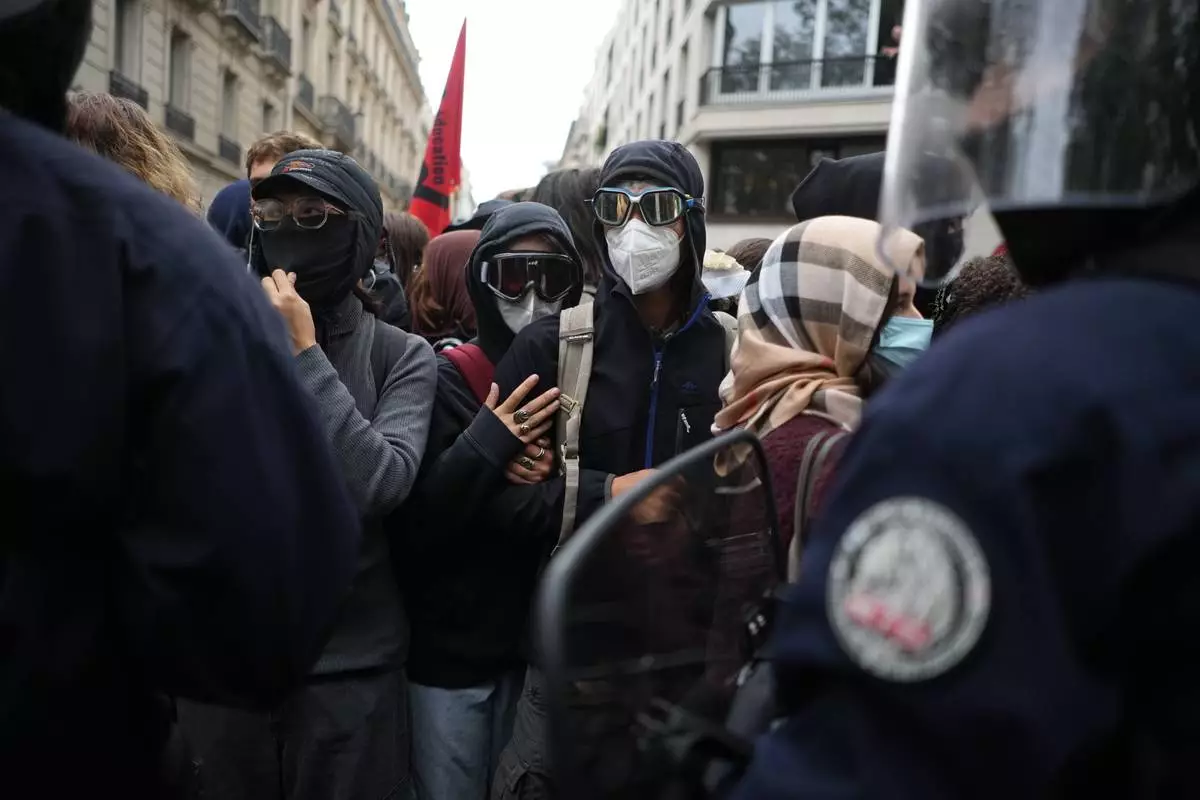
Students face policemen near Sciences Po University as they protest against under-resourced schools, in Paris, Wednesday, Oct. 7, 2026. (AP Photo/Thibault Camus)