Golden hash browns, gravy-smothered biscuits and crispy waffles with a hearty helping of syrup are among the classic Southern comfort foods. But when hurricanes tear through Southeastern towns, the hot meals and bold yellow signs of the local Waffle House provide another kind of comfort.
If a Waffle House stays open in town, even in a limited capacity, neighbors are reassured that the coming storm is unlikely to cause devastation. A closed location of the dependable diner chain has come to indicate impending disaster. The metric is known as the Waffle House Index.
What might sound like silly logic has become one of the most reliable ways for Southerners — and even federal officials — to gauge a storm’s severity and identify communities most in need of immediate aid.
The South’s favorite disaster authority provides an informal measure of how significantly a storm will affect or has affected a community.
A map of the chain’s over 1,900 locations, concentrated in the Southeast and mid-Atlantic, helps residents of storm-prone states assess whether they’re likely to lose power, experience severe flooding or endure other extreme conditions that might cause a resilient restaurant to close its doors. For some, it’s a telltale sign of whether they need to evacuate.
Waffle House is known not just for serving breakfast 24/7, 365 days a year, but also for its disaster preparedness. For decades, people across the South have noticed that the local Waffle House seemed to be the only business still open during a storm or the first to reopen after it passed.
The restaurant chain’s reputation for remaining open when people desperately needed a place to warm up, charge devices and grab a hot meal became a fairly reliable — albeit amusing — resource to help track recovery efforts. The company even operates its own storm center.
Waffle House’s social media shares color-coded maps of its restaurant locations in certain regions that will soon be hit or are recovering from storm damage. The Federal Emergency Management Agency also offers some live tracking.
Green means the location is serving a full menu, indicating minimal damage in the surrounding area. The lights are on and the syrup is flowing.
Yellow means the restaurant is serving a limited menu, a signal that it’s pulling power from a generator and might have a low food supply. The area might not have running water or electricity, but there’s enough gas to fry up bacon for hungry customers.
Red means the location is closed, a sign of unsafe operating conditions and severe destruction to the restaurant or nearby communities.
Former FEMA Administrator Craig Fugate has said he thought up the Waffle House Index while leading Florida’s emergency management efforts in 2004. He had been searching for something to eat while surveying the devastation left by Hurricane Charley and was only able to find a Waffle House serving a limited menu.
His team began to notice other open Waffle Houses in communities without power or running water. The restaurants eventually became a key feature on a color-coded map that his team provided to help the public and local officials identify where storm damage was most severe.
Fugate continued to use his color-coded map when he joined FEMA under President Barack Obama. He was the agency’s administrator in 2011 when a deadly tornado tore through the town of Joplin, Missouri. Both of the town’s Waffle Houses reportedly stayed open.
The restaurant chain’s disaster readiness is no coincidence. Seven locations were destroyed and 100 more shut down in 2005 during Hurricane Katrina, but company executives saw business skyrocket at restaurants that reopened quickly.
They soon embraced a business strategy centered around keeping their restaurants operable during and after a disaster, according to the company’s website. The chain said it has invested in portable generators, bought a mobile command center and trained employees on what they can still serve if they lose electricity.
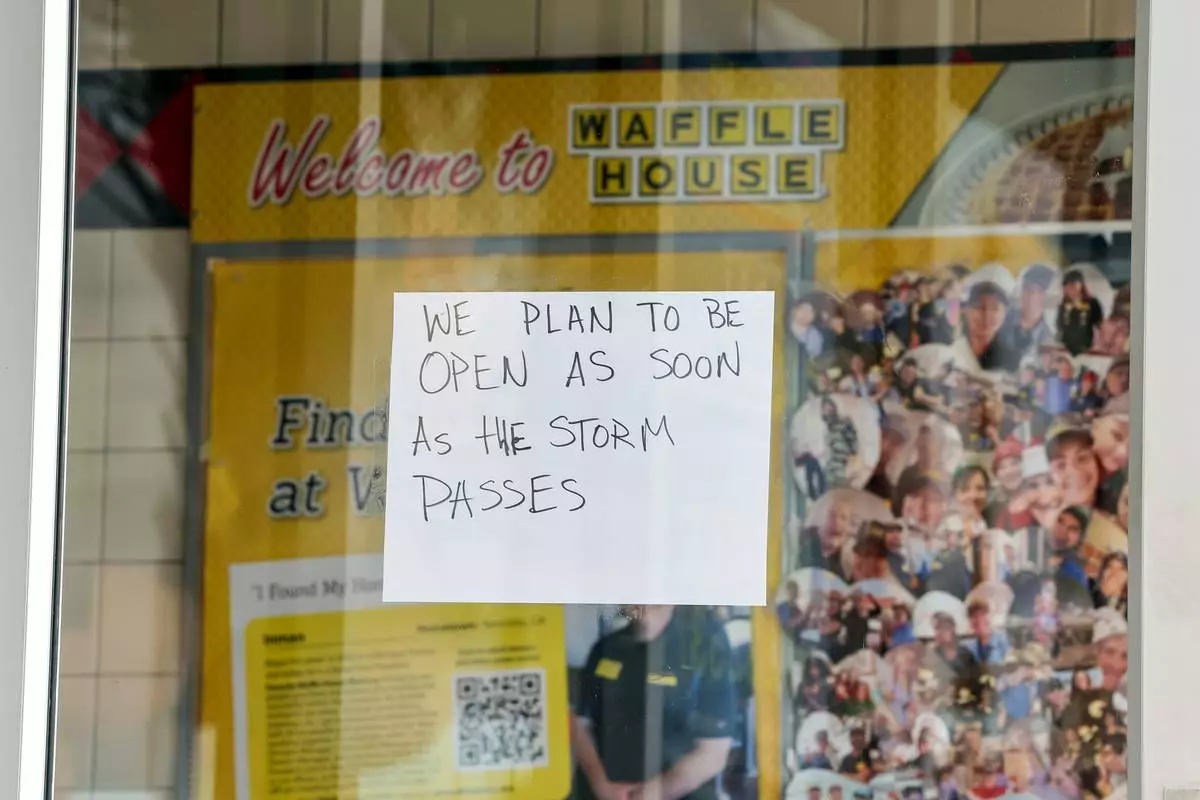
FILE - A sign on a closed Waffle House on Highway US 19 in anticipation of Hurricane Milton on Oct. 8, 2024, in New Port Richey, Fla. (AP Photo/Mike Carlson, File)
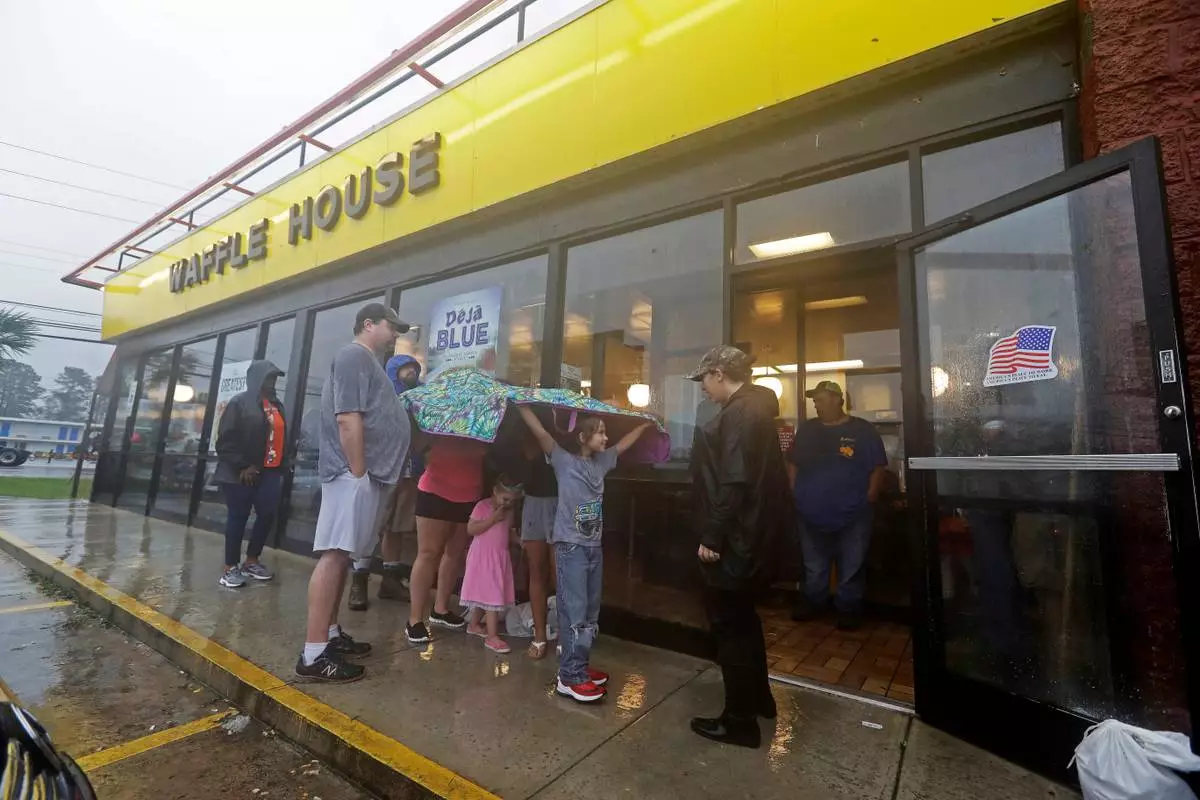
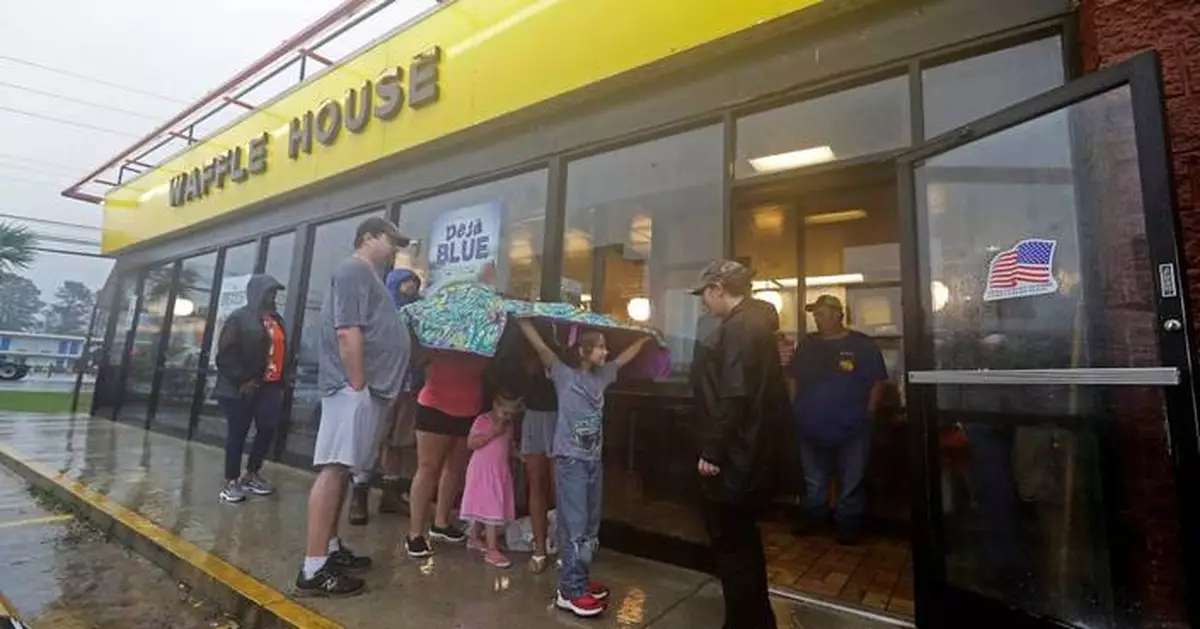
FILE - Luke Churchill, left, stands with his wife Mary and their children, Katie, Liam and Raighan, as they wait in the rain outside an open Waffle House restaurant in Wilmington, N.C., after Hurricane Florence traveled through the area on Sept. 16, 2018. (AP Photo/Chuck Burton, File)