European executives have hailed China's supply chains and sound business environment, as China and the EU opened a new round of trade talks in Beijing on Thursday.
China's Commerce Minister Wang Wentao met with EU Trade Commissioner Maros Sefcovic, and the two sides are expected to co-chair the second round of talks under the China-EU trade and investment consultation mechanism from Thursday to Friday, with the trade and investment balance, export controls, intellectual property rights and WTO reform expected to be on the agenda.
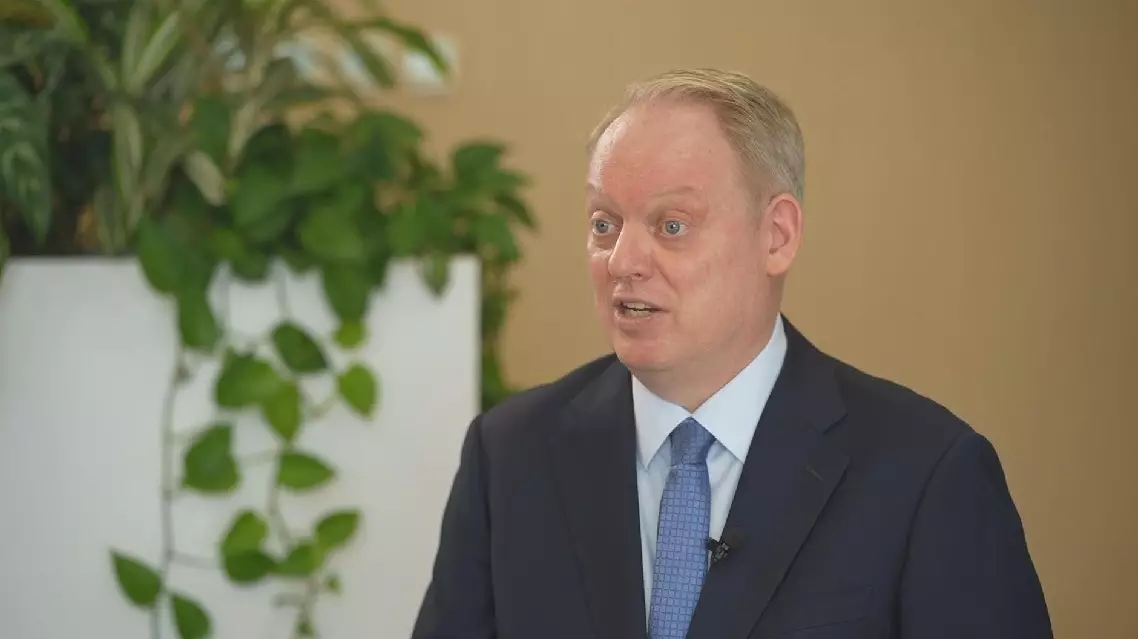
Speaking to China Global Television Network (CGTN) in a recent interview, Jens Eskelund, president of the European Union Chamber of Commerce in China, said the country is evolving from simply a lucrative market into a reliable manufacturing base for international companies, thanks to its high-quality and stable supply chains.
"China used to be a place where you came primarily because it was a big and expanding market and you could make good profits. Increasingly, what we see is that foreign companies are here to tap into and leverage Chinese supply chains for their global operations. This is sort of the progression from what used to be 'in China, for China', to increasingly 'in China for the world'. So I think the big theme right now for many of our members is sort of the integration of Chinese supply chains with global operations. And I think that's where many come to see the opportunity going forward," said Eskelund.
His view was shared by Erik Buschmann, chief operating officer of Airbus China, who said the nation's stable operating environment has encouraged the European planemaker to scale up its investment. The aircraft manufacturer operates a final assembly line for single-aisle aircraft in the northern port city of Tianjin, its first outside Europe.
"We see two things in China. We see a large demand for aircraft, commercial aircraft which we're delighted to serve. We see a very stable environment. So that's the right environment for us to think about what to do in China. Hence the decision to invest in Tianjin and to deliver to the Chinese customer aircraft which are built in Tianjin, and with that we are underscoring that we are a good partner to the Chinese aviation system by being local in China in this case here in Tianjin," said Buschmann. On Wednesday, the Chinese Foreign Ministry said China always believes it serves the shared interests of China and the EU to stay committed to openness and cooperation, and resolve economic and trade disputes through dialogue and consultation on an equal footing.
European business figures hail China's supply chains as China-EU trade talks open
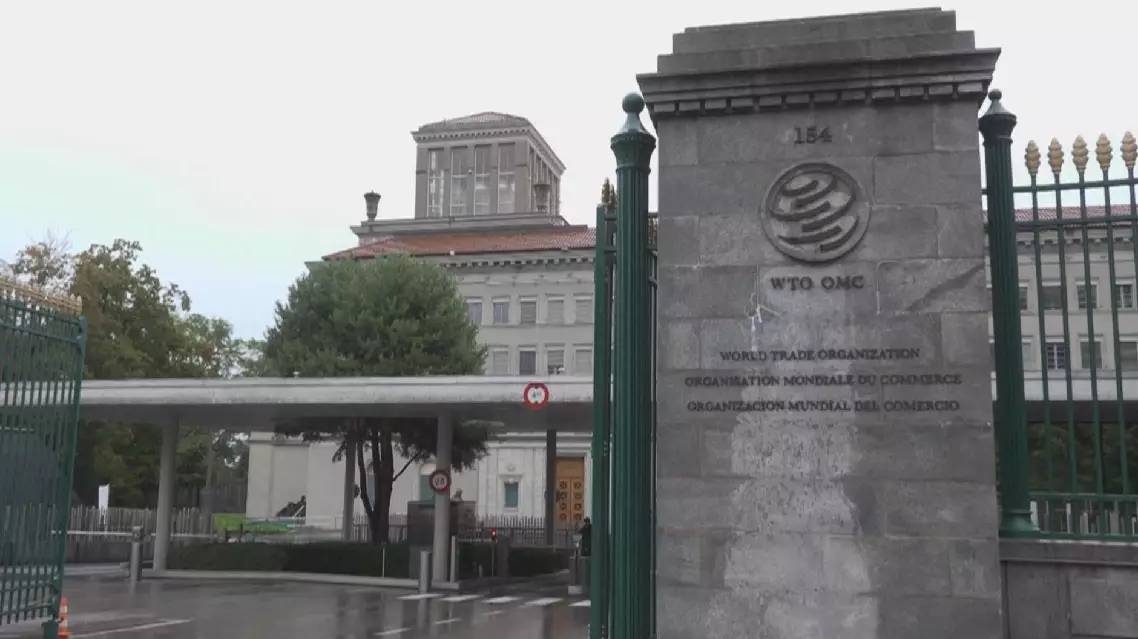
The World Trade Organization (WTO) said on Thursday that global merchandise trade is expected to grow by 3.9 percent in 2026, up from its March forecast of 1.9 percent, driven by supply chain adaptation and strong investment in artificial intelligence (AI).
"Given stronger-than-expected performance in the first half of the year, world merchandise trade volumes are expected to grow by 3.9 [percent] in 2026, almost double the 1.9 increase foreseen in the baseline scenario in the March forecast. Merchandise trade growth is further expected to pick up slightly to 4.1 percent in 2027," WTO Deputy Director-General Johanna Hill told a press conference held at the WTO headquarters in Geneva.
While revising up the forecast for merchandise trade growth, the WTO's latest Global Trade Outlook and Statistics report lowered the outlook for commercial services trade in 2026 over the impact of the Middle East conflict.
The forecast for services trade volume growth in 2026 has been revised down to 3.3 percent from 4.8 percent in March.
In 2027, growth rates in volume terms for merchandise and services trade are expected to rise to 4.1 percent and 6.4 percent, respectively, depending on a timely resolution of the Middle East conflict, the report said.
In the report, the WTO projected global GDP growth at 2.6 percent and 2.9 percent in 2026 and 2027, respectively.
WTO Director-General Ngozi Okonjo-Iweala said the figures "reflect trade resilience in action."
Hill said that while the system has proven resilient, that does not necessarily mean it is robust, calling for global efforts to strengthen the multilateral trading system to help ensure that the global economy is better equipped to deal with future shocks.
According to the report, merchandise trade volume grew by 3.5 percent in the first half of 2026, exceeding expectations despite the disruption caused by the Middle East conflict.
The performance reflected the ability of supply chains to adapt to shocks affecting energy, fertilizer and transport markets, the report noted.
The report showed that crude oil exports from the Middle East fell by roughly 24 percent and liquefied natural gas (LNG) exports by 47 percent in the first half of 2026. But increased shipments from other suppliers helped limit the decline in global exports to around 6 percent for crude oil and just 1 percent for LNG. Fertilizer markets also adjusted despite severe disruption, the report said.
Another factor contributing to the higher merchandise trade growth forecast is "a stronger-than-expected" surge in AI-related capital investment, said the report.
In the first half of 2026, AI-enabling goods such as semiconductors and servers accounted for 47 percent of global merchandise trade growth, with trade in these products going up 67 percent year-on-year, accelerating from already rapid growth in 2024 and 2025.
As the Middle East conflict disrupted transport and travel services, services trade growth slowed from 14 percent year-on-year in value terms in the first quarter of 2026 to 10 percent in the second quarter, the report showed.
It noted that other services, especially digitally delivered services such as computer and financial services exports, remained resilient and continued to support overall services trade growth.
WTO revises up 2026 global merchandise trade growth forecast