China's third-quarter exports rose 22 percent year on year to more than 8 trillion yuan, or about 1.2 trillion U.S. dollars, for the first time, while September imports also hit a monthly record, customs data showed Wednesday.
Wang Jun, vice minister of the General Administration of Customs, attributed the export growth to China's extensive industrial chains and expanding advanced manufacturing sector, which he said enabled producers to respond quickly to global demand.
"On the production side, China exported more than 350 billion yuan (about 52.3 billion U.S. dollars) worth of ships in the first three quarters, up 24.6 percent. Exports of 300,000-metric-ton oil tankers, large liquefied petroleum gas carriers and liquefied natural gas carriers all more than doubled. Ship designs using alternative fuels such as methanol and ammonia continued to improve, supporting global energy transportation," Wang said.
Export growth also extended to other manufactured goods, including industrial robots and electronic components.
"As China's industrial robot industry adopted more digital and intelligent technologies, exports approached 10 billion yuan (about 1.5 billion U.S. dollars), up 16.9 percent, helping trading partners upgrade their manufacturing sectors. Exports of electronic components rose 70 percent, while shipments of electrical equipment such as wires and cables increased 25.3 percent, helping meet global demand for AI computing and power infrastructure," Wang said.
Beyond industrial goods, Wang cited portable filming devices for creators of short-form videos, mini ice makers for camping and portable air conditioners as examples of Chinese products tailored to overseas consumers.
Imports, meanwhile, grew more than 20 percent year on year in each of the seven months from March through September. They reached a record 2.13 trillion yuan, or more than 318 billion U.S. dollars, in September, surpassing 2 trillion yuan for the first time.
"The rapid growth in imports during the first three quarters was mainly driven by steady economic performance and demand from China's vast domestic market. The expansion of advanced manufacturing also generated strong demand for intermediate goods, including key components," Wang said.
Wang pointed to increased purchases of electronic components and raw materials as signs of demand from manufacturers.
"In the first three quarters, China's imports of data-storage components jumped 150 percent, while imports of integrated circuits rose 56.6 percent and aircraft parts increased 17.6 percent. Improving production activity also provided steady support for imports of upstream raw materials. China imported more than 1.2 billion metric tons of ores containing metals such as iron, aluminum and nickel, as well as over 400 million metric tons of oil and gas during the period," Wang said.
The rise in imports extended to consumer goods. Demand for imported food and consumer goods also grew.
"At the same time, as Chinese consumers shift from simply having access to products to seeking better-quality options, their demand for quality goods from around the world continues to grow. In the first three quarters, China's imports of fresh durians from Malaysia jumped 330 percent, while imports of salmon from the Faroe Islands rose 41.4 percent, Italian olive oil 28.6 percent and French perfume 28.5 percent," Wang said.
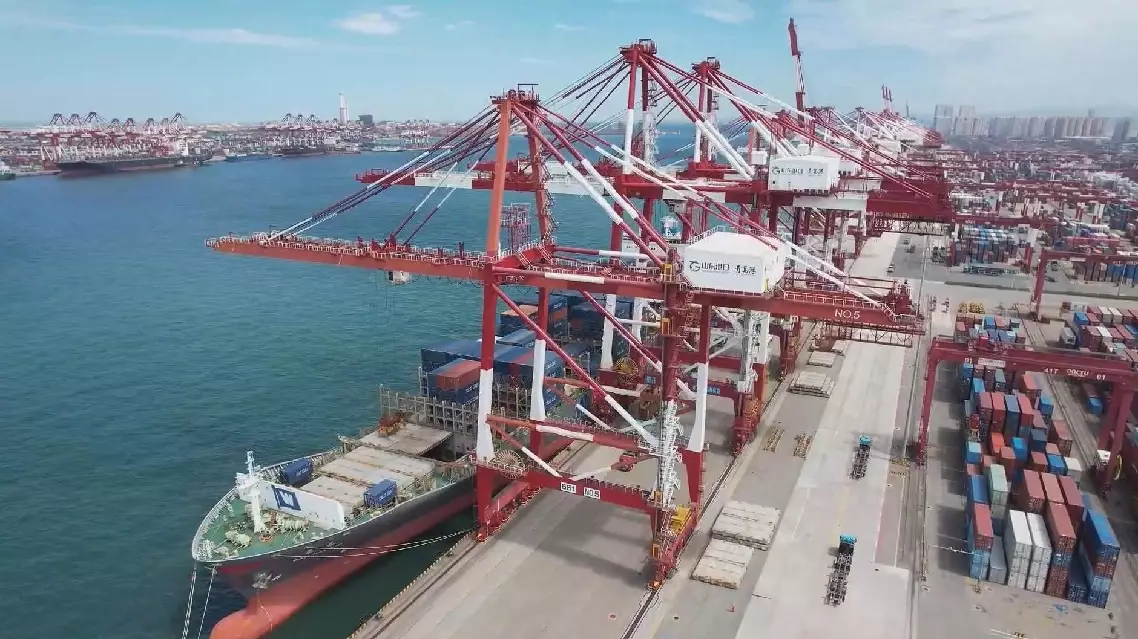
China’s Q3 exports top 8 trln yuan while September imports hit record