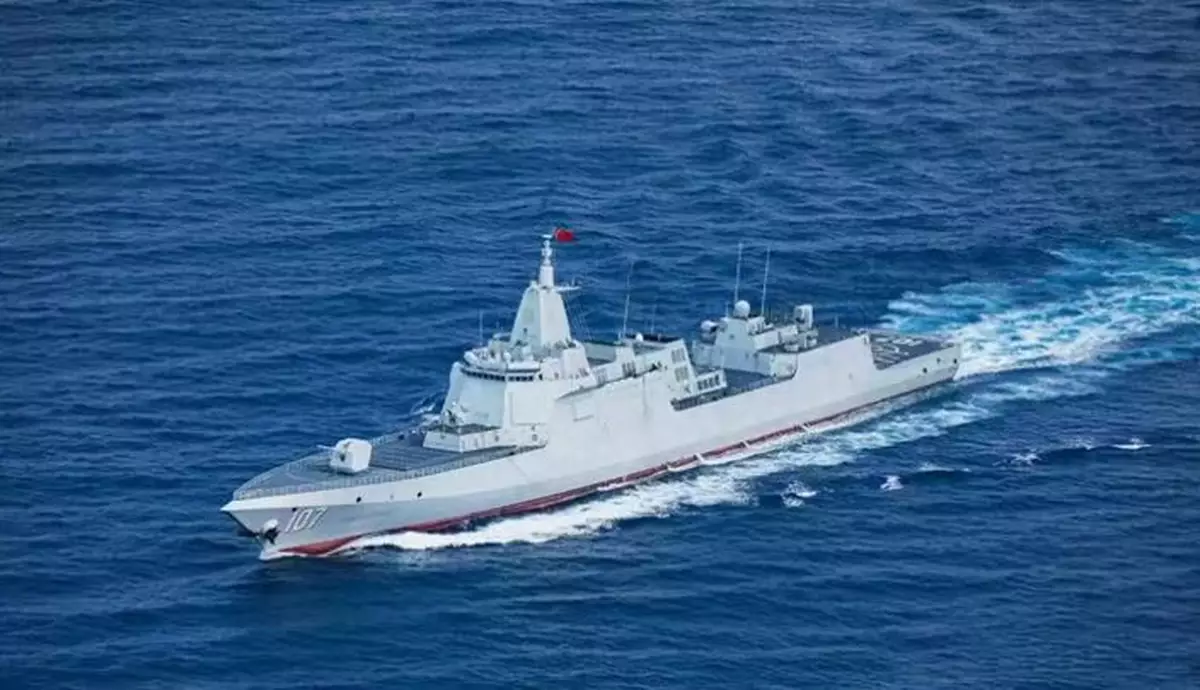

On October 7, CCTV's military news program dropped a telling detail during an interview aboard the PLA Navy's Type 055 destroyer Zunyi. The program recounted how the Zunyi, responding to a foreign warship's tracking and surveillance at sea, leaned on its high-speed maneuverability. The foreign vessel that forced itself to keep up eventually shut down and stopped dead, losing all propulsion and electrical power.
The Reveal: CCTV's Interview Points Straight at the Benfold
The program never named the opposing ship. It gave only the outcome. Multiple media outlets republished the disclosure, and several sources corroborated one another.
Public attention swung back to an incident three months earlier, when a US Navy destroyer lay paralyzed in the South China Sea.
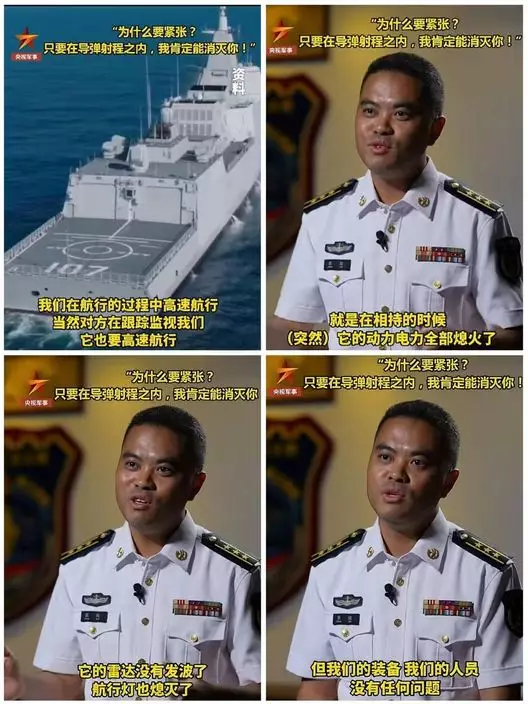
Foreign warship shadowing Zunyi suddenly loses all power.
Line up that clue against the public reporting, and the direction becomes fairly clear. On August 17, USNI News published a report confirming that the Arleigh Burke-class destroyer USS Benfold suffered an engineering failure in the South China Sea on July 24. The entire ship lost propulsion and electrical power.
The US military chartered a commercial tugboat to haul the destroyer back to Subic Bay in the Philippines for emergency repairs. On board, the generator sets had shut down, and freshwater production, central air conditioning, flush toilets, and galley equipment had all ground to a halt.
Add CNN's contemporaneous reporting, and the two accounts snap together. CCTV's interview description of a total loss of propulsion and electrical power of the opposing ship matches the failure reported by the US side exactly, in both timing and symptoms.
CCTV aired the episode only after more than three months, presenting it as a case study in responding to foreign warship tracking and surveillance. That delay itself signals such confrontations are anything but rare. It is just that most of the time, the outside world never sees the details.
The Power Gap: 112 Megawatts vs. 100,000 Horsepower
Start with the propulsion. The Zunyi is a Type 055 destroyer displacing 12,000 to 13,000 tons fully loaded. It packs four QC-280 gas turbines in a combined gas turbine and gas turbine (COGAG) arrangement. Total output exceeds 112 megawatts, about 150,000 horsepower. That muscle buys sustained high-speed cruising and still leaves ample load redundancy.
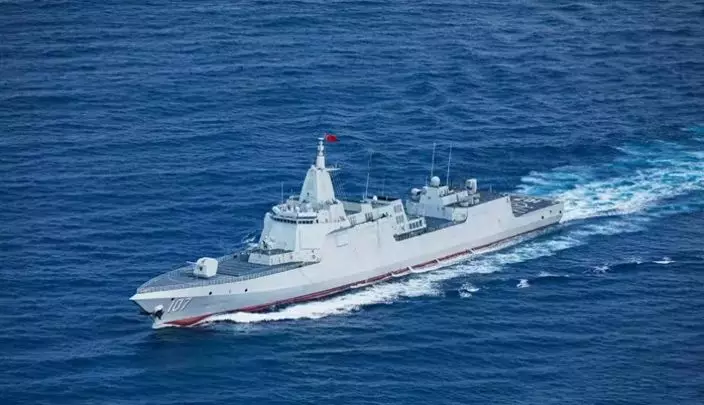
Type 055's gas turbines give ample power reserves.
By comparison, early Arleigh Burke-class destroyers muster only a little more than half that power. The gap shows up most directly in sustained high-speed steaming.
The USS Benfold belongs to the Flight I batch of the Arleigh Burke class, displacing 8,300 to 9,000 tons fully loaded. Its four LM2500 gas turbines deliver a combined 100,000 horsepower. For electricity, the ship leans on three Allison 501-K34 gas turbine generator sets. Each unit is rated at 2,500 kilowatts, for a total of 7,500 kilowatts.
The LM2500 is a mature workhorse across Western surface fleets. But the Benfold was commissioned in 1996, and by 2026 it will have logged a full 30 years of service. That puts the ship squarely in the stage of system aging and frequent breakdowns.
A warship's electromechanical piping and generator sets undergo irreversible physical decay. Under prolonged high-intensity deployment, old hulls routinely suffer component fatigue, aging wiring, and declining heat dissipation. The South China Sea's high-humidity, high-salinity environment only accelerates the slide.
When the Zunyi leads at more than 30 knots, the Benfold must hold its tracking distance. Its electromechanical systems and generator sets must then run for long stretches in conditions close to their limits. Sustained high-speed steaming tests more than raw power. It also probes the margins for heat dissipation, lubrication, and grid stability.
Once an old ship's margins run dry, localized failures easily cascade and spread.
Four Days Adrift: 40-Degree Heat, Blackout, and a Tugboat Rescue
From publicly available information, the consequences were brutally concrete. The full-ship blackout did more than dim the lights. It shut down air conditioning, fresh water, and sanitary facilities across the vessel.
July in the South China Sea is peak summer heat. Temperatures inside the steel hull rose above 40 degrees Celsius, and the crew endured four days in sealed compartments. They survived on emergency meals and material relief from the accompanying guided-missile cruiser USS Robert Smalls, and only when a commercial tugboat arrived on the scene was the destroyer towed away.
The episode came with a twist. Some reports say the Chinese warships shadowing nearby initially had no clear idea what was happening aboard the other vessel. For a time, they judged that the US warship, which had suddenly stopped and gone into radio silence, might be executing other tactical maneuvers.
Only after a full day and night of close monitoring did they confirm the truth: a total power failure that left the ship dead in the water.
The technical substance of the "pushed to the breaking point" claim demands a harder look. The Arleigh Burke class was designed with three generator sets housed in separate compartments. The design holds that even if two are destroyed by hits, the last one must still keep propulsion and communications running.
Losing power across an entire ship under that redundant architecture tells its own story. The failure was not simply a single generator set pushed past its load. It exposes long-term shortfalls in day-to-day maintenance.
The Higgins offers more evidence. In April this year, another US Seventh Fleet destroyer caught fire because of an electrical fault, lost power and propulsion, and drifted at sea for several hours. Take the two accidents together, and the deeper problem clearly extends beyond a single warship.
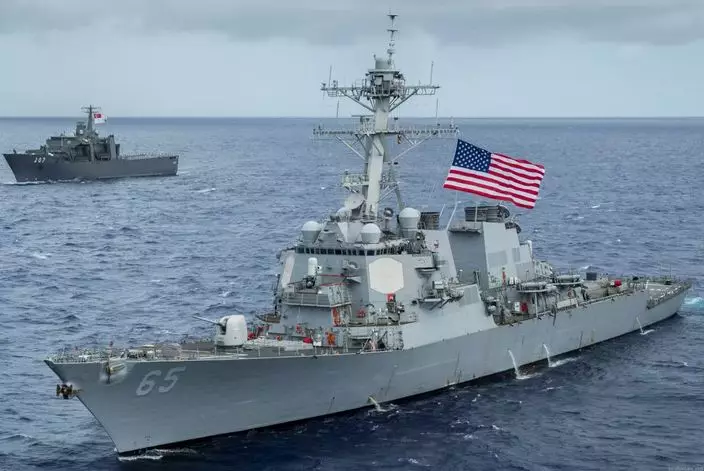
USS Benfold, 30 years old, systems aging.
The accident also exposes the US Navy's logistics and maintenance bind. Shipyards and repair facilities in the continental United States lack capacity, skilled workers are in short supply, and repair schedules slip again and again.
Many destroyers that should have gone into the yard for major overhauls have postponed those plans over and over.
Outsourcing deepens the squeeze. Maintenance after ships return to port has long been handed to defense contractors, who bill by the construction period and carry limited manpower. When several ships tie up at the same time, some vessels always miss out on thorough repairs, and large numbers of aging warships have no choice but to deploy while still carrying defects.
The Benfold is Exhibit A. It ran high-frequency frontline missions without completing thorough electromechanical maintenance, and the systemic hidden dangers were planted long ago.
Young Fleets, Old Hulls: The Generation Gap at Sea
The Chinese Navy's surface fleet tells the opposite story. Its main destroyers are young hulls with stable electromechanical systems, and failure rates sit at the low end of the service life cycle.
China's domestic shipbuilding industry supplies the backbone. Its support system gets warships into the yard on time and maintains them according to plan, so ships put to sea with a relatively high level of combat readiness.
This gap stays invisible in peacetime. Only in long, high-intensity maritime standoffs does it get magnified into concrete consequences.
High-speed tracking and counter-tracking is a stress test for shipboard electromechanical systems. It measures two things: reaction speed and staying power.
The Zunyi has power to burn. Its integrated electromechanical management is highly automated, letting the ship adjust speed and course at any time to match sea conditions and mission needs. The destroyer can hold high-speed runs for extended periods and keep the initiative of the standoff firmly in its own hands.
Whoever can sustain high-speed operations longer controls the tempo. That side can also drag the opponent into operating conditions it is not suited for.
In the tracking duel, the foreign warship lost more than the initiative.
After the full-ship blackout and loss of propulsion, the vessel lost battlefield awareness and any basic guarantee of navigational safety. Radar and navigation lights became hard to maintain, and communications fell back to a minimum. In close-range, complex waters like the South China Sea, that is an extremely dangerous state to be in.
A several-thousand-ton main combatant drifting in a hotspot, waiting for a tugboat, is a severe risk in its own right.
Equipment performance under extreme operating conditions does not lie.
The Benfold's paralysis this time was more than an electromechanical failure. It offered a concrete display of the gap between the Chinese and US surface fleets in platform condition, fleet structure, and industrial sustainment capacity.
As the Chinese Navy commissions and continuously deploys new types of main combat ships, the platform generation gap in open-ocean confrontations will keep revealing itself. Leaning on old warships alone to sustain a high-intensity forward presence only pushes failure risk and tactical passivity higher.
The Art of Stopping War
** 博客文章文責自負,不代表本公司立場 **