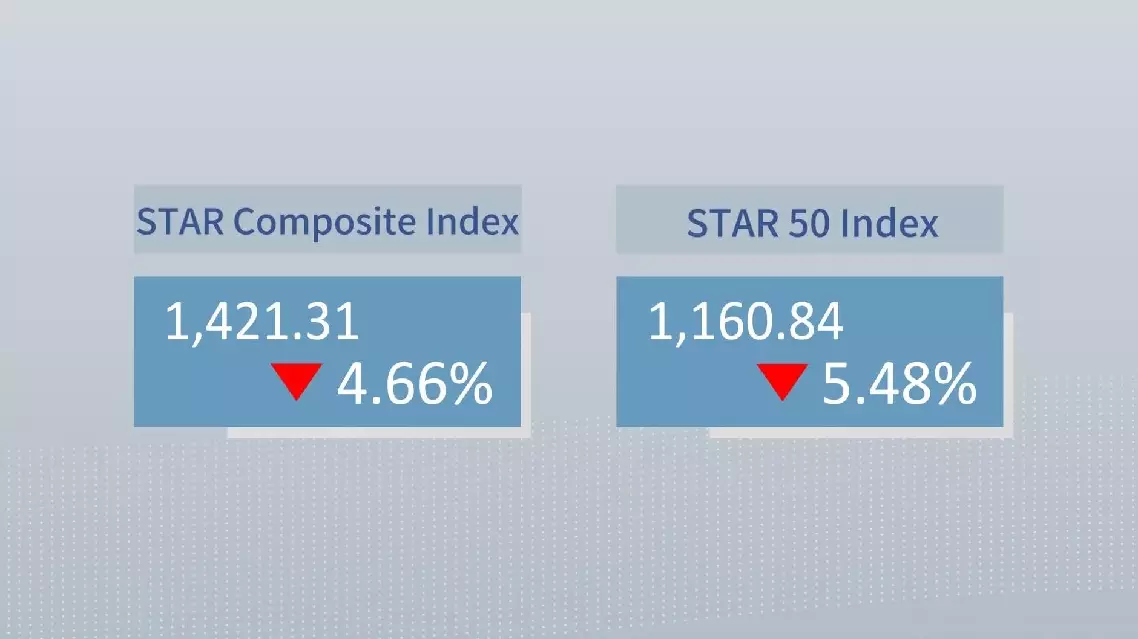
The STAR Composite Index, which reflects the performance of stocks on China's sci-tech innovation board, closed 4.66 percent lower at 1,421.31 points on Friday.
The STAR 50 Index, which tracks the 50 largest stocks listed on the board that also meet certain liquidity requirements, closed 5.48 percent lower at 1,160.84 points.
The sci-tech innovation board, commonly known as the STAR Market, was inaugurated in June 2019 at Shanghai Stock Exchange. It is designed to support companies in the high-tech and strategic emerging sectors.
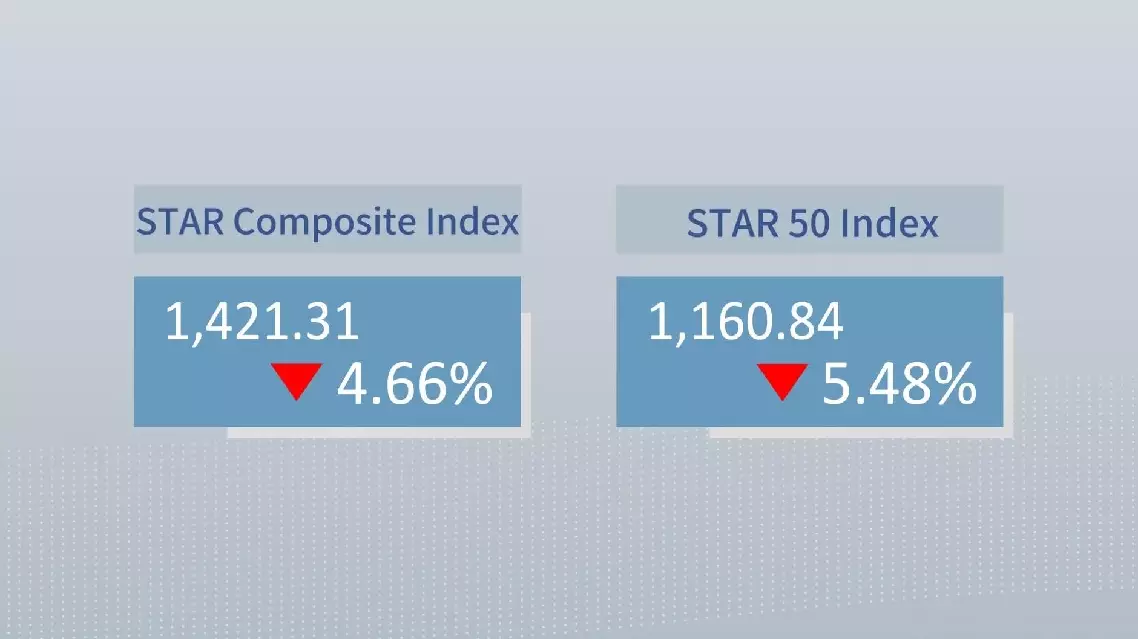
China's STAR Composite Index closes lower Friday
China's STAR Composite Index closes lower Friday
Following the launch of a new African Union-mandated rating agency, the interim head of the agency has emphasized that Africa currently pays far more to borrow than its repayment record justifies.
The Africa Credit Rating Agency (AfCRA) launched in Mauritius on Oct 7 as an independent, private sector-driven institution.
Speaking in a virtual interview with China Global Television Network (CGTN), Sifiso Falala, interim chief executive of the Africa Credit Rating Agency (AfCRA), said the problem starts with how few African countries are considered safe to lend to.
"We all know that the African cost of borrowing is very high, exceptionally high, so much so that African countries often borrow money to repay existing debt and cover their various budget deficits. And that is as a result of the fact that out of the 55 states in Africa, only three are in what you'd call investment-grade. The risk -- over 50 African states are rated as being uncreditworthy, so to speak," he said.
The continent reportedly loses 74.5 billion U.S. dollars a year through inflated borrowing costs. Falala said this is overpayment is rooted in an unfair system, stressing that the ratings do not match actual repayment behavior.
"Fundamentally, if you look at the past 10 years, you'll find, for example, that 50 or more of the African states have not defaulted on their payments. In other words, they've made good. Technically speaking, they should be considered as creditworthy, and yet, according to the model that is used, they are not creditworthy. And because they are not creditworthy, they then tend to pay more when they borrow. So that is a serious problem, because they would argue that a creditworthiness model is not the same as a default model," he said.
AfCRA was established with an aim to improve how international financial markets assess African sovereigns, sub-sovereigns and businesses by strengthening data, expertise and context on African credit risk, and to give Africa a stronger voice in global financial governance.
Its ratings will cover African sovereigns, sub-sovereigns, corporates and public and private institutions, and may extend to non-African entities subject to management decisions.

Africa's ratings do not match repayment record, new credit agency chief says