Skip to Content Facebook Feature Image

Paraguay seizes major digital bank tied to president, leaving millions of customers in limbo

News

Paraguay seizes major digital bank tied to president, leaving millions of customers in limbo
News

News

Paraguay seizes major digital bank tied to president, leaving millions of customers in limbo

2026-11-04 04:37 Last Updated At:04:40

ASUNCIÓN, Paraguay (AP) — Paraguay’s central bank seized a major digital lender with close ties to President Santiago Peña on Tuesday, fueling a political crisis and threatening the country’s burgeoning reputation as a regional haven for investors. The takeover left millions of customers’ savings and hundreds of millions of dollars in public funds in limbo.

The central bank’s board voted unanimously late Monday to put Ueno Bank into resolution and hand its management to officials charged with assessing its finances and protecting its assets, the regulator said Tuesday. The move came after Ueno’s solvency ratio, a measure of its capital against its risk-weighted assets, fell below half the legal minimum. Resolution allows regulators to transfer a failing bank’s deposits to other institutions before liquidating its remaining assets.

More Images
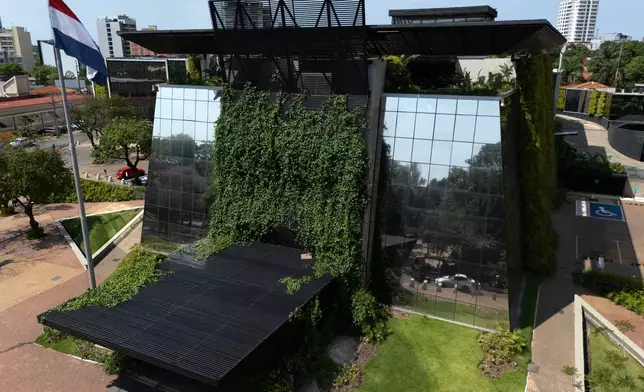
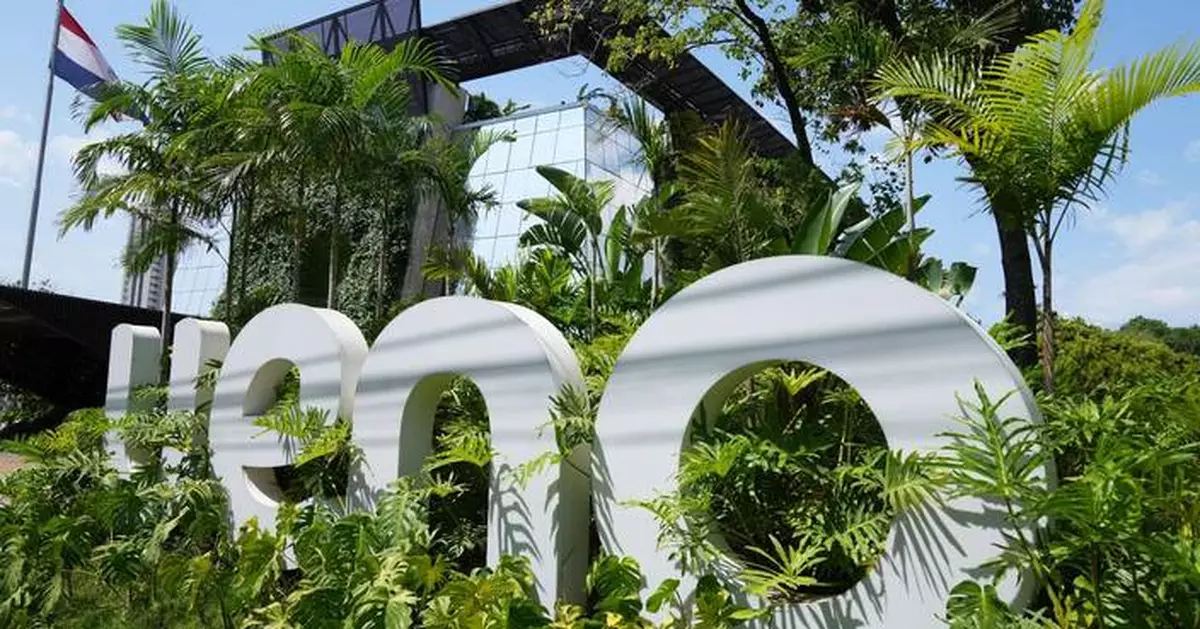
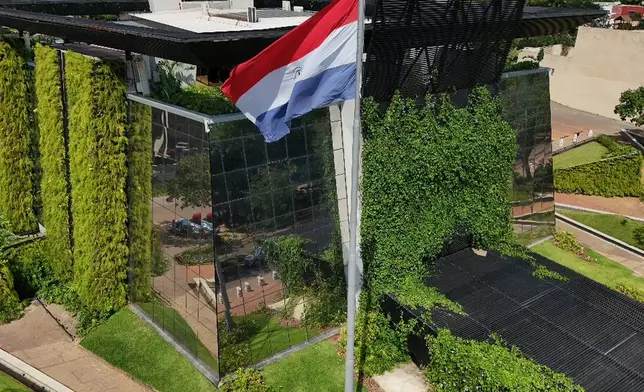
The headquarters of Ueno bank, a major digital lender, stands in Asuncion, Paraguay, after the nation's Central Bank seized it due to its solvency ratio, Tuesday, Nov. 3, 2026. (AP Photo/Jorge Saenz)
The headquarters of Ueno bank, a major digital lender, stands in Asuncion, Paraguay, after the nation's Central Bank seized it due to its solvency ratio, Tuesday, Nov. 3, 2026. (AP Photo/Jorge Saenz)
The headquarters of Ueno bank, a major digital lender, stands in Asuncion, Paraguay, after the nation's Central Bank seized it due to its solvency ratio, Tuesday, Nov. 3, 2026. (AP Photo/Jorge Saenz)
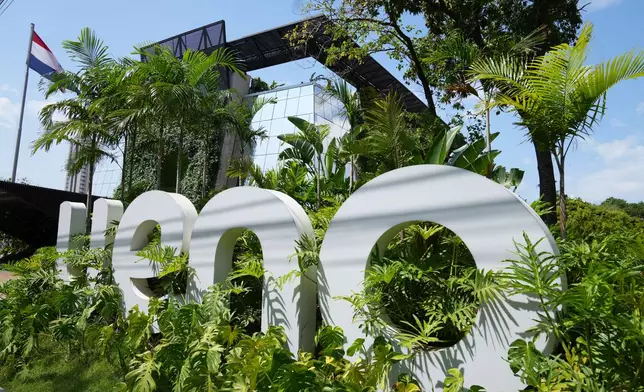
The headquarters of Ueno bank, a major digital lender, stands in Asuncion, Paraguay, after the nation's Central Bank seized it due to its solvency ratio, Tuesday, Nov. 3, 2026. (AP Photo/Jorge Saenz)

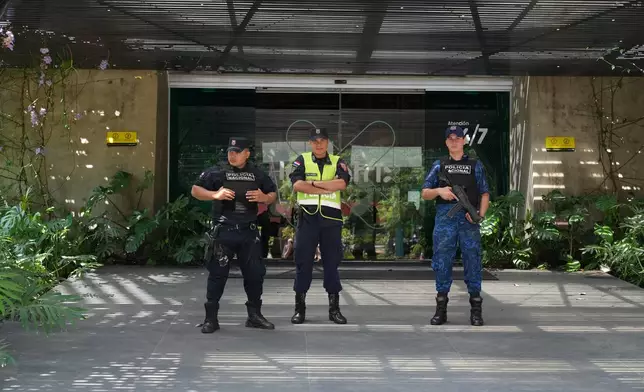
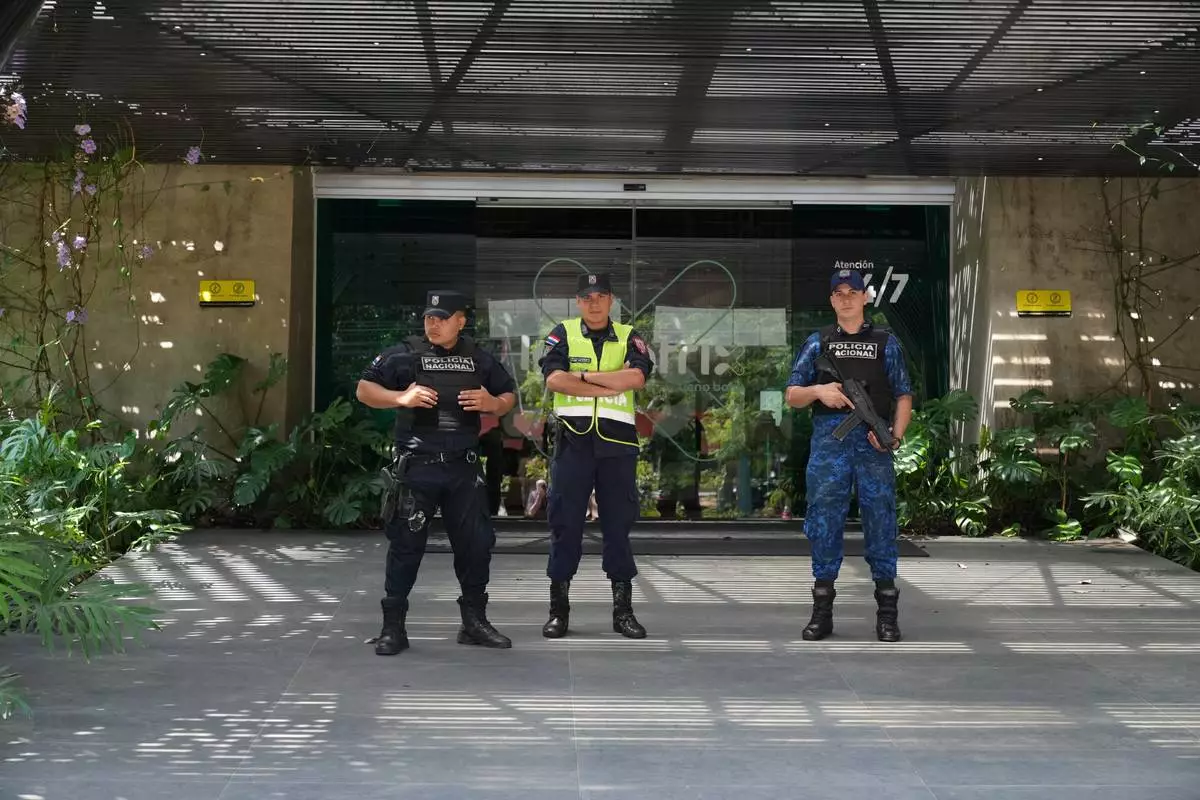
Police stand outside the headquarters of Ueno bank, a major digital lender in Asuncion, Paraguay, after the nation's Central Bank seized it due to its solvency ratio, Tuesday, Nov. 3, 2026. (AP Photo/Jorge Saenz)

Police stand outside the headquarters of Ueno bank, a major digital lender in Asuncion, Paraguay, after the nation's Central Bank seized it due to its solvency ratio, Tuesday, Nov. 3, 2026. (AP Photo/Jorge Saenz)

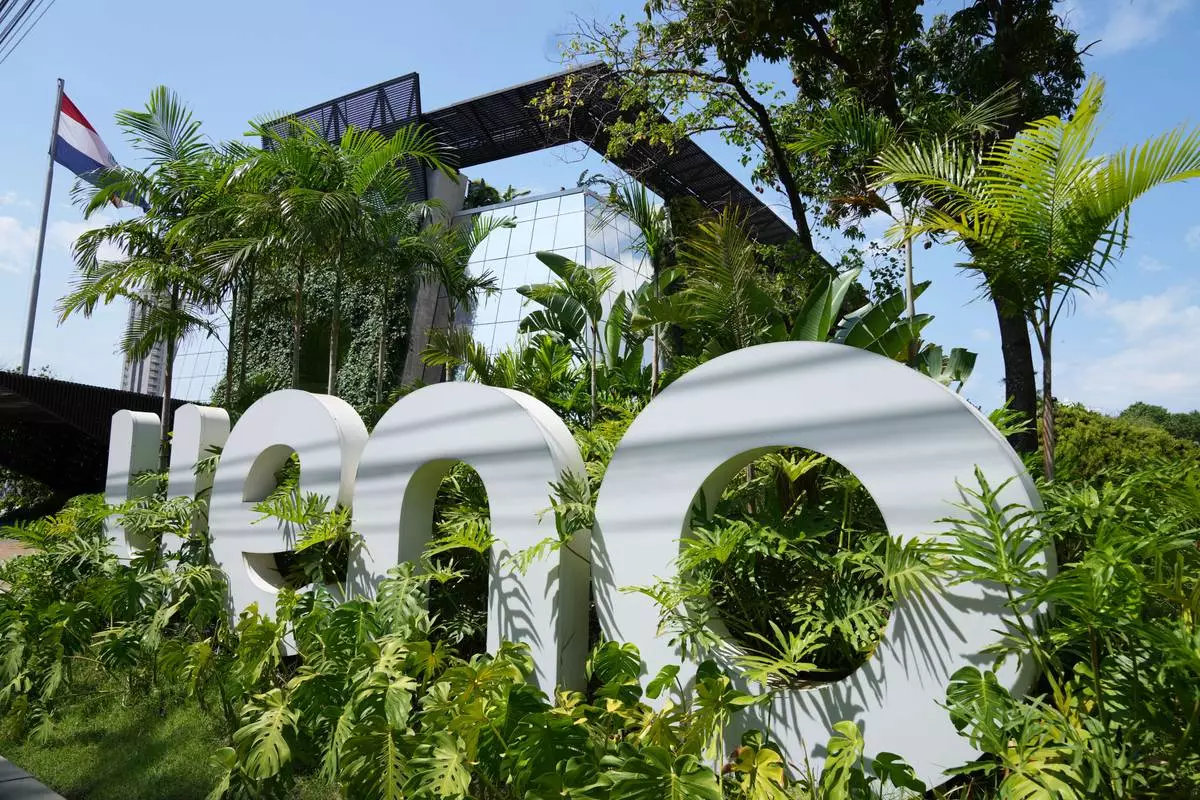
The headquarters of Ueno bank, a major digital lender, stands in Asuncion, Paraguay, after the nation's Central Bank seized it due to its solvency ratio, Tuesday, Nov. 3, 2026. (AP Photo/Jorge Saenz)

The headquarters of Ueno bank, a major digital lender, stands in Asuncion, Paraguay, after the nation's Central Bank seized it due to its solvency ratio, Tuesday, Nov. 3, 2026. (AP Photo/Jorge Saenz)

The bank says it has about 3 million customers, equivalent to roughly 60% of the adult population of the South American country, and manages $800 million to $850 million in public money. That includes about $380 million invested by Paraguay’s state pension and health fund.

Prosecutors ordered the arrest of eight people, including Ueno President Juan Manuel Gustale and chief executive Federico Miguel Vázquez Villasanti, as part of an investigation into suspected breach of trust and other offenses. By Tuesday afternoon, another two bank directors had been taken into custody, prosecutors said.

Peña, who canceled a planned trip to an international summit in Spain late Monday, said that he had asked central bank chief Carlos Carvallo to resign and had agreed with congressional leaders to fast-track legislation expediting payouts to depositors and guaranteeing the return of public money. He vowed to hold whoever was behind the collapse accountable.

“Those responsible will have to answer to the courts, without exceptions or privileges,” he wrote on social media.

Carvallo, who led Ueno’s predecessor before Peña appointed him, said he had already signed his resignation but would stay on to oversee the takeover because “the central bank needs calm to do its job.”

Locked out of their accounts on the bank’s app, panicked customers gathered outside shuttered branches across the country demanding answers about their savings, as police stood guard.

Activists called for an evening rally outside Congress to demand Peña’s impeachment and an investigation into the bank’s collapse, while an association of pensioners planned a protest outside Peña’s official residence.

“This really tarnishes the country’s name,” said depositor Víctor González, who came to the bank’s headquarters to ask about his savings, only to be told by police that he and others couldn’t even stand outside.

“Apparently, these criminals are protecting the malicious people who caused this financial collapse,” he added, referring to the officers.

Customers could not withdraw or transfer money Tuesday, though most are protected by deposit insurance. A central bank fund guarantees up to 228.3 million Paraguayan guaraníes ($38,000) per person, enough to fully cover about 97% of Ueno’s depositors, according to preliminary estimates. By law, that money must be paid within 15 days of the takeover, a deadline that can be extended once.

As a first step, the central bank said depositors would soon receive up to 10 million guaraníes ($1,700), minus any debts they owe Ueno, though it gave no date.

Those with larger balances face more uncertainty. The central bank stopped short of promising them full repayment, saying only that it would seek “the greatest possible protection.”

The state pension fund said pensions would be paid as usual and that it was moving the roughly 32,000 retirees who collect their pensions through Ueno to another bank. It also plans legal action to recover its investment.

Fast-growing Paraguay has courted foreign investors with low taxes, light regulation and a record of economic stability, recently winning its first investment-grade credit ratings, a milestone in Peña’s campaign to turn the landlocked nation into a manufacturing hub.

But Ueno’s collapse revives long-standing concerns about weak institutions. Paraguay ranked 150th of 182 countries and territories in Transparency International’s 2025 Corruption Perceptions Index, tied with Bangladesh and the Central African Republic.

Peña’s own ties to Ueno have fueled some of those concerns since he took office in 2023. Soon after his inauguration, he named Carvallo to run the central bank. Critics called the appointment a conflict of interest, though the regulator has said Carvallo recused himself from decisions involving Ueno.

Peña remained a business partner of Grupo Vázquez, the conglomerate that owns Ueno, until March 2025. He repeatedly dismissed concerns about its finances, accusing the media of fearmongering. Meanwhile, government agencies and state funds poured money into Ueno. The bank said last month that public money accounted for about a quarter of its deposits.

Less than a week ago, Ueno announced plans to raise $100 million in fresh capital, half from its holding company and half from shares to be sold to local private investors. Fitch Ratings changed its outlook on the bank to negative last month, citing rapid growth in its balance sheet and a high level of intangible assets.

The central bank said it warned Ueno in June that it was lending too much money to companies tied to its owners. Banks face strict limits on such loans because they let owners funnel customers’ savings into their own businesses.

“There was a great deal of flexibility in financial and banking rules that allowed this institution to expand very rapidly,” said Luis Rojas, a Paraguayan economist. “There was preferential treatment, which raised a lot of suspicions.”

Opposition senators said Tuesday they would seek to impeach Peña over his handling of public money deposited at Ueno. To succeed, they would have to win over lawmakers from his own Colorado Party, which controls both chambers of Congress and has governed Paraguay for all but five years since 1947, including during a lengthy military dictatorship.

Peña, a former International Monetary Fund economist who cast himself as a modernizer of both the country and its entrenched ruling party, cannot seek reelection in 2028. But as factions jockey to succeed him, the crisis has exacerbated political rifts. Rodolfo Friedmann, a party vice president, called for Peña’s expulsion, while Senate President Basilio Núñez defended the president and blamed the central bank instead.

DeBre reported from Buenos Aires, Argentina. Associated Press writer Nayara Batschke in Santiago, Chile, contributed to this report.
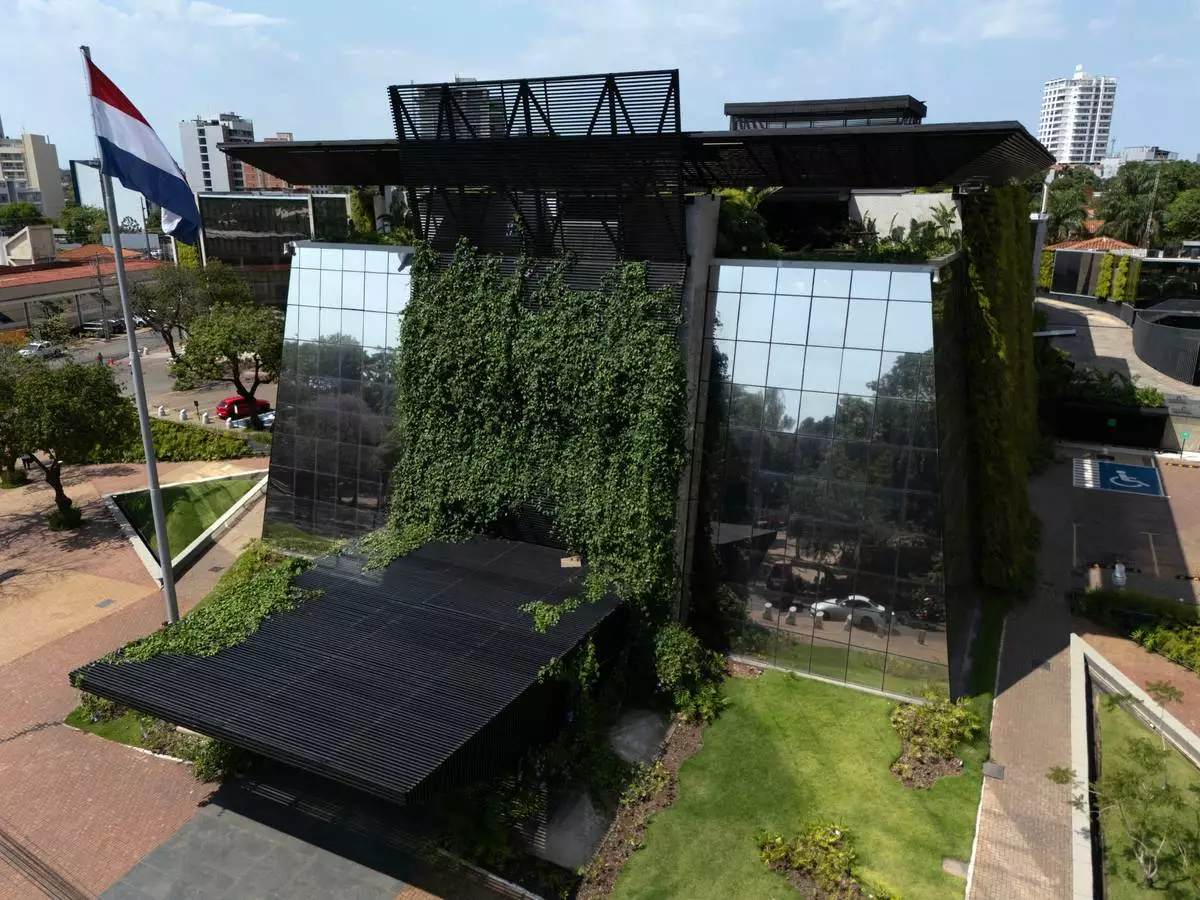
The headquarters of Ueno bank, a major digital lender, stands in Asuncion, Paraguay, after the nation's Central Bank seized it due to its solvency ratio, Tuesday, Nov. 3, 2026. (AP Photo/Jorge Saenz)
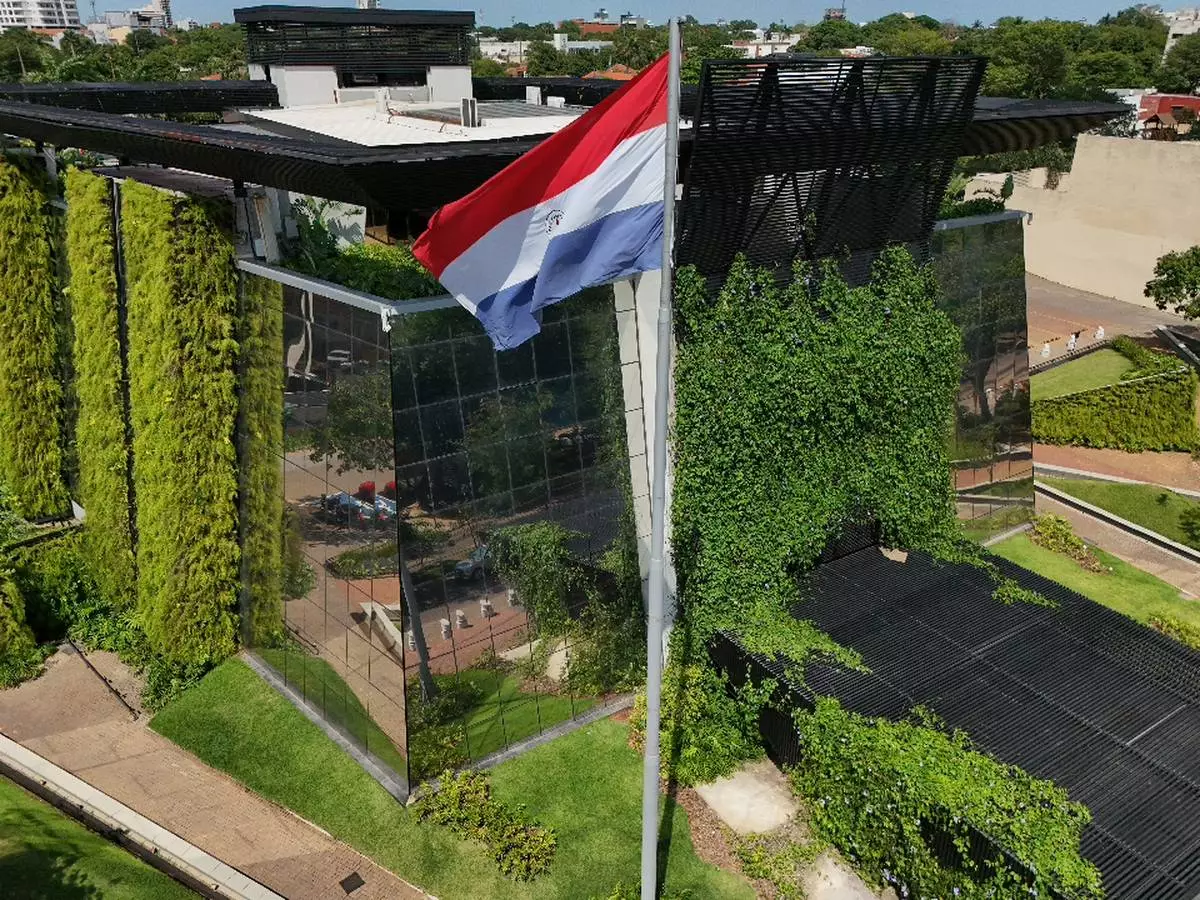
The headquarters of Ueno bank, a major digital lender, stands in Asuncion, Paraguay, after the nation's Central Bank seized it due to its solvency ratio, Tuesday, Nov. 3, 2026. (AP Photo/Jorge Saenz)
The headquarters of Ueno bank, a major digital lender, stands in Asuncion, Paraguay, after the nation's Central Bank seized it due to its solvency ratio, Tuesday, Nov. 3, 2026. (AP Photo/Jorge Saenz)
The headquarters of Ueno bank, a major digital lender, stands in Asuncion, Paraguay, after the nation's Central Bank seized it due to its solvency ratio, Tuesday, Nov. 3, 2026. (AP Photo/Jorge Saenz)

Police stand outside the headquarters of Ueno bank, a major digital lender in Asuncion, Paraguay, after the nation's Central Bank seized it due to its solvency ratio, Tuesday, Nov. 3, 2026. (AP Photo/Jorge Saenz)
Police stand outside the headquarters of Ueno bank, a major digital lender in Asuncion, Paraguay, after the nation's Central Bank seized it due to its solvency ratio, Tuesday, Nov. 3, 2026. (AP Photo/Jorge Saenz)
The headquarters of Ueno bank, a major digital lender, stands in Asuncion, Paraguay, after the nation's Central Bank seized it due to its solvency ratio, Tuesday, Nov. 3, 2026. (AP Photo/Jorge Saenz)
The headquarters of Ueno bank, a major digital lender, stands in Asuncion, Paraguay, after the nation's Central Bank seized it due to its solvency ratio, Tuesday, Nov. 3, 2026. (AP Photo/Jorge Saenz)
ATLANTA (AP) — Democrat Keisha Lance Bottoms was elected governor of Georgia on Tuesday, making history as the first Black woman to be elected governor in the United States, defeating Republican businessman Rick Jackson and flipping the top job in a key swing state.

A former Atlanta mayor, Bottoms won Tuesday despite a staggering campaign spending deficit driven by the billionaire Jackson tapping more than $200 million of his own fortune. She becomes the first Democrat to prevail in a Georgia governor’s race since 1998.

“What we do in this moment will echo through history,” she said ahead of Election Day. Bottoms often sidestepped the barrier-breaking possibilities of her candidacy and instead emphasized her plans to improve an uneven economy and counter President Donald Trump’s administration in Washington.

“Let’s choose hope over fear, progress over division, and come together to build a better Georgia for everyone,” she said.

The outcome bucks voters’ longtime reluctance to put Atlantans in the governor’s mansion, and Bottoms’ victory is the latest example of how the growth of the state’s largest metro area is reshaping Georgia politics. In addition to a Black woman as governor, the state also reelected its first Jewish senator, Democrat Jon Ossoff, to serve alongside its first Black senator, Raphael Warnock.

Jackson told supporters: "Tonight, the voters spoke ... and I respect their decision."

Bottoms will succeed Republican Gov. Brian Kemp, who was barred by law from seeking a third term. It was the third Georgia gubernatorial election in a row with a Black woman leading the ticket. Kemp twice defeated Stacey Abrams, who remains a prominent voting rights advocate and Democratic fundraiser but opted against a third run for governor.

Bottoms was among eight Black major party nominees for governor on the ballot Tuesday. There have been just three Black governors elected in U.S. history, all of them Democratic men. This year, two Black women were vying for governor: Bottoms and Republican Lisa Demuth of Minnesota.

The descendant of enslaved Georgians, Bottoms rarely acknowledged the historic nature of her candidacy explicitly. But she often recounted her family history.

“I am at least a fifth-generation Georgian,” she said. “I say ‘at least’ because we can only trace our family back five generations — to a plantation in Crawfordville.”

She noted that her grandfather moved to Atlanta from rural Georgia and had to “walk through these back doors” of downtown buildings she would later enter through the front as mayor. She said her ancestry “is always present with me.”

Bottoms called for expanding the Medicaid insurance program to include hundreds of thousands more people and increasing Georgia’s minimum wage to $15 per hour. She wants to raise the pay of teachers, firefighters, police officers and other public employees, pause data center development and repeal Georgia’s ban on abortion after the sixth week of pregnancy.

“This is a life and death issue,” she said of the abortion ban, citing cases of women dying from miscarriage and pregnancy complications because physicians fear criminal prosecution under the abortion law.

She’s called for pausing new data center developments and stopping installation of any additional automated Flock cameras used by law enforcement.

And she pledged to “make sure we are protected from the harmful policies of Donald Trump,” and missed no chance to remind voters that Jackson said he wanted to govern like “Trump with a Southern tone” and become the president’s “favorite governor.”

“I’m not running to be his favorite governor,” Bottoms told voters during the rivals’ lone debate. “I’m running to work on behalf of people like you.”

Bottoms challenged Jackson’s assertions that he understood Georgians’ economic struggles because he’d once had his own. Pointing to Jackson’s company, Jackson Healthcare, and its lucrative government contracts, Bottoms disputed that Jackson was a self-made political outsider. And she accused him of using the money he made from taxpayers to try to “buy this election.”

She withstood Jackson’s attacks on her record as mayor. Jackson’s deluge of TV ads included spots featuring clips of protests after the 2020 police killings of Atlanta resident Rayshard Brooks and Minneapolis resident George Floyd, both Black men, by white officers in their respective cities. Jackson also hammered Bottoms for not seeking a second term as mayor, saying she abandoned the city.

For Republicans, Jackson’s defeat marks a difficult turn in the state’s evolution into a two-party battleground. He began his campaign as a relative unknown but leveraged his personal wealth and outsider appeal to defeat the sitting lieutenant governor, who had Trump’s early endorsement, the attorney general and the secretary of state.

Democrats already had won three U.S. Senate elections since Trump’s first presidential victory a decade ago, and Sen. Jon Ossoff was vying for reelection Tuesday. Yet the GOP has had a statehouse trifecta — holding the governor’s office and controlling both chambers of the General Assembly — for more than two decades.

Democrats were trying Tuesday to flip control of the state House, though Republicans were heavily favored to defend their Senate majority and give Bottoms at least one GOP-led chamber to navigate.

Dr. Theopia Johnson Tate, of Atlanta, poses for a portrait at an election night event for Georgia Democratic gubernatorial candidate Keisha Lance Bottoms, Tuesday, Nov. 3, 2026, in Atlanta. (AP Photo/Brynn Anderson)

Dr. Theopia Johnson Tate, of Atlanta, poses for a portrait at an election night event for Georgia Democratic gubernatorial candidate Keisha Lance Bottoms, Tuesday, Nov. 3, 2026, in Atlanta. (AP Photo/Brynn Anderson)

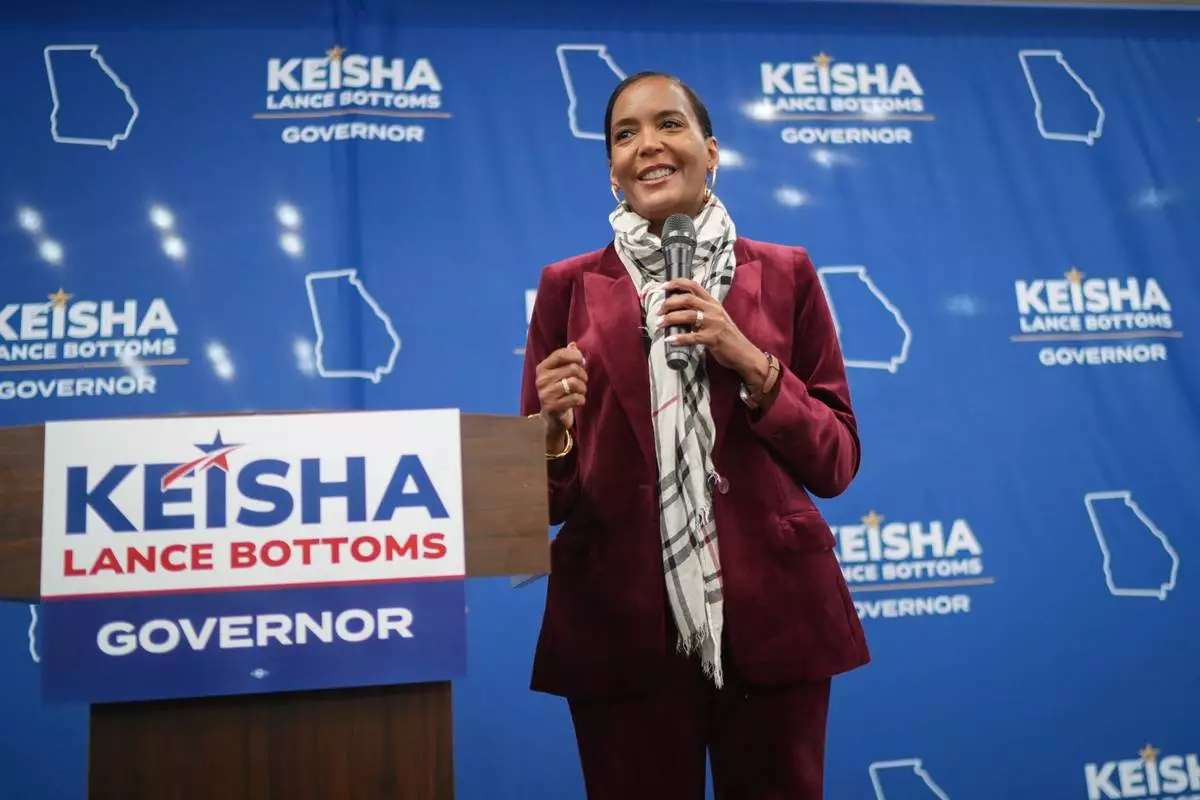
Democratic gubernatorial candidate for Georgia, Keisha Lance Bottoms speaks during a campaign event on Sunday, Nov. 1, 2026, in Macon, Georgia. (AP Photo/Ryan Murphy)

Democratic gubernatorial candidate for Georgia, Keisha Lance Bottoms speaks during a campaign event on Sunday, Nov. 1, 2026, in Macon, Georgia. (AP Photo/Ryan Murphy)

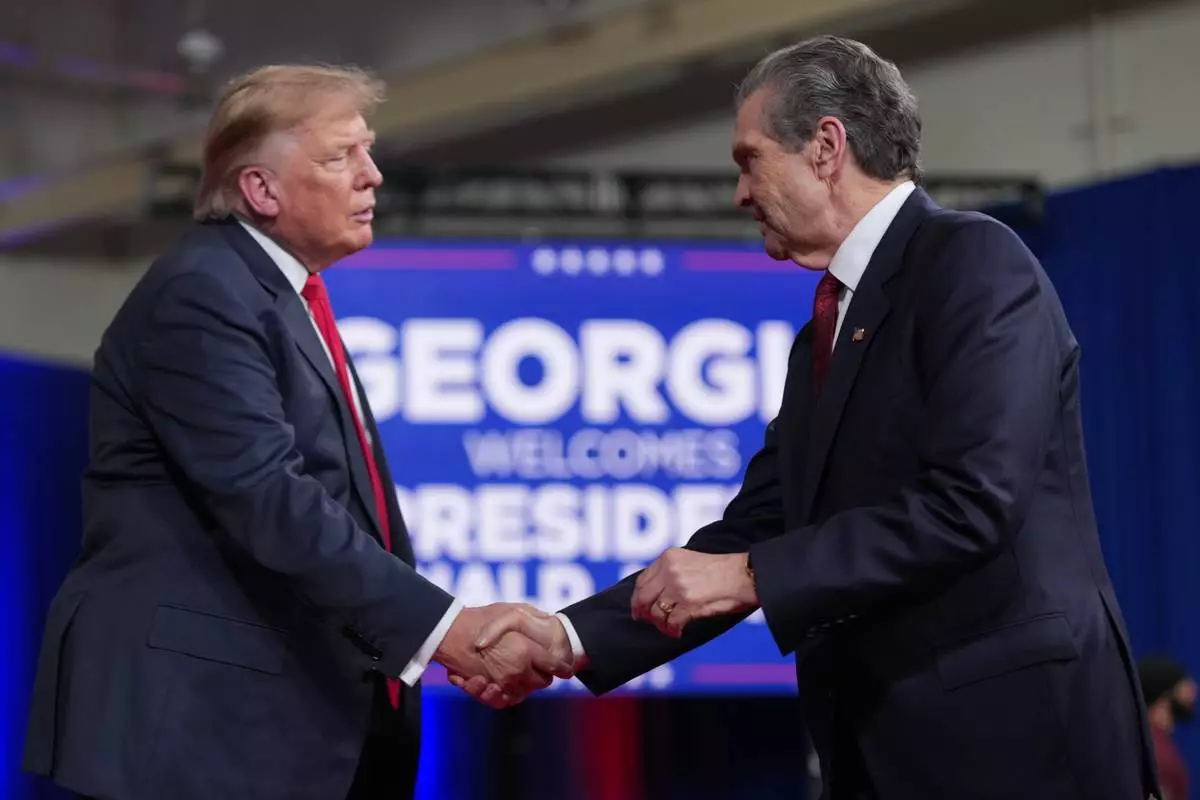
President Donald Trump shakes hands with Georgia gubernatorial candidate Rick Jackson at a campaign rally at Guardian Centers of Georgia, Saturday, Oct. 24, 2026, in Perry, Ga. (AP Photo/Mark Schiefelbein)

President Donald Trump shakes hands with Georgia gubernatorial candidate Rick Jackson at a campaign rally at Guardian Centers of Georgia, Saturday, Oct. 24, 2026, in Perry, Ga. (AP Photo/Mark Schiefelbein)

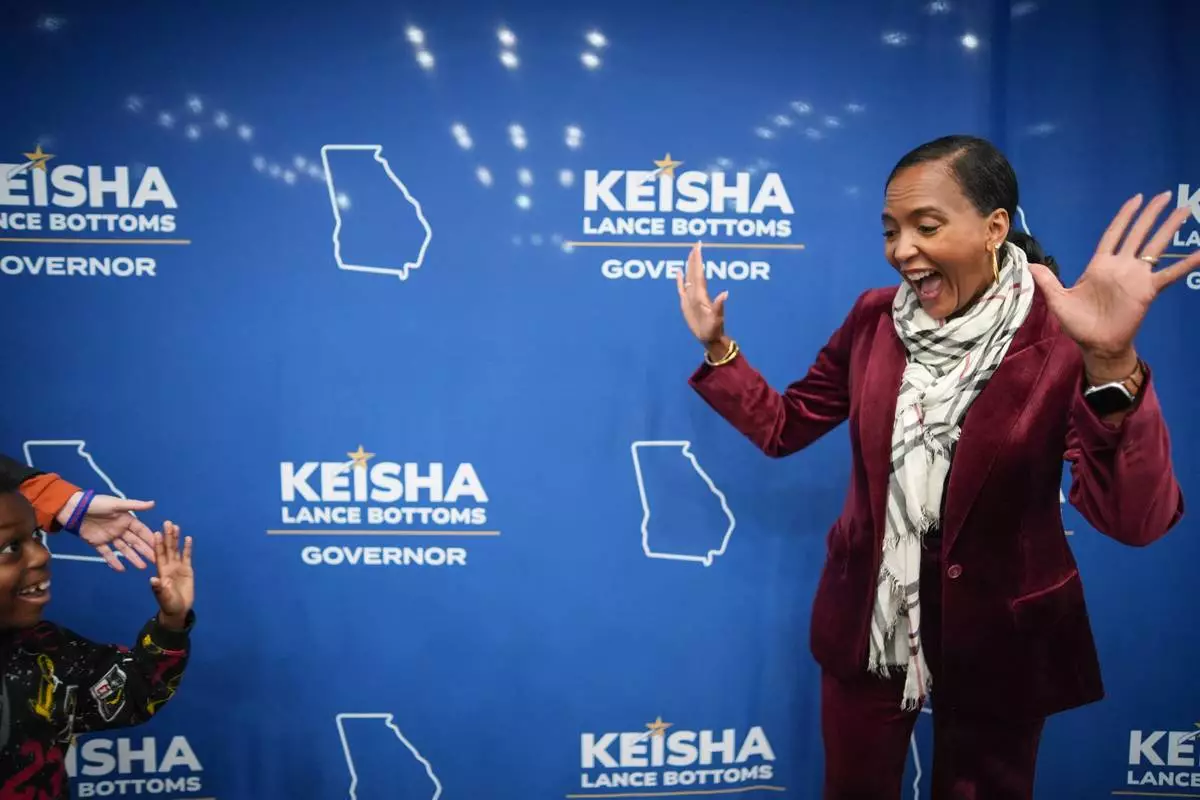
Georgia Democratic gubernatorial candidate Keisha Lance Bottoms greets a young supporter during a campaign event, Sunday, Nov. 1, 2026, in Macon, Georgia. (AP Photo/Ryan Murphy)

Georgia Democratic gubernatorial candidate Keisha Lance Bottoms greets a young supporter during a campaign event, Sunday, Nov. 1, 2026, in Macon, Georgia. (AP Photo/Ryan Murphy)

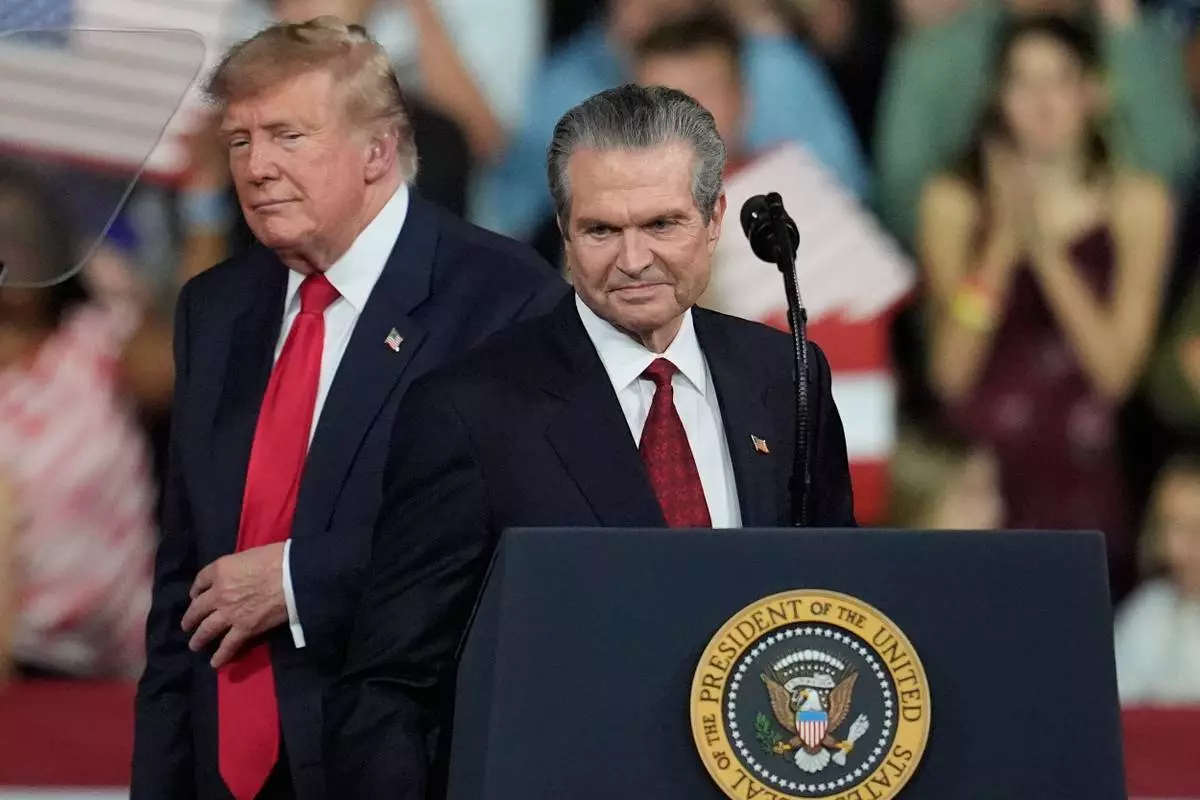
President Donald Trump invites Georgia gubernatorial candidate Rick Jackson to speak at a campaign rally at Guardian Centers of Georgia, Saturday, Oct. 24, 2026, in Perry, Ga. (A5P Photo/Mike Stewart)

President Donald Trump invites Georgia gubernatorial candidate Rick Jackson to speak at a campaign rally at Guardian Centers of Georgia, Saturday, Oct. 24, 2026, in Perry, Ga. (A5P Photo/Mike Stewart)

Recommended Articles