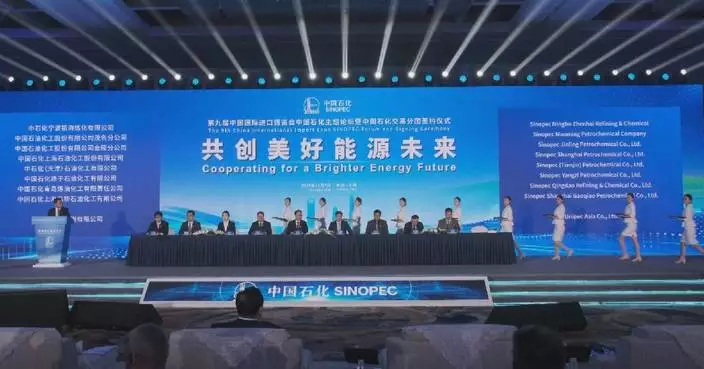
China's imports of agricultural products in 2025 rose by more than 60 percent compared with 2017, the year before the China International Import Expo (CIIE) was launched.
At the ninth CIIE which opened in Shanghai on Thursday, guests said that the expo greatly facilitated the entry of overseas agricultural products into the Chinese market.
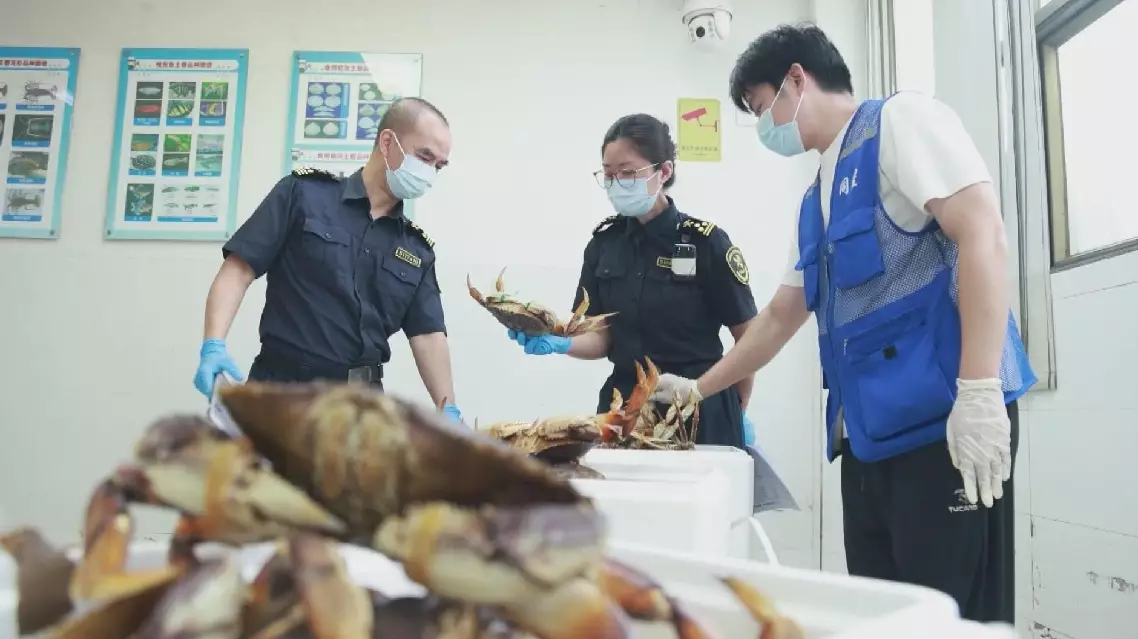
China is the world's second largest import market for agricultural produce, and also the largest importer of crabs.
In 2025, the country imported more than 130,000 tons of crabs, nearly 90 percent of them live.
"The reason why live crabs can be supplied to China year-round is that China has opened up market access to most crab species from major crab-producing countries. Currently, live crabs from over 20 countries and regions can be exported to China. Among them, mud crabs have the most sources, including 17 countries and regions such as Vietnam, Myanmar and Bangladesh," said Cao Derong, president of the China Chamber of Commerce of Import and Export of Foodstuffs, Native Produce and Animal By-Products (CFNA).
China's massive consumer demands also helped change the lives of local farmers.
"In the Shyamnagar area along the coast of Bangladesh, more local female residents have found employment as the mud-crab-farming industry expanded. They mainly work as 'inspectors', checking the water quality and environment of crab boxes every three hours. In this area alone, about 10,000 people work on crab farms," said Cao.
"Under the framework of the World Trade Organization, China's average bound tariff rate on agricultural imports is about 15 percent, far below the averages of developed and developing countries, which are around 35 percent and 55 percent, respectively. China is providing full-coverage zero-tariff treatment to all African countries with diplomatic ties, and to all least developed countries with diplomatic relations. This is an important contribution to the economic development of the Global South and developing countries around the world," said Tu Xinquan, dean of the China Institute for WTO Studies, University of International Business and Economics.
China's agricultural imports increase over 60 percent after CIIE launch
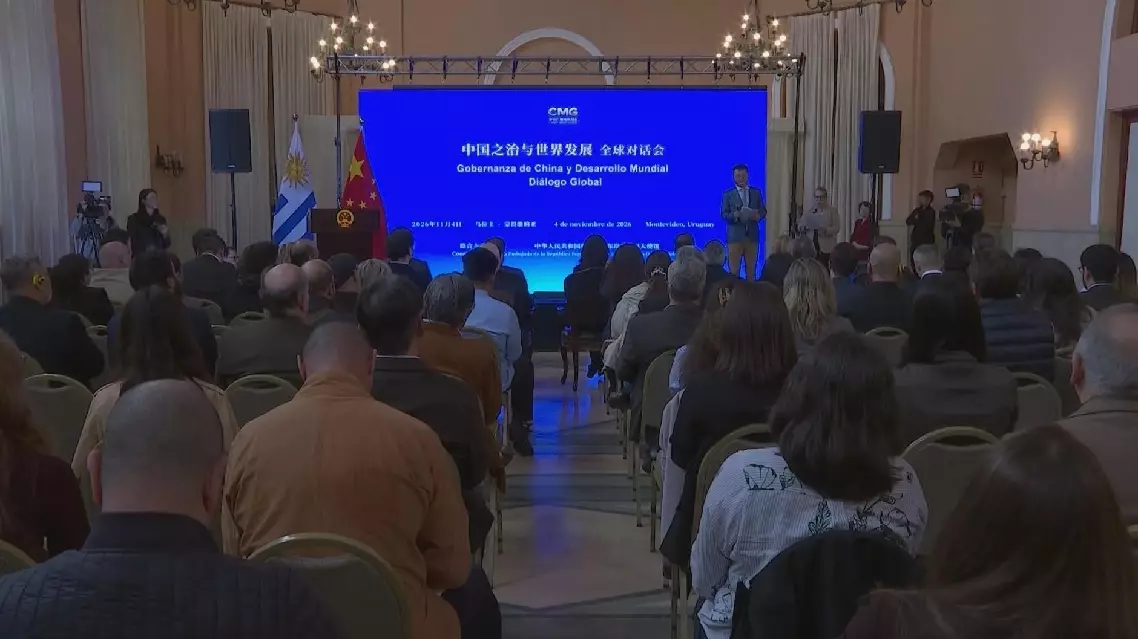
A global dialogue on China's governance and world development was held in Montevideo, Uruguay, on Wednesday, bringing together government officials, business representatives and academics for in-depth exchanges on China's development experience and the prospects for multilateral cooperation.
In her opening remarks, Uruguayan Vice President Carolina Cosse noted that China's development experience offers invaluable reference for Uruguay. Amid current global uncertainties, China's steady development and continuous opening-up provide vital growth opportunities for countries worldwide, she said, adding that Uruguay looks forward to deepening bilateral exchanges, safeguarding global multilateralism, and building a fair, inclusive, and sustainable world.
Representatives from Uruguay's political, business, academic and media sectors, as well as diplomatic envoys from Brazil, Russia, the United Kingdom and other countries to Uruguay, and the representative of the European Union to Uruguay attended the event.
Participants said that Chinese President Xi Jinping's remarks at the recently concluded fifth plenary session of the 20th Central Committee of the Communist Party of China (CPC) provided a profound exposition on the internal logic of the Chinese model of long-term governance, which serves as a blueprint for China's development while contributing Eastern wisdom to global sustainable growth.
The plenary session has drawn widespread attention from the international community, with China's development experience and the CPC's governance practices emerging as focal points of global discourse.
The attendees emphasized that Latin American countries, including Uruguay, should strengthen communication and cooperation with China to jointly uphold multilateralism and build a community with a shared future for mankind.
During a panel discussion, guests spoke in depth about the spirit of the plenary session, China's governance practices and shared opportunities for China-Latin America cooperation.
"Through this event, we have gained a deeper understanding of China's governance model, the main pillars of its economic development, and its tremendous progress in social development. We also discussed China's new development agenda and new directions for future cooperation between China, Uruguay and Latin America," said Ignacio Bartesaghi, a Uruguayan scholar.
"This event provided an excellent opportunity to explore from various angles the potential for further bilateral cooperation. I believe exchanges in education, culture, and science and technology will play an extremely important role as we continue to deepen our partnership," said Fernando Lugris, director general for cultural affairs of Uruguayan Ministry of Foreign Affairs.
The event also featured screenings of promotional videos for premier programs produced by China Media Group (CMG), including "Records of Chinese Craftsmanship: Intelligent Robot Manufacturing" and "China Flash Forward", vividly showcasing China's smart manufacturing and green innovation achievements.
Mainstream media outlets in Uruguay, including La República, La Mañana, and the National Television of Uruguay, covered the event.
Global dialogue on China's governance, world development held in Uruguay