Nearly a decade after the documentary "Twenty Two", which focused on the victims of Japan's wartime sexual slavery system, debuted in China, its director and co-producer have revisited this collective trauma as the number of living survivors in China and the Republic of Korea (ROK) continues to dwindle.
In November 2023, Li Meijin, a "comfort women" survivor who was forced into sexual slavery during World War II, died in south China's Hainan Province at the age of 98. With her passing, all 22 elderly survivors featured in the documentary have passed away. In the Republic of Korea, only five survivors remain. Against this backdrop, director Guo Ke and co-producer Kim Wong-dong revisited their stories in the recently released CGTN documentary "Five."
At Dongguk University in Seoul, Professor Kim Wong-dong, who also served as the associate producer of "Twenty Two," recently held a screening and discussion session for his students.
"Have you ever heard of a documentary about the 'comfort women' called 'wenty Two?' In 2016, the total number of surviving victims in China stood at 22. Unfortunately, as of now, all 22 who took part in the film have passed away. However, in Republic of Korea, there are still five living survivors. This is an issue concerning both China and the ROK -- a shared problem that remains unresolved," he told his class.
Dedicated to recording and presenting the collective trauma of Chinese and ROK "comfort women" survivors, Kim said his aim is not to impose his views, but simply to present the truth and remind people of history.
"For over a decade now, I have been making films on this subject. I am also an educator teaching video production. As such, I believe it is my duty to convey this painful history to the students who learn media from me. Of course, it is not my intention to impose my views on them. I cannot just ask young people to inherit the critical mindset of our older generation. During this period of study, if students can confront this issue on their own and reflect on it, even for a moment, I believe that is enough," he said.
Recalling the filming process from more than a decade ago, Guo said the brave survivors were not only living witnesses to a dark historical period, but also were able to overcome the day-to-day challenges of their later years.
"Naturally, we felt a deep sense of sympathy for them. After all, they suffered so much back then, and they were in their nineties -- quite old. But these women were nothing like we had imagined. They were very independent. Most of them were able to live on their own," said Guo.
The film has since drawn a widespread response in both countries, bringing unexpected box office success and public awareness of Japanese wartime atrocities.
"'Twenty Two' grossed over 100 million yuan at the box office -- something no one expected, including me. It succeeded because so many people cared about these elderly women," he said.
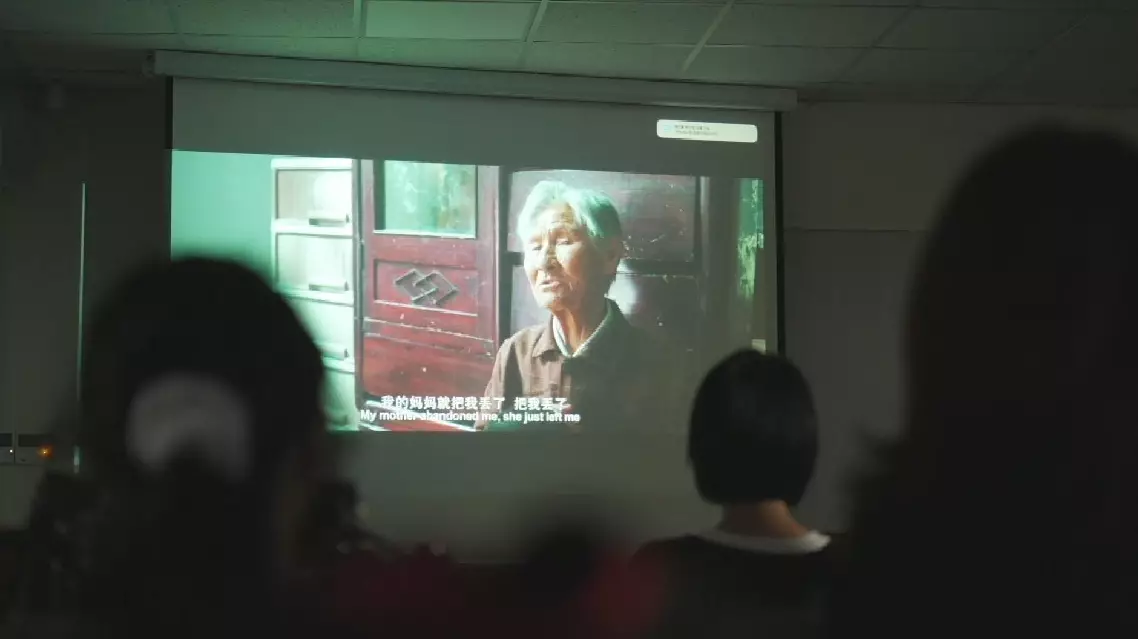
Chinese, ROK filmmakers revisit "comfort women" stories as survivors dwindle