SAN DIEGO--(BUSINESS WIRE)--Nov 5, 2026--
XiFin, Inc., a healthcare information technology company providing AI-enabled revenue cycle management and related technology to diagnostic laboratories, pathology groups, radiology practices, hospital outreach programs, and pharmacies, today announced that the XiFin ® Empower RCM System has achieved HITRUST Risk-based, 2-year (r2) Certified status for the third consecutive two-year term. XiFin also announced that its Pharmacy Documentation and Workflow System, Clinical Opportunity Messaging System, and Pharmacy Claims Processing and Reporting Systems have been recertified under the HITRUST Implemented, 1-year (i1) assessment.
This press release features multimedia. View the full release here: https://www.businesswire.com/news/home/20261105607160/en/
The r2 certification covers the XiFin Empower RCM System residing at SWITCH, Microsoft Azure, and Amazon Web Services (AWS), along with XiFin's corporate headquarters in San Diego, California, and the data centers that host the platform: the SWITCH facility in Las Vegas, Nevada, and Azure and AWS facilities in Washington State. The i1 certification covers the three pharmacy systems residing at Microsoft Azure.
HITRUST r2 certification is the framework's most comprehensive assurance. It requires an organization to select and implement controls scaled to its specific risk factors, undergo assessment by an authorized external assessor, pass HITRUST's independent quality review, and complete an interim assessment at the one-year mark to retain certification for the full two-year term. HITRUST i1 certification is a one-year, threat-adaptive assessment of a prescribed set of leading security practices that HITRUST updates as the threat landscape changes.
Healthcare organizations face growing expectations from regulators, payors, and their own boards to hold technology vendors to independently verified security standards rather than self-attestation. A current HITRUST certification allows a customer's risk team to rely on a validated assessment of XiFin's controls, often reducing the length of security review during procurement and renewal.
“Recertifying under r2 for a third term, and recertifying our pharmacy platforms under i1 in the same cycle, reflects a control program that runs every day of the year, not an exercise we complete for an audit,” said Marty Barrack, Chief Legal and Compliance Officer at XiFin. “Our customers are being asked harder questions about the vendors that touch protected health information. We want them to be able to answer those questions, and our HITRUST certification helps answer that.”
“Maintaining r2 and i1 certifications across platforms hosted at SWITCH, Azure, and AWS means our controls have to work consistently in three different environments and hold up to an external assessor's testing in each one,” said Bill Floeter, CISSP, CHPS, Senior Vice President, Security and Compliance at XiFin. “The value for a customer is practical. Their security team can start from a validated scope statement and spend its time on the questions specific to their environment, instead of re-testing controls HITRUST has already examined.”
“The HITRUST Assurance Program is rigorous and reliable because of the comprehensiveness of control requirements, depth of review, and consistency of oversight,” said Bimal Sheth, EVP, Standards Development & Assurance Operations at HITRUST. “HITRUST Certification demonstrates XiFin is taking the most proactive approach to cybersecurity, data protection, and risk management.”
XiFin's HITRUST certification letters and scope statements are available to customers and prospective customers on request. XiFin is listed in the Health3PT Vendor Directory of HITRUST-certified vendors. Additional information is available at www.xifin.com/what-we-do/security/.
About XiFin
XiFin is a healthcare information technology company that empowers organizations to navigate an evolving and increasingly complex healthcare landscape. The XiFin Empower AI RCM ecosystem and trusted data employ active intelligence and automation to reduce manual touches, coordinate workflows, accelerate customer innovation, and improve financial outcomes. Our comprehensive set of solutions—spanning revenue cycle management, clinical workflow enablement, laboratory information systems, and patient engagement—deliver The Power to Do Good® so that healthcare organizations can do more good for more patients. Visit www.XiFin.com, follow XiFin on LinkedIn, or subscribe to the XiFin blog to learn more.
HITRUST is a registered trademark of the HITRUST Alliance.
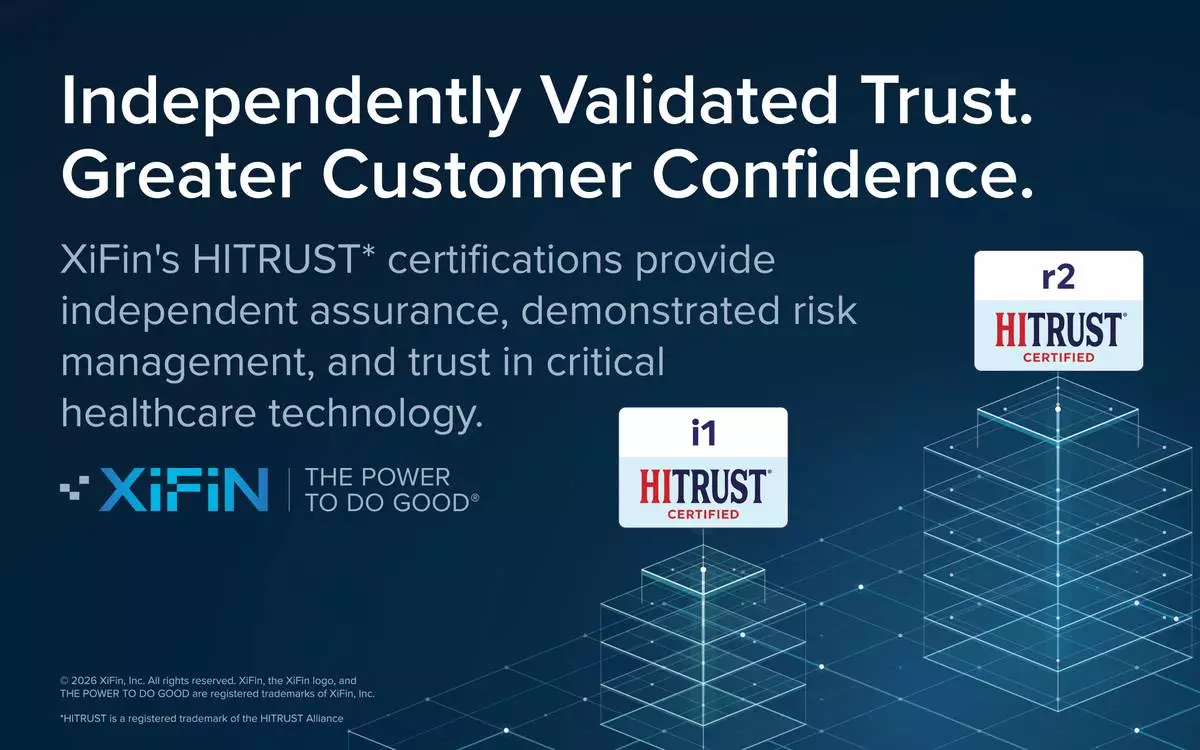
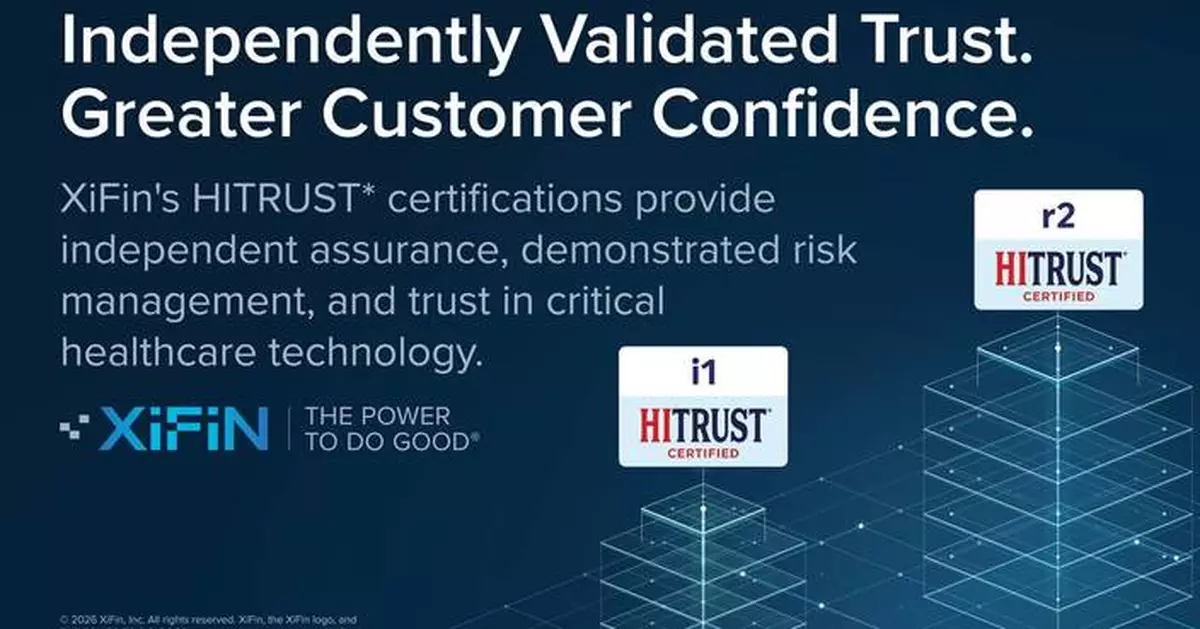
XiFin continues to demonstrate its commitment to security and trust, achieving HITRUST r2 certification for the XiFin® Empower RCM System for the third consecutive two-year term, along with HITRUST i1 recertification for its Pharmacy Documentation and Workflow System, Clinical Opportunity Messaging System, and Pharmacy Claims Processing and Reporting Systems.
SAN FRANCISCO (AP) — Anthropic is developing its artificial intelligence systems around twice as quickly as it was a year ago amid the CEO’s calls to slow down the technology’s pace of improvement, according to an analysis released Thursday by an independent monitoring group.
Anthropic invited researchers from the Berkeley, California-based nonprofit, Model Evaluation and Threat Research, to review its internal data and interview staff as it prepares for its Wall Street debut with debate swirling over the potential for AI models to elude human control with catastrophic consequences.
The findings are significant because details about the technology — and its risks — have been provided primarily by AI companies, which have been encouraged by President Donald Trump’s administration to police themselves on matters of safety.
It was during the research group’s assessment period that Anthropic CEO Dario Amodei called for the AI industry to slow its work so safety measures can catch up. In a Sept. 12 essay responding to mounting concerns about runaway AI, he urged the AI world to “slow the pace at which we improve the capabilities of AI models.”
Anthropic did not immediately comment on the report in response to inquiries.
The San Francisco-based company is planning to go public later this month in what could be the biggest initial public offering of stock ever.
METR estimated that Anthropic is improving the capabilities of its models to do “well specified tasks” around twice as fast as it was a year earlier. The nonprofit’s researchers said they believed much of the reason for the faster development is the help of AI itself.
Anthropic has said its Claude chatbot increasingly is helping the company develop newer, more advanced versions of itself.
METR has conducted evaluations on model capabilities for Anthropic, OpenAI and other labs for years. The nonprofit is funded through donations and does not accept compensation for its work, but AI companies it has partnered with for evaluations have provided access and tokens, which METR uses for evaluations, research and engineering.
One of its two reports was based on analysis of Anthropic’s internal data provided by the company over a period of about 11 weeks, from mid-August through late October, as well as employee interviews.
METR said its assessment focused on two questions: whether the growth rate of Anthropic’s internal capabilities has accelerated and how much of that was attributable to AI. The group said it was given “unprecedented access to internal data” on Anthropic’s AI research and development process.
Anthropic’s redactions to the report limited how METR could communicate more detailed estimates of acceleration, and there were some internal disagreements and uncertainty among METR’s team, but the group said it believed the company’s rate of improvement had doubled.
“Anthropic appears to have made as much progress on benchmarks in the past year as they did between October 2023 and October 2025,” according to the METR report.
METR also reviewed both a public risk report Anthropic published in August and a private version, as well as other non-public data, and the organization said the public report “overall understates the level of acceleration that was occurring."
The report was peppered with caveats. METR said it could be overstating its findings, because the acceleration might only be limited to “well-specified tasks” that can be graded automatically or with a language model, instead of “messy” tasks that are harder to define. Or it could be that Anthropic understated its previous progress, making the latest number look bigger.
METR said it was able to “confidently” rule out the growth of computing power used in training AI models as the reason for the acceleration. Traditionally, the amount of computing power, known as compute, is directly related to how well an AI model performs. The researchers said their guess was that the improvement was down to using AI itself to improve AI.
A key concern, METR said, is that using AI to improve itself could start to compound the acceleration, which could be especially worrying given that researchers found there were no “bottlenecks” such as restrictions on computing power or data holding back Anthropic’s AI progress.
“We understand that AI is not yet able to make highly significant and fully autonomous contributions to the most important parts of the model training process,” the report said. However, Anthropic researchers described significant “signs of life” implying that could happen soon, METR said.
Amodei touched on this issue in his September essay, saying AI advances have been driven primarily by the concept of recursive self-improvement, or what he defined as “AI’s growing ability to build the next generation of AI.”
“Left unchecked, it could outrun our ability to understand and control these systems, and so must be pursued very carefully, if at all,” Amodei wrote.
In that same essay, Amodei championed the idea of having external evaluators embedded within the leading AI labs and specifically highlighted METR as an appropriate third-party evaluator. OpenAI CEO Sam Altman said at the time that he also supported the idea of independent evaluators with employee-like access.

FILE - Dario Amodei, CEO and co-founder of Anthropic, attends the annual meeting of the World Economic Forum in Davos, Switzerland, Jan. 23, 2025. (AP Photo/Markus Schreiber, File)
FILE - Pages from the Anthropic website and the company's logo are displayed on a computer screen in New York, Feb. 26, 2026. (AP Photo/Patrick Sison, File)