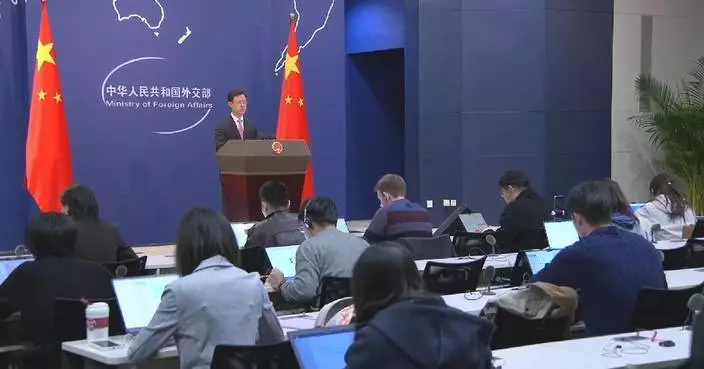
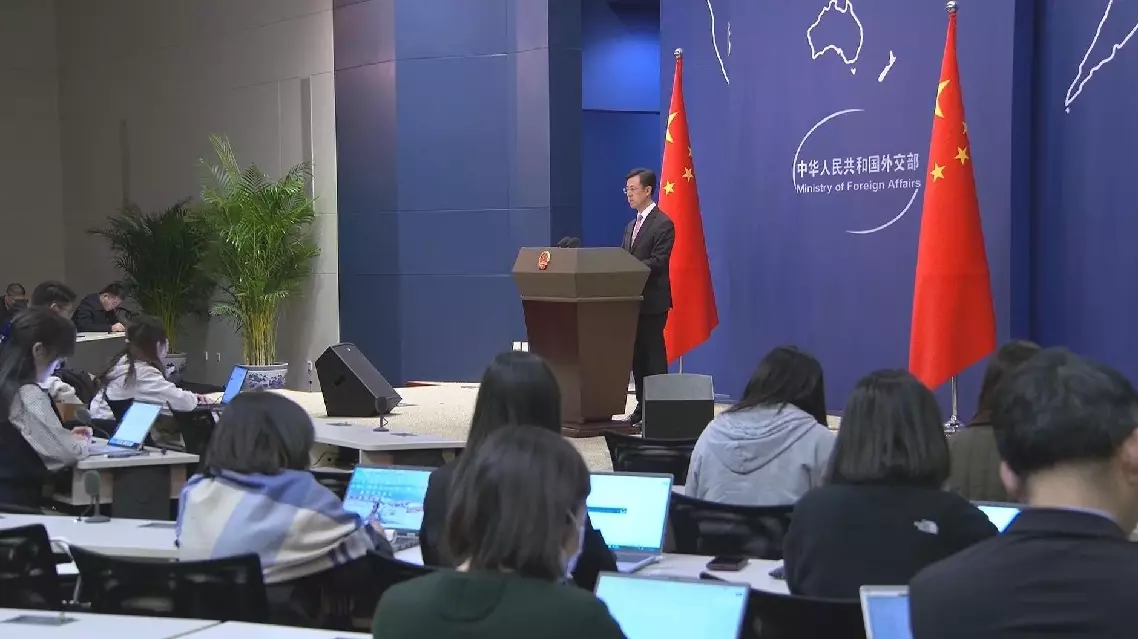
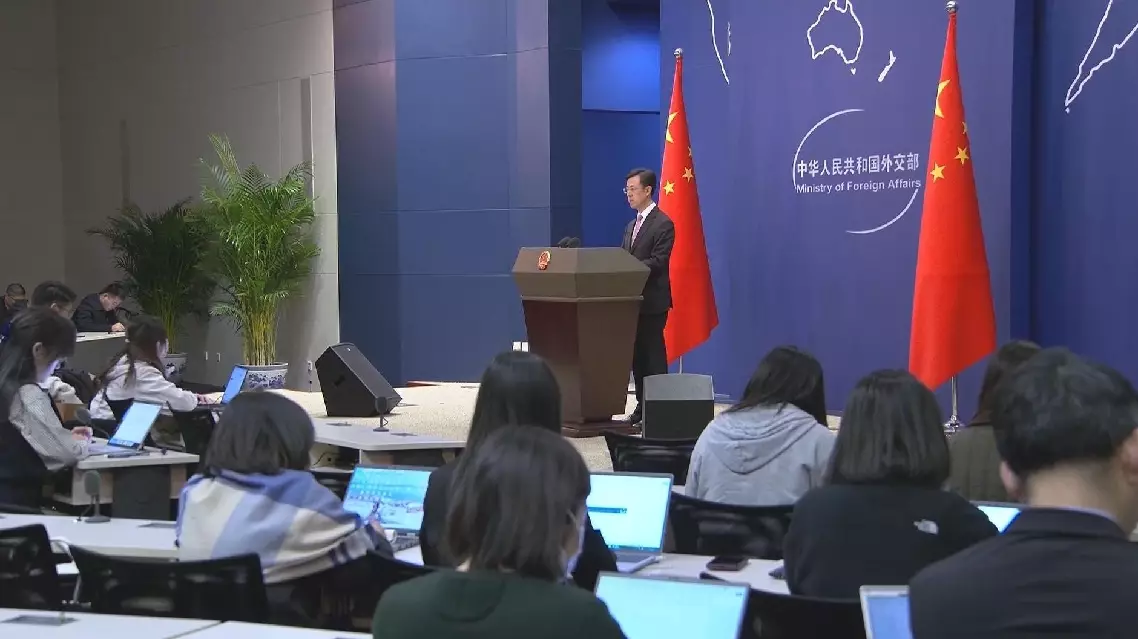
The second China-Canada Economic and Financial Strategic Dialogue will be held in Canada on November 9 as agreed between the two sides, Foreign Ministry spokesman Guo Jiakun said at a regular press briefing in Beijing on Friday. "He Lifeng, member of the Political Bureau of the Communist Party of China (CPC) Central Committee, vice Premier of the State Council and China's lead person in the dialogue, will co-chair the dialogue with the Canadian co-leaders, Minister of Finance and National Revenue Francois-Philippe Champagne and Minister of International Trade Maninder Sidhu," Guo said.
Second China-Canada Economic and Financial Strategic Dialogue to be held in Canada on Nov 9
Second China-Canada Economic and Financial Strategic Dialogue to be held in Canada on Nov 9
Second China-Canada Economic and Financial Strategic Dialogue to be held in Canada on Nov 9
Chinese scientists have set a new record for the coldest temperature ever achieved by humans, cooling a cloud of rubidium atoms to 9.7 picokelvin, and keeping it stable for observation for seven seconds.
The result, announced by the Chinese Academy of Sciences' Technology and Engineering Center for Space Utilization on Friday, marks a major step toward absolute zero, the lowest temperature theoretically possible, creating the coldest artificial substance known to date. The work was published on Friday in the journal Science.
The experiment was carried out in the ultra-cold atom physics rack aboard China's space station. The project began feasibility studies in 2011, and its experiment system was launched with the Mengtian module in 2022. It was organized by the Technology and Engineering Center for Space Utilization under the CAS, while completed by Beijing University and the Shanghai Institute of Optics and Fine Mechanics (SIOM) of the CAS.
They cooled a rubidium atom cloud to an equivalent temperature of 9.7 picokelvin, 14 orders of magnitude below the roughly 300 kelvin room temperature on Earth, and kept it stable for observation for seven seconds. The result broke the previous record of 38 picokelvin, set by a German team in 2021.
"We have mastered the whole technology chain for deep cooling of ultracold atoms, allowing atoms to reach the picokelvin level. This shows that our engineering capability in deep atomic cooling is up to the world advanced level," said Chen Weibiao, Party secretary of SIOM.
On Earth, gravity pulls atoms downward, making it hard to cool them sufficiently. In the microgravity environment of China's space station, atoms could float freely and reach far lower temperatures without strong external confinement. The Chinese research team remotely controlled the space station's equipment from the ground to make the breakthrough, said the CAS center.
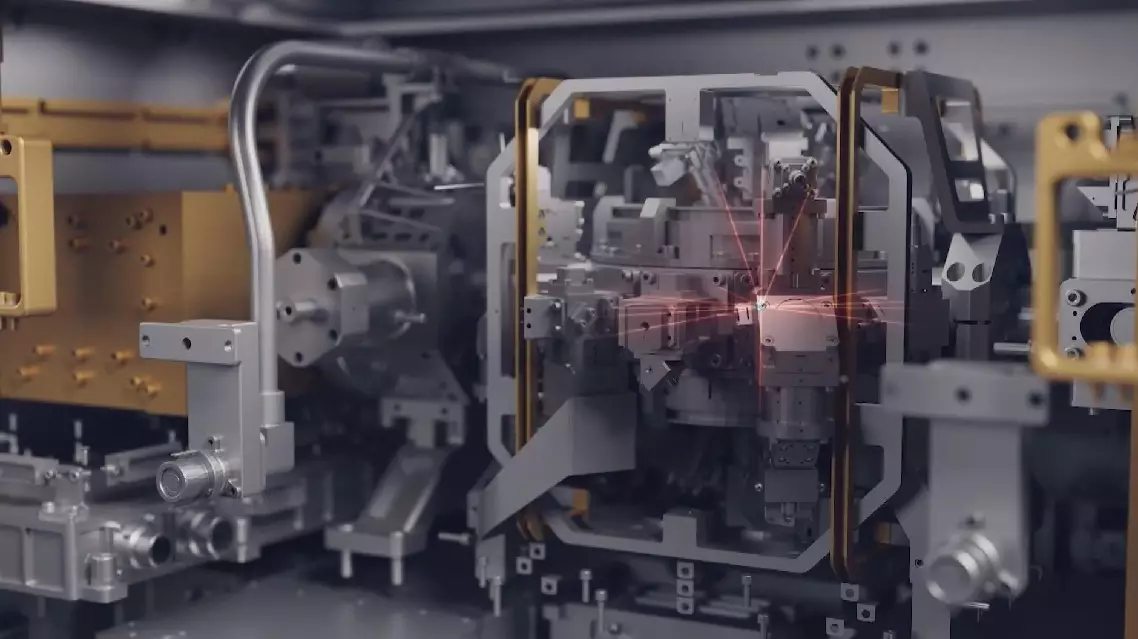
China sets world record for coldest temperature aboard space station