Skip to Content Facebook Feature Image

Germany set to get its first female president as governing parties unite around ex-minister

News

Germany set to get its first female president as governing parties unite around ex-minister
News

News

Germany set to get its first female president as governing parties unite around ex-minister

2026-11-09 22:49 Last Updated At:22:50

BERLIN (AP) — Germany is set to get its first female president after Chancellor Friedrich Merz's party nominated Ilse Aigner, a center-right politician with appeal to liberals, to become the country's head of state next year.

Aigner presented herself Monday as a unifying figure in an increasingly polarized country, saying that she hopes to represent a “strong center.” She said the broad political support taking shape for her is “an important signal against populist and extremist forces in our country.”

More Images
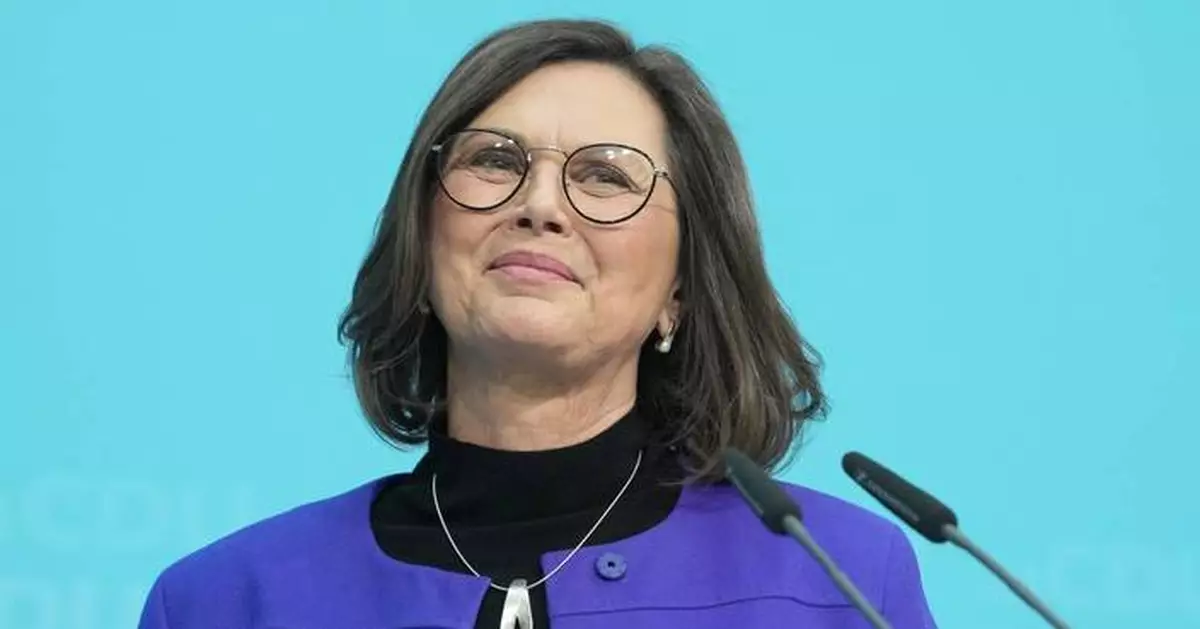
Ilse Aigner, candidate for the President of Germany, attends a news conference in Berlin, Germany, Monday, Nov. 9, 2026. (AP Photo/Markus Schreiber)
Ilse Aigner, candidate for the President of Germany, attends a news conference in Berlin, Germany, Monday, Nov. 9, 2026. (AP Photo/Markus Schreiber)

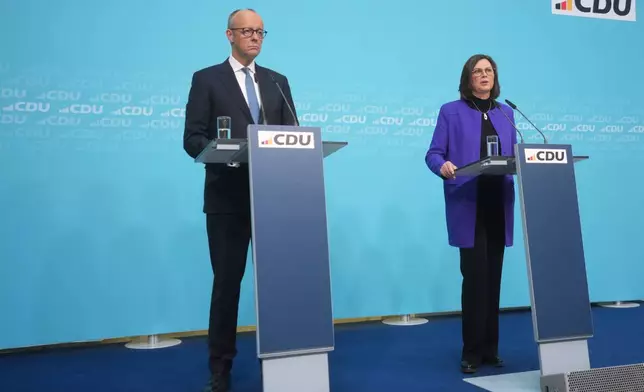
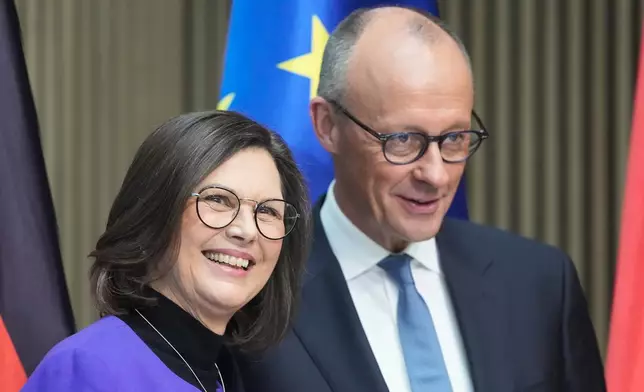
German Chancellor Friedrich Merz, left, nominates Ilse Aigner, right, as a candidate for president of Germany in Berlin, Monday, Nov. 9, 2026. (AP Photo/Markus Schreiber)
German Chancellor Friedrich Merz, left, nominates Ilse Aigner, right, as a candidate for president of Germany in Berlin, Monday, Nov. 9, 2026. (AP Photo/Markus Schreiber)

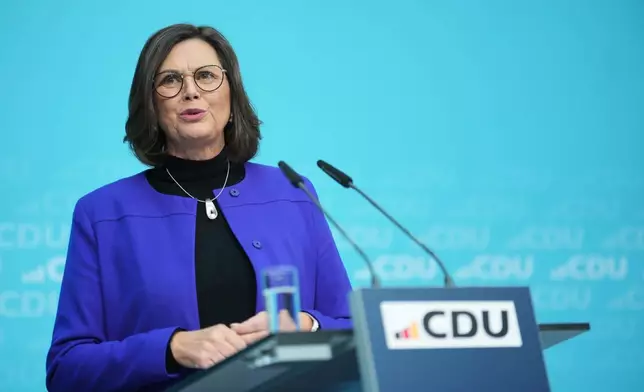
Ilse Aigner, candidate for President of Germany, speaks to the media in Berlin, Germany, Monday, Nov. 9, 2026. (AP Photo/Markus Schreiber)
Ilse Aigner, candidate for President of Germany, speaks to the media in Berlin, Germany, Monday, Nov. 9, 2026. (AP Photo/Markus Schreiber)

German Chancellor Friedrich Merz, right, nominates Ilse Aigner, left, as candidate for the President of Germany in Berlin, Germany, Monday, Nov. 9, 2026. (AP Photo/Markus Schreiber)
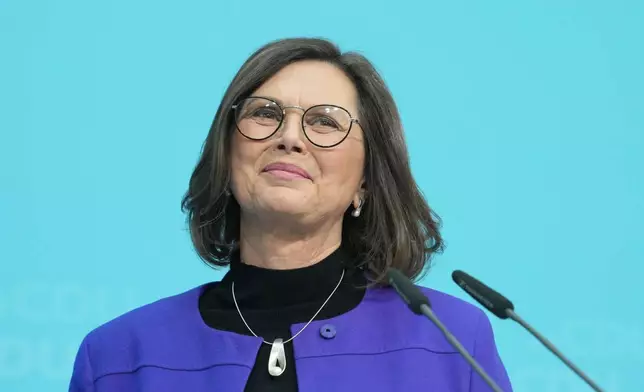
German Chancellor Friedrich Merz, right, nominates Ilse Aigner, left, as candidate for the President of Germany in Berlin, Germany, Monday, Nov. 9, 2026. (AP Photo/Markus Schreiber)

Ilse Aigner, candidate for President of Germany, attends a news conference in Berlin, Germany, Monday, Nov. 9, 2026. (AP Photo/Markus Schreiber)

Ilse Aigner, candidate for President of Germany, attends a news conference in Berlin, Germany, Monday, Nov. 9, 2026. (AP Photo/Markus Schreiber)

The new head of state will be elected Jan. 30 when a special parliamentary assembly chooses a successor to President Frank-Walter Steinmeier, who is constitutionally barred from seeking a third five-year term. It is made up of the 630 members of the national parliament's lower house and an equal number of delegates from Germany's 16 state parliaments.

Aigner, 61, is the speaker of Bavaria's state legislature and hails from the Christian Social Union, the smallest of three parties in the national government and part of Merz's conservative bloc, which has long pushed her candidacy. After it won official backing Monday from leaders of Merz's Christian Democratic Union and the center-left Social Democrats, she looks all but assured of election.

The governing parties will have a majority in the assembly that elects the president. Aigner also has received a positive reception from the opposition Greens.

“From my point of view, it is high time for a woman to hold this highest office for the first time,” Merz said as he presented Aigner. He said her background as an electrical engineer would also be a first for a president, reflecting “the reality of millions of people in our country” in manual work.

Aigner has been active in politics since her late teens and was elected to the Bavarian state legislature in 1994. She served as Germany’s agriculture minister from 2008 to 2013 under Chancellor Angela Merkel.

She then served as Bavaria's economy minister and transport minister before becoming the speaker of the Bavarian state legislature eight years ago. She has a relatively liberal reputation; in her current role, for example, she was supportive of Germany's first openly transgender lawmaker in 2019.

“I am in politics to overcome divisions, bring people together and also reach those who perhaps feel that they stand on the sidelines,” Aigner said, adding that she stands against “every attack on human dignity.”

Germany's post-World War II federal republic has had 12 presidents since 1949, all men. Women have held most of the country's other top jobs.

Merkel was the first female chancellor, from 2005 to 2021. Four women have served as speaker of the lower house of parliament, in protocol terms Germany's No. 2 official ahead of the chancellor, including incumbent Julia Klöckner.

The president is supposed to be above party politics and usually has a largely ceremonial and representative job, but the head of state can play a part in times of political crisis. Steinmeier, for example, took an unusually active role in nudging rival politicians toward forming a new government after an inconclusive election in 2017.

German politics has become more turbulent since, with rising support for the far-right Alternative for Germany further complicating efforts to form politically cohesive governments.

Alternative for Germany intends to field a candidate of its own. Co-leader Alice Weidel criticized the nomination of Aigner and said that, as parliamentary speaker, she “has proven several times that she cannot set aside the role of party politician.”
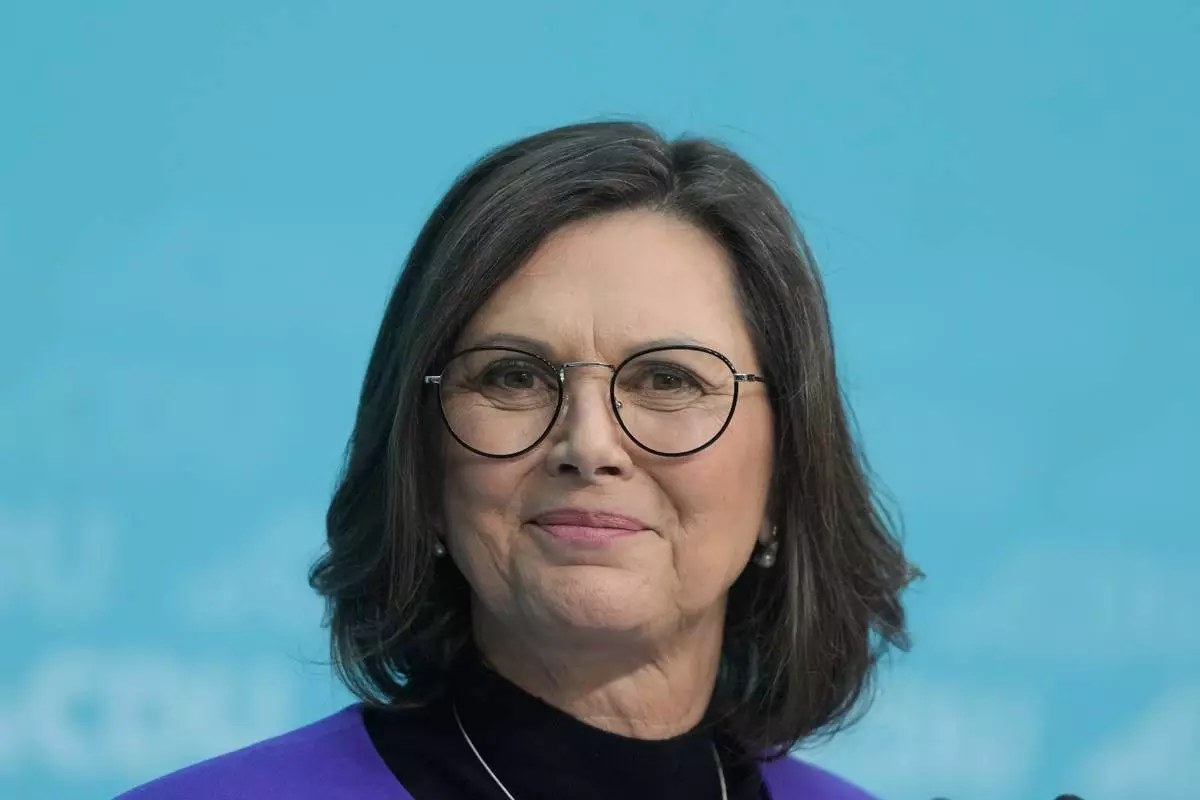
Ilse Aigner, candidate for the President of Germany, attends a news conference in Berlin, Germany, Monday, Nov. 9, 2026. (AP Photo/Markus Schreiber)
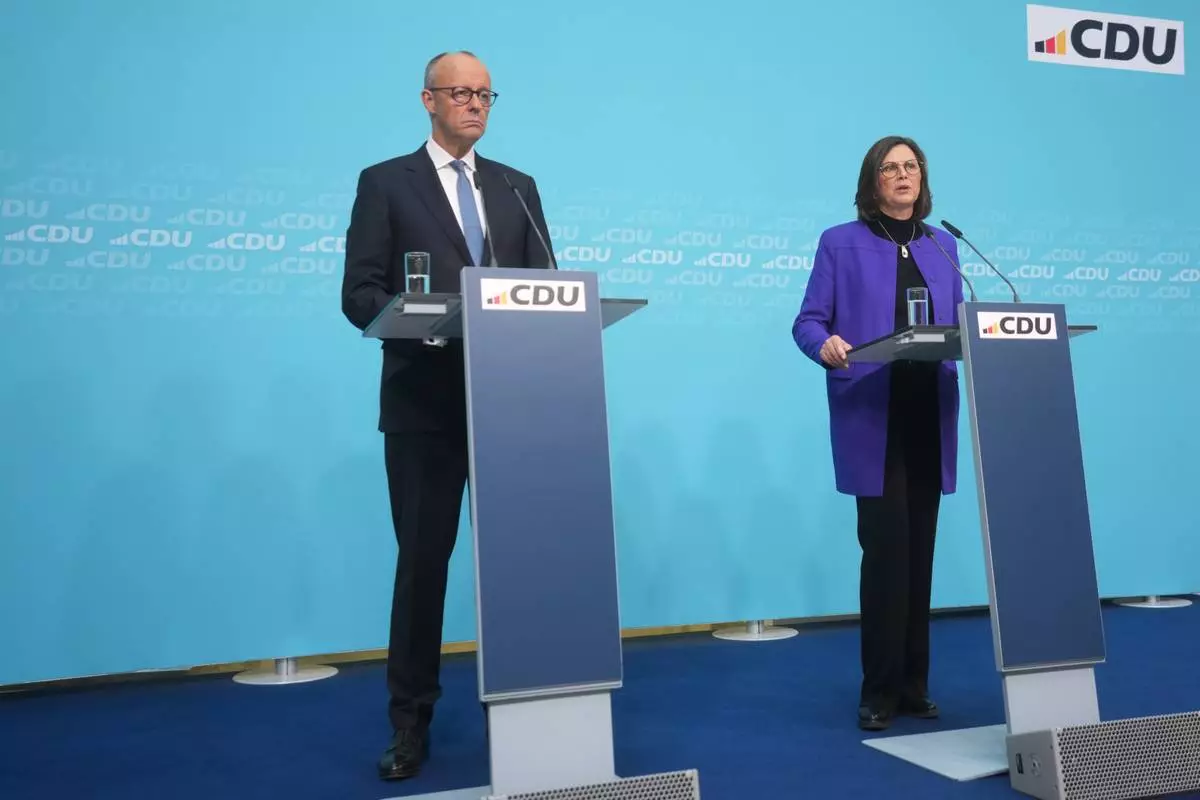
Ilse Aigner, candidate for the President of Germany, attends a news conference in Berlin, Germany, Monday, Nov. 9, 2026. (AP Photo/Markus Schreiber)

German Chancellor Friedrich Merz, left, nominates Ilse Aigner, right, as a candidate for president of Germany in Berlin, Monday, Nov. 9, 2026. (AP Photo/Markus Schreiber)
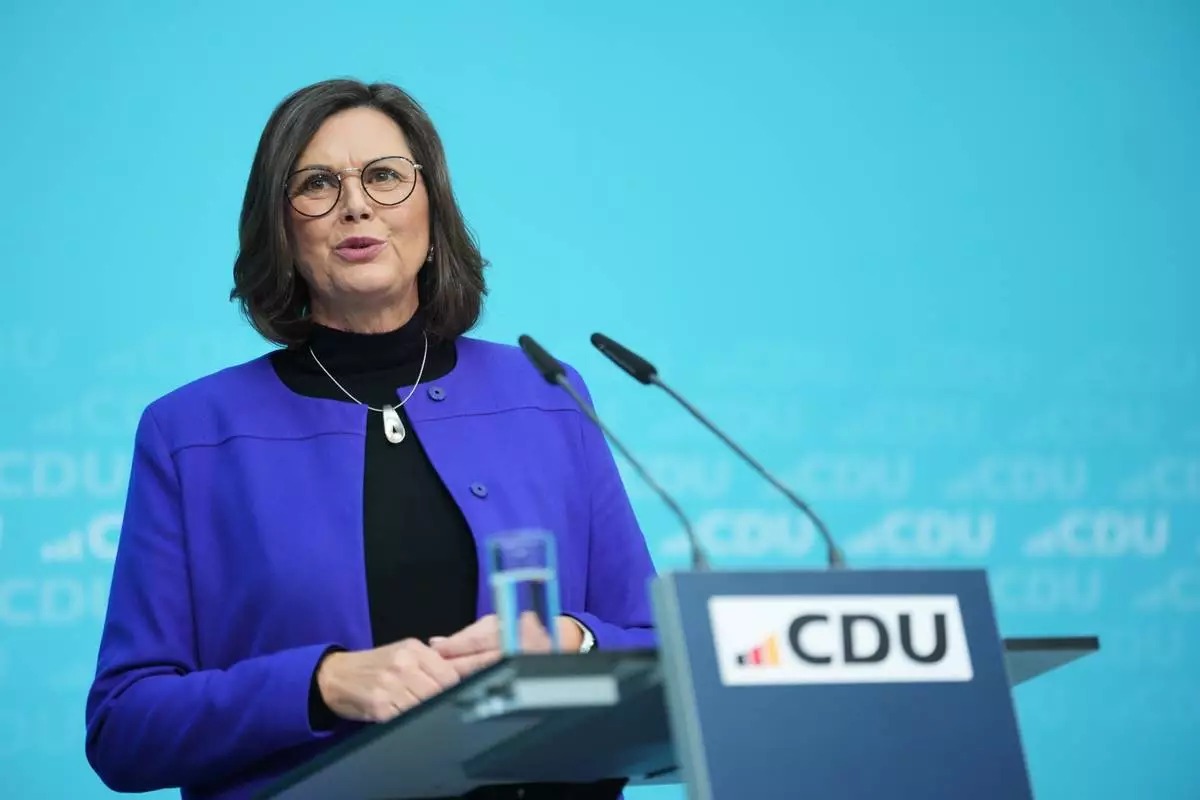
German Chancellor Friedrich Merz, left, nominates Ilse Aigner, right, as a candidate for president of Germany in Berlin, Monday, Nov. 9, 2026. (AP Photo/Markus Schreiber)

Ilse Aigner, candidate for President of Germany, speaks to the media in Berlin, Germany, Monday, Nov. 9, 2026. (AP Photo/Markus Schreiber)
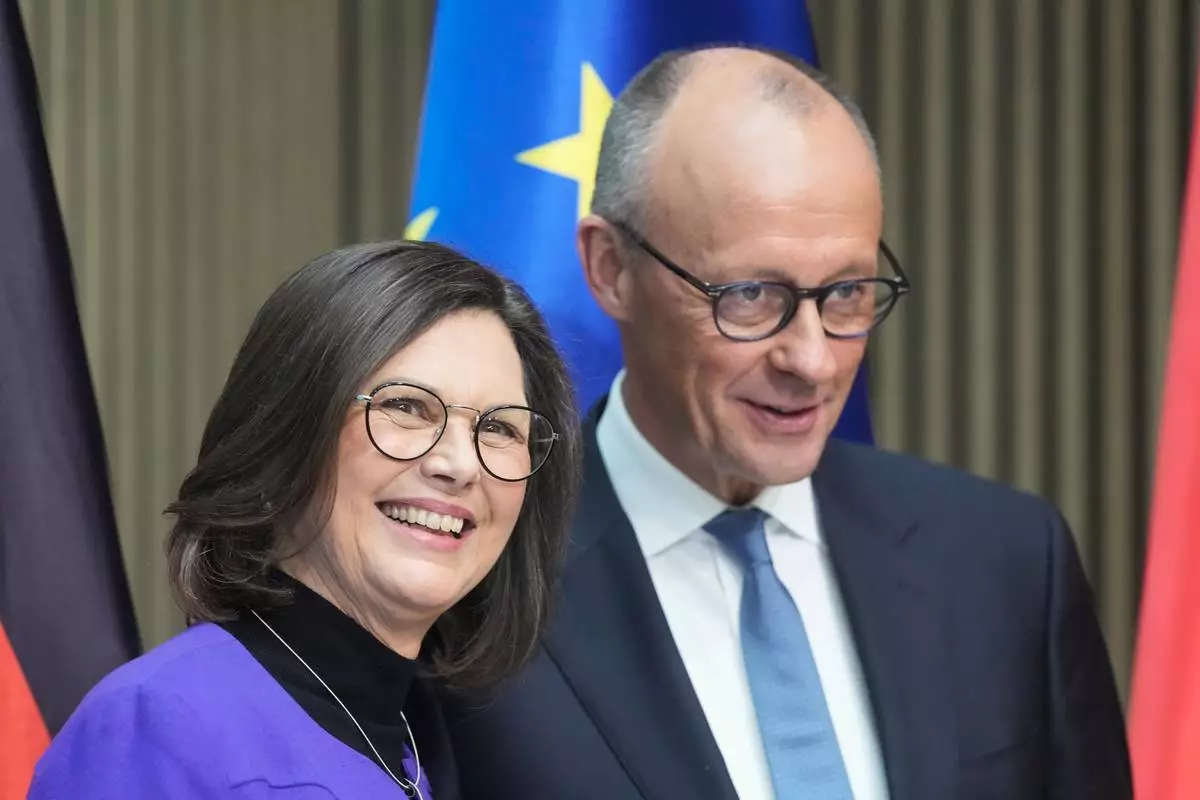
Ilse Aigner, candidate for President of Germany, speaks to the media in Berlin, Germany, Monday, Nov. 9, 2026. (AP Photo/Markus Schreiber)

German Chancellor Friedrich Merz, right, nominates Ilse Aigner, left, as candidate for the President of Germany in Berlin, Germany, Monday, Nov. 9, 2026. (AP Photo/Markus Schreiber)
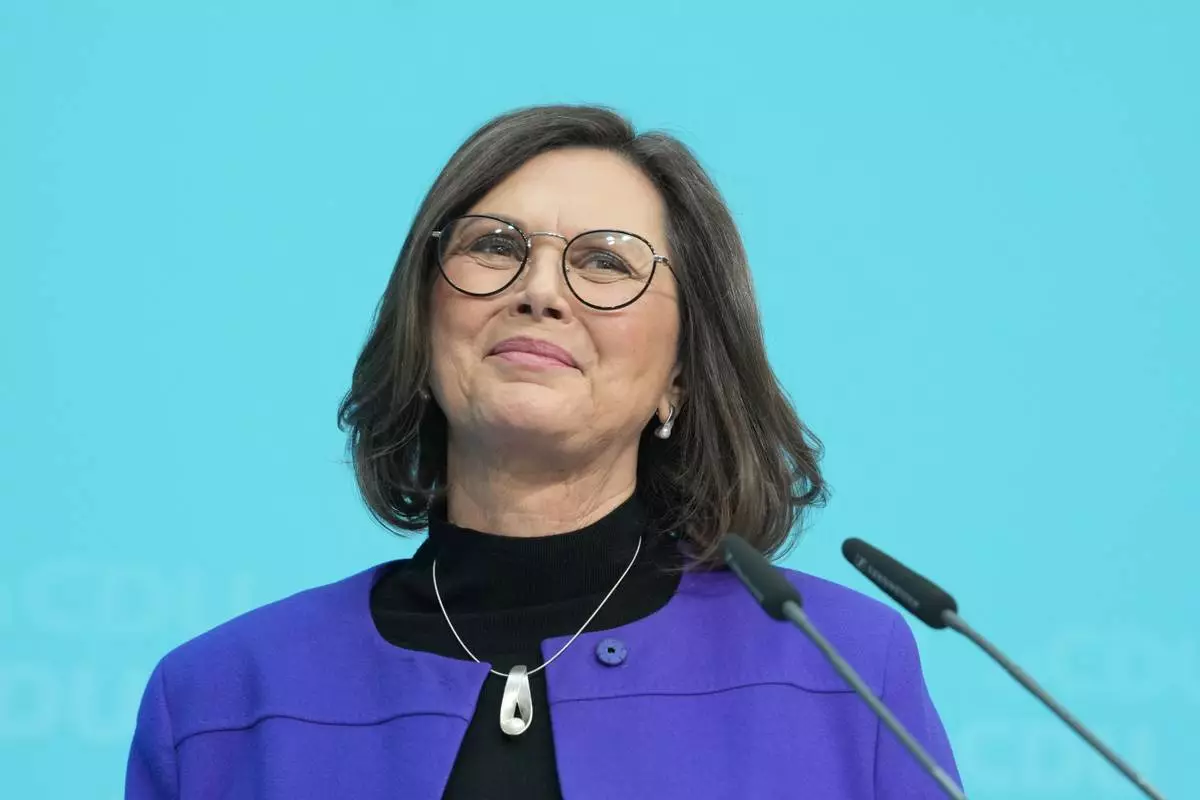
German Chancellor Friedrich Merz, right, nominates Ilse Aigner, left, as candidate for the President of Germany in Berlin, Germany, Monday, Nov. 9, 2026. (AP Photo/Markus Schreiber)

Ilse Aigner, candidate for President of Germany, attends a news conference in Berlin, Germany, Monday, Nov. 9, 2026. (AP Photo/Markus Schreiber)

Ilse Aigner, candidate for President of Germany, attends a news conference in Berlin, Germany, Monday, Nov. 9, 2026. (AP Photo/Markus Schreiber)

The death toll from airstrikes near Yemen’s capital has increased to 44, most of them women and children, health authorities from the Iran-backed Houthi rebels said overnight. Separately, Iran’s foreign ministry on Monday dismissed comments by U.S. Secretary of State Marco Rubio that Iranian demands for ending the war have been “ridiculous.”

Here is the latest news from the Middle East on Monday. Read our full coverage here.

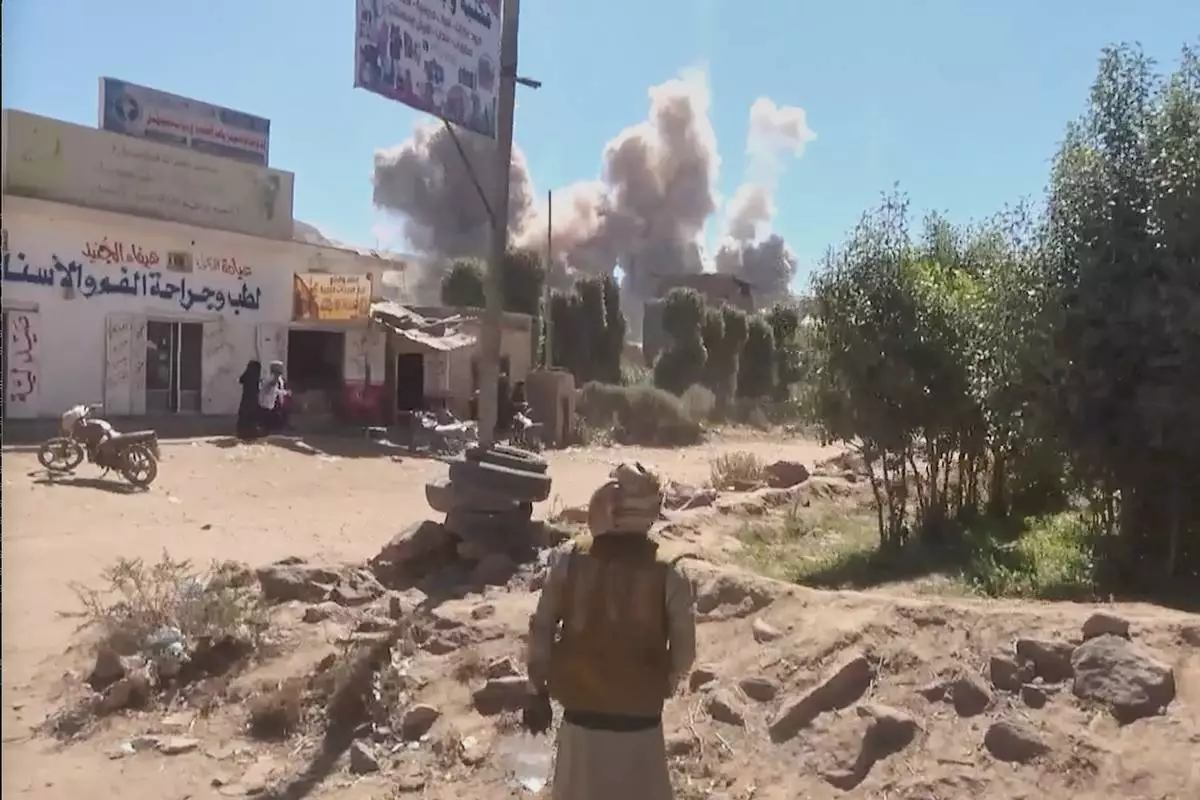
The death toll from airstrikes that hit homes near Yemen’s capital, Sanaa, on Saturday has increased to 44, most of them women and children, Houthi health authorities said late Sunday.

The strikes on the village of al-Shariya, east of Sanaa, wounded 40 others, including eight children and nine women, said Anees al-Asbahi, spokesperson for the Houthi-run Health Ministry. The dead included 21 children and 10 women, he said, making the strikes one of the deadliest attacks in the latest bout of violence in Yemen’s yearlong civil war.

Al-Asbahi said rescue teams were still searching the area for missing people, raising fears that the death toll could rise.

He blamed Saudi Arabia for the strikes, which came amid a major escalation in fighting between the Iran-backed rebels and the kingdom that has killed hundreds of people in Yemen and dozens in Saudi Arabia.

Iran’s foreign ministry on Monday dismissed remarks by U.S. Secretary of State Marco Rubio, who said Sunday that Iranian demands for ending the war had sometimes been “outrageous and ridiculous.”

At a briefing, foreign ministry spokesperson Esmail Baghaei told reporters that U.S. strikes during talks in June 2025 and February this year had been “illogical and ridiculous.” He described the war as a “criminal” act.

Baghaei said none of Iran’s demands were illogical or ridiculous. They include an end to the U.S. blockade of Iran’s ports, the lifting of sanctions, the unfreezing of Iranian assets, compensation for war damage and an end to hostilities throughout the region, including Israeli operations in Lebanon.

On Sunday, Rubio said President Donald Trump prefers a diplomatic solution, but “right now, it hasn’t been very productive because the Iranian demands are simply not just unacceptable, but in some cases outrageous and ridiculous and really not realistic.”

Trump told CNN in a phone interview Sunday that as long as the U.S. sees progress in negotiations with Tehran and the two sides sign a “strong agreement,” it is “highly unlikely it’s going to be necessary” to resume strikes.

Baghaei said Iran’s proposal to end hostilities by lifting sanctions and reopening the strategic Strait of Hormuz remains “on the table.” Last week, he said Iran had shortened the timetable for implementing its seven-step plan to reopen the strait and resume nuclear talks with the U.S. from seven days to two.

Trump is scheduled to meet Qatari Prime Minister Sheikh Mohammed bin Abdulrahman Al Thani at the White House on Monday, according to his official schedule.

Qatar has helped mediate efforts to end the war between the U.S. and Iran.

Turkish President Recep Tayyip Erdogan told journalists on a return flight from Azerbaijan late Sunday that he had discussed his concerns with Trump.

“We do not want a new wave of attacks to be launched against Iran, nor do we wish to see our region dragged into further instability,” he said. “Unfortunately, we are now seeing a shift in a negative direction. We are doing everything in our power to prevent this."

Iraqi Prime Minister Ali al-Zaidi traveled to Iran on Saturday to deliver a message from Trump regarding efforts to contain tensions and prevent the region from sliding into war, two Iraqi officials with knowledge of the trip said.

They spoke on condition of anonymity because they were not authorized to comment publicly.

The Iraqi officials said that Iran remained firm in its position and insisted it would make no concessions in the negotiations.

— Qassim Abdul-Zahra in Baghdad

This report will be updated throughout the day as new developments emerge.

This image taken from video released by Houthi-run Al-Masirah TV on Saturday, Nov. 7, 2026, shows a man watching smoke rise following what the channel described as an airstrike by Saudi-backed government forces on a town near Sanaa, Yemen. (Al-Masirah TV via AP)

This image taken from video released by Houthi-run Al-Masirah TV on Saturday, Nov. 7, 2026, shows a man watching smoke rise following what the channel described as an airstrike by Saudi-backed government forces on a town near Sanaa, Yemen. (Al-Masirah TV via AP)

Recommended Articles