Skip to Content Facebook Feature Image

China's railways handle 3.42 bln tonnes of cargo in Jan-Oct period

China

China

China

China's railways handle 3.42 bln tonnes of cargo in Jan-Oct period

2026-11-15 16:43 Last Updated At:17:42

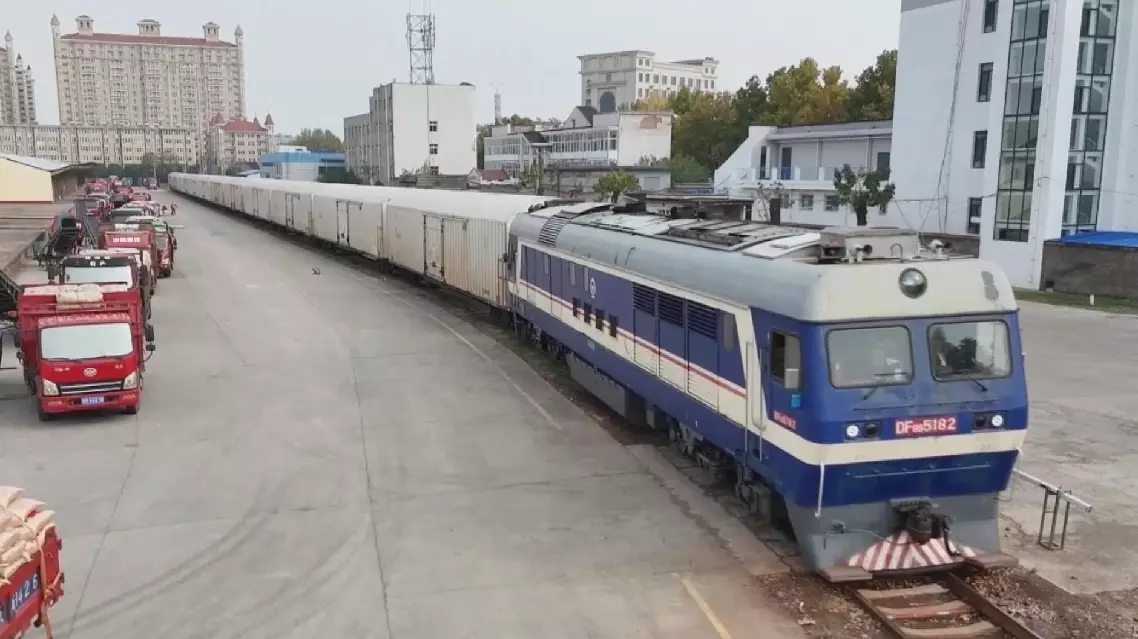
China's state railways handled 3.42 billion tonnes of cargo in the first 10 months of 2026, up 1.1 percent year on year, with the transport of key goods well guaranteed, railway logistics products continuously upgraded, and China-Europe (Central Asia) freight trains operating at high quality, China State Railway Group Co., Ltd - the railway operator said Sunday.

The daily average number of loaded freight cars stood at 189,200, up 1.8 percent from the same period last year, according to the railway operator .

From January to October, China's state railways transported 1.75 billion tonnes of coal, including 1.16 billion tonnes of thermal coal.

As northern China entered the heating season in October, the railway sector stepped up coal shipments out of major production areas in Shanxi, Shaanxi, Inner Mongolia, and Xinjiang to ensure energy supply during peak winter demand.

Meanwhile, China has also been actively supporting grain circulation by opening green channels. During the Jan-Oct period, state railways transported more than 100 million tonnes of grain, up 11.7 percent year on year.

On Thursday, China's first walnut freight train under the "Xinjiang Fruit Outbound" program departed Aksu Railway Station in northwest China's Xinjiang Uygur Autonomous Region, bound for Changxing South Railway Station in east China's Zhejiang Province. Its transit time was nearly 30 percent shorter than that of road transport.

"To meet the concentrated outbound transport demand for walnuts from southern Xinjiang, we precisely coordinated freight capacity resources and adopted a transport model featuring priority container allocation, priority marshalling, and direct non-stop delivery, thereby minimizing intermediate transfers and reloading," said Guo Feng, manager of the Aksu Business Department of the Korla Railway Logistics Center under China Railway Urumqi Group Co., Ltd.

In cross-border freight transport, China-Europe freight trains made 18,600 trips in the first 10 months of this year, up 14.6 percent year on year, while China-Central Asia freight trains made 12,100 trips, up 1.9 percent.

Rail-sea intermodal trains on the New International Land-Sea Trade Corridor, a key logistics route connecting western China to global markets, transported more than 1.13 million twenty-foot equivalent units (TEUs) of cargo, providing strong transport support for high-quality Belt and Road cooperation and China's high-level opening-up.
China's railways handle 3.42 bln tonnes of cargo in Jan-Oct period

China's railways handle 3.42 bln tonnes of cargo in Jan-Oct period
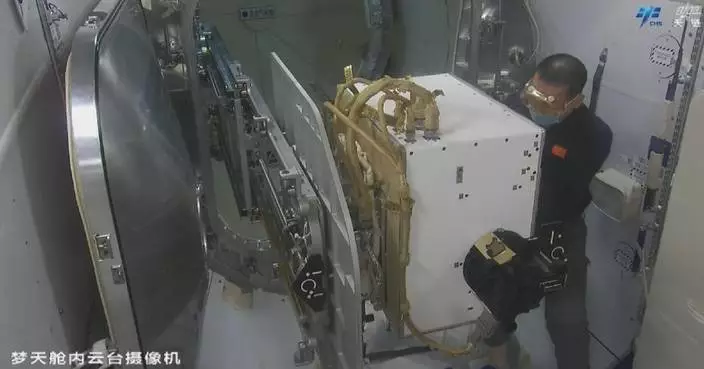
China's space station has made steady progress in its fourth round of space radiation exposure experiments over the past week, with samples including nanozymes, actinomycetes and plant seeds brought back after completing a five-month exposure outside the station.

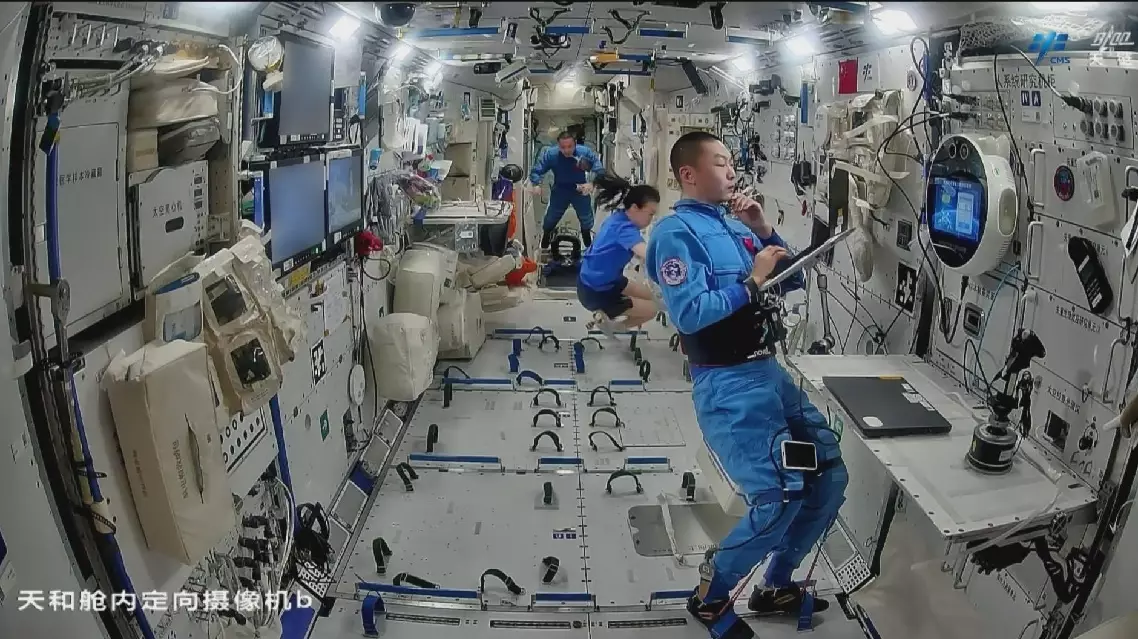
The three Shenzhou-23 astronauts -- Zhu Yangzhu, Zhang Zhiyuan and Li Jiaying -- completed the retrieval, removal and storage of the samples, as well as the handling of the exposure device.

Once returned to Earth, the samples will undergo further analysis to help researchers better understand how space radiation affects living organisms.

The experiment is part of China's broader research into the effects of the space environment on biological systems, particularly the impact of prolonged exposure to space radiation.

The crew also carried out a range of scientific experiments and routine maintenance work aboard the Tiangong space station.

In a study of musculoskeletal responses to microgravity, the astronauts used foot-pressure measurement equipment to collect data during typical workdays. The findings will help researchers examine how the forces acting on bones and muscles vary under different conditions in orbit.

The astronauts also collected nasal and environmental surface swab samples for research into interactions between viruses and immune metabolism.

In addition, they completed assessments of their emergency decision-making abilities and tests of their emotional states in orbit. The data will help ground-based researchers track changes in the crew's decision-making and emotional responses over the course of a space mission. The trio continued routine maintenance of the station's living environment, monitoring cabin air quality through total volatile organic compound test and air cleanliness test. They also replaced components in the regenerative life-support system and the hot-air heating unit in the space kitchen, and cleaned the cabin.

All three astronauts kept to their exercise schedules and used equipment designed to counter the effects of weightlessness, including a device to help prevent bone loss, to maintain their health during the mission.

China's Tiangong space station has entered an era of long-term human habitation. The Shenzhou-23 spacecraft was launched on May 24, carrying three astronauts, two of whom are nearing the end of their sixth month in orbit, while the third is scheduled to remain in space for a full year.

China space station advances fourth round of radiation exposure experiments

China space station advances fourth round of radiation exposure experiments

Recommended Articles