

Call it the APEC (Asia-Pacific Economic Cooperation) effect. Waves of foreign businesspeople and tourists are flocking to Shenzhen, drawn by its technology, and pouring into the city's famous Huaqiangbei electronics district. The daily flow of foreign business visitors has jumped sharply, topping 10,000 at peak times.
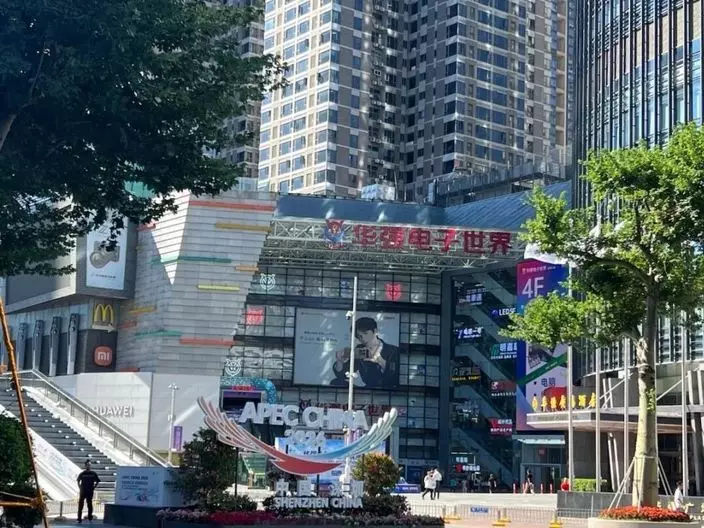
APEC effect: foreign crowds flood Huaqiangbei, peaking past 10,000 daily.
The APEC Effect
Click to Gallery
APEC effect: foreign crowds flood Huaqiangbei, peaking past 10,000 daily.
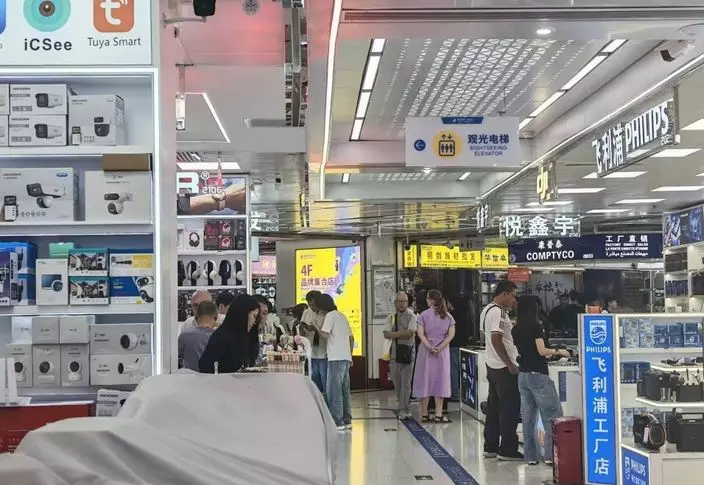
Huaqiangbei: China's self-styled No. 1 Electronics Street.

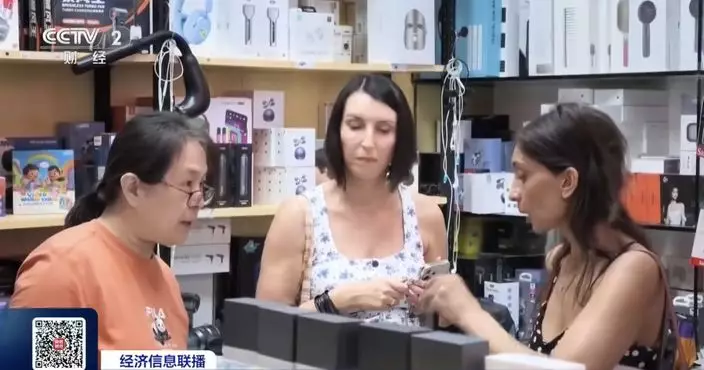
Foreign buyers snap up smart hardware, 3C gear, AI products.
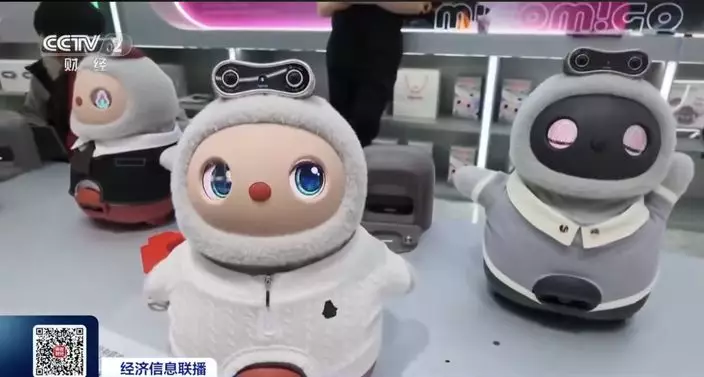
Smart products are a hit with first-time foreign viewers.
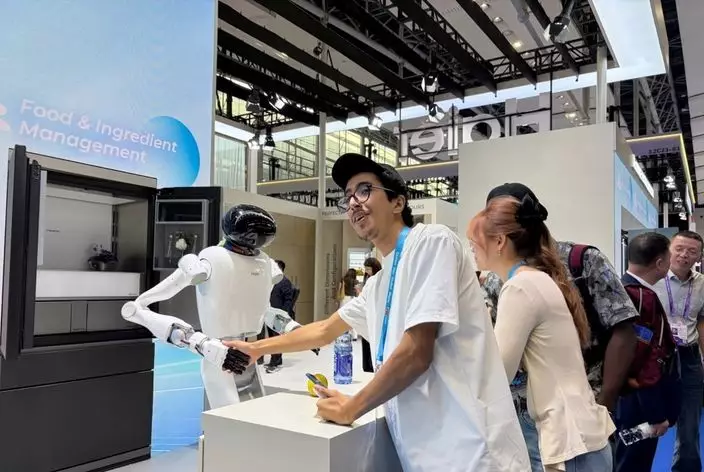
Shenzhen tech tours boom; robot stores are top stops.
Shenzhen day tours launch this year; tech routes hottest.
Foreign tourists and buyers are snapping up smart hardware, 3C accessories and AI innovations such as smart glasses. In the process, they experience firsthand the efficiency and creative energy of Shenzhen's industrial chain: 'designed in the morning, prototyped in the afternoon, mass-produced the next day.'
The scale is staggering. Known as 'China's No. 1 Electronics Street,' the Huaqiangbei commercial district ranks among the world's largest trading hubs for electronic products. It packs 35 specialized markets, 115,000 business entities and more than a million types of electronic components into about 1.45 square kilometers.
Huaqiangbei: China's self-styled No. 1 Electronics Street.
Foreign media also came to see it firsthand during the APEC summit. One Japanese media report marveled at Huaqiangbei's astonishing 'China speed' and manufacturing muscle. The district, the report said, showcased a wide range of Chinese-made tech hardware and software while drawing large numbers of overseas buyers hunting for business opportunities and placing orders.
Merchants Ride the Wave
Domestic media outlet Jiupai News reports that Ms. Chen, who runs an electronics store in Huaqiangbei selling mainly AI translators, has felt a clear jump in foot traffic lately. International travelers are leading the surge. She greets customers from different countries every day, and orders are up nearly 30 percent year on year.
Many of her foreign customers said they had never seen similar AI products anywhere else, and receiving that kind of feedback makes her genuinely happy.
Next door, Ms. Zou runs a shop packed with AI dolls, gimbals, translators and AI glasses. Both her retail and wholesale orders have climbed sharply in recent weeks.
Chinese products keep getting better, she said, and foreign customers are embracing them more than ever, so she and her fellow merchants naturally feel proud.
Foreign buyers snap up smart hardware, 3C gear, AI products.
Thanks to China's APEC host year, more international customers are making special trips to Huaqiangbei. They had arrived full of expectations, she said, and many of those visits ended in signed orders.
The summit has done double duty in her view. It has helped the world understand China better, and it has helped merchants like her better understand what customers from different countries actually want.
Mr. Zhang has run a Huaqiangbei shop for more than a decade, selling computer products like portable hard drives. The surge in foot traffic began to show at the start of this year, he said.
Foreign shoppers haggle too, and they haggle hard, he said. But the closing rate stays high because his products and prices can take the heat.
Smart products are a hit with first-time foreign viewers.
Orders are up 50 percent, he revealed. Now he hopes to use the APEC summit as a stage to win more international business for his shop.
Visitors and Record Numbers
Alex, a first-time visitor from France, has just picked up a pair of Bluetooth earphones in Huaqiangbei. He says the price is cheap and the quality very good. Many of the products he had only seen online before; this time, he finally got the opportunity to experience them in person.
Plenty of people around him use Chinese brands, he says. Before coming to Shenzhen, he even searched online specifically.
Britta, a German also in China for the first time, has her eye on AI products. Shenzhen's tech strength is what drew her to Huaqiangbei, she says. She came to feel the power of technology and hopes to leave with products she likes.
Shenzhen tech tours boom; robot stores are top stops.
One Shenzhen tour guide who works in English calls Huaqiangbei the 'top draw' on the city's tech tourism routes. Nearly every client she has received this year has asked to go there.
She adds a caveat. Many foreign tourists report that the English interfaces for electronic payments, social platforms and travel apps still have room for improvement.
The official numbers back up the buzz. Shenzhen received 40.34 million inbound tourist visits in 2025, up 27.6 percent, according to data released by the city's relevant institutions. Foreign visitors accounted for 3.338 million visits, up 38.1 percent, while international tourism revenue hit 79.05 billion yuan, up 52 percent.
The APEC effect shows up at the border too. As of September this year, 537,000 people from APEC member economies entered through the Shenzhen Airport Port, up 29.5 percent year on year. That is a record high.
Guides Ride the Boom
Wu Xin is living proof that the boom is real. The 28-year-old is a returned overseas Chinese and a second-generation Shenzhen native, according to the Economic Observer. Working as an English-speaking guide, she picks up tour bookings through social platforms at home and abroad. Her first order this October came from a young Pole.
The booking came at the very last minute, Wu recalled. The client was in Hong Kong at the time and messaged her that evening to ask whether she could show him around Shenzhen. She took him up Lianhua Mountain, then kept the rest of the itinerary in Futian and Nanshan, with Huaqiangbei on the route.
Shenzhen day tours launch this year; tech routes hottest.
Her second order came from a Dutch traveler, and his tech tour agenda was even clearer.
Both clients work in AI-related fields, Wu said. The Pole browsed the malls slowly, lingering over robot stores and new energy vehicles. The Dutchman was all about drones.
Gong Liang, who runs an inbound tourism company, has watched the wave build. Since 2024, China Travel has trended again and again on social media at home and abroad.
Then Beijing poured fuel on the fire. At the end of that year, China fully relaxed and optimized its transit visa-free policy, stretching the stay for transit visa-free foreigners from the original 72 and 144 hours to 240 hours, or 10 days. It also added 21 ports of entry and exit for transit visa-free travelers and further expanded the areas where they can stay and roam. Inbound tourism has been heating up ever since.
Tech Routes, Real Hiccups
This year, his company started testing short one-day and half-day tours of Shenzhen, and the tech route is the runaway favorite. Gong Liang said the itinerary usually opens with Huaqiangbei and Houhai, then shifts to hands-on time with drone delivery and driverless taxis. Huaqiangbei is the beating heart of the whole route.
What tourists zero in on are the gadgets that keep getting shared on overseas social media: AI glasses, smart translators, even electric suitcases you can ride like a bicycle. When the group leans male, the tour tacks on a stop at a Xiaomi Auto showroom.
Under the APEC effect, Gong Liang said, his clients now come from a growing list of countries, and first-time visitors to China account for 60 to 70 percent of them. One group of Singaporean clients came to Shenzhen this year for APEC-related activities, he noted, and is already preparing to return to China next year.
But the friction starts fast. Wu Xin said Polish tourists found linking a bank card to WeChat Pay anything but convenient, so they had to pay cash for the entire trip. A Dutch visitor named Xin flagged the same payment headaches.
Other tourists mentioned that when they tried to find local guides on social platforms like Xiaohongshu, their accounts got throttled, leaving them unable to comment or send private messages. Ride-hailing apps do offer English interfaces, but they are clumsy to use.
Wu Xin's verdict is blunt. Some apps that claim to be going global have merely flipped the language switch to English. True internationalization is another matter.
Mao Paishou
** 博客文章文責自負,不代表本公司立場 **