Jensen Huang, revered as a "god" by tech figures, turned defeat into victory. The "Silicon Valley coalition" cheered jubilantly and began to counterattack, exposing the "destroy Jensen Huang" campaign by The New York Times and others, saying its scale and ruthlessness were unprecedented and highly unusual. Among them, Hyperspace AI founder Varun Mathur conducted a quantitative analysis of this, and the figures he calculated were astonishing, showing that there was a sophisticated organization and deployment behind it.
A veteran media figure in Taiwan pointed out that whether some reporting methods deviate from journalistic principles is questionable.
Silicon Valley Strikes Back
Looking back at the whole storm, the "first shot" was fired by The New York Times. In late October, it was the first to disclose the extramarital affair between Jensen Huang and Huang Le, and claimed she was a "Chinese spy." Then on November 11, it broke another story that he had an affair with a female senior executive at the company, making it impossible for Jensen Huang to hold on and forcing him to step down.
Mathur counted The New York Times' reports about Jensen Huang from October 27 to November 14 and found that there were as many as 88, and they were also the most cited by other media outlets.
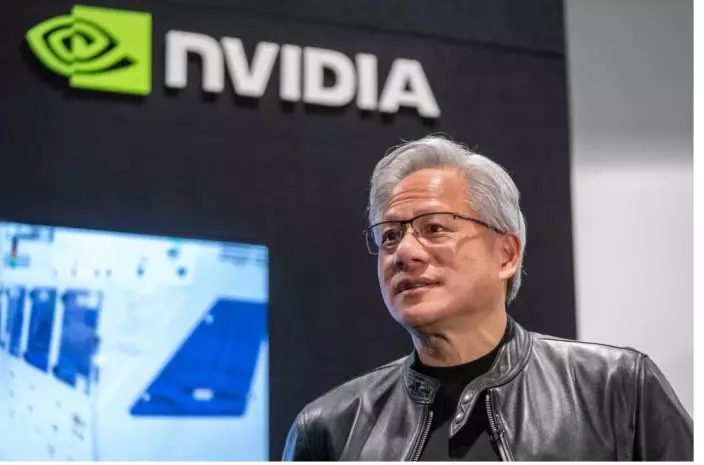
Hyperspace AI Founder counts 88 NYT pieces on Huang from October 27 to November 14, mostly negative.
According to his analysis, during that period, five US and U.K. media outlets including The New York Times published a total of 276 reports in 19 days. He said: "Overall, as you see this data, you will observe this was an exceptional media onslaught against Jensen with sharply negative coverage about him, his work, style, and family."
In terms of quantity, "it was brutal, and unlike coverage in the past of CEOs who have had affairs (such as Intel CEO in 2018)".
He said that when Intel CEO Brian Krzanich had an extramarital affair eight years ago and subsequently resigned, The New York Times published only two reports at the time, and other media outlets published only 15, which is worlds apart from the frenzied coverage of Jensen Huang this time.
Anatomy of a Hit Job
US media such as The New York Times not only carried out intensive and continuous sniping, but in order to "finish him off," their reporting methods also went all out. Veteran Taiwanese media figure Zeng Bowen posted on Facebook to dissect the relevant reports, pointing out several problems from the perspective of journalistic professionalism:
First, the newspaper's October 29 report cited anonymous sources and, in a "fairly certain tone," said Huang Le was a "Chinese intelligence asset." It later used the term in its headline again, and only after authorities stated that there was no evidence to confirm she was a "spy" did the newspaper change it to "suspected spy."
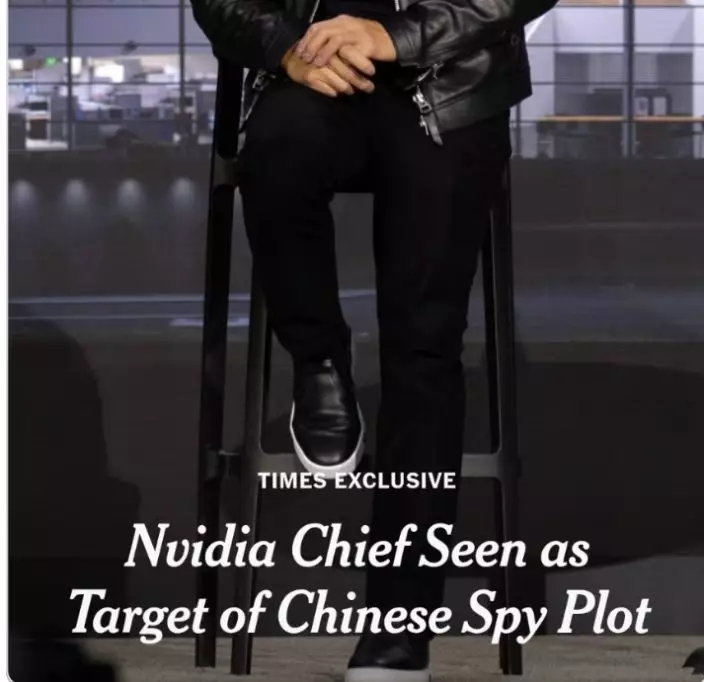
Second, The Wall Street Journal reported that Singapore's intelligence agency suspected Huang Le of being "an asset of China's Ministry of State Security" and launched an investigation into her, but the Singapore authorities immediately rebutted this sternly, saying that Huang Le was interviewed because Megaspeed was suspected of false declarations, and that she was not investigated for engaging in espionage activities.
Third, some media outlets, relying only on anonymous sources, claimed that Jensen Huang had a third "mistress," but more than 10 days after the story was published, they were still unable to verify who that person was, making its authenticity highly questionable.
Every political power struggle is a life-or-death fight, and the media are often weapons of mass destruction. As Shopify CEO Tobias Lütke said, "Let's be honest, this was surgical: affair, Chinese spy, another affair, another affair," Lütke said. "This is, like, choreographed. It's too organized. This is exactly how you write it in a book as a takedown story."
The Battle Isn't Over
The New York Times' methods deserve one more example. The paper claimed that interviews and documents showed Jensen Huang routinely belittled and crudely insulted subordinates. He once shouted at a senior colleague that the man's mother should have aborted him early on, and told another colleague he wanted to pry open his skull and urinate on his brain.
Huang later pushed back through a spokesperson, saying some of the allegations were fabricated. Thousands of employees are now rallying behind him, the spokesperson said, proof that these claims are pure fiction.
Fortunately for Huang, luck was on his side. With a benefactor in Trump and the market behind him, he staged a V-shaped rebound and came back from the dead. But the opposing camp has not lowered its flags or silenced its drums. Under these circumstances, the media sniping will continue.
Take the commentary The New York Times ran today, titled "With Jensen Huang, Trump Strikes Another Blow for Billionaire Impunity". It argues that Trump remains tied to the tech oligarchs, and it quotes hawkish members of Congress warning that if Nvidia's board reappoints Huang as CEO, "national security risk is passed along to the United States military and its citizens".
Lai Ting-yiu
Captions:
Hyperspace AI Founder counts 88 NYT pieces on Huang from October 27 to November 14, mostly negative.
What Say You?
** 博客文章文責自負,不代表本公司立場 **
As I've said in earlier pieces, the Jensen Huang saga is a drama packed with twists, and you never know the ending until the very last moment. On Monday the plot finally flipped: out of nowhere, he staged a comeback from defeat and reclaimed the Nvidia CEO seat. Punters on Polymarket and in the stock market lost big.
A Stunning Comeback
His miraculous return, of course, wasn't powered by the 200,000-signature petition alone that the 'Silicon Valley coalition' drummed up. The real force was Trump working overtime behind the scenes, proof that his clout endures.
And this was a fight Trump couldn't skip. The China hawks' anti-Huang campaign was an organized, carefully planned offensive, and its final target was him.
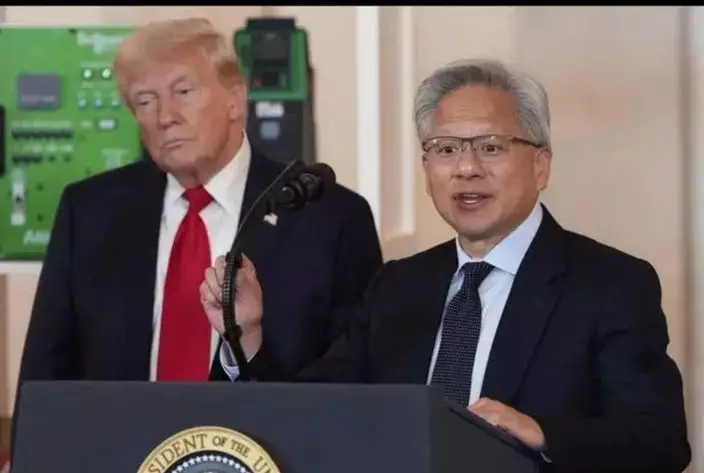
Trump clears Huang's path, crushes hawks, saves himself.
But the political wrestling doesn't stop just because Huang is back in office. Hawkish lawmakers have already vowed to keep hunting him down, and Trump's next mission is to shield another titan in equal peril: Elon Musk.
Clearing the Mines
To push Jensen Huang back into office, Trump did plenty of behind-the-scenes work. His first job: before pressing Nvidia's board to reverse its decision, he had to clear Huang of any suspicion of criminal wrongdoing.
Two confidants did the heavy lifting. Attorney General Blanche and Director of National Intelligence Clayton ran a full-body scan on Huang, making sure no leverage could be seized against him.
That let Trump declare loudly that investigators had been looking into the matter for a long time, and that if there really were any problem, he would not be doing this.
Armed with those assurances, Trump sent Vice President JD Vance to negotiate with Nvidia's board. Vance guaranteed that Huang faced no criminal prosecution and posed no national security risk. A CEO under arrest and indictment, after all, would spell deep trouble for the company.
Jensen Huang faced another crisis: his mistress Huang Le stood accused of being a 'Chinese spy.' Trump moved deliberately to defuse that bomb too.
He had FBI Director Kash Patel state publicly that the case had been under investigation for a year, but that no evidence confirmed Huang Le was a spy. If that accusation collapses, Huang's road back to the top gets much smoother.
Vance, Trump's Pick
Trump's decision to send JD Vance on this errand in recent days was carefully weighed. In White House senior circles, Vance has long enjoyed good relations with the tech giants, and he is an old friend of Jensen Huang's. His stance on the controversy aligns completely with that of the "big boss," which made Vance the best choice to run the mediation.
Vance has said publicly that the Democratic Party is exploiting the Jensen Huang controversy to attack Trump, accusing the president of being soft on China.
His target was not only the Democrats. Many people inside the Republican Party and the White House harbor the same intention. In this fight, Vance and Trump stand on the same side.
Very few people at the top of the White House knew about the secret back-channel mediation, and the secrecy was airtight.
The reason: several hawks in the administration wanted to sink Jensen Huang, above all Secretary of State Rubio. Rubio had added strong words in an intelligence report concerning Huang. If he had leaked information to sabotage the mediation process, Huang's reinstatement could have failed at the final step.
Trump later said he was very glad that nothing about the matter leaked. The remark shows he knows how hard it is to read hearts inside the White House, and that he has to stay on guard.
Hawks Kept in Check
As for the other "hawk," Treasury Secretary Bessent, Trump asserted his authority and kept him in check, so after accompanying the president to the APEC summit in Shenzhen, he quickly changed his tune. From earlier harsh words saying that "Nvidia executives must make drastic changes" and that new leadership should be sought from outside, by the time he gave a CBS interview last Sunday his tone had softened, saying that the problem of Jensen Huang being sidelined had been resolved and that "Well, Jensen is on the outside now."
Trump handled the whole matter with attention to all sides: in addition to clearing the "political bomb" for Jensen Huang, he also settled the crisis in Huang's marriage with his wife, because an extramarital affair is, after all, a major moral "sin," and if Mrs. Huang had come forward to publicly denounce her husband, it would have been extremely detrimental to his reinstatement. Trump said in a post on a social platform yesterday that Jensen Huang and his wife "have worked it out," and that "He's got a very, very, very good wife, and they've worked it out." Trump also gave Mrs. Huang a compliment: "She's a fantastic woman." It is believed that after hearing this, most of Mrs. Huang's resentment dissipated.
There is reason to speculate that Trump and Vance had direct phone calls with Jensen Huang and his wife to prevent their marriage from breaking down and ruining the bigger plan.
The Hawks Strike Back
Trump may have won this round, but the China hawks are in no mood to quit. They remain spoiling for a fight, and the pushback is not confined to Democrats. Some Republican lawmakers are rolling up their sleeves too.
Democratic Senator Warren led the charge, branding the decision to reinstate Jensen Huang as reckless. "The reckless decision to bring Jensen Huang back as CEO does not change the fact that Mr. Huang, NVIDIA executives, and the company's board still owe Congress answers about the company's compliance with U.S. export controls," she said. Nvidia, she warned, must ensure it does not endanger U.S. national security.
Republican Senator Ricketts was just as blunt. Even if Huang returns as CEO, he said, that does not spare him from testifying before Congress on December 3. One thing is clear: a grilling awaits Jensen Huang.
Next: Saving Musk
The China hawks are on the prowl like wolves. Another tech titan is next for the rack: SpaceX chief Elon Musk.
Democrats have already sounded the charge ahead of the midterms. If they win control of Congress, they say they will dig into Musk's hidden financial ties to Donald Trump, from how he landed a raft of government contracts to whether any benefits changed hands.
Their Musk hunt has one endgame: Trump himself.
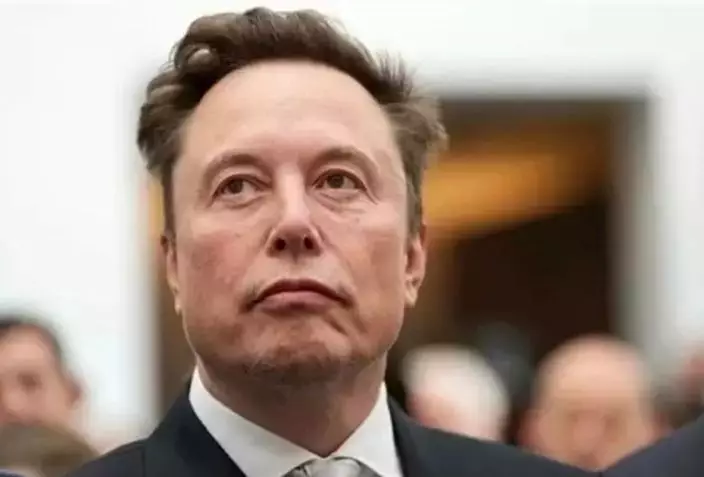
Huang saved; Trump's next rescue: Musk in danger.
This brawl is about to begin. After rescuing Jensen Huang, Trump must save Musk next. In saving Musk, he is saving himself.
Lai Ting-yiu