Brazil's presidential election took a dramatic turn. Leftist leader Lula (Luiz Inácio Lula da Silva) staged a last-minute comeback and edged out Flávio Bolsonaro, the son of the man known as Brazil's Trump. Brazil's Supreme Federal Court promptly ordered an investigation into the loser's illegal acceptance of American money. Sensing trouble, Flávio bolted for Florida in the United States, and more evidence of his crimes is expected to surface.
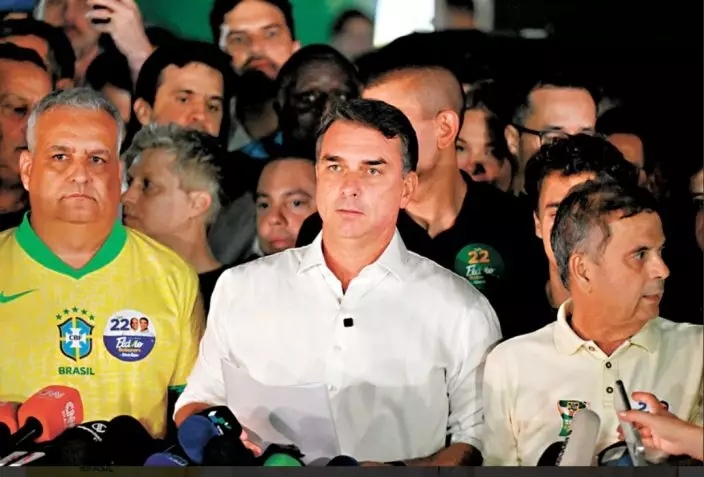
Bolsonaro Jr. fled to US over allegation of illegal US funding associated with Vice President Vance.
A Money Trail Emerges
The money trail, according to preliminary information, runs through at least one cash pipeline: the Rockbridge Network, a conservative organization secretly bankrolling his campaign. One of its founders is none other than US Vice President Vance. In other words, the water flows from the top of the White House, and Trump is believed to be the one giving the orders. And there is more than one pipeline.
The White House reaching for dirty tricks should surprise no one. Trump has long wanted Lula gone and Bolsonaro, his pro-American ally, installed in power. Back in July, reports had already surfaced that he sent colour-revolution operatives into Brazil to secretly meddle in the election. Lula struck first and shut the operation down.
The Escape Unfolds
Brazilian law makes it illegal for a presidential candidate to take foreign political donations for campaign use. So once the election results came out, Supreme Court ordered Flávio Bolsonaro to surrender his passport, and the Federal Police to open an investigation. The probe zeroed in on the US funding received by Flávio.
The deadline came and went with no passport handed over, and Flávio used that window to flee to Venezuela before moving on to the United States.
US media report that Trump personally approved his entry and told the State Department to issue a visa right away.
The episode makes one thing clear: Trump has been his big backer all along. The signs point to Trump flexing his muscle time and again to prop up the younger Bolsonaro and push him toward power, while undercutting Lula's election prospects.
Now the revelation that he took money from an organization tied to Vance confirms that Trump did indeed meddle in Brazil's election through his confidants. Some of those dirty tricks had already been exposed back in July.
Why Trump Wanted Lula Out
Lula's bid for another term has Trump fuming. The first reason: Lula has long been no friend of the United States. He is determined to shake off American influence and turn toward China, bucking the pro-US governments across South America. Trump hates him to the bone and wants this thorn in his side pulled out.
The second reason is just as personal. Lula's opponent is the son of Trump's "good bro" Bolsonaro. If the son is lifted into the presidency, he would submit to Washington heart and soul.
So Trump moved early. He had already told his lieutenants to "get to work" and find ways to tilt this election.
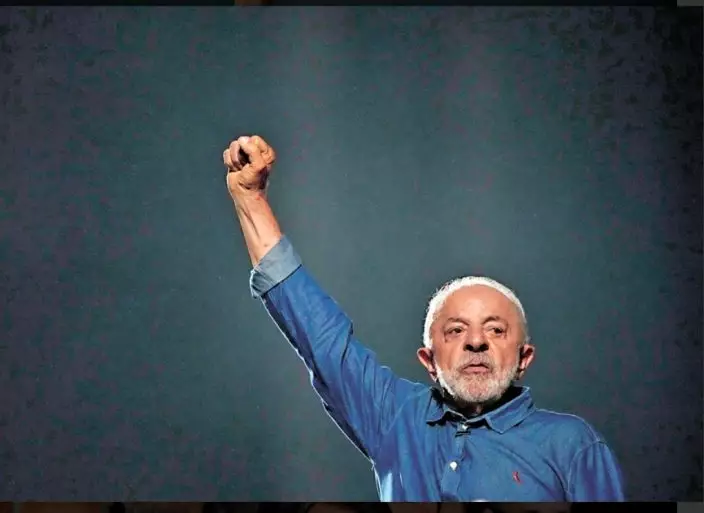
Trump's dirty tricks fail; Lula stands firm.
Lula Shuts the Door
American meddling in South American elections has been "routine fare" for years, and some US officials have become "seasoned hands" at the craft. More than three months ago, US media broke the story: two senior State Department officials had traveled to Brazil. They were Barnes, the Assistant Secretary of State overseeing the Bureau of Democracy, Human Rights, and Labor, and Samson, a former assistant secretary. On paper it was a routine visit. In reality, it was a covert operation.
Behind closed doors, the pair met with opposition figures who questioned Brazil's current electronic voting system. The agenda: how to manufacture a "rigged election" narrative, cast doubt on Lula's vote count, and then whip up public protests to block him from taking office.
Both officials are veterans of "colour revolutions". Their mission was to "collaborate" with the camp of Jair Bolsonaro's son, smear the electoral system, and wait for the moment to stage a grand "comeback" spectacle.
Lula, true to his reputation as a political master, hit back at once. He ordered that the two men be denied entry and exit visas, shutting them out at the door.
Tariff Stick Backfires
Trump had another ruthless trick up his sleeve: a 25% tariff aimed squarely at Brazilian goods bound for the US. He was clearly swinging the tariff stick as punishment, hitting Brazil's economy hard enough to send voters a message -- Pick Lula, and the good days are over.
But the harsh move backfired. Brazil changed tactics on the spot, aggressively building alternative markets and shipping more of its goods to China.
The numbers tell the story. Brazil's trade with China has climbed sharply in recent years, and 37% of its exports now head to China. Trade with the US, meanwhile, has sunk to a historic low.
Lula's Survival Playbook
Trump threw everything at the fight, but he still could not move the old-left Lula. That failure left him seething.
The sting ran deeper because his recent meddling in neighboring countries' elections had kept paying off, installing pro-American regimes from Honduras to Costa Rica and Colombia. Pro-American allies were lifted into the presidency one after another, and he was riding high until Brazil tripped him up.
Lula's story carries a blunt lesson: to resist US interference and avoid being swallowed, first be tough enough to withstand the pressure.
Second, bring political cunning: meet dirty tricks with dirty tricks.
In geopolitics' dangerous law of the jungle, that skill set is essential.
Lai Ting-yiu
What Say You?
** 博客文章文責自負,不代表本公司立場 **
Israel votes today. Some 7.3 million voters will decide whether Benjamin Netanyahu, the political 'cat with nine lives,' finally runs out of them. Their ballots will also shape how the war against Iran is fought, and the whole region is watching.
Election Day Showdown
The numbers look grim for the incumbent. Netanyahu's camp trails slightly, while challenger Gadi Eisenkot, a former IDF chief of staff, holds a narrow lead. If Eisenkot can pull the smaller parties into his corner, he could command 69 seats in parliament and push Netanyahu out the door.
Trump, meanwhile, is standing by Netanyahu to the very last moment. Eisenkot takes a very different line on the Iran war, and a change of government could leave Trump short a key partner in any future strike on Iran. It would also spell the end of his 'private secret alliance' with Netanyahu.

If Netanyahu falls, Trump loses his partner against Iran.
Netanyahu is fighting this battle with his back to the wall. Lose the premiership, and his protective shield shatters on the spot. Prison comes next.
He was indicted on corruption and bribery charges back in 2020. Since the trial opened, he has repeatedly delayed the proceedings by arguing the country is at war. Once he leaves office, the trial must start immediately, and a prison sentence looks highly likely.
This time he faces a formidable opponent, and the fight will not be easy. First, he carries the stain of corruption and perverting justice, and his credibility is in tatters. Second, the Israeli military is stuck in a quagmire, making no progress on three fronts: Gaza, Lebanon and Iran. Critics accuse him of strategic blunders, and he has lost a large share of public support.
The latest poll spells out the damage. Fully 45% of respondents say Eisenkot is better suited to be prime minister. Only 33% back Netanyahu. That is a 12-point gap, two points wider than in the previous survey.
Playing the Trump Card
Desperate to turn the race around, Netanyahu is doubling down on the security card. On one flank he courts the far right. On the other, he plays up the Iranian threat, claiming Israel can wipe out this evil regime only under his leadership, with American firepower at its side.
He took the fear campaign to a chilling extreme. On the eve of the election, he posted an AI-generated image on social media showing Israel's capital destroyed by a nuclear bomb.
Netanyahu is also tying himself to Trump. "We still have two years of Trump left to complete the job with Iran," he said, by which he means finishing off the current Iranian regime for good.
"Future generations will not forgive us if we miss the historic window of opportunity that allows us to try and complete the most critical mission facing our generation," he warned.
US media report he even tried the same trick twice. He lobbied Trump to join forces for another strike on Iran before the Israeli election, hoping to power his campaign. Trump refused, and the plan collapsed.
Failing to talk Trump back into war, Netanyahu settled for second best. He begged his "comrade-in-arms" to publicly back his re-election. Trump happily obliged, urging Israeli voters to cast their ballots for "Bibi," Netanyahu's nickname, so the US and Israel can finish the "mission against Iran."
Why Trump Needs Bibi
Donald Trump is firmly behind "Bibi" and wants him to keep power. If Netanyahu falls, the United States will no longer find it as easy as before to team up with Israel for strikes on Iran. The reason: former Chief of Staff Gadi Eisenkot brings a very different strategic outlook from Netanyahu's.
Netanyahu's goal has always been the same: topple Iran's current government and install a pro-American, pro-Israel regime. When the United States and Israel last joined forces in a "decapitation strike" on Iran's Supreme Leader, he was convinced the mission was accomplished. But the Iranian regime still stands, and he has not given up to this day.
His rival Gadi Eisenkot is a seasoned military strategist, and he sees things very differently. In his view, toppling the Iranian regime is simply not an achievable goal.

Challenger Eisenkot (second from right) differs sharply on Iran strategy.
Eisenkot proposes pairing military strikes with diplomacy, using a balanced strategy to end the war. He supports precision strikes on Iran's nuclear facilities but opposes restarting a full-scale war. Economic pressure on Iran, he argues, would give its leaders a "sense of failure" more effectively than round after round of military operations.
A Different Kind of Hawk
On teaming up with Washington, Eisenkot takes a very different line from Netanyahu. He insists that "Israel must focus on a future without relying on the US." In his view, the country cannot afford to be like Netanyahu, unable to defy Trump's wishes and stripped of its autonomy.
It can thus be seen that if he succeeds in taking power, he will not blindly follow Trump's orders to carry out his reckless military decisions.
The consequences would be real. The joint strikes on Iran of the past few months may not be repeatable. The US military could lose an arm, and future wars would be far harder to win.
The Kushner Connection
If Netanyahu loses, Trump takes another hit: the secret alliance built on their personal bond dies with it.
The tie ran deeper than politics. The elder Kushner, Trump's in-law, was an old family friend of Netanyahu. Through that connection, the younger Kushner made numerous investments in Israel, was entrusted by Trump with important work, and joined the US team negotiating with Iran.
Those personal channels shaped Washington's ties with Israel and its policy toward Iran and the wider Middle East.
If Israel gets a new prime minister, dealings with Trump lose the personal factor and become a new game. That might even help cool the Middle East down.
The Verdict Looms
The verdict arrives tomorrow, when the results of Israel's parliamentary election come in. Make no mistake: Netanyahu is the man who provoked this war with Iran.
His rival Gadi Eisenkot is a hardliner too. But he is, at least, the more pragmatic of the two, and less cunning. If I had a vote, Bibi would not get it.
Lai Ting-yiu