
Skip to Content Facebook Feature Image

Democrats' First 100 Hours: End Tariffs, Curb Iran War, Target Trump's Fortune

Blog

Democrats' First 100 Hours: End Tariffs, Curb Iran War, Target Trump's Fortune
Blog

Blog

Democrats' First 100 Hours: End Tariffs, Curb Iran War, Target Trump's Fortune

2026-10-27 11:17 Last Updated At:11:17

Donald Trump is campaigning like a man in a bar fight. Wall Street Journal reporters tailing him watched him sprint through seven rallies in seven days to drum up votes, emerging with bruises on his hands and face. The damage tells the story: the Republican Party's midterm prospects are "truly in dire straits."
 
Dire Odds
Democratic Party leaders, meanwhile, smell victory. According to disclosures by The New York Times, they have already drawn up action plans for the "first 100 hours" and "first 100 days" after winning. The agenda is aggressive: swiftly overturn Trump's tariff measures, halt the Iran war, and rigorously investigate his corrupt misdeeds.
 
And they won't stop there. They plan to strip away his claws by bringing down Defense Secretary Pete Hegseth. With the situation this bad, no wonder Trump is fighting for his life.
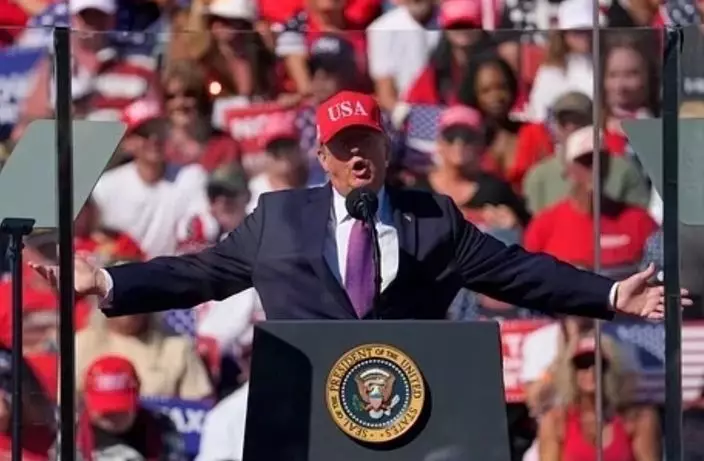
Trump's seven rallies in seven days: GOP midterms in trouble.

Trump's seven rallies in seven days: GOP midterms in trouble.

The betting markets tell the same bleak story for Republicans. Polymarket's latest forecast gives the Democrats a 92% chance of taking the House of Representatives and a 65% chance of taking the Senate. That tracks closely with recent polling trends.
 
The Cook Report, an election analysis firm, reads it the same way. Given the Democrats' current position, winning half the seats in the House is all but a lock. The Senate is a bigger ask, but if Democrats can win a few fiercely contested "red states" (Republican strongholds), the tide could turn. Right now, it's hardly out of reach.
 
The 100-Hour Blitz
The New York Times reports that Democrats, with victory in sight and control of the House their minimum prize, have already drawn up action plans for the "first 100 hours" and "first 100 days" after winning. The goal: overturn Trump's decisions at lightning speed.
 
House Minority Leader Hakeem Jeffries plans to move the moment the chamber reconvenes, rolling out several priority bills. First, kill Trump's tariff measures and hand the lead on trade policy back to Congress. Second, demand that he end the war against Iran, with any new conflict requiring congressional authorization. Third, reverse nearly $1 trillion in cuts to the federal Medicaid program.
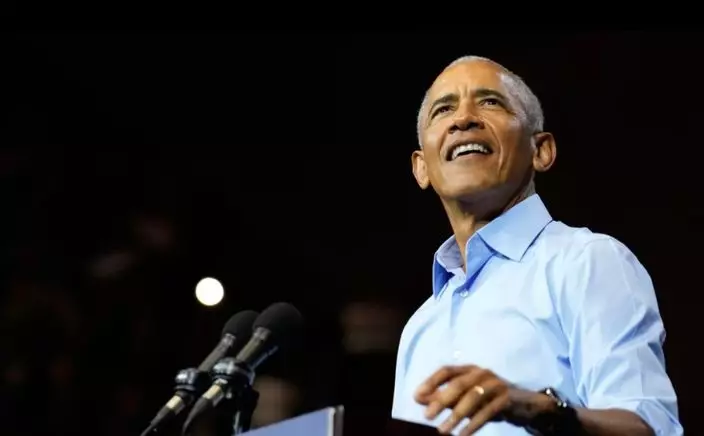
Obama blasts Trump as warlike, corrupt, harmful to people.

Obama blasts Trump as warlike, corrupt, harmful to people.

With Democrats expected to hold a majority of House seats, passage there is a lock. The Senate is where the math gets ugly. Republicans will likely try to block the bills, but a measure backed by a clear majority of public opinion could still squeak through if the vote count is razor-thin.
At that point, Trump would face enormous pressure and could be forced to back down.

Follow the Money
Trump has another nightmare on the horizon. Democrats plan to use their first 100 days after winning to beef up congressional oversight of the president and the executive branch, digging hard into corruption.
 
The target list runs long: the web of favors flowing to Trump, the crypto "money stream" reaching him and his family, and whether hidden interests lurk behind government contracts handed out without public bidding.
 
If Democrats dig deep into Trump's "money kingdom," the dark corners could yield major finds. On Forbes' rich list this year, his net worth hit US$6.5 billion, up from just US$2.1 billion in 2020.
 
The takeaway is stark: his fortune ballooned after his return to power. The claim that he never abused his office for personal gain? Good luck finding anyone who buys that.
 
Claws and Coffers
To the victor go the spoils. The Democrats have another move planned: clipping Trump's claws. The Wall Street Journal reports that if the party wins control of the House of Representatives, it will push for a vote to impeach Secretary of Defense Pete Hegseth once the chamber reconvenes on November 9.
 
Even if the vote passes the House, the case will have to go to the Senate. Removal requires a two-thirds majority there, so the odds of success are slim.
 
But that is not really the point. The goal is to knock the wind out of Hegseth's sails and further weaken Trump's authority for the rest of his term.
 
A Democratic victory would also tighten the screws on Trump's fiscal agenda. Tax cuts and similar measures would face obstacle after obstacle.
 
Wen Bin, chief economist at China Minsheng Bank, says the Democratic Party may introduce new tax legislation and could even repeal the new tax-cut items in the One Big Beautiful Bill. The fight over the debt ceiling is bound to intensify as well.
If that happens, the government's fiscal woes will sink even deeper.

Republican Revolt
Trump is not just up against a Democratic Party out for blood. If Republicans capsize in these midterms, anger inside the party over his drag on the ticket will boil over, and the internal split will only widen.
 
The cracks are already showing. A leaked recording from a closed-door meeting caught Paxton, a Republican Senate candidate in Texas, saying bluntly that Trump's war on Iran sent gasoline and diesel prices soaring, and that this was the main factor weighing down his campaign.
 
Paxton is not alone. Reuters reports that some Republican candidates break with Trump on at least one policy issue, mostly the Iran war. They are calling for a quick end to the war, a direct rebuke of the president.
 
If Republicans ultimately lose the midterms, that fury will burn through the party and turn the rift with Trump into open conflict.
 
If Democrats really do stop the Iran war and overturn the tariffs after the midterm elections, it would be a crushing defeat for Trump. And much of the world would cheer.

Lai Ting-yiu


What Say You?

** 博客文章文責自負,不代表本公司立場 **

A massive upheaval has turned France upside down. Emmanuel Macron's government badly misjudged the situation beforehand and failed to contain the unrest, and it took a huge political hit.

France Caught Off Guard

Once the storm passed, several mysteries remained. Why did a student protest spiral into full-scale rioting? Who was pulling the strings? Luxury stores were looted, and every sign points to someone orchestrating events from behind the scenes. Could organized crime be involved?

On the first mystery, the Financial Times has named the culprit: a mysterious squad of "men in black." Their methods, tactics and equipment are strikingly similar to those of Hong Kong's black-clad rioters of years past. The difference? The French squad is still active on the protest front lines, while its Hong Kong counterparts have vanished without a trace.

FT: mysterious 'men in black' squad behind France riots. Similar to what Hong Kong had experienced.

FT: mysterious 'men in black' squad behind France riots. Similar to what Hong Kong had experienced.

The French police made their biggest blunder last time by underestimating the crowds. They deployed just 2,350 officers around Paris. That left them vastly outnumbered by the troublemakers, completely on the back foot and powerless to control the situation.

Worse still, the police misjudged who they were up against. Their opponent was a black-clad squad with real tactics, strong organization, ample equipment and hard-earned riot experience. Traditional policing simply could not cope.

Inside the Black Bloc

The Financial Times has unmasked the background of this 'squad.' They have no formal organization. They have surfaced at major demonstrations before, bearing the name 'Black Bloc.'

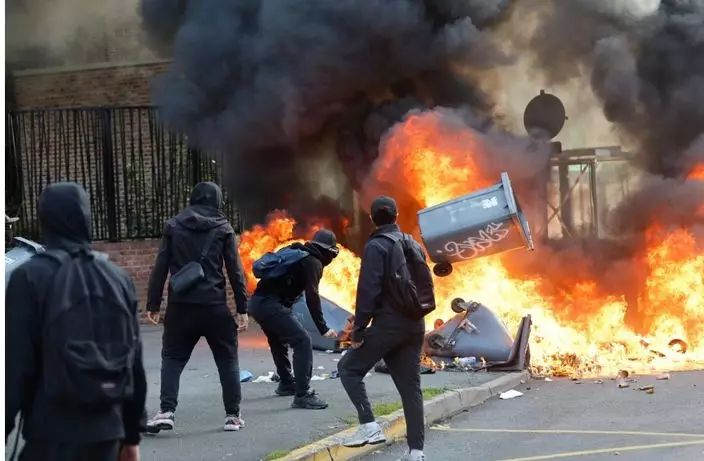
This time, the group swarmed into the protest ranks in large numbers. Their hallmarks: black clothing, masked faces, gas masks and goggles, plus iron rods and petrol bombs. Full gear, ready for violent destruction.

On the ground, during the mass demonstrations, they moved with practiced skill. They built barricades to block roads, dug up paving bricks and hurled them at police, and set fires with petrol bombs, smashing and wrecking wherever they went.

They organized through social platforms and messaging apps, moving fluidly, much like an orchestra without a conductor in which every player knows exactly how to position and coordinate. The police, by contrast, stuck to traditional tactics. They held a single defensive line and stayed on the back foot the whole time.

Anarchists Without Leaders

The Black Bloc has no hierarchy, no leadership and no party ties, the report said. But its ideology is crystal clear. It preaches anarchism, opposes capitalism and glorifies attacking the establishment by radical means, including violence. Its membership is now estimated at 5,000.

The group first rose in Germany in the 1980s. It later hoisted the anti-globalization banner and incited riots at several demonstrations. It mobilized during the 1999 WTO summit and the 2007 G8 summit, leaving those cities in an uproar.

That leaderless setup is the group's best armor. With no ringleaders to hunt down, police find it hard to break the organization apart.

So to this day, the Black Bloc stays active across protest movements, waiting for its chance to stir trouble.

Echoes of Hong Kong

After reading the Financial Times report, a friend noticed how closely the Black Bloc resembled Hong Kong's black-clad rioters in 2019. The similarity led him to suspect that the two groups had long maintained some kind of connection, and that the riot methods and tactics had been transplanted to Hong Kong.

Fortunately, Hong Kong's "men in black" have since disappeared without a trace. Whether the "brothers and sisters" who fled to the United Kingdom will travel to France to join their ranks remains unknown.

The Looting Mystery

Another mystery hangs over these riots: did a crime syndicate plan and direct the looting of luxury stores? The authorities still have no hard proof. But the signs are hard to miss.

First, once the luxury stores were hit, large batches of expensive goods surfaced online for sale within an extremely short time. That points to a behind-the-scenes organization taking in bulk stolen goods, then moving them fast through 'fencing channels.' It does not look like the work of individual teenage robbers.

Second, French law enforcement authorities strongly suspect that a criminal syndicate used the unrest to incite teenagers in poor neighborhoods to loot. It then quietly took in the stolen goods behind the scenes and sold them below market price for huge profits.

Organized crime behind luxury store lootings, goods fenced fast.

Organized crime behind luxury store lootings, goods fenced fast.

A Lesson for Police

These two mysteries expose just how fragile and slack France's security system really is. Riot control and robbery prevention both fall short, and the gaps are everywhere.

By comparison, the Hong Kong Police Force is more than a cut above.

Still, the police would do well to treat France's chaos as a cautionary tale.

Lai Ting-yiu

Recommended Articles