
The United States has always seen itself as the most civilized nation of all, quick to brand other countries brutal and inhumane. Now two recent death-row executions have brought that moral high ground crashing down overnight.
Moral High Ground Shattered
First came Tennessee, which put a female death-row inmate to death. Two lethal injections failed. She suffered enormous torment, and the process showed no humanity whatsoever.
The other case is even more outrageous. The Department of Defense has decided to livestream the entire firing-squad execution of a prisoner. In nature, that is no different from the Islamic State releasing beheading videos.
That decision has inflamed the infighting between Vice President J.D. Vance and Defense Secretary Pete Hegseth. At precisely this moment, Vance's confidant inside the Pentagon leaked to the media, laying bare the two men's old and new grudges. The livestreamed execution plan is merely the latest fuse. Plenty of drama is still to come.

Hegseth's livestream execution plan sparks GOP infighting.
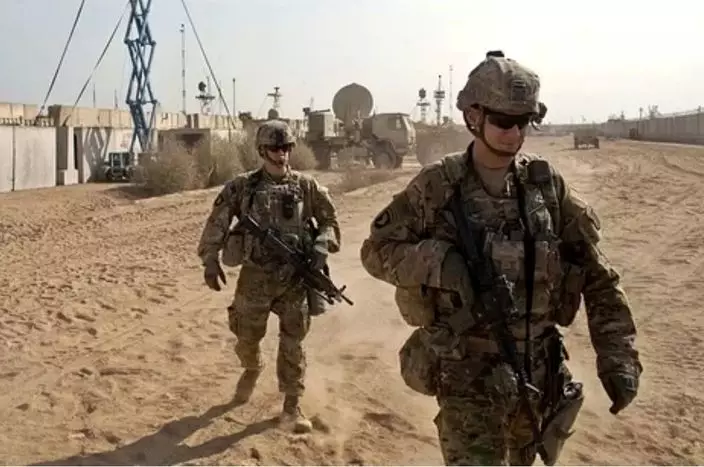
Since Trump returned to power, the unthinkable has kept happening, one episode after another. The latest landed last Thursday, when the Department of Defense announced horrifying news. Hassan, a prisoner sentenced to death by a military court 17 years ago, will face a firing squad on December 3, with the entire process broadcast live by the media.
This deeply shocking execution "reality show" is being staged in public for the first time in history. It instantly ignited heated debate.
Defense Secretary Hegseth personally gave the green light to this unprecedented move. On "Real America's Voice," a conservative television network, he said: "We'll make sure that people are able to watch it, that it's public — because people need to understand that there's serious consequences for these types of things."
He said the execution would come at 1 p.m. on December 3, matching the date and
hour of the shooting 17 years earlier. It would unfold at the very site where the
attacker carried out his crime. And he added that he did not have to think at all to
make this decision. It was a "No-brainer".
Hassan worked as a psychiatrist at the base. Back then, he opened fire on the soldiers present, killing 13 people in all. Hegseth's decision to hold the execution at the same time and place is plainly "meeting violence with violence," and it carries a heavy scent of revenge.
Making the process public serves another purpose: fueling populist fury toward an "enemy of the state." The move echoes his casting of the attack on Iran as a "righteous crusade". The playbook is identical.
Hegseth was smug about announcing the public staging of his reality show. Far-right figures cheered him on enthusiastically. But objection erupted at once from political and religious circles.
Vice President Vance, long said to be at odds with Hegseth, tactfully voiced disapproval of the livestreamed execution. "I'm not going to be watching it," he said. He also hinted that the decision would very likely be withdrawn in the end: "I don't know that that's actually going to happen."
The upshot: senior White House officials are divided over the plan. Some have raised objections, and Vance is certainly one of them.
Republicans Revolt and Vance's Pentagon Confidant Breaks Silence
The dissent didn't stop inside Trump's team. Members of the Republican Party openly opposed the move as well, blasting Hegseth and showing no deference even to one of their own.
Senator John Curtis fired first on social media, aiming his warning squarely at the United States: "A civilization erodes when it cultivates an appetite for executions as a form of entertainment."
Tillis went further, likening the move to ISIS executing hostages. Only Islamic extremists livestream executions, he argued, and "public executions are what oppressive dictatorships like Iran and Afghanistan do. It should not be happening in America."
Of all the objections, Vance's stance was the most closely watched. Reports had been mounting that his conflict with Hegseth was deepening, and that he resented Hegseth's handling of senior military personnel. The livestreamed firing-squad controversy was merely the latest flashpoint.
One of the key figures behind the clash is Driscoll, Vance's confidant at the Defense Department and former Secretary of the Army. Once seen as a rising star, Driscoll was forced out by Hegseth and resigned in anger last month.

Driscoll tells Rolling Stone: Hegseth feared his Vance ties.
In an interview with Rolling Stone last week, Driscoll pulled back the curtain. His relationship with Vance, he revealed, made him unacceptable to Hegseth. Hegseth feared Vance might use Driscoll to threaten his own grip on the Defense Department, and so removed him.
Driscoll filled in the backstory. Early in his tenure as Secretary of the Army, he showed Hegseth his bargaining chip: a deep friendship with Vance. That bond, he argued, could help the Defense Department secure the new resources it needed from the White House.
Hegseth erupted the moment he heard it. Any contact with the White House, he declared, had to go through the Office of the Secretary of Defense. Driscoll said the episode triggered a serious conflict between the two of them.
The friendship between Driscoll and Vance runs deep. They grew close at Yale Law School. Driscoll then climbed fast through the military, served as an adviser to Vance after retiring, and the two remained tight.
He was appointed Secretary of the Army in February last year. Hegseth, aware of the "powerful backer" behind him, felt his own power under threat and had long been on edge.
Then came the spark. Reports at the time said Driscoll wanted to see Trump together with Vance so the three could discuss Army reform. When Hegseth got wind of it, he slammed the table and cursed, ordering Driscoll not to open any line to the White House on his own.
By February of this year, Driscoll had put forward his list of Army general promotions. Hegseth blocked it, seizing direct control of the Army's senior personnel management.
Two months later, Hegseth went further still and axed Driscoll's partner, Army Chief of Staff General George. From then on, the two men were irreconcilable. Driscoll had no choice but to resign in September, leaving the Pentagon in dismay.
Driscoll disclosed to Rolling Stone magazine that Hegseth runs the Defense Department as a "one-man show." Whether he agrees or not, he said, once Hegseth has made a decision, he has no power to change it.
In fact, what Hegseth dreads even more is Vance, the man threatening him from behind.
On the subject of livestreamed execution, a White House official says the "big boss," Trump, does not oppose it. But Trump could still change his mind. He is hearing out opinions from all sides before making a final call, which is why he said publicly that no decision has been made yet.
By the look of it, the internal fight is still far from settled.
Whatever the outcome of this episode, the split between Vance and Hegseth has deepened. The best of this infighting drama yet awaits.
Lai Ting-yiu
What Say You?
** 博客文章文責自負,不代表本公司立場 **