American elections are, at their core, a money game. Winning is not about policy platforms. It is about who spends more. The upcoming midterms are exactly that.
The Money Game Turns Bipartisan
The Wall Street Journal reported today that since September, Republicans have poured cash into 10 key districts to drive votes. They have already spent more than $200 million. That is a sharp increase from last month, and it puts them far ahead of the Democrats.
But donors never bet on just one side. US media revealed that corporate giants such as Meta have quietly been playing political hedging. They are donating to Republicans while also pumping money into Democrats.
Their calculation: if the latter controls both chambers, the donations can buy protection and reduce the risk of payback. With these covert money pipelines, Democrats may not lose the money contest after all.
For corporate giants, there is only absolute interest, never absolute loyalty. That is true worldwide, but especially for American companies. So it is no surprise that Meta boss Mark Zuckerberg plays political hedging.
US media reported that months ago he foresaw the growing risk of AI regulation. He also expected Democrats to likely control Congress. So he decided to throw $65 million behind AI-friendly politicians, including Democratic candidates.
He funneled money through four super PACs. He also set up a new organization called Building Tomorrow to support Democratic campaigns behind the scenes.
Of course, he also donated to Republican-affiliated organizations, with amounts in the tens of millions of dollars.
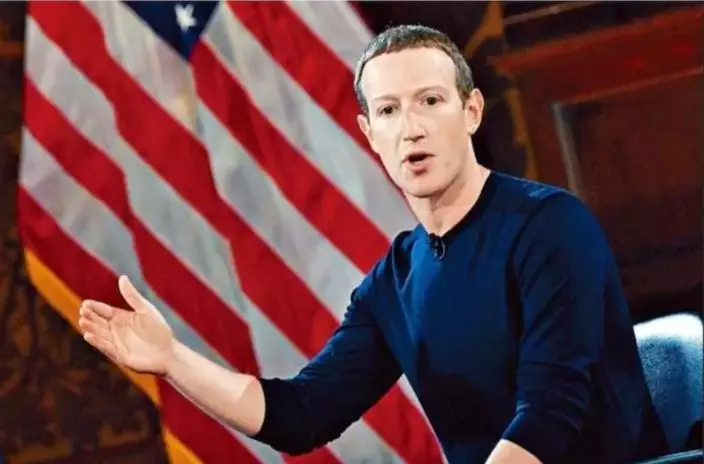
Zuckerberg plays both sides, funding Republicans and Democrats ahead of midterms.
Silicon Valley Covers Both Sides
Meta is not the only giant hedging its bets. OpenAI CEO Sam Altman is also making frequent overtures to Democratic lawmakers, with plans to provide donations through back-channel moves.
Some companies are hiring former Biden-era officials or advisers to help craft their playbook for working with Democrats.
These corporate giants have real reasons to worry about life after the midterms. If Democrats control the House, they face two risks. First, with a majority in hand, the party will relentlessly pursue Trump over alleged violations and conflicts of interest.
If Trump does not cooperate and refuses to disclose information, Congress will likely demand records from companies caught up in the affair, and it will prosecute them if they defy.
Some giants that previously leaned toward Trump must move early to hedge risk. One way is to donate money to repair relations.
Second, when Democrats gain power, the party's lawmakers who demand strict AI regulation are bound to make trouble and take aim at tech companies. So Meta and others have locked onto a group of AI-friendly Democratic candidates and are pouring money into their campaigns.
If they back the winners, the risk of being made to pay later drops.
Musk and Huang Make One-Way Bets
Not every tech giant hedges. Plenty still make one-way bets on Trump and the Republican Party.
Among them is SpaceX boss Elon Musk. The super PAC he founded has made an initial investment of about $100 million to boost Republican votes in at least eight states. During the 2024 presidential race, he donated roughly $240 million to support Donald Trump.
The two later fell out for a time. But Musk knows Trump still holds the cards. So this time he is showing deference and spending heavily to back the Republican Party.
Jensen Huang, boss of chip giant Nvidia, also knows how to play the game this time. According to reports, he has self-funded a political action committee called NY PAC.
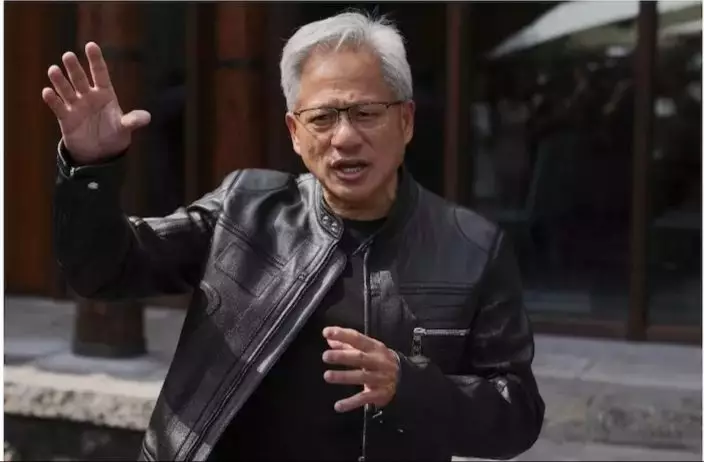
Following Musk, Jensen Huang funds Republicans for political insurance.
The PAC will send political donations to the Republican Party to help it fight a tough midterm battle. Do not assume Huang only understands high-end technology. It turns out he has a knack for high-end politics too.
Dark Money Gives Democrats a Late Edge
Mark Zuckerberg and others have donated to Democrats. But the ultra-rich are still mostly betting on Republicans.
The Financial Times donor rankings show the scale of that tilt. The 20 biggest givers have already poured $1.058 billion into the race, and most of the money has gone to Republicans.
Only a small minority is backing Democrats. The standout is George Soros, the veteran financier, who has given more than $100 million and tops the list by amount.
On paper, Republicans hold the edge in the money fight. But tech giants that hedge like Meta are expected to steer dark money toward Democrats.
Democrats also get a lift from public anger over Trump's reckless Iraq war. That gives them a stronger public opinion advantage than their rivals, keeping their midterm odds slightly higher.
Compared with the other corporate titans, Mark Zuckerberg may be the ultimate winner.
Lai Ting-yiu
What Say You?
** 博客文章文責自負,不代表本公司立場 **
The world is getting more chaotic. Someone who benefits you today may hurt you tomorrow, and not just a little. The damage can be catastrophic.
The Strike and the Immediate Fallout
Amazon boss Jeff Bezos is a living example. Not long ago, he and a group of tech giants became Donald Trump's honored guests. They figured that with the president covering them, they were bound to cash in.
But then Donald Trump suddenly went to war against Iran, and Amazon took collateral damage. Its large data center in a Gulf country came under Iranian attack. The damage was severe.
Reuters reported yesterday that the center in Bahrain was almost completely destroyed. Cloud services across the entire region were paralyzed, and customers had to relocate on a large scale to other regions. Amazon suffered heavy losses, and its AI money-making plan went up in smoke.
Other tech giants had been ambitiously preparing to make big money in the Middle East. That dream has also shattered. Donald Trump truly harms people without limit.
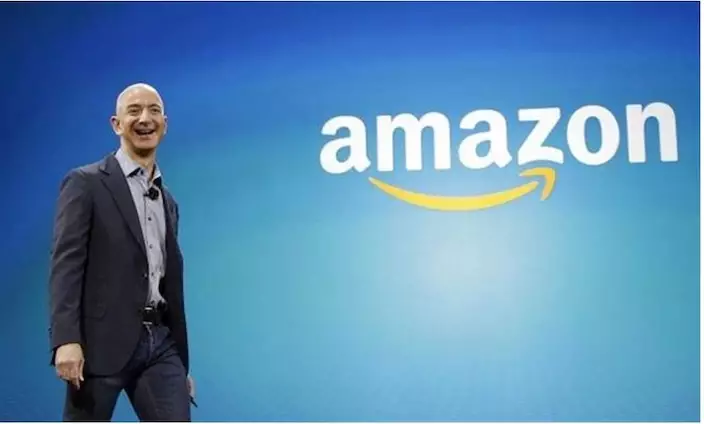
Iran destroyed Amazon’s Bahrain cloud hubs, wrecking regional expansion plans.
The report said Amazon Web Services assessed the damage to the data center and said cloud services in the Bahrain area could no longer be repaired.
That center was one of three 'data hosting zones' the company had built in the United Arab Emirates. With one zone paralyzed, the impact already exceeded the load capacity the system was originally designed for. Operations across the whole region became difficult to maintain.
The customer base using services in the region is huge, and banking operations have taken the most direct hit. The situation is catastrophic.
According to reports, Amazon Web Services has sent notices to customers advising them to relocate operations to other regions. The company will provide assistance.
War is merciless. One attack threw the entire system into chaos. The company is suffering, customers are suffering too. The UAE government is suffering even more. They are all left in tears.
Why Iran Hit the Cloud and How Tech Giants Froze
The disaster began shortly after the US-Iran war broke out. Iran launched large-scale drone strikes on two of the three large data centers Amazon had set up in the UAE. The center in Bahrain took the heaviest damage.
The Iranian military said it targeted the data centers because the United States was using AI to formulate combat plans. Amazon's centers had provided support to US forces. That put them on the strike list.

Targeted data-center airstrikes now terrify tech giants eyeing Gulf AI.
That was only the stated reason. Iran had another strategic calculation. Destroying digital infrastructure in the UAE would strike the country's economy and force it to pressure the United States to end the war as soon as possible.
The move was ruthless. Gulf states such as the United Arab Emirates, Saudi Arabia, and Qatar have been racing to transform their economies. They are investing heavily in high-tech sectors, with AI as the centerpiece, and courting American tech giants.
They knew this was a super gold mine. The giants were drooling, rubbing their hands, and ready to march in.
Amazon led the charge. Amazon Web Services quickly built three large data centers in the UAE, betting on the first taste of the broth and a fortune to follow.
At that time, OpenAI, Oracle, and Nvidia were also preparing to build mega AI campuses in the Gulf states. Shortly after Donald Trump took office, the giants accompanied him on a visit to the Middle East and signed a series of investment plans. Nvidia moved to supply its most advanced chips to AI companies in Saudi Arabia.
They all saw it as a sure-fire path to wealth.
But when the US-Israeli coalition launched its war against Iran in late February, their get-rich dreams went up in the flames of war. Iran immediately struck Amazon's large data center in the UAE and scored a direct hit, causing severe damage.
The Islamic Revolutionary Guard Corps (IRGC) then released an attack list. Amazon, Google, Microsoft, Nvidia, Oracle, and others were all named, identified as accomplices of the United States.
With the Gulf states suddenly engulfed in war and danger, the giants immediately shrank back. Every plan was frozen.
Gulf Stalls, Hong Kong Contrast
The reality is the Gulf states suffer most. Their grand plans to develop innovation, technology, and AI industries just took a heavy blow. After this data center attack, finding brave investors will be even harder.
Some US media commentaries have already drawn a blunt conclusion. The Gulf can no longer become a major AI hub, and critical technology infrastructure will not be built in the Middle East.
After reading this Reuters report, a friend immediately thought of Hong Kong's Five-Year Plan. It stresses that "Security is the prerequisite for development, whereas development reinforces security." The plan will strengthen top-level design and efficiently safeguard national security.
That naturally includes a safe business environment. If data centers were located in Hong Kong, they would be a hundred times safer than in the war-torn Gulf region.
Lai Ting-yiu